
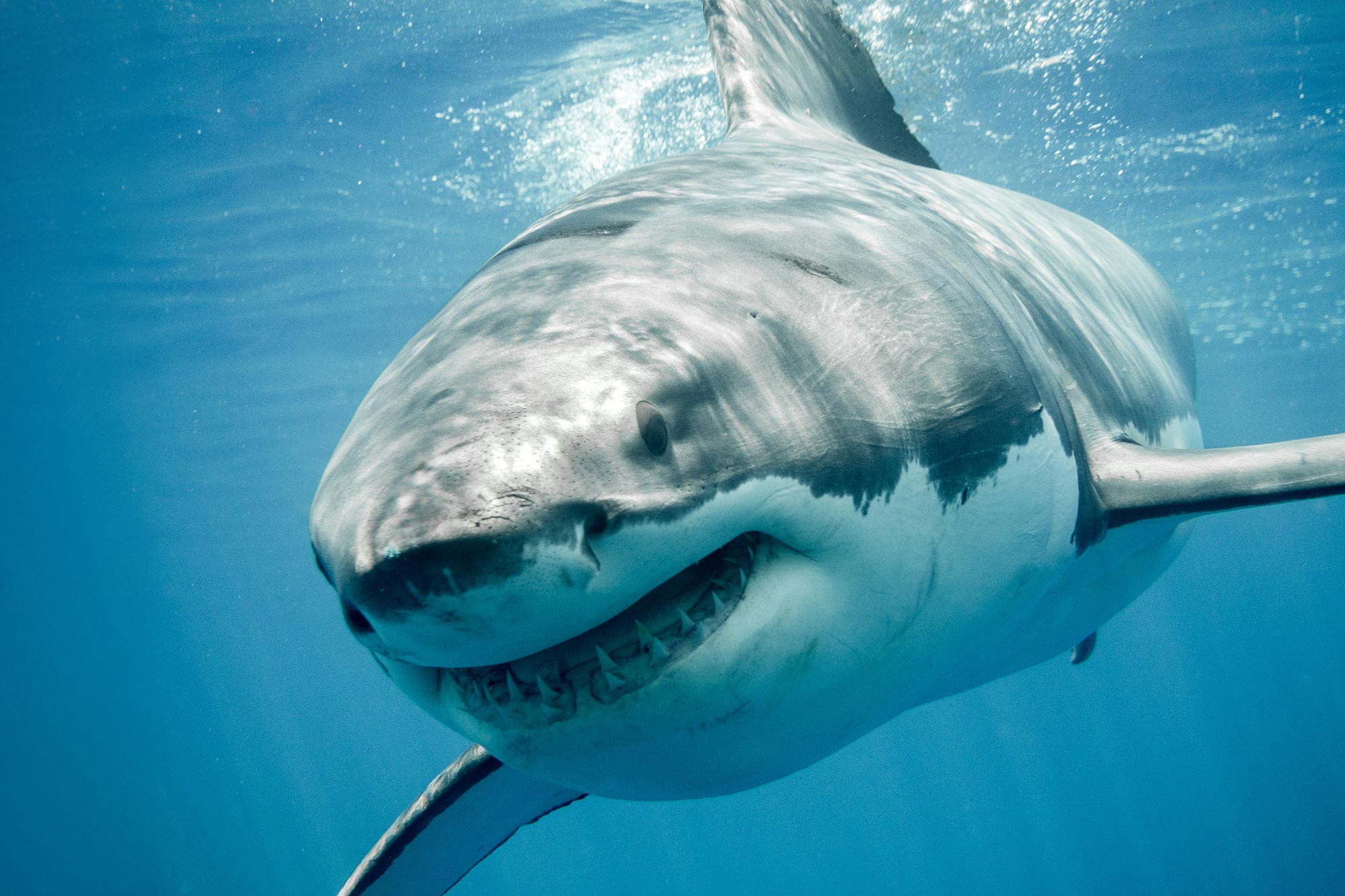
A juvenile great white shark was captured off the coast of Spain, leading researchers to investigate further and confirm the species’ rare but ongoing presence in the Spanish Mediterranean.
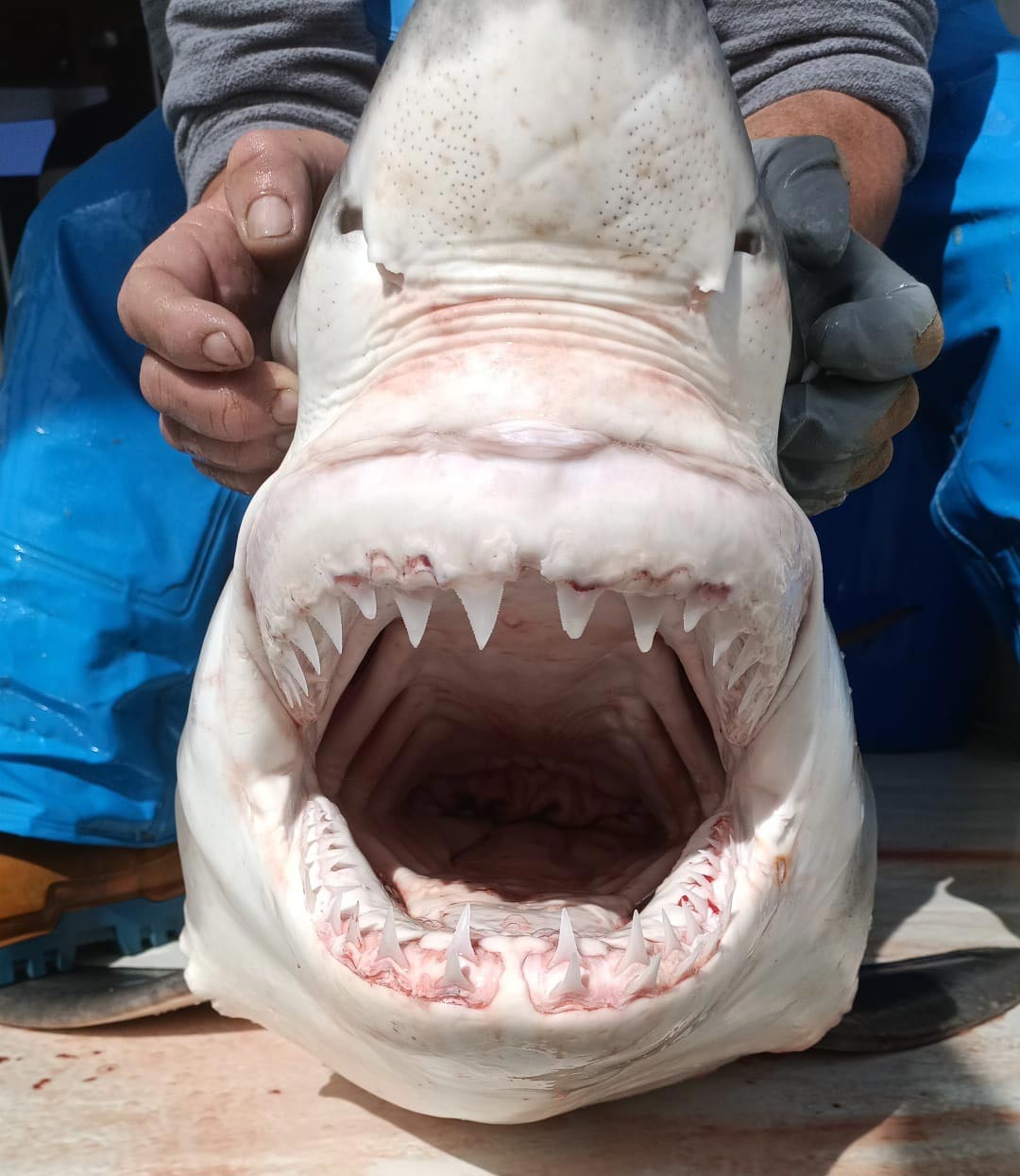
On April 20, 2023, local fishermen operating off the eastern peninsula unexpectedly caught a juvenile great white shark (Carcharodon carcharias). The animal measured about 210 cm in length and weighed between 80 and 90 kg. Encounters like this are rare in the region, and the incident prompted scientists to take a closer look at the historical record.
Researchers reviewed documented sightings and captures dating back to 1862, assembling a comprehensive analysis that has now been published in the open-access journal Acta Ichthyologica et Piscatoria.
By placing this single event within more than 160 years of data, the team found that great white sharks in the Mediterranean represent what scientists often describe as a “ghost” population. They are seldom seen, yet the evidence shows they have not disappeared.
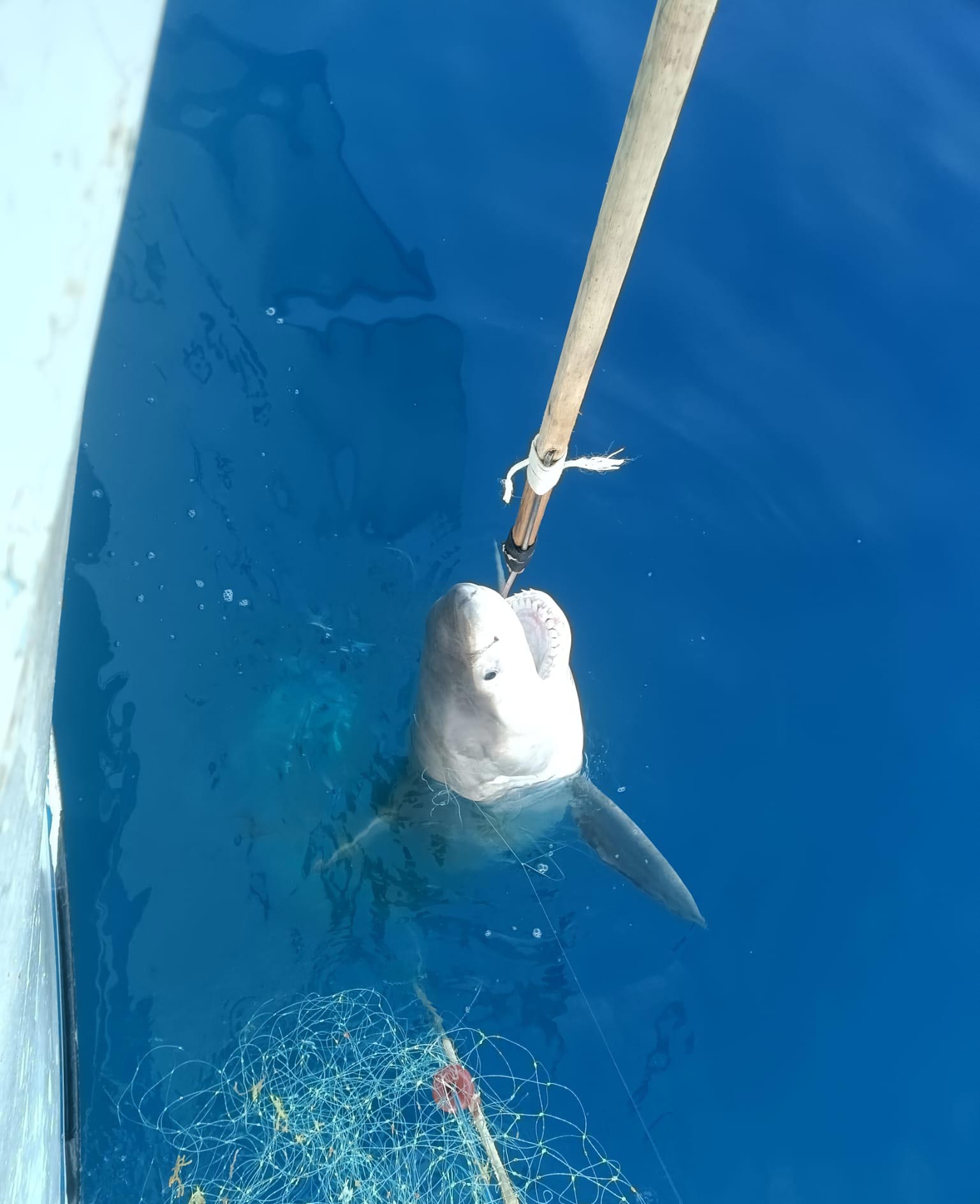
Records confirm an ongoing, though irregular, presence in these waters. Despite this persistence, the species remains listed as Vulnerable on the IUCN Red List, and global population trends continue to decline.
“Determining the presence of juvenile individuals is of particular importance,” says Dr. José Carlos Báez, the study’s lead researcher. “The occurrence of juvenile specimens raises the question whether active reproduction may be occurring in the region.” If young sharks are present, it could suggest that the Mediterranean is more than just a transit zone and may support at least some level of breeding activity.
Video of the accidentally caught great white shark. Credit: Báez et al., 2026
The fear of Great White Sharks
Public perception often complicates discussions about great white sharks. Fear has long shaped the way people respond to large marine predators, especially species associated with rare but highly publicized attacks. Yet the historical record examined in this study shows that sightings in Spanish Mediterranean waters are uncommon and remain exceptional events rather than routine occurrences.
Referencing H.P. Lovecraft’s line that “the oldest and strongest emotion of mankind is fear, and the oldest and strongest kind of fear is fear of the unknown.” Báez argues that better scientific knowledge offers a path forward. “By shedding light on the biology and ecology of the great white shark, research can help replace unfounded myths with genuine understanding.” In other words, careful documentation and long-term study may do more to reduce anxiety than speculation ever could.
Dismantling the Stigma, One Myth at a Time
With great white shark populations in decline, researchers emphasize that long-term observation programs are vital to understanding the species’ biology in the Mediterranean. By pairing direct sightings with advanced tracking methods, evidence-based strategies can be developed for the conservation of this iconic apex predator.
“The main idea I want to convey to the public is that these large marine animals have a fundamental role in marine ecosystems. As highly migratory pelagic species, they redistribute energy and nutrients across vast distances. They serve as nature’s scavengers – by consuming carrion, they keep ecosystems clean. Even in death, their descent to the seafloor provides a critical pulse of nourishment for deep-sea communities,” concludes Báez.
Reference: “New record of white shark, Carcharodon carcharias (Elasmobranchii, Lamniformes, Lamnidae), from the Mediterranean Spanish coast” by José Carlos Báez, Miguel A. Puerto, Davinia Torreblanca, José L. Varela, Leila Carmona and David Macías, 27 January 2026, Acta Ichthyologica et Piscatoria.
DOI: 10.3897/aiep.56.173786
This study was partially supported by the Spanish research project DINAMO (PID2021-128169OB-100), funded by the Spanish Ministry of Science and Innovation (MICINN). This research was also partially supported financially by the project “Plan Complementario de I+D+i en el área de Biodiversidad (PCBIO),” funded by the European Union within the framework of the Recovery, Transformation and Resilience Plan—NextGenerationEU, by the Spanish Ministry of Science, Innovation and Universities, and by the Regional Government of Andalucía through subproject ALMA.
Never miss a breakthrough: Join the SciTechDaily newsletter.
Follow us on Google and Google News.
26 Comments
I said this would happen!
You don’t have to be a rocket scientist to figure out that with all the deaths from all the asylum seekers drowning in the Mediterranean trying to reach Spain or Greecs or even the Canary Islands, it was a foregone conclusion sharks would be attracted to the area with the abundance of food foe the taking!
And that’s with the drowning we do know about!
What about the ones we don’t know that are happening, probrably daily?
Sharks can pick up scent of food from miles away!
And they won’t differentiate between asylum seekers and holidaymakers!
Stick to your day job Simon.
Mark you are such a dill
Didn’t think of that
Mark, maybe YOU should stick to yours IF you have one and don’t live in mommy’s basement.
Said this would happen? To who? No one knows you or hears you Simon. Sorry buddy, as someone else said, stick to your regular occupation!
Sharks do not like human flesh that much… But I guess in tough times, they will not hesitate 😆🍪😝
Caught “accidentally?” Yeah right! Total bullshit. Humans murder every species on earth. Leave these animals alone. Ridiculous. No fingers studies need to be done. This is where THEY live. Humans encroach upon their homes. Stupid stupid subhuman necrovores.
My sentiments exactly Teresa. Amen to that!
When there were shoals of Tuna in the Med, Great Whites were fairly common. A large specimen was caught off Malta in the 1980s. The death of a British sailor was attributed to a Great White in Valetta harbour in the 50s.
Was this latest one returned to the water or was it killed?
Text was changed. I said no f*cking studies need to be done. But hey that’s where these researchers get their money,.
Killed, clearly, sharks cannot live outside of water or without constantly moving, so that water continuously moves through the gills to provide oxygen to the shark…..the little photo op on the deck where the Fisherman is pulling up the nose to expose the teeth, the shark most certainly dead, that pic sure was important, horrible thing to do!!!!!
This is disgusting and certainly no “accident” they caught then killed a juvenile GW, just deplorable, they could have just as easily unhooked it and let go, this was a senseless act of cruelty…….to then include the death in an article discussing their declining numbers is diabolical…….maddening, they should definitely have been punished
Horrible to write about the death of a juvenile great white at the hands of unecessary crazy fisherman in spain so casually. Shame
Where does it state the shark was killed? They also mentioned several times how important they were to ecosystems.
Arthur seriously?!?! The picture of the shark on the deck of the boat shows the shark is dead…….yes funny that and of course they are very important to the ecosystem, that’s why this article makes no sense, to show the death of the shark while discussing their declining numbers is diabolical
Honestly Simon
What next oh no they’ve run out of beans in sainsburys ….it must be all the asylum seekers in boats fault
My sentiments exactly Teresa. Amen to that!
Absolutely agree 💯%, especially while extolling about their declining numbers…… Sure seems counter intuitive to kill any shark while pretending to be concerned about possible extinction!!!!! So disgusting, they should have been fined at the least….. This made me very angry
Stupid people,great whites are in danger in all our oceans.they could have put it back.warming weather and temperate ocean climates,not surprised there in the mediterrenean,only a matter of time.i hope there numbers increase.sharks are more than just soup you know
Exactly!!!!!! Horrible thing to do!!!!!! They had every opportunity to unhook the shark but rather chose to kill it
I believe this is a little megladon.
They didn’t return it to the ocean after the “accidental” capture??? ☹️ This was a life not just a fascinating research statistic.
It is unbelievable that this article refers to Great Whites as being a rare find in the Med in 2926, when it was a known fact back in the 70s that the region appeared to be a nursery area for the species.
There was an understanding that these sharks were previously resident there due to an original presence of Monk Seals and Tuna shoals as prey.
The seals had gradually declined to extinction by human hunting and the Tuna by overfishing. But the sharks seemed to have stayed in place for breeding purposes, while the Tuna have begun to return as a result of conservation measures.
Remnants of juvenile sharks could be seen on display in local fish markets, such as on the island of Malta.
It is rather weird that current science papers treat this topic as discovery, when simple conversations with local fishermen, or finding the right book in a public library would have revealed this common knowledge with little effort!
Swimming offshore around Malta often revealed shadows in the blue depths that encouraged cautious observation!
Shark attacks in the Med by great whites would not leave body parts. These sharks eat tuna in the Mediterranean which are not too much different from humans. White sharks in California or South Africa eat seals which are much more fatty and to their taste so attacks on humans are likely to be spat out again. Even the most portly human is too bony and not fatty enough for them
Great White sharks dont eat humans intentionally, not even dead ones. Humans dont contain enough calories to maintain Great Whites nutritional needs. Too many bones and guts, not enough fat and human fat is low in nutrition. Great Whites eat seals. Higher meat to bone ratio and nutritious fat. Its a myth that Great Whites eat dead people or allegedly dead slaves. Sharks aren’t stupid and do not eat anything. Accidental bites occur and are often fatal. Dead humans would be eaten by smaller fish and by seabirds. Tiger, Bull, white tip or perhaps Blue sharks maybe, but not Great Whites.