
Close Menu
    Facebook X (Twitter) Instagram
    SciTechDaily
    • Biology
    • Chemistry
    • Earth
    • Health
    • Physics
    • Science
    • Space
    • Technology
    Facebook X (Twitter) Pinterest YouTube RSS
    SciTechDaily
    Home»Science»Graphene Turned Magnetic by University of Manchester Researchers
    Science

    Graphene Turned Magnetic by University of Manchester Researchers

    By University of ManchesterJanuary 9, 2012No Comments2 Mins Read
    Facebook Twitter Pinterest Telegram LinkedIn WhatsApp Email Reddit
    Share
    Facebook Twitter LinkedIn Pinterest Telegram Email Reddit
    Graphene Turned Magnetic by University of Manchester Researchers
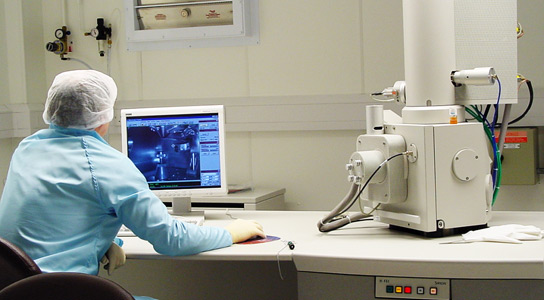
    Dr. Irina Grigorieva uses a microscope to look at prepared graphene devices.

    Incredibly thin and strong, graphene—a one atom think densely packed honeycomb crystal lattice of carbon atoms—has many fascinating properties. Now scientists at The University of Manchester have turned graphene magnetic by inserting defects into the lattice structure.

    Can organic matter behave like a fridge magnet? Scientists from The University of Manchester have now shown that it can. In a report published in Nature Physics, they used graphene, the world’s thinnest and strongest material, and made it magnetic.

    Graphene is a sheet of carbon atoms arranged in a chicken wire structure. In its pristine state, it exhibits no signs of the conventional magnetism usually associated with such materials as iron or nickel.

    Demonstrating its remarkable properties won Manchester researchers the Nobel Prize in Physics in 2010.

    This latest research led by Dr. Irina Grigorieva and Professor Sir Andre Geim (one of the Nobel prize recipients) could prove crucial to the future of graphene in electronics.

    The Manchester researchers took nonmagnetic graphene and then either ‘peppered’ it with other nonmagnetic atoms like fluorine or removed some carbon atoms from the chicken wire. The empty spaces, called vacancies, and added atoms all turned out to be magnetic, exactly like atoms of, for example, iron.

    “It is like minus multiplied by minus gives you plus,” says Dr. Irina Grigorieva.
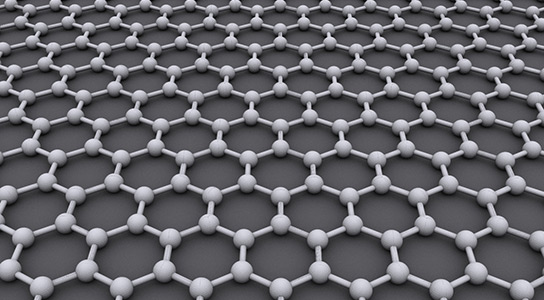
    Graphene
    Graphene is an atomic-scale honeycomb lattice made of carbon atoms.

    The researchers found that, to behave as magnetic atoms, defects must be far away from each other and their concentration should be low. If many defects are added to graphene, they reside too close and cancel each other’s magnetism. In the case of vacancies, their high concentration makes graphene disintegrate.

    Professor Geim said: “The observed magnetism is tiny, and even the most magnetized graphene samples would not stick to your fridge.

    “However, it is important to reach clarity in what is possible for graphene and what is not. The area of magnetism in nonmagnetic materials has previously had many false positives.”

    “The most likely use of the found phenomenon is in spintronics. Spintronics devices are pervasive, most notably they can be found in computers’ hard disks. They function due to coupling of magnetism and electric current.

    “Adding this new degree of functionality can prove important for potential applications of graphene in electronics,” adds Dr. Grigorieva.

    Never miss a breakthrough: Join the SciTechDaily newsletter.
    Follow us on Google and Google News.

    Graphene Magnetic Popular University of Manchester
    Share. Facebook Twitter Pinterest LinkedIn Email Reddit

    Related Articles

    Electrons Flowing Like Liquid in Graphene

    Graphene Oxide Layers Deform Evenly Under Gentle Strain

    Pillared Graphene Structures Gain Strength, Toughness and Ductility

    Researchers Control Light Emission by Pairing Exotic 2D Materials

    Experimental Evidence Shows New Boron Nanomaterial is Possible

    Graphene “Sandwich” Protects Microscopic Materials from Radiation

    Researchers Control Magnetic Clouds in Graphene, Switch Magnetism On and Off

    Combining Graphene and TMDC Could Lead to the Next Generation of Solar Cells

    Defects in Graphene Will Reduce its Strength

    Leave A Reply Cancel Reply

    • Facebook
    • Twitter
    • Pinterest
    • YouTube

    Don't Miss a Discovery

    Subscribe for the Latest in Science & Tech!

    Trending News

    The Universe Is Expanding Too Fast and Scientists Can’t Explain Why

    “Like Liquid Metal”: Scientists Create Strange Shape-Shifting Material

    Early Warning Signals of Esophageal Cancer May Be Hiding in Plain Sight

    Common Blood Pressure Drug Shows Surprising Power Against Deadly Antibiotic-Resistant Superbug

    Scientists Uncover Dangerous Connection Between Serotonin and Heart Valve Disease

    Scientists Discover a “Protector” Protein That Could Help Reverse Hair Loss

    Bone-Strengthening Discovery Could Reverse Osteoporosis

    Scientists Uncover Hidden Trigger Behind Stem Cell Aging

    Follow SciTechDaily
    • Facebook
    • Twitter
    • YouTube
    • Pinterest
    • Newsletter
    • RSS
    SciTech News
    • Biology News
    • Chemistry News
    • Earth News
    • Health News
    • Physics News
    • Science News
    • Space News
    • Technology News
    Recent Posts
    • A Common Diabetes Drug May Hold the Key to Stopping HIV From Coming Back
    • Ancient “Syphilis-Like” Disease in Vietnam Challenges Key Scientific Assumptions
    • Drinking Alcohol To Cope in Your 20s Could Damage Your Brain for Life
    • Scientists Crack Alfalfa’s Chromosome Mystery After Decades of Debate
    • Ancient Ant-Plant Alliance Collapses As Predatory Wasps Move In
    Copyright © 1998 - 2026 SciTechDaily. All Rights Reserved.
    • Science News
    • About
    • Contact
    • Editorial Board
    • Privacy Policy
    • Terms of Use

    Type above and press Enter to search. Press Esc to cancel.