

A bold new quantum theory of gravity may finally bridge the long-standing rift between Einstein’s general relativity and quantum field theory.
This potential “Theory of Everything” could answer some of the deepest mysteries in science—from black hole singularities to the origins of the universe—while inviting the global scientific community to contribute to the final proof.
A Long-Sought Breakthrough in Unifying Physics
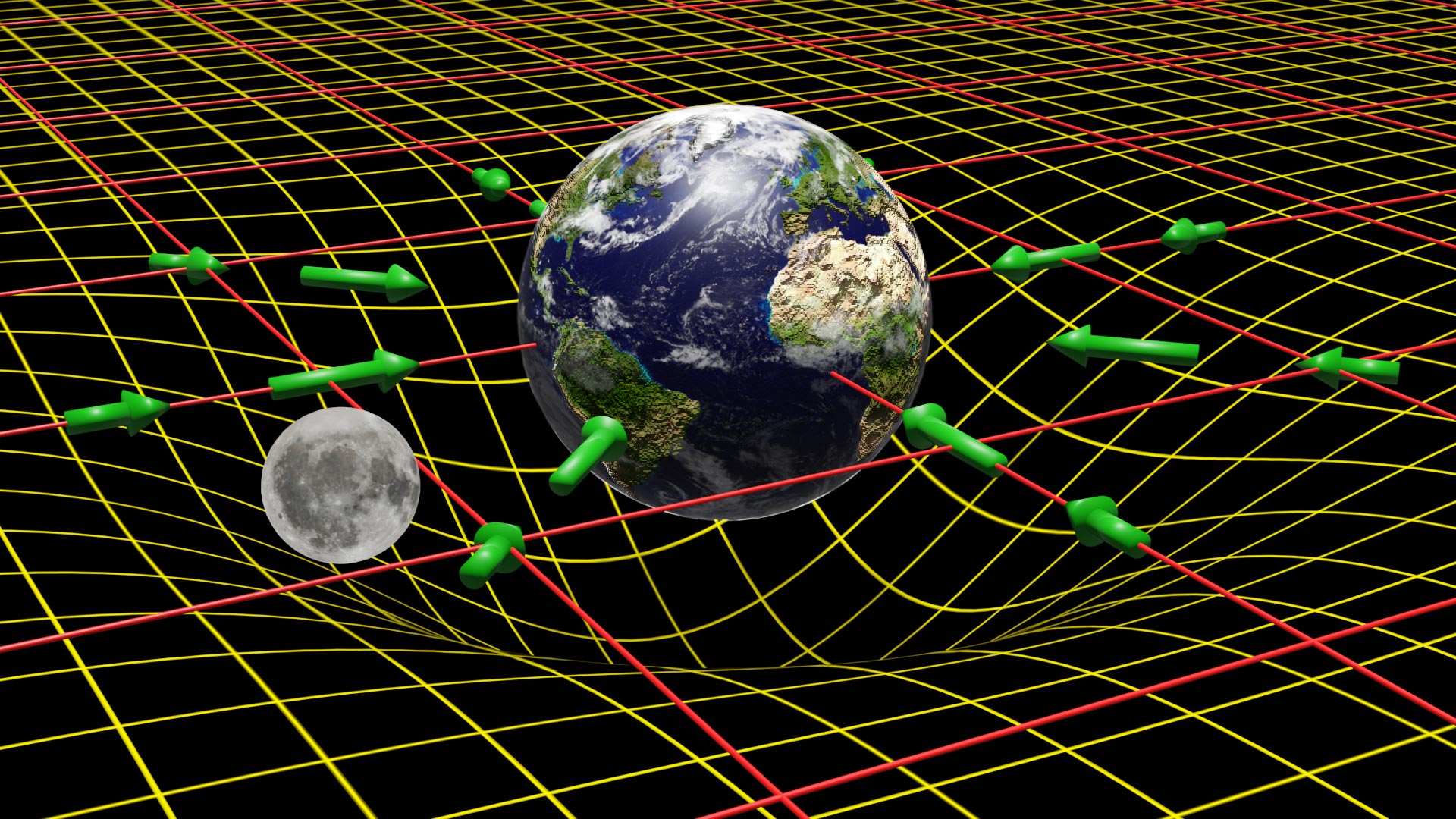
After decades of searching, scientists may finally be closing in on one of the biggest mysteries in physics: how to unite gravity with the other fundamental forces of nature. For generations, physicists have struggled to reconcile two powerful yet incompatible theories—Einstein’s theory of gravity and quantum mechanics. Now, a major breakthrough from researchers in Finland could bring us one step closer to a long-sought “Theory of Everything.”
Physicists at Aalto University have developed a brand-new quantum theory of gravity that plays nicely with the Standard Model—the framework that describes all known particles and forces, except gravity. Their work could help scientists better understand cosmic puzzles like how the universe began or what really happens inside black holes. It might sound like deep theory, but advances like this often lead to real-world tech—after all, your phone’s GPS system wouldn’t work without Einstein’s theory of gravity.
New Paper Could Unlock Big Bang Mysteries
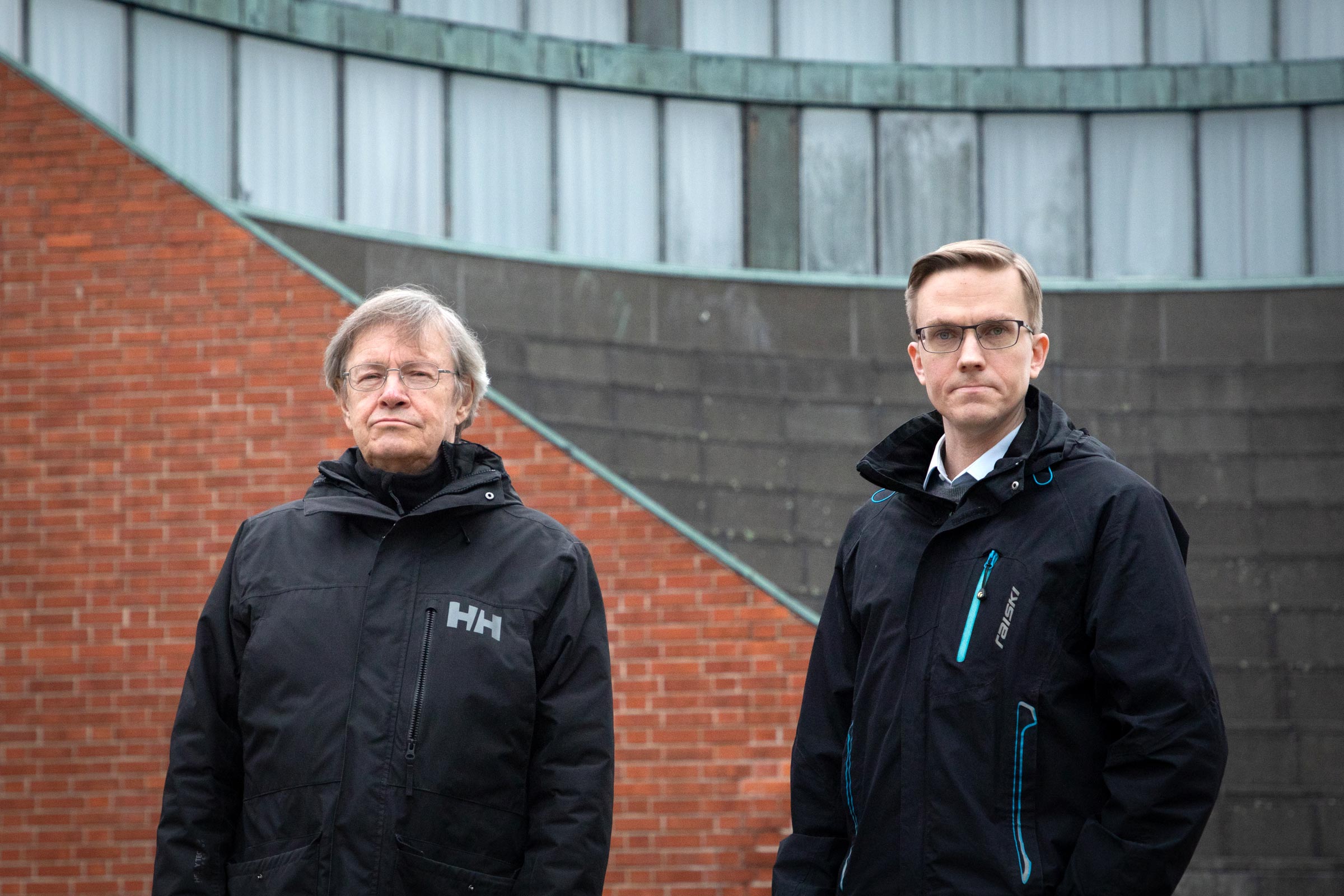
In a newly published paper in Reports on Progress in Physics, researchers Mikko Partanen and Jukka Tulkki lay out their groundbreaking theory. And the implications could be huge.
“If this turns out to lead to a complete quantum field theory of gravity, then eventually it will give answers to the very difficult problems of understanding singularities in black holes and the Big Bang,” he says.
“A theory that coherently describes all fundamental forces of nature is often called the Theory of Everything,” says Partanen, although he doesn’t like to use the term himself. “Some fundamental questions of physics still remain unanswered. For example, the present theories do not yet explain why there is more matter than antimatter in the observable universe.”
Cracking the Gravity Gauge Theory Puzzle
The key was finding a way to describe gravity in a suitable gauge theory — a kind of theory in which particles interact with each other through a field. “The most familiar gauge field is the electromagnetic field. When electrically charged particles interact with each other, they interact through the electromagnetic field, which is the pertinent gauge field,” explains Tulkki. “So when we have particles which have energy, the interactions they have just because they have energy would happen through the gravitational field.”
A challenge long facing physicists is finding a gauge theory of gravity that is compatible with the gauge theories of the other three fundamental forces — the electromagnetic force, the weak nuclear force and the strong nuclear force. The Standard Model of particle physics is a gauge theory that describes those three forces, and it has certain symmetries. “The main idea is to have a gravity gauge theory with a symmetry that is similar to the Standard Model symmetries, instead of basing the theory on the very different kind of spacetime symmetry of general relativity,” says Partanen, the study’s lead author.
Where Relativity and Quantum Theory Clash
Without such a theory, physicists cannot reconcile our two most powerful theories, quantum field theory and general relativity. Quantum theory describes the world of the very small—tiny particles interacting in probabilistic ways—while general relativity describes the chunkier world of familiar objects and their gravitational interaction. They are descriptions of our universe from different perspectives, and both theories have been confirmed to extraordinary precision—yet they are incompatible with each other. Furthermore, because gravitational interactions are weak, more precision is needed to study true quantum gravity effects beyond general relativity, which is a classical theory.
“A quantum theory of gravity is needed to understand what kind of phenomena there are in cases where there’s a gravitational field and high energies,” says Partanen. Those are the conditions around black holes and in the very early universe, just after the Big Bang—areas where existing theories in physics stop working.
Always fascinated with the very big questions of physics, he discovered a new symmetry-based approach to the theory of gravity and began to develop the idea further with Tulkki. The resulting work has great potential to unlock a whole new era of scientific understanding, in much the same way as understanding gravity paved the way to eventually creating GPS.
Open Invitation to the Scientific Community
Although the theory is promising, the duo point out that they have not yet completed its proof. The theory uses a technical procedure known as renormalization, a mathematical way of dealing with infinities that show up in the calculations. So far Partanen and Tulkki have shown that this works up to a certain point—for so-called ‘first order’ terms—but they need to make sure the infinities can be eliminated throughout the entire calculation. “If renormalization doesn’t work for higher order terms, you’ll get infinite results. So it’s vital to show that this renormalization continues to work,” explains Tulkki. “We still have to make a complete proof, but we believe it’s very likely we’ll succeed.”
Partanen concurs. There are still challenges ahead, he says, but with time and effort he expects they’ll be overcome. “I can’t say when, but I can say we’ll know much more about that in a few years.”
For now, they’ve published the theory as it stands, so that the rest of the scientific community can become familiar with it, check its results, help develop it further, and build on it.
Hope for a New Era of Discovery
“Like quantum mechanics and the theory of relativity before it, we hope our theory will open countless avenues for scientists to explore,” Partanen concludes.
Reference: “Gravity generated by four one-dimensional unitary gauge symmetries and the Standard Model” by Mikko Partanen and Jukka Tulkki, 2 May 2025, Reports on Progress in Physics.
DOI: 10.1088/1361-6633/adc82e
Never miss a breakthrough: Join the SciTechDaily newsletter.
Follow us on Google and Google News.
14 Comments
Just a thought , how about the theory of everything’s causality , (example process ) emergent – divergent- causality- divergent -declining , point of remergent ( change in value ) reprocessing of emergent process . Everything goes through the process multiple times at different rates , depending on what has the influential state of matter . ( example ) a plants process verse’s a rocks process of emergent to decay . a process of change in matters state ( example ) liquid water to gas or the opposite liquid water to ice solid . In the decline each state of matter moves through a separation of the quantum that has a quality imprinted on the changed emergent matter a new or maybe the same causality builds or declines . My theory has so many different combinations I couldn’t begin to show all those processes .
In conjunction to my theory , to calculate the process of everything’s causality theory might be possible with the power of a quantum computer computation with the abilities of a artificial intelligence algorithm .
First, you have no scientific theory, since you haven’t posed it and shown that you can make quantitative predictions of observations.
Second, causality is conserved by special relativity, which all these theories obey. As long as they are separate theories – and the unified “theory of everything” sense is no longer seen as likely – there is no causality problem.
Third, you seem to present stream-of-consciousness comments that are mostly unreadable for others.
So, you HAVE read my paper. See you later.
Here’s a hint: you see all those intersecting lines your art department displays – the same lines all these scientists think in because that’s what they were taught? They don’t exist – at all.
The nature of ‘things’ is entirely different than the things any of us have ever been imagining – unless you start imagining new concepts.
If you’re not thinking outside the box (the box we all are lead to believe we should be thinking in), you’re wrong. You will be wrong because the box is wrong. ok?
That’s just contrarianism, not science.
Science is observably correct, regardless of other fields such as e.g. use of perspective in art.
Paper debunked by Sabine Hossenfelder. In short: elementary math errors, mostly with tensor notation.
SH has not reviewed this paper yet…you are thinking of a paper written by the Finnish Minister of Finance, not Aalto University. This paper is much more scholarly, however not without controversy. The authors propose unifying gravity with the standard model by considering additional fields and gauge groups while promoting perturbative renormalizability (though only demonstrated mathematically at 1-loop corrections) . No new predictions, and not easily testable. SH should review it on her channel and make her own comments.
Sabine Hossenfelder may have started out as a physicist but as a popular science communicator she is now considered a problem. It started with her unwarranted, vitriolic attacks on modern theoretical science – at which point I stopped taking notice – and has now accelerated as far as I understand her popular science communicator critics:
“Sabine Hossenfelder is a very popular science communicator who focuses largely on topics in physics. Although much of her content is effective and without issue, there is an undercurrent of anti-establishment rhetoric that has grown immensely as of late, and it is an enormous problem. Sabine is a not a charlatan like most of my other targets, and this is not a hit piece, but rather commentary on this aspect of her work and how it came to be. If you are a fan of hers, consider this perspective.” – ProfessorDaveExplains @ youtube: “The Problem With Sabine Hossenfelder”
Re the paper I agree, but my own response upped the ante: They did not reproduce Einstein’s field equations. It is hard to tell how much it relates to general relativity.
At long last nearly ready to assemble a new device to perform and record a new and, hopefully, irrefutable video demonstration of the true nature of gravity (e.g., radiant pulsing angular lines of attractive force; https://odysee.com/@charlesgshaver:d/1Gravity:8 [one of three]), I still stand by the validity of my earlier efforts. I hope to upload a convincing video of the new effort to the same video channel within two weeks.
If you have no peer reviewed science to present, please do not put up links and unsupportable claims. It retracts from the value of a science news media channel like SciTechDaily.
Professor Larsson, I don’t like to rain on anyone else’s parade but my model of gravity is a personal discovery from 2009 (first reproducible experiment video in 2012) and to the best of my knowledge I still have no “peers.” Furthermore, there is no need to “…reconcile our two most powerful theories, quantum field theory and general relativity.” because my model of gravity is consistent from the micro to the macro. I don’t know exactly what took me so long to devise this new experiment, to circumvent all of the preexisting labels pertaining to rotating wheels (e.g., gyroscopic effect, minimally) but like with my first experiments in 2012 it finally occurred to me with ongoing musings. As of yesterday, I performed a few motorized tests and found my new proof to be valid. Today, I plan to make a few brief videos of those same tests so I can check the orientation of markings on my wheels, frame by frame, to be certain they are moving as they appear to be, faster than my eye can catch. If/when I upload a new video to the same video channel as my others, I plan to include a more detailed description (e.g., Hypothesis; major premise; minor premise; results). I’d be pleased to work with you and your peers, online, in the future if so desired. First, I must prove it for myself.
They don’t derive Einstein’s field equations, all that they do is set standard particle masses equal to general relativistic mass energy masses.
“Without such a theory, physicists cannot reconcile our two most powerful theories, quantum field theory and general relativity.”
Their own references include such a theory: “Quantum gravity as a low energy effective field theory”, John F Donoghue (2017), Scholarpedia, 12(4):32997. In fact, general relativity and quantum field theory are both effective theories against the Planck energy scale, where they simultaneously stop being applicable. With the successful quantization of gravity by e.g. Donoghue, the two relativistic and effective theories are in principle reconciled.
“If renormalization doesn’t work for higher order terms, you’ll get infinite results.”
As far as I understand field physicists have discovered that non-renormalization – which the quote hints at – is not absolute but that such theories can still yield a finite number of parameters that need to be measured for making predictions. [“Renormalization”, Wikipedia.]
That happens in Donoghue’s theory. “The perturbative treatment of quantum General Relativity behaves as an effective field theory, and well defined quantum corrections can be calculated.”