
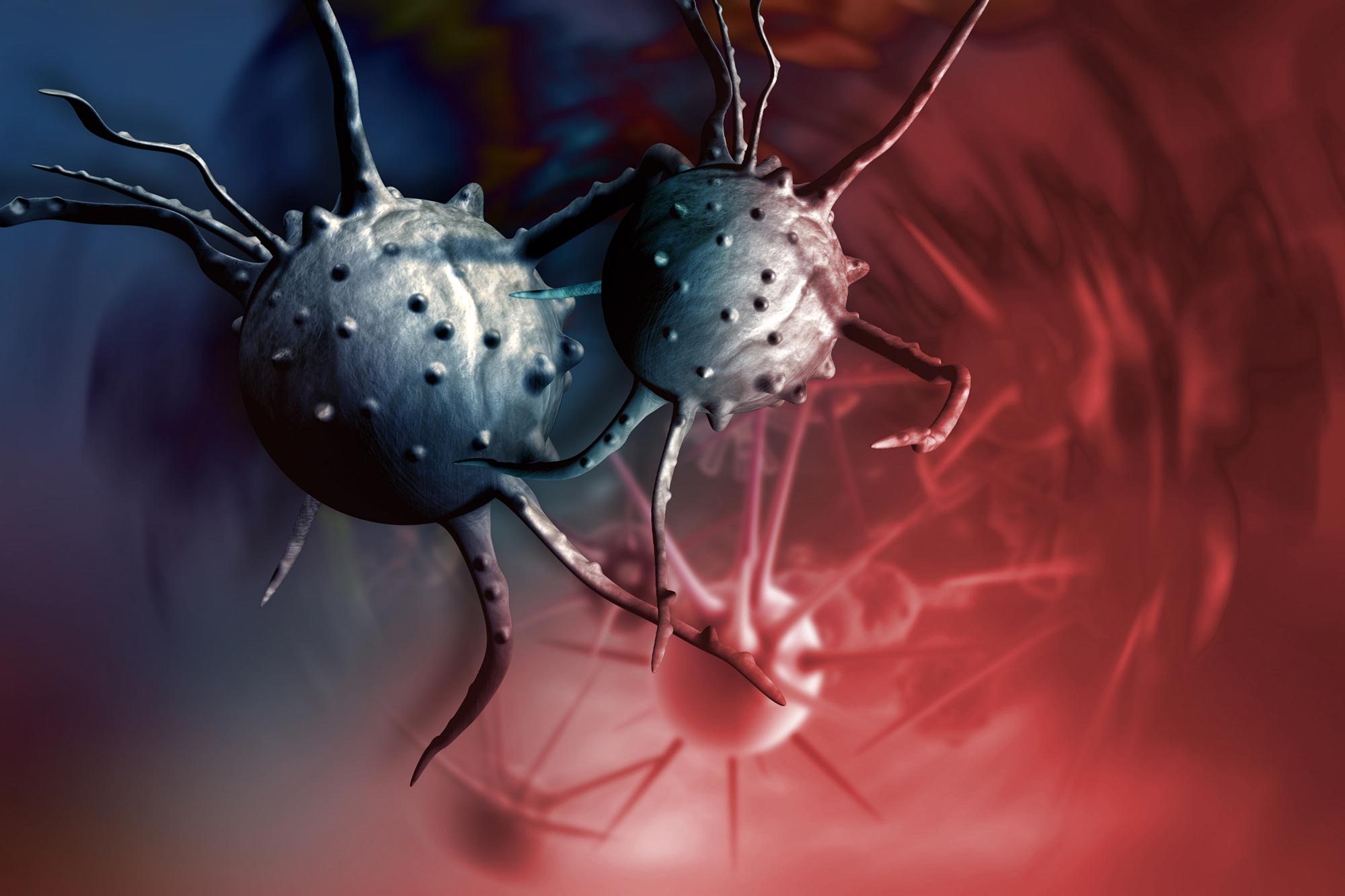
Through a highly collaborative research effort led by the laboratory of Saïd Sebti, Ph.D., at the VCU Massey Comprehensive Cancer Center, a team of scientists has successfully developed a groundbreaking targeted therapy that hones in on the KRAS protein that drives some of the deadliest human cancers, including pancreatic, lung and colon tumors.
Their findings —published in Cancer Research Communications — suggest that a novel inhibitor drug could be used to target KRAS G12D, a subset of the notorious cancer-driving KRAS gene. This research involved the combined efforts of scientists from multiple esteemed cancer centers, including three National Cancer Institute-designated cancer centers (Moffitt Cancer Center, Montefiore Einstein Comprehensive Cancer Center, University of Florida Health Cancer Center) and the Cancer Center at Illinois.
Collaborative Efforts and Research Advancements
“This discovery is a major step forward in our battle against some of the most aggressive forms of cancer,” said Sebti, the associate director for basic research and the Lacy Family Chair in Cancer Research at Massey. “Our collaborative effort signifies a leap forward in the development of targeted therapies against KRAS-driven cancers such as pancreatic cancer.”
For this particular study, Sebti’s team screened a library of compounds in partnership with the Cancer Center at Illinois to identify drugs that attach themselves to KRAS and thwart it, preventing it from causing cancer. The most potent drug they identified through this process, KRAS Binder-456 (KRB-456), was then evaluated by Sebti and his team to understand its biological mechanism of action. They demonstrated that KRB-456 significantly inhibits the growth in mice of mutant KRAS-addicted tumors derived from pancreatic cancer patients who had not responded to, or relapsed following, traditional chemotherapy or radiation therapy.
Future Research Directions
Sebti said further investigation is planned to test this drug in combination with standard-of-care therapeutic options to explore its potential as an effective supplement to cancer treatment, or to possibly inform the development of a more potent or selective drug against KRAS G12D-driven tumors.
“For every researcher in the field of oncology, the ultimate aspiration is to make a tangible difference in the lives of cancer patients. As we progress toward this goal, the excitement mounts, knowing that our work could directly impact those battling this devastating disease,” said Sebti, who is also a professor in the Department of Pharmacology and Toxicology at the VCU School of Medicine. “KRAS used to be called the ‘undruggable target.’ But we and others have now shown that it is druggable. We’re hoping that our continued work will lead to the development of effective drugs for KRAS G12D-driven cancers.”
Implications for Cancer Treatment
More than 90% of pancreatic cancers, about 35% of colon tumors, and roughly one-quarter of lung tumors have a mutant KRAS gene, Sebti said.
“It’s about targeting the mutation, not necessarily the disease,” Sebti said. “We anticipate that our findings will help identify a therapeutic option that would also work for lung and colon tumors that also have this specific KRAS G12D mutation.”
This builds on nearly a decade’s worth of research led by Sebti at different cancer centers investigating the KRAS gene’s involvement in cancer development.
Sebti’s laboratory at Massey, one of only two NCI-designated cancer centers in Virginia, is dedicated to research in cancer biology and therapeutic interventions. Through innovative collaborations and cutting-edge technology, the lab strives to unravel the complexities of cancer and develop novel strategies for effective treatment of the disease.
Reference: “Discovery of KRB-456, a KRAS G12D Switch-I/II Allosteric Pocket Binder That Inhibits the Growth of Pancreatic Cancer Patient-derived Tumors” by Aslamuzzaman Kazi, Alok Ranjan, Vasantha Kumar M.V., Bogos Agianian, Martin Garcia Chavez, Vignesh Vudatha, Rui Wang, Rajanikanth Vangipurapu, Liwei Chen, Perry Kennedy, Karthikeyan Subramanian, Jonathan C.K. Quirke, Francisca Beato, Patrick W. Underwood, Jason B. Fleming, Jose Trevino, Paul J. Hergenrother, Evripidis Gavathiotis and Said M. Sebti, 28 December 2023, Cancer Research Communications.
DOI: 10.1158/2767-9764.CRC-23-0222
Collaborators on this study include Aslamuzzaman Kazi, Ph.D., Alok Ranjan, Karthikeyan Subramanian, Vignesh Vudatha, M.D., and Rui Wang, Ph.D., of Massey and the VCU School of Medicine; Jose Trevino, M.D., surgeon-in-chief at Massey and formerly of the University of Florida; Evripidis Gavathiotis, Ph.D., Bogos Agianian, Ph.D., and Vasantha Kumar M.V. of the Albert Einstein College of Medicine; Paul J. Hergenrother, Ph.D, Martin Garcia Chavez, Ph.D., and Jonathan C.K. Quirke of the University of Illinois Urbana-Champaign; Francisca Beato, Liwei Chen Ph.D., Jason Fleming, M.D., Perry Kennedy, Ph.D., and Rajanikanth Vangipurapu, Ph.D., of Moffitt Cancer Center; and Patrick Underwood of the University of Florida.
The study was funded by the National Institutes of Health.
Never miss a breakthrough: Join the SciTechDaily newsletter.
Follow us on Google and Google News.