
A new study reveals that early human migrations from New Guinea significantly shaped Wallacean societies over the past 3,500 years through genetic and linguistic exchanges.
A new study by the University of Adelaide and The Australian National University (ANU) provides the first genomic evidence of early human migration from New Guinea into Wallacea—an archipelago that includes Timor-Leste and hundreds of inhabited islands in eastern Indonesia.
Published in PNAS, the study fills significant gaps in the genetic history of the Wallacean Archipelago and the West Papuan regions of Indonesia. This region, known for its rich genetic and linguistic diversity comparable to that of the Eurasian continent, was analyzed through 254 newly sequenced genomes.
Genetic and Cultural Transformation of Wallacean Societies
In combination with linguistic and archaeological evidence, the study shows that Wallacean societies were transformed by the spread of genes and languages from West Papua in the past 3,500 years – the same period that Austronesian seafarers were actively mixing with Wallacean and Papuan groups.
“My colleagues at the Indonesian Genome Diversity Project have been studying Indonesia’s complex genetic structure for more than a decade, but this comprehensive study provides confirmation that Papuan ancestry is widespread across Wallacea, pointing to historical migrations from New Guinea,” says lead author Dr Gludhug Ariyo Purnomo, from the University of Adelaide’s School of Biological Sciences.
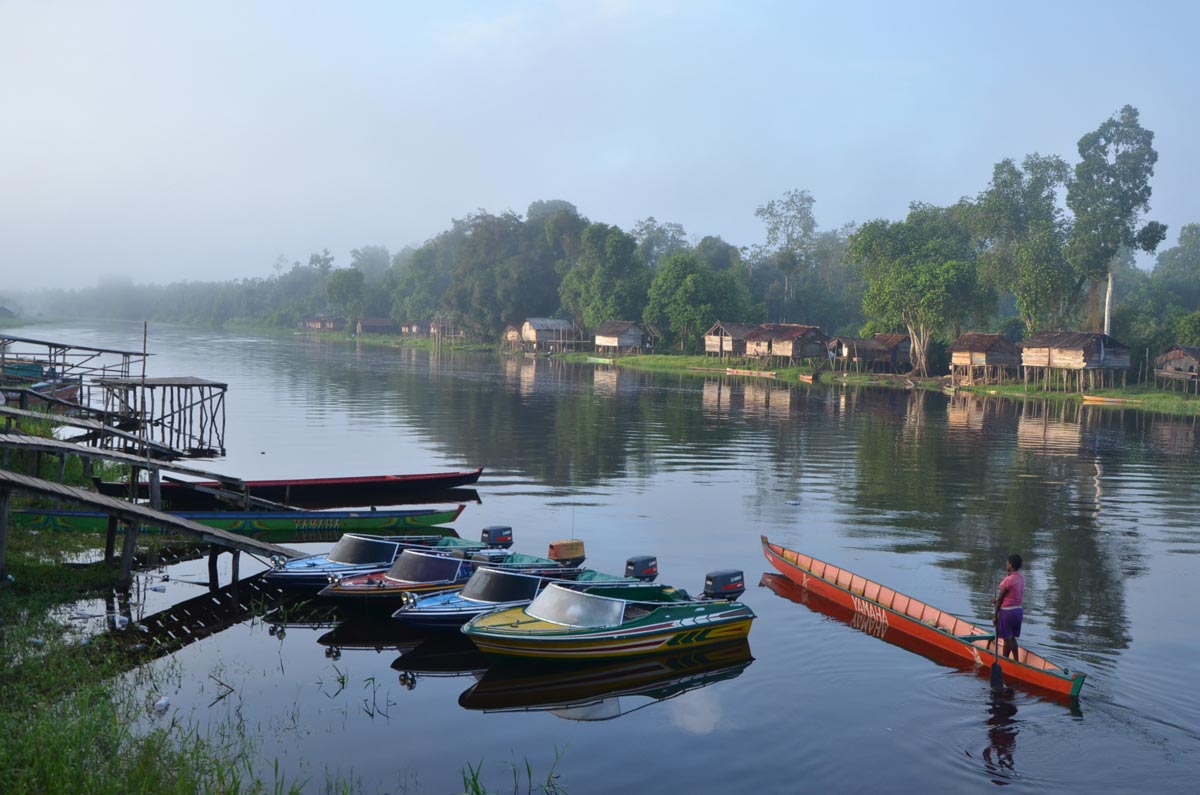
“By connecting the dots between genetics, linguistics, and archaeology, we now recognise West Papua as an important bio-cultural hub and the launching place of historical Papuan seafarers that now contribute up to 60% of modern Wallacean ancestry.”
Genomic research is also becoming increasingly important for developing new medicines tailored to specific genetic backgrounds.
“In the era of precision medicine, understanding the genetic structure of human groups is vital for developing treatments that are helpful rather than harmful, with Wallacea and New Guinea having been poorly represented in past genomic surveys,” Dr Purnomo says.
Complex Ancestry and Cultural Integration
Associate Professor Ray Tobler, from ANU, says Wallacea had been isolated for more than 45,000 years since the arrival of the first human groups, and the more recently arriving Papuan and Austronesian migrants reconfigured Wallacean culture by introducing new languages that diversified and intermingled to create its rich linguistic landscape.
“Our findings suggest that the Papuan and Austronesian migrations were so extensive that they have largely overwritten the ancestry of the first migrants, making the recovery of these ancient migrations from genetic data challenging,” says Professor Tobler, who is also an Adjunct Fellow at the University of Adelaide’s Australian Centre for Ancient DNA.
According to the researchers, there are challenges in reconstructing past movements of people using modern genetic data due to historical migrations and movements.
“There’s also been so much movement in Wallacea in the past couple of thousand years, due to the spice trade and slavery, that it obscures the relationship between geography and genetics,” Associate Professor Tobler says.
“What we know about Wallacea and New Guinea is just the tip of the iceberg, but the use of ancient DNA can help to overcome some of these challenges and help us to understand the origins and legacy of human journeys to the region stretching back tens of thousands of years.”
Reference: “The genetic origins and impacts of historical Papuan migrations into Wallacea” by Gludhug A. Purnomo, Shimona Kealy, Sue O’Connor, Antoinette Schapper, Ben Shaw, Bastien Llamas, Joao C. Teixeira, Herawati Sudoyo and Raymond Tobler, 17 December 2024, Proceedings of the National Academy of Sciences.
DOI: 10.1073/pnas.2412355121
Never miss a breakthrough: Join the SciTechDaily newsletter.
Follow us on Google and Google News.
4 Comments
Hi
Hoi
I’m interrested in knowing human ancestor and how it split to four groups in races and blood, where human races categorical to 4 colour namely yellow which dominant in asia, chinesse as sample, black in africa white in caucasian and reddish in europe while myself is brown as my assumption as the result of mix races above .. that’s my humble oppinion
People come from man king and queen I said you investigate 🔎