
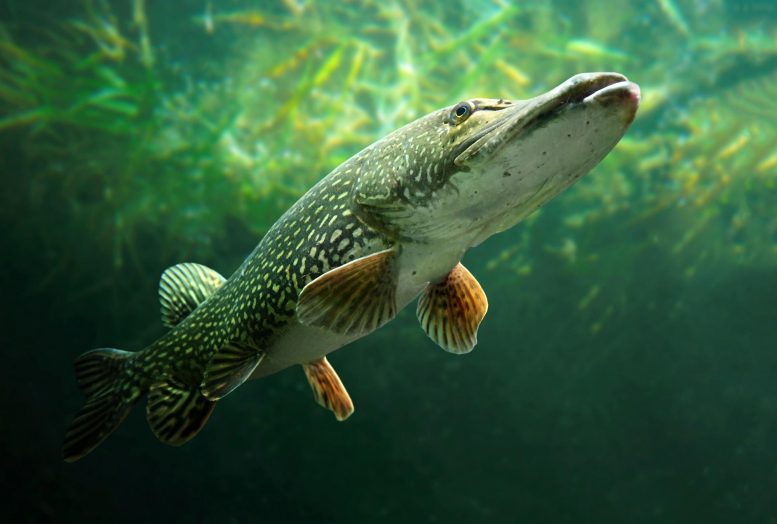
Rising temperatures could endanger many freshwater fish species, particularly in tropical regions. Limiting global warming to 1.5°C is critical to protect aquatic biodiversity.
The habitats of freshwater fish species are threatened by global warming, mainly due to rising water temperatures. A 3.2-degree Celsius (5.8-degree Fahrenheit) increase in global mean temperature would threaten more than half of the habitat for one-third of all freshwater fish species. The number of species at risk is ten times smaller if warming is limited to 1.5 degrees (2.7 degrees Fahrenheit). This is the conclusion of a study led by Radboud University, in collaboration with Utrecht University, PBL Netherlands Environmental Assessment Agency, Leiden University, and others, and published in Nature Communications today (March 15th, 2021).
Many studies have already assessed the potential impacts of climate change on animal and plant species in terrestrial systems. “However, freshwater fish species have been largely ignored, even though they represent approximately a quarter of the global known vertebrate diversity,” says Valerio Barbarossa, lead author of the paper. This is the first study that investigated the potential impact of climate change on approximately 11,500 freshwater fish species around the globe.
Clear differences between global warming scenarios
With a global rise of 3.2 degrees Celsius, a scenario expected if there are no further emission cuts after current governments’ pledges for 2030, over one-third of the freshwater species have more than half of their present-day habitats threatened by extremes in water temperature or streamflow.
If global warming is limited to 2 degrees (3.6 degrees Fahrenheit), 9% of the species would have more than half of their habitat threatened. If warming is limited to 1.5 degrees, the number of species at risk reduces to 4%. “These numbers indicate that limiting global warming really matters for freshwater fish species, just as previous research has shown that it matters for species in terrestrial systems,” says Barbarossa.
Temperature and Flow
The researchers modeled future extremes in water flow and temperature and identified where these may exceed present-day extremes within the habitats of the fish species. “Water temperature and water flow are two key habitat factors for freshwater fish species. Climate change will amplify extremes in flow and temperature, which may reduce the amount of suitable habitat. This, in turn, is an important indicator of extinction risk,” says Aafke Schipper, environmental researcher at Radboud University and PBL and co-author of the study.
The results of the study indicate that changes in water temperature are much more threatening than changes in flow extremes, reflecting that global warming will lead to rising water temperatures nearly everywhere. The findings further show that threats to freshwater fish species are particularly high in tropical waters.
Man-Made Barriers
“The numbers of species at risk represent a worst-case scenario in the sense that we assume that fish will not be able to move to other parts of the watershed or adapt to changed conditions,” continues Barbarossa. “We have also considered a scenario in which species could move freely across the watershed and “escape” altered conditions. In that case, climate change threats would be substantially lower. However, many freshwater systems are fragmented, which impedes fish from moving to more suitable conditions.”
River systems worldwide are characterized by an increasing number of many man-made barriers like dams, weirs, sluices or culverts. These reduce the connectivity of freshwater habitats and limit opportunities for fish to respond to climate change by shifting their ranges. This, in turn, stresses the need to limit global warming, the authors conclude, if we want to safeguard freshwater biodiversity.
Reference: “Threats of global warming to the world’s freshwater fishes” by Valerio Barbarossa, Joyce Bosmans, Niko Wanders, Henry King, Marc F. P. Bierkens, Mark A. J. Huijbregts and Aafke M. Schipper, 15 March 2021, Nature Communications.
DOI: 10.1038/s41467-021-21655-w
Never miss a breakthrough: Join the SciTechDaily newsletter.
Follow us on Google and Google News.
1 Comment
“Climate change will amplify extremes in … temperature, which may reduce the amount of suitable habitat.”
Why would extremes be amplified when nighttime low temperatures are increasing faster than daytime highs?
The article mentions barriers to movement — dams! — which are known to make down-stream waters colder because they take water out of the bottom of the reservoirs.
What happened to these fish during previous interglacial warm periods?