
Close Menu
    Facebook X (Twitter) Instagram
    SciTechDaily
    • Biology
    • Chemistry
    • Earth
    • Health
    • Physics
    • Science
    • Space
    • Technology
    Facebook X (Twitter) Pinterest YouTube RSS
    SciTechDaily
    Home»Health»Hand Dermatitis in Two Thirds of Public Due to Frequent Hand Washing During COVID-19
    Health

    Hand Dermatitis in Two Thirds of Public Due to Frequent Hand Washing During COVID-19

    By EADVMay 6, 2021No Comments3 Mins Read
    Facebook Twitter Pinterest Telegram LinkedIn WhatsApp Email Reddit
    Share
    Facebook Twitter LinkedIn Pinterest Telegram Email Reddit
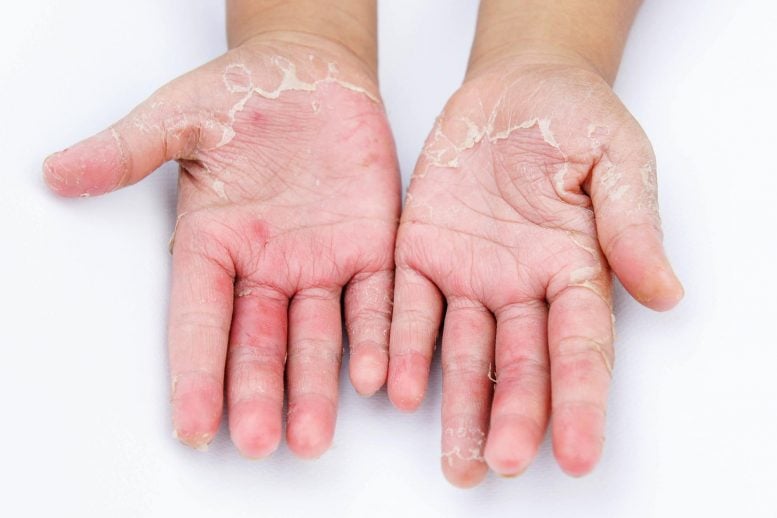
    Dry Peeling Hands
    Stringent hand washing and the use of alcohol-based rubs during the COVID-19 pandemic may have led to hand dermatitis in over two-thirds of the public.

    More than two-thirds of the public may now have hand dermatitis due to stringent hand washing and using alcohol-based rubs during the COVID-19 pandemic.

    The dermatological impact of COVID-19 is a burning topic at EADV’s 2021 Spring Symposium. New research presented today highlights the effect that stringent hand hygiene during the pandemic has had on hand skin health.

    Researchers at Father Muller Medical College, India, analyzed transepidermal water loss (TEWL — an essential parameter for measuring skin barrier function) from 582 people (291 healthcare professionals (HCPs) and 291 healthy individuals from the general population). Results indicated that hand dermatitis was now present among 92.6% of HCPs and 68.7% of the general population, despite only ~3% of HCPs and 2.4% of the general public in the study having reported a prior history of hand dermatitis (obtained through medical history and self-reported history). Higher mean TEWL (dryer skin) was also noted in females (65.4 g/m2h) and intensive care professionals (58.2 g/m2h), which was associated with high frequency of hand washing and use of alcohol-based hand rubs.

    Skin Irritation as a Barrier to Hygiene Compliance

    Both the HCPs and participants from the general public in this study stated that skin irritation and dryness was the main barrier to the consistent practice of hand hygiene (as reported by 72.1% of HCPs, and 50.8% of healthy volunteers).

    Dr. Monisha Madhumita, Father Muller Medical College, India explains: “This research truly demonstrates the impact of increased hand washing and uptake of alcohol-based rubs on the hand skin health of HCPs and the general public. Moreover, we now know that using TEWL to measure skin barrier function can help us compare the efficacy of various barrier protective measures, and discover suitable modifications of hand hygiene practices and products to help prevent hand eczema. Finding suitable modifications to practices and products that may increase the accessibility of proper hand hygiene is something of vital importance to many in our community.”

    Marie-Aleth Richard, EADV Board Member and Professor at the University Hospital of La Timone, Marseille, adds: “This research shows there is now a skin-disease epidemic within the COVID-19 pandemic. It is promising to see this problem being recognized, and I am excited to see how the dermatology community goes about finding potential solutions to this issue.”

    Reference: “Challenges in curbing SARS-CoV2 – Overzealous Hand Hygiene and the Overlooked Skin Damage” by Madhumita, M., Bhat, R., EADV Spring Symposium 2021.

    Never miss a breakthrough: Join the SciTechDaily newsletter.
    Follow us on Google and Google News.

    COVID-19 Dermatology Infectious Diseases Popular
    Share. Facebook Twitter Pinterest LinkedIn Email Reddit

    Related Articles

    Skin Reactions After COVID-19 Vaccination: Rare, Usually Don’t Recur After Second Dose

    Sunlight Linked With Lower COVID-19 Deaths – And NOT Because of Vitamin D

    Large, Red, Itchy or Painful Skin Reactions to Moderna COVID-19 Vaccine in Some Patients

    Vitamin D Determines Severity in COVID-19: Researchers Urge Government to Change Advice

    How COVID-19 Kills: New Study Explains the Mechanisms of the New Coronavirus

    Vitamin D Linked to Low Coronavirus Death Rate

    Infection Researchers Identify How Coronaviruses From Animals Need to Change to Spread to Humans

    How Effective Are Cloth Masks Against Coronavirus? [Video]

    Key Insights on How Coronavirus Spreads From Chinese Megacity of Shenzhen

    Leave A Reply Cancel Reply

    • Facebook
    • Twitter
    • Pinterest
    • YouTube

    Don't Miss a Discovery

    Subscribe for the Latest in Science & Tech!

    Trending News

    Breakthrough Bowel Cancer Trial Leaves Patients Cancer-Free for Nearly 3 Years

    Natural Compound Shows Powerful Potential Against Rheumatoid Arthritis

    100,000-Year-Old Neanderthal Fossils in Poland Reveal Unexpected Genetic Connections

    Simple “Gut Reset” May Prevent Weight Gain After Ozempic or Wegovy

    2.8 Days to Disaster: Scientists Warn Low Earth Orbit Could Suddenly Collapse

    Common Food Compound Shows Surprising Power Against Superbugs

    5 Simple Ways To Remember More and Forget Less

    The Atomic Gap That Could Cost the Semiconductor Industry Billions

    Follow SciTechDaily
    • Facebook
    • Twitter
    • YouTube
    • Pinterest
    • Newsletter
    • RSS
    SciTech News
    • Biology News
    • Chemistry News
    • Earth News
    • Health News
    • Physics News
    • Science News
    • Space News
    • Technology News
    Recent Posts
    • After 37 Years, the World’s Longest-Running Soil Warming Experiment Uncovers a Startling Climate Secret
    • NASA Satellite Captures First-Ever High-Res View of Massive Pacific Tsunami
    • ADHD Isn’t Just a Deficit: Study Reveals Powerful Hidden Strengths
    • Scientists Uncover “Astonishing” Hidden Property of Light
    • Scientists Discover Stem Cells That Could Regrow Teeth and Bone
    Copyright © 1998 - 2026 SciTechDaily. All Rights Reserved.
    • Science News
    • About
    • Contact
    • Editorial Board
    • Privacy Policy
    • Terms of Use

    Type above and press Enter to search. Press Esc to cancel.