
Close Menu
    Facebook X (Twitter) Instagram
    SciTechDaily
    • Biology
    • Chemistry
    • Earth
    • Health
    • Physics
    • Science
    • Space
    • Technology
    Facebook X (Twitter) Pinterest YouTube RSS
    SciTechDaily
    Home»Technology»Harnessing Plant Molecules To Improve the Efficiency of Solar Panels
    Technology

    Harnessing Plant Molecules To Improve the Efficiency of Solar Panels

    By Biophysical SocietyFebruary 22, 20233 Comments3 Mins Read
    Facebook Twitter Pinterest Telegram LinkedIn WhatsApp Email Reddit
    Share
    Facebook Twitter LinkedIn Pinterest Telegram Email Reddit
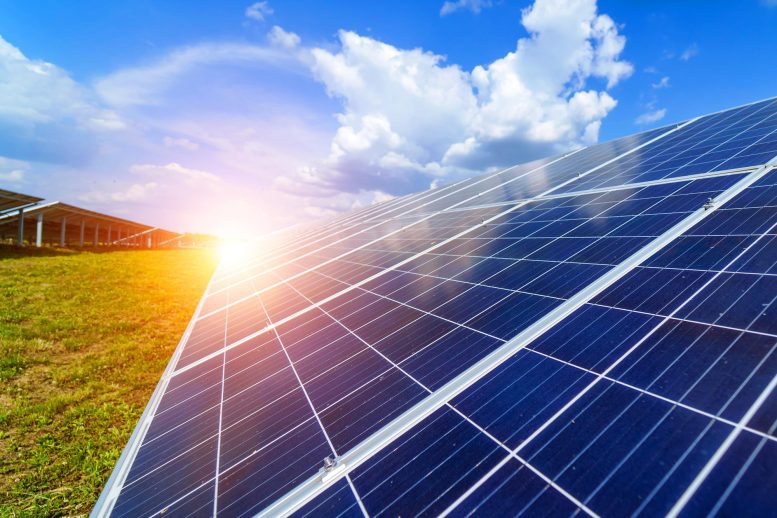
    Solar Panels in Grass
    Lahari Saha, a researcher at the University of Maryland, Baltimore County, is developing a novel approach to improve the efficiency of solar panels. Her research involves leveraging plants’ capability to convert sunlight into chemical energy through biological molecules such as chlorophyll, which are excellent at capturing sunlight and converting it to energy.

    Current solar panels are inefficient and contain toxic materials, a different approach that harnesses plant molecules like chlorophyll could lead to improvements.

    Our current solar panels aren’t very efficient; they are only able to convert up to about 20 percent of the sun’s energy into electricity. As a result, to generate a lot of electricity, the panels require a lot of space—sometimes leading forests to being cut down or farms to being replaced by solar. If solar panels were more efficient, much smaller panels could make the same amount of electricity, and wouldn’t claim as much land.

    To make solar panels that are more efficient, Lahari Saha, in the lab of Professor Chris D. Geddes at the University of Maryland, Baltimore County, is working to make electricity in a unique way—by harnessing plants’ abilities to convert sunlight into chemical energy using biological molecules, like chlorophyll, that excel at absorbing sunlight. Saha will present her work on Wednesday, February 22 at the 67th Annual Biophysical Society Meeting in San Diego, California.
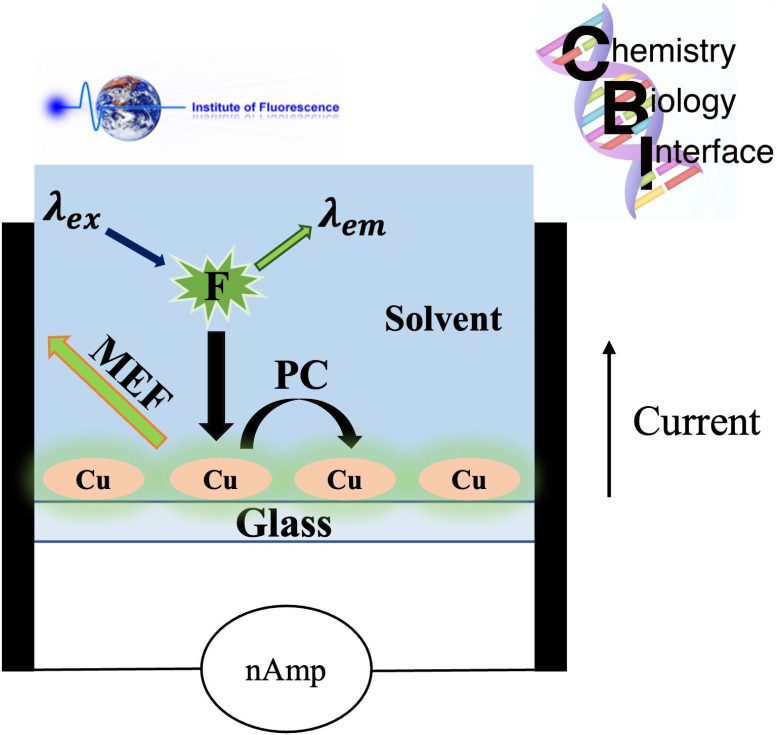
    Harnessing Plant Molecules to Harvest Solar Energy
    Plasmon to Current technology. Fluorophores produce an induced current in the metal, which is proportional to the magnitude of the fluorophore’s extinction coefficient, 𝜖. MEF – Metal-Enhanced Fluorescence PC – Plasmonic Current Cu – Copper metals. Credit: Image courtesy of Lahari Saha

    Their goal is to use biological molecules to make electricity that can then be harvested and used to power devices or stored in batteries for later use. The process involves leveraging molecules’ fluorescence. “Any sort of molecule that fluoresces, gives off light. If we excite the fluorophore, it can transfer its energy to metal nanoparticles, and if the particles are close enough to each other, they will knock off electrons and generate current,” Saha explained. The process is not just limited to molecules that fluoresce, Saha explained, they just need to have high absorption of light such as chlorophyll, beta carotene, or lutein. Each of these is relatively inexpensive and easy to derive from plants

    The other benefit of this kind of fluorescence-based solar panel is that it would be easier to recycle. Currently, solar panels rely on expensive materials like silicon and contain elements that can be toxic, including l​​ead and cadmium—in most states solar panels are considered hazardous waste when it’s time to dispose of them. But Saha is hopeful that her solar panels will be primarily plant-based molecules and other materials that are relatively prevalent like copper, making them easier to recycle when the time comes. Plus, by selecting materials with greater longevity, she hopes the solar panel will last longer before it is time to dispose of them.

    But Saha’s top goal is to make a solar panel that’s more efficient, “so it doesn’t have as large of a footprint,” she said. She hopes her smaller solar panels will allow farms to maximize food production over generating energy, and will keep forests preserved.

    Never miss a breakthrough: Join the SciTechDaily newsletter.
    Follow us on Google and Google News.

    Biophysical Society Energy Popular Solar Energy
    Share. Facebook Twitter Pinterest LinkedIn Email Reddit

    Related Articles

    MIT’s Clever Way To Clean Solar Panels Without Water

    3D-Printed “Nano-Skyscrapers” Help Bacteria Convert Sunlight Into Electricity

    New World Record: Almost 30% Efficiency for Next-Generation Tandem Solar Cells

    Solar Energy Breakthrough: Ultrathin Solar Cells Using 2D Perovskites Get a Boost

    Mystery of High Performing Novel Solar Cells Revealed in Stunning Clarity

    A Sunny Outlook for Solar: New Research Demonstrates Great Promise for Improving Solar Cell Efficiency

    Sustainable Electricity-Free Air Conditioner Can Harness Solar Energy To Reduce Temperatures on Hot Days

    Scientists Set New World Record With Bifacial Solar Cells

    Future of High Efficiency Perovskite Solar Cells Shines a Little Brighter

    3 Comments

    1. Mitksoss on March 2, 2023 10:26 am

      I hate this job

      Reply
      • joe mama on March 6, 2023 5:03 pm

        good for you

        Reply
    2. 3kw solar panel price in india on July 28, 2023 3:29 am

      Your blog post blew me away with its impeccable research and engaging writing style.

      Reply
    Leave A Reply Cancel Reply

    • Facebook
    • Twitter
    • Pinterest
    • YouTube

    Don't Miss a Discovery

    Subscribe for the Latest in Science & Tech!

    Trending News

    Monster Storms on Jupiter Unleash Lightning Beyond Anything on Earth

    Scientists Create “Liquid Gears” That Spin Without Touching

    The Simple Habit That Could Help Prevent Cancer

    Millions Take These IBS Drugs, But a New Study Finds Serious Risks

    Scientists Unlock Hidden Secrets of 2,300-Year-Old Mummies Using Cutting-Edge CT Scanner

    Bread Might Be Making You Gain Weight Even Without Eating More Calories

    Scientists Discover Massive Magma Reservoir Beneath Tuscany

    Europe’s Most Active Volcano Just Got Stranger – Here’s Why Scientists Are Rethinking It

    Follow SciTechDaily
    • Facebook
    • Twitter
    • YouTube
    • Pinterest
    • Newsletter
    • RSS
    SciTech News
    • Biology News
    • Chemistry News
    • Earth News
    • Health News
    • Physics News
    • Science News
    • Space News
    • Technology News
    Recent Posts
    • These Tiny Robots 50x Smaller Than a Hair Can Hunt and Move Bacteria
    • Simple Blood Test May Predict Alzheimer’s Years Before Brain Scans Show Signs
    • Scientists Say Adding This Unusual Seafood to Your Diet Could Reverse Signs of Aging
    • U.S. Waste Holds $5.7 Billion Worth of Crop Nutrients
    • Scientists Say a Hidden Structure May Exist Inside Earth’s Core
    Copyright © 1998 - 2026 SciTechDaily. All Rights Reserved.
    • Science News
    • About
    • Contact
    • Editorial Board
    • Privacy Policy
    • Terms of Use

    Type above and press Enter to search. Press Esc to cancel.