
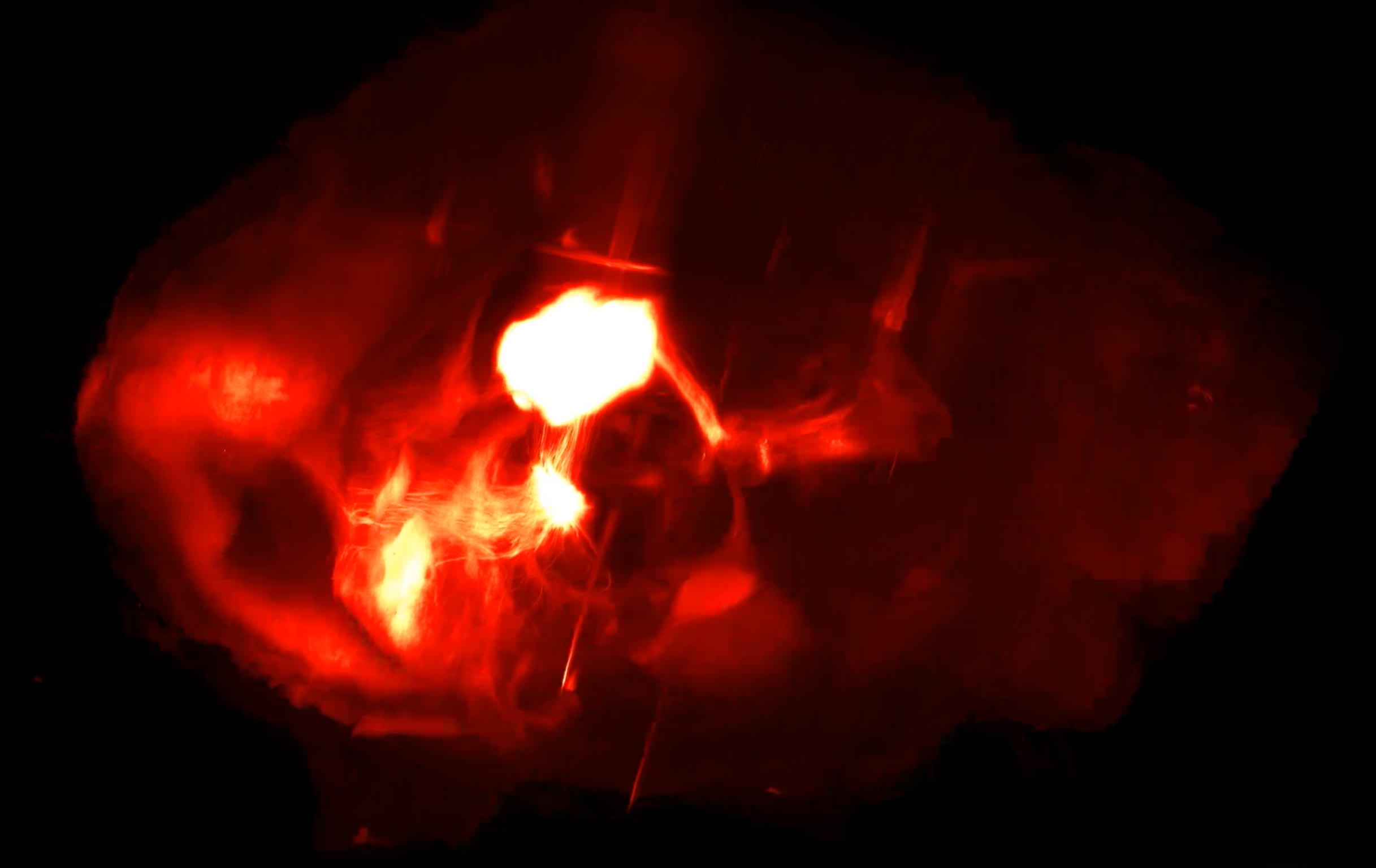
Observational learning from others’ trauma enhances resilience through serotonin-induced changes in the brain, a discovery by the University of Lausanne that could revolutionize depression treatment.
The simple act of observing others cope with a traumatic experience can increase our capacity for resilience and prevent the pathological states that can result from it, notably depression. Neuroscientists at UNIL have demonstrated the presence of this “emotional contagion” in mice, and successfully deciphered its mechanism. The neurotransmitter serotonin, released in a brain structure called the habenula, has been shown to be the key to resilience. This discovery revisits the role of serotonin and opens up new perspectives, notably for understanding depression and its treatment.
Understanding Human Resilience
Human beings have the ability to cope with aversive experiences while continuing to live a normal life. This ability is known as resilience. However, some individuals are more vulnerable to traumatic events. They develop a loss of motivation and drive, which are hallmarks of depression.
Promoting resilience in such people at risk could counter their vulnerability and function as a preventive practice against the possible emergence of a pathological state. But there are still too many unknowns for resilience to be used as a preventive practice.
“There is a lack of clinical tools or underlying mechanisms to promote this type of conditioning capable of fostering a resilient reaction as in healthy people,” says Manuel Mameli, Associate Professor at the Department of Fundamental Neurosciences at the Faculty of Biology and Medicine, University of Lausanne (UNIL).
To achieve this, we need to understand the brain function behind adversity – a challenge that Manuel Mameli’s team has successfully undertaken.
Observing for Self-Preservation
To explore the underlying brain mechanisms, the UNIL neuroscientists first designed an experimental model capable of promoting resilience and measuring its consequences on the appearance of pathological traits following trauma.
“We started from the recognized fact that simply observing the emotional experiences of others helps us to learn from them. It’s a phenomenon known as emotional contagion, and it engages resilience,” explains Manuel Mameli.
To achieve this, an “observer” mouse was placed close to a mouse subjected to small electric shocks to the paws. This simple task protected the majority of the observer mice from developing pathological states of depression when they were subsequently exposed to this unpleasant experience themselves. This was not the case for mice who had not witnessed the traumatic experiences of their fellow companions.
The scientists concluded that the simple act of observing others cope with a traumatic experience increases one’s own capacity for resilience and helps guard against possible pathological consequences.
The Role of Serotonin in Emotional Resilience
Following the discovery of this behavioral principle, the neuroscientists successfully identified the brain mechanism mediating it. They focused on the habenula, a tiny cerebral structure located at the heart of the brain, known to participate in emotional and sensory processing, and to regulate neurotransmitters associated with depression, notably serotonin.
To achieve this, they specifically developed imaging tools to track this molecule in mice. “It is very difficult to measure the variation of serotonin in the brain. Thanks to a biosensor developed by Yulong Li of Peking University, co-author of the study, we were able to identify the key mechanism,” adds Manuel Mameli.
Recordings made during behavioral experiments revealed that emotional contagion coincided with a lasting change in the functioning of neurons in the habenula, together with an increase in serotonin release in this region.
More specifically, according to Sarah Mondoloni, postdoctoral fellow in Manuel Mameli’s laboratory at UNIL and first investigator of the study, “it is the dynamics of serotonin that change during this task, and this is the key finding of our study.”
By artificially altering the dynamics of serotonin levels, the research team was able to demonstrate that its non-increase not only undermines the long-lasting neuronal activity change in the habenula, but also the ability of mice to foster resilience following adversity.
Linking Serotonin Dynamics to Depression and Resilience
A common denominator between the mechanism of resilience after adversity discovered in this study and that of depression is serotonin. Many antidepressants target serotonin to increase its concentration in the brain. Here, neuroscientists show that a transient, localized increase in the habenula can prevent the onset of apathetic behavior following a traumatic experience.
“This property of the serotonergic system is an exciting information for neuroscientists. But our discovery could also pave the way for new therapeutic applications relevant to depression, for example by testing existing pharmacological serotonin activators, including psychedelic therapies that stimulate the serotonin system. Their use could be refined to achieve better therapeutic approaches,” concludes Manuel Mameli.
Reference: “Serotonin release in the habenula during emotional contagion promotes resilience” by Sarah Mondoloni, Patricia Molina, Salvatore Lecca, Cheng-Hsi Wu, Léo Michel, Denys Osypenko, Fanchon Cachin, Meghan Flanigan, Mauro Congiu, Arnaud L. Lalive, Thomas Kash, Fei Deng, Yulong Li and Manuel Mameli, 5 September 2024, Science.
DOI: 10.1126/science.adp3897
Never miss a breakthrough: Join the SciTechDaily newsletter.
Follow us on Google and Google News.
8 Comments
A behavioural response to the trauma produces a beneficial effect, so naturally the researchers’ next question is “How do we turn this into a drug?” not “How do we train humans to practice this response?”
Says everything that is wrong with psychiatry research.
My thoughts exactly!
Just watch horror movies!
(It works for me)
Touches!!!!!
Some people misfortunes are other people fortune!
You can say that again.
We don’t need more drugs!
You can get the same results from watching horror movies!
Lol. You’re probably right.
That’s what’s been happening it’s called desensitizing .these are some real winners .how much did it cost for them to figure out something we already know ?