
Close Menu
    Facebook X (Twitter) Instagram
    SciTechDaily
    • Biology
    • Chemistry
    • Earth
    • Health
    • Physics
    • Science
    • Space
    • Technology
    Facebook X (Twitter) Pinterest YouTube RSS
    SciTechDaily
    Home»Technology»Harnessing the Helix: First-of-Its-Kind “Springy” Chiral Interface Boosts Solar Cell Efficiency
    Technology

    Harnessing the Helix: First-of-Its-Kind “Springy” Chiral Interface Boosts Solar Cell Efficiency

    By Hong Kong University of Science and TechnologySeptember 17, 2024No Comments3 Mins Read
    Facebook Twitter Pinterest Telegram LinkedIn WhatsApp Email Reddit
    Share
    Facebook Twitter LinkedIn Pinterest Telegram Email Reddit
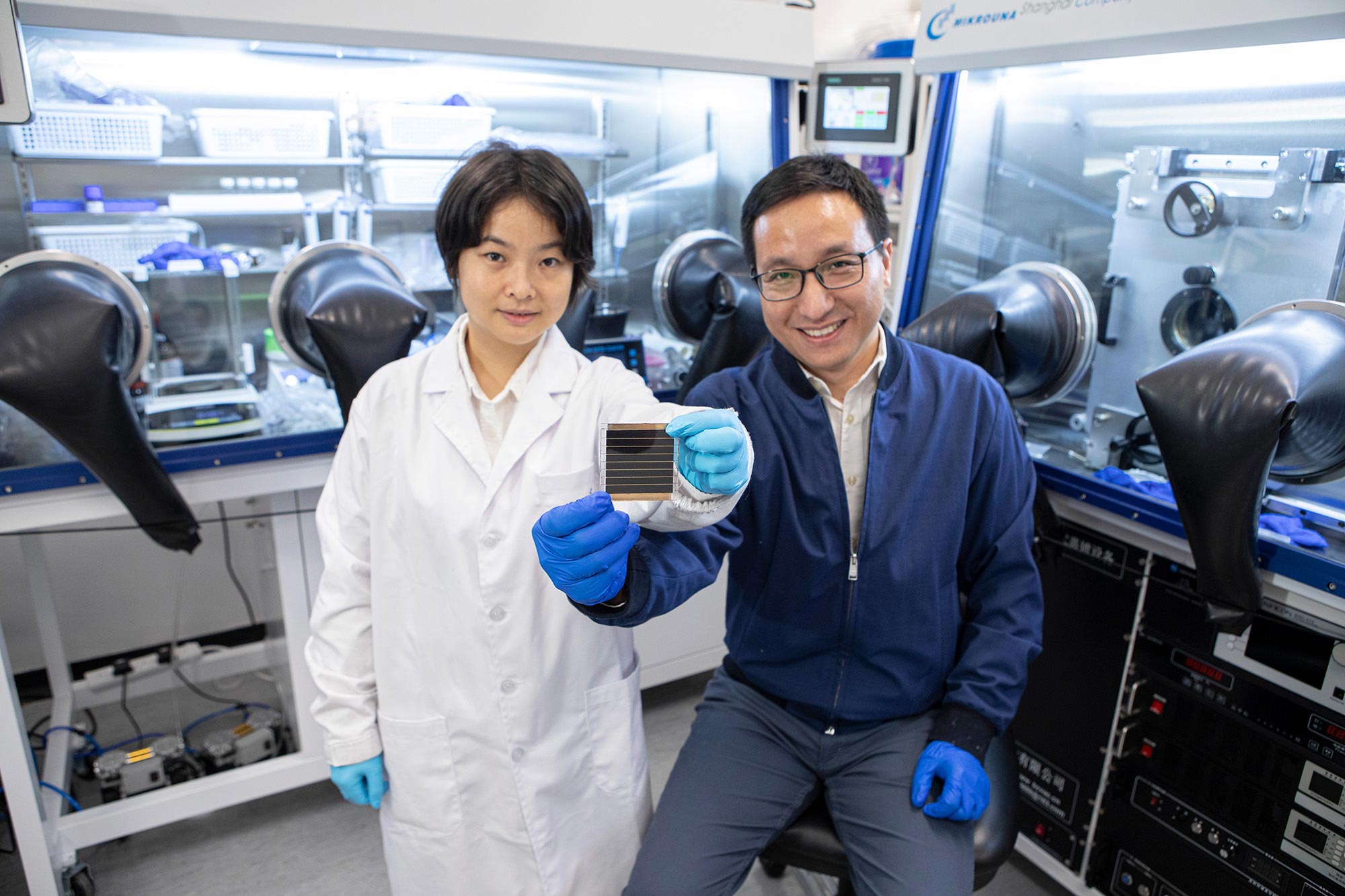
    Zhou Yuanyuan and Duan Tianwei
    Prof. Zhou Yuanyuan (right) and Dr. Duan Tianwei (left) holding their newly developed perovskite solar cell. Credit: HKUST

    HKUST’s new chiral interface improves perovskite solar cells’ efficiency and durability, enhancing commercial prospects.

    A team of scientists led by the School of Engineering of the Hong Kong University of Science and Technology (HKUST) has developed a novel chiral-structured interface in perovskite solar cells. This breakthrough enhances the reliability and power conversion efficiency of this fast-advancing solar technology, paving the way for its commercialization.

    A perovskite solar cell (PSC) is a type of solar cell that includes perovskite-structured compound materials, which are inexpensive to produce and simple to manufacture. Unlike conventional silicon solar cells that require expensive high-temperature, high-vacuum fabrication processes, perovskites can be easily made into thin films using various printing techniques at low cost. The performance of PSCs has climbed very rapidly in recent years, but there are still significant barriers to commercialization, particularly concerning their various stability aspects under real-world conditions. An outstanding challenge was the insufficient adhesion between the different layers of the cells, resulting in limited interfacial reliability.
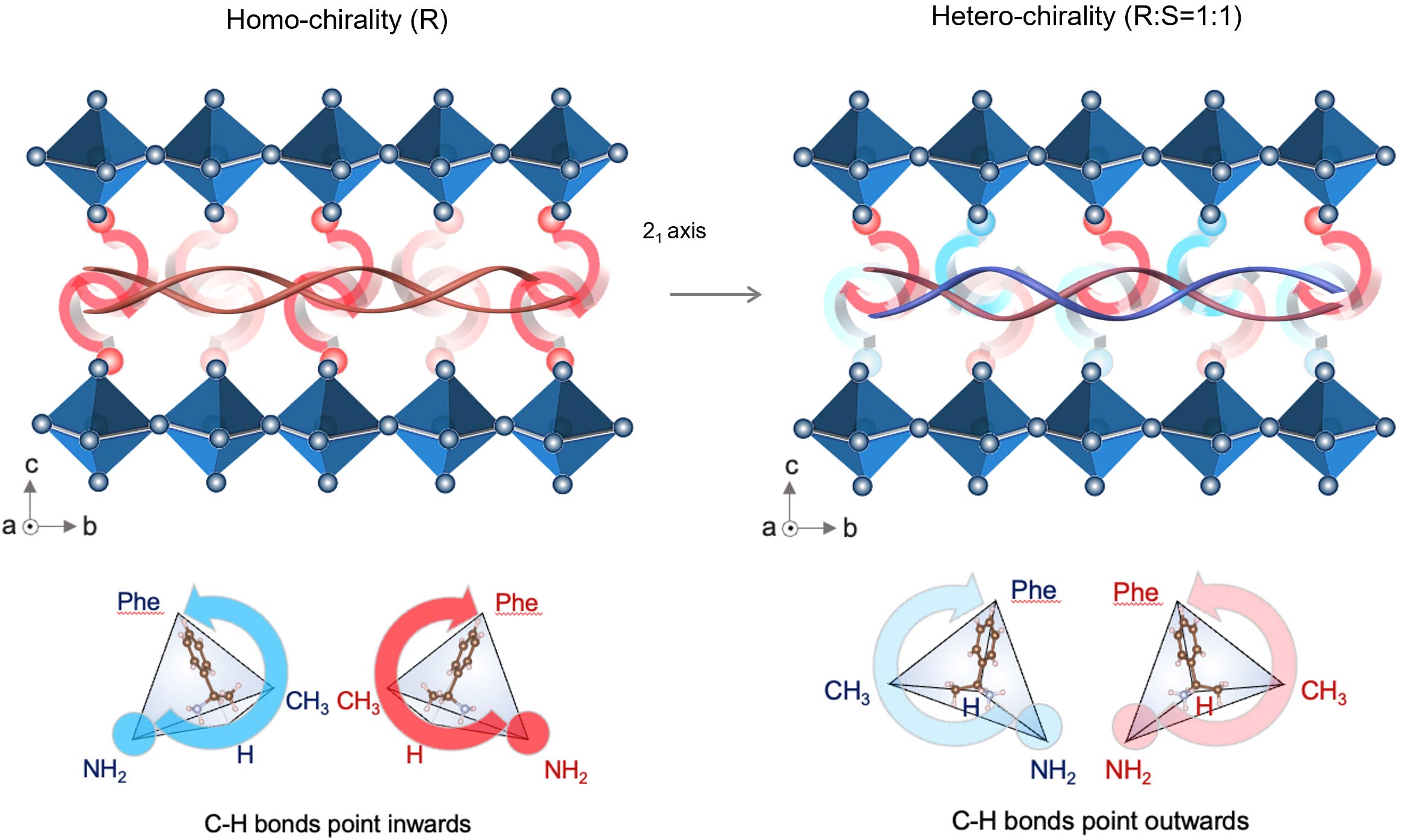
    Schematics of Homochiral and Heterochiral Interface Modification Concepts
    Schematics illustration of the homochiral and heterochiral interface modification concepts invented by Prof. Zhou’s research team. Credit: HKUST

    Enhancing Interfacial Reliability in Solar Cells

    To address this issue, Prof. Zhou Yuanyuan, Associate Professor of the Department of Chemical and Biological Engineering (CBE) at HKUST, and his research team got inspiration from the mechanical strength of natural chiral materials and constructed an unprecedented chiral-structured interface in PSCs, unlocking very high reliability.

    The team inserted chiral-structured interlayers based on R-/S-methylbenzyl-ammonium between the perovskite absorber and electron transport layer to create a strong, elastic heterointerface. The encapsulated solar cells retained 92% of their initial power conversion efficiencies after 200 cycles between −40°C and 85°C for 1,200 hours, tested under the International Electrotechnical Commission (IEC) 61215 solar cell standards.
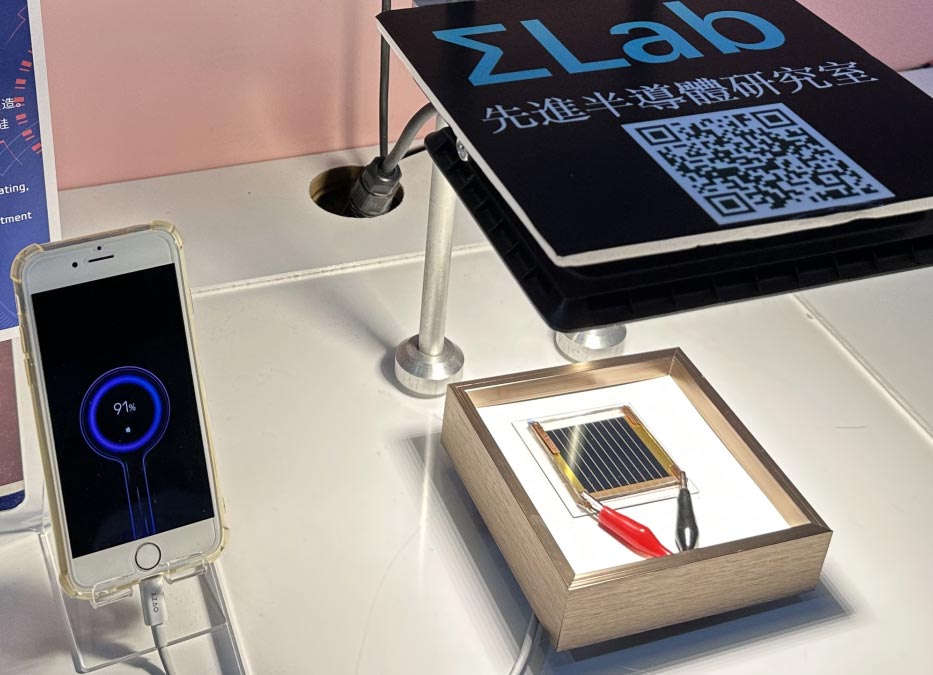
    Perovskite Solar Cell Charging Mobile Phone
    A demonstration of using the perovskite solar cell developed by Prof. Zhou Yuanyuan’s research team to charge a mobile phone. Credit: HKUST

    Mechanical Properties and Durability Enhancement

    “The intriguing mechanical properties of chiral materials are associated with the helical packing of their subunits, which resembles a mechanical spring,” said the first author of this work, Dr. Duan Tianwei, currently a Research Assistant Professor in the CBE Department at HKUST and a previous Research Grants Council postdoctoral fellow. “Incorporating a chiral-structured interlayer at the crucial device interface makes the perovskite solar cell more mechanically durable and adaptable under various operational states,” she added.

    “It is really the dawn for the commercialization of perovskite solar cells. Given the high efficiencies of these cells, if we could ultimately overcome the reliability issue, billions of energy markets will be seen,” said Prof. Zhou.

    Impact on Solar Energy Commercialization

    This breakthrough holds great promise for the future of solar energy. With the potential for enhanced reliability and power conversion efficiency, future perovskite solar panels could become even more dependable in various weather conditions, ensuring continuous electricity generation over extended periods.

    The team’s research work was recently published in prestigious journal Science. The paper was co-written by Dr. Duan (the lead first author) and Prof. Zhou (the lead corresponding author), as well as collaborators from the US National Renewable Energy Laboratory, Hong Kong Baptist University, and Yale University.

    Reference: “Chiral-structured heterointerfaces enable durable perovskite solar cells” by Tianwei Duan, Shuai You, Min Chen, Wenjian Yu, Yanyan Li, Peijun Guo, Joseph J. Berry, Joseph M. Luther, Kai Zhu and Yuanyuan Zhou, 23 May 2024, Science.
    DOI: 10.1126/science.ado5172

    Never miss a breakthrough: Join the SciTechDaily newsletter.
    Follow us on Google and Google News.

    Hong Kong University of Science and Technology Perovskite Solar Cell Photovoltaics Solar Energy
    Share. Facebook Twitter Pinterest LinkedIn Email Reddit

    Related Articles

    Revolutionary Solar Cells Set To Slash Costs and Boost Energy Production

    Scientists Unveil Game-Changing Molecular Treatment for Solar Cells

    Game-Changing Discovery: Chinese Scientists Have Discovered a “Secret” Hidden Structure in Perovskite Solar Cells

    Solar Cell Breakthrough: Korean Researchers Set New Perovskite Efficiency Records

    Innovative Technology Offers Big Performance Boost to Perovskite–Silicon Tandem Solar Cells

    New Materials Enable Cheaper Solar Cells That Are Easier To Make

    Researchers Set New World Record for Solar Cell Efficiency

    Predicting Semiconductor Solar Cell Performance From Terahertz and Microwave Spectroscopy

    Templating Approach Stabilizes “Ideal” Perovskite Material for Cheap, Efficient Solar Cells

    Leave A Reply Cancel Reply

    • Facebook
    • Twitter
    • Pinterest
    • YouTube

    Don't Miss a Discovery

    Subscribe for the Latest in Science & Tech!

    Trending News

    Largest-Ever Study Finds Medicinal Cannabis Ineffective for Anxiety, Depression, PTSD

    250-Million-Year-Old Egg Solves One of Evolution’s Biggest Mysteries

    Living With Roommates Might Be Changing Your Gut Microbiome Without You Knowing

    Century-Old Cleaning Chemical Linked to 500% Increased Risk of Parkinson’s Disease

    What if Your Memories Never Happened? Physicists Take a New Look at the Boltzmann Brain Paradox

    One of the Universe’s Largest Stars May Be Getting Ready To Explode

    Scientists Discover Enzyme That Could Supercharge Ozempic-Like Weight Loss Drugs

    Popular Sweetener Linked to DNA Damage – “It’s Something You Should Not Be Eating”

    Follow SciTechDaily
    • Facebook
    • Twitter
    • YouTube
    • Pinterest
    • Newsletter
    • RSS
    SciTech News
    • Biology News
    • Chemistry News
    • Earth News
    • Health News
    • Physics News
    • Science News
    • Space News
    • Technology News
    Recent Posts
    • Challenging the Narrative: New Study Shows U.S. Life Expectancy Is Rising Across All States
    • Mystery Illness Kills 5 in Burundi As Doctors Scramble for Answers
    • Bone-Strengthening Discovery Could Reverse Osteoporosis
    • The Most Elusive Number in Physics Just Got Even More Mysterious
    • Scientists Uncover Hidden Trigger Behind Stem Cell Aging
    Copyright © 1998 - 2026 SciTechDaily. All Rights Reserved.
    • Science News
    • About
    • Contact
    • Editorial Board
    • Privacy Policy
    • Terms of Use

    Type above and press Enter to search. Press Esc to cancel.