
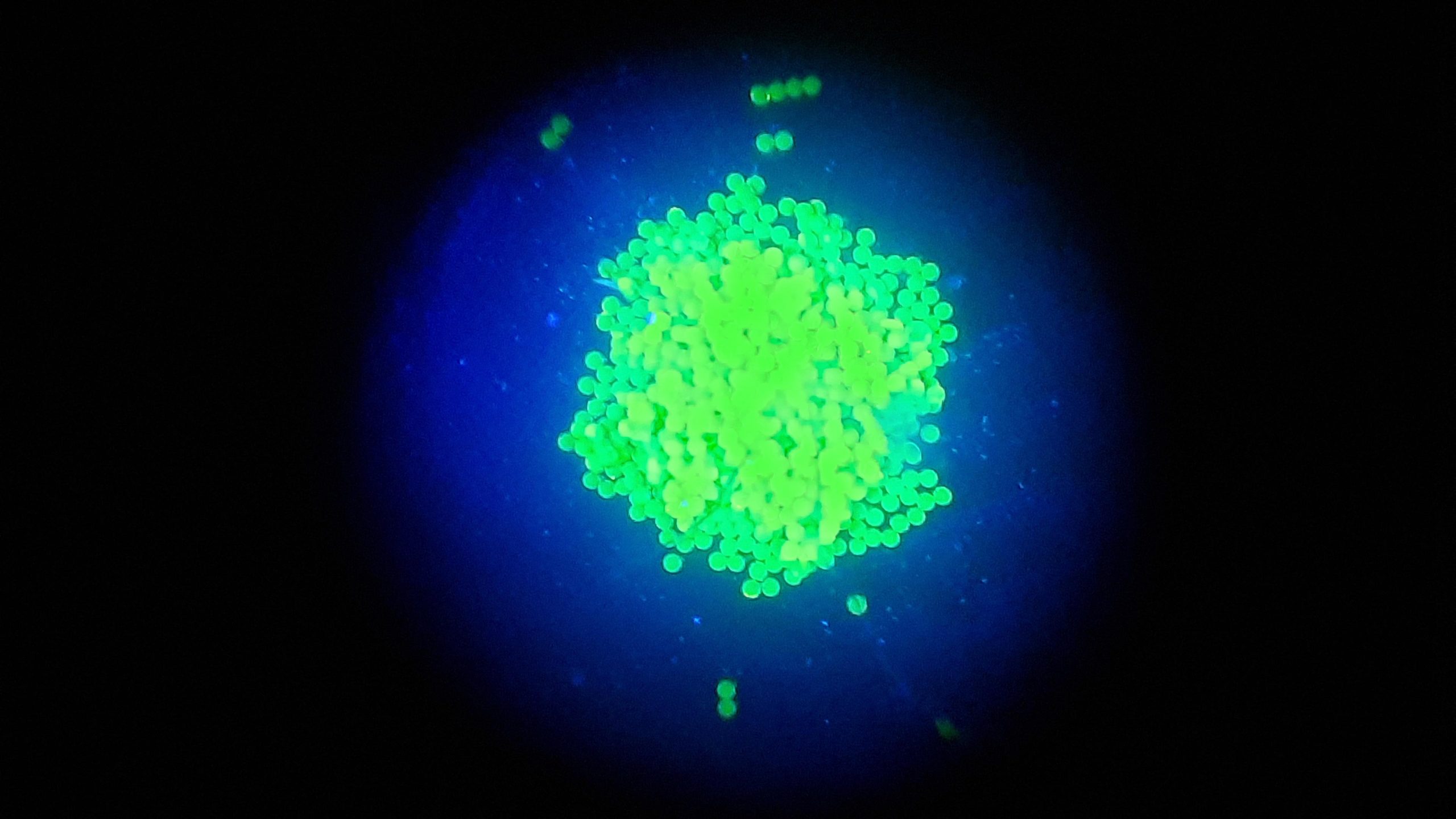
Groundbreaking Technology Uses Acoustic Waves to Move Living Cells Without Contact
This innovation could replace bulky lab equipment, revolutionizing drug discovery and enabling rapid, personalized treatment testing. Born from a student project levitating diamonds, the tech has evolved into a compact benchtop device that automates key biomedical tasks and speeds up pharmaceutical research. Its potential to streamline clinical testing and unlock faster cures for diseases like cancer and Alzheimer’s could reshape the future of medicine.
A New Way to Move Cells
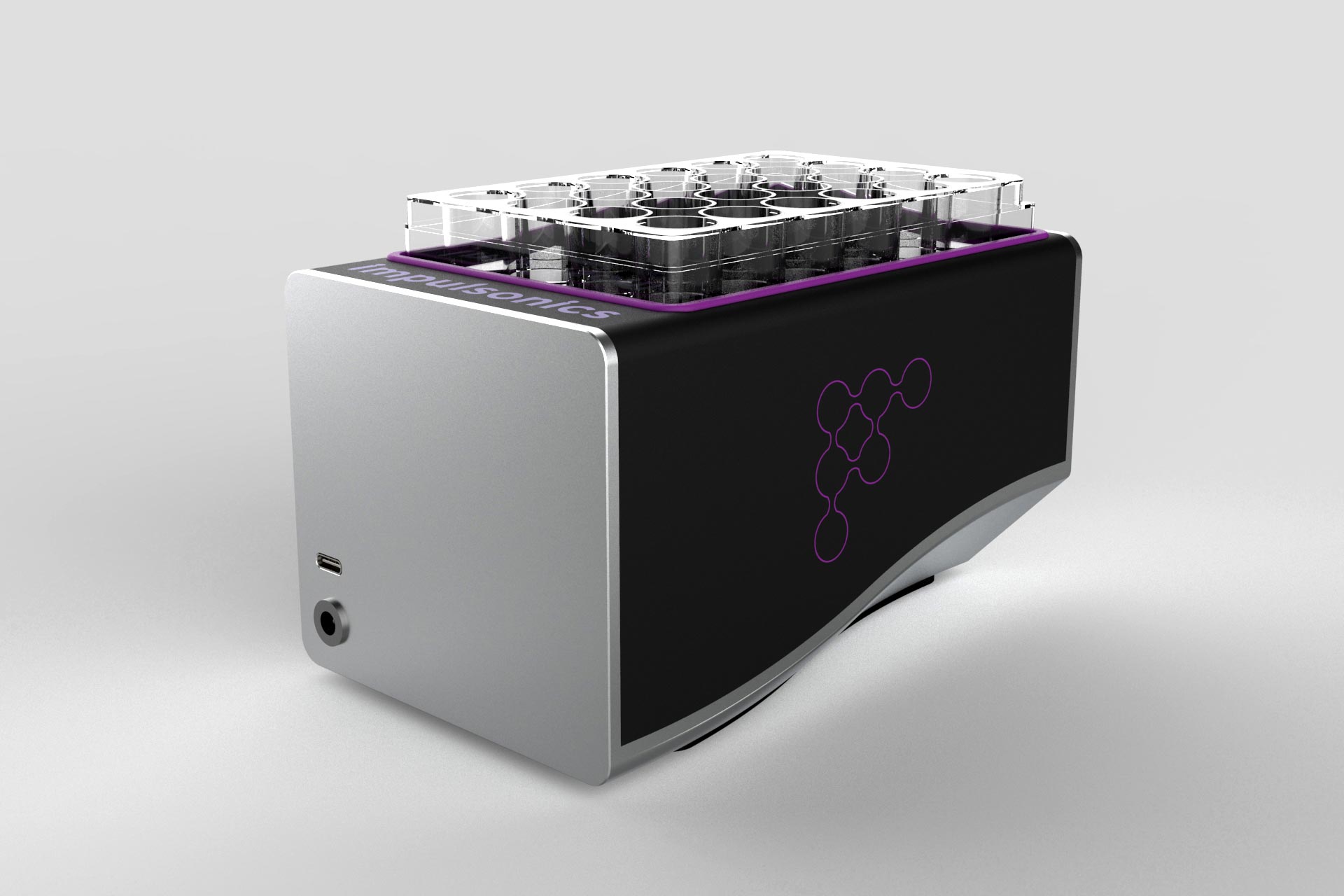
Engineers at a University of Bristol spin-out company have created a new technology that can move cells without touching them, enabling critical tasks that currently require large pieces of lab equipment to be carried out on a benchtop device.
The invention could accelerate the discovery of new medicines and unlock personalized medicine screening in clinics.
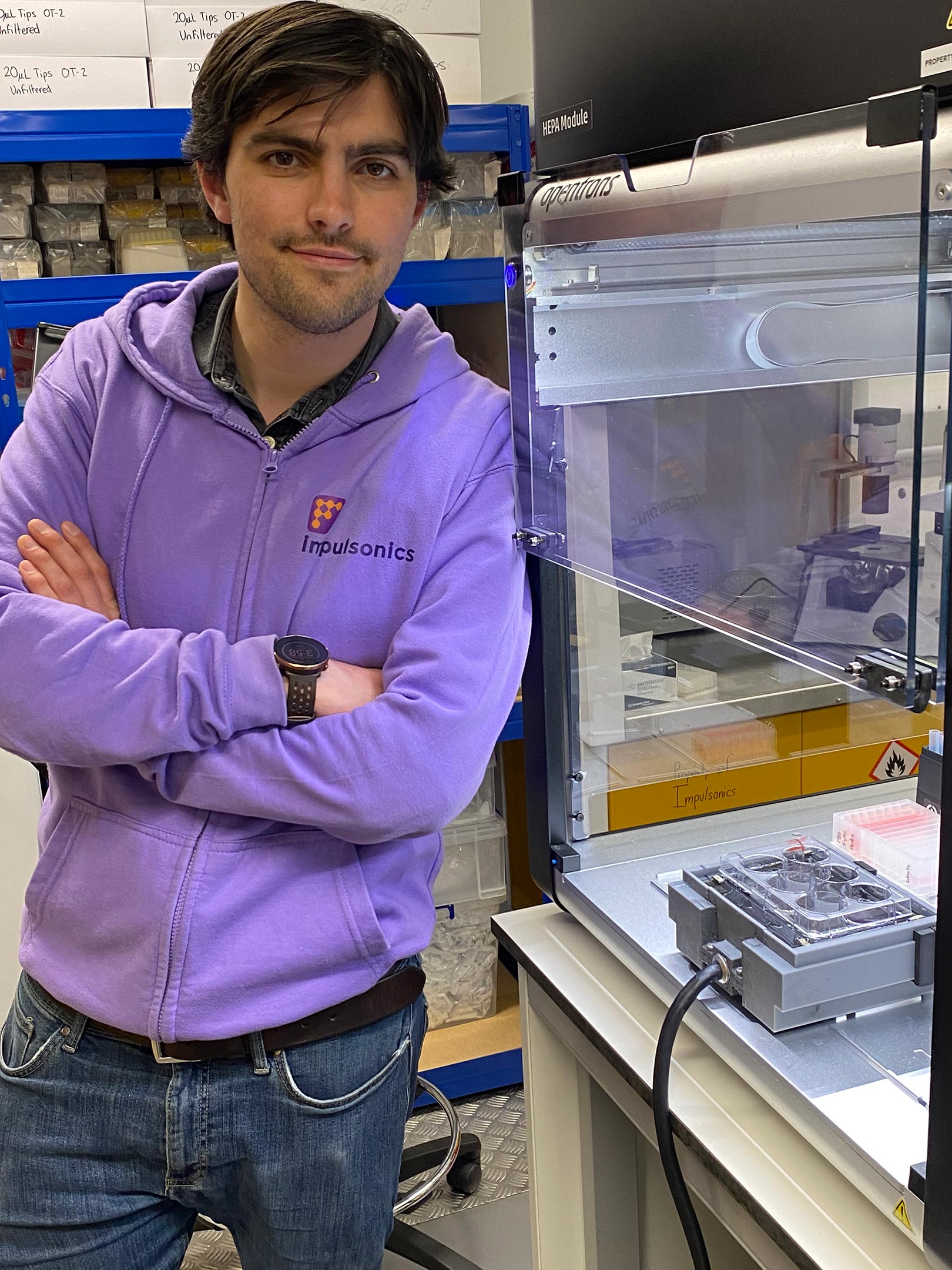
The groundbreaking concept was unveiled for the first time today in an article in Science published by Dr. Luke Cox, where he describes his journey from University of Bristol student to CEO of start-up company Impulsonics. The article is a prize essay in the Bioinnovation Institute and Science Prize for Innovation.
How does it work?
Acoustic waves exert a force on their surroundings, this is why they are able to produce the tiny vibrations in your eardrum that enable you to hear. This same principle can be used to move very small objects such as cells. Impulsonics’ technology uses multiple small speakers to carefully control the sounds produced and therefore the movement of the cells. By playing different sounds in a sequence the cells can be observed to “dance,” around their container.
The Challenge of Cell-Based Drug Testing
Behind every new drug lies thousands of hours spent by scientists growing cells in a petri dish to test it before it is tried on patients. Even in 2025 this remains a highly manual and difficult to automate process, leading to expensive and sometimes unreliable processes that make it harder to develop novel lifesaving drugs to the point when they can be used in the clinic.
The new technology uses acoustic waves to move cells, which appear to “dance.” This capability replaces the need for many large pieces of equipment in a lab and could make it significantly easier to automate cell growth and help scientists discover new drugs faster. It also opens up new possibilities in the clinic, such as personalized medicine screening, where many different drugs can be tested to find the most effective before being given to a patient.
From Floating Diamonds to Moving Cells
Luke initially worked on the physics of acoustic levitation of a diamond, creating an experiment to hold objects in mid-air against gravity. Observing this seemingly magical experiment, he realized that the technology had the potential to transform our ability to handle small-delicate objects. This led him to next work on moving cells. The final step was realizing that this technology could replace many of the common processes performed in biomedical labs. From this realization, the company Impulsonics emerged.
Luke and his team have now developed this idea to the point where complex biomedical tasks, such as expanding a cell population, can be performed with this technology. Dr. Luke Cox said: “A huge benefit of this technology is that it allows the process of screening new drugs to be accelerated. This means it can help discover new drugs for all kinds of diseases ranging from cancer to Alzheimer’s.”
Compact, Powerful, and Data-Driven
Professor Bruce Drinkwater, an academic at the University of Bristol and a co-founder of Impulsonics, said “The device is small, with a footprint half the size of a standard lab bench where previous technologies took up whole rooms. Critically it also helps produce very high-quality data quickly, which is exactly what is needed in biomedical research.”
In the future, this invention has many potential applications across biotechnology. Luke Cox concluded: “I look forward to expanding this unique technology platform to accelerate development across the pharmaceutical and healthcare industries wherever cells are grown.”
Reference: “Dancing with the cells: How acoustically levitating a diamond enabled a redesign of biotech automation” by Luke Cox, 3 April 2025, Science.
DOI: 10.1126/science.adw0393
Never miss a breakthrough: Join the SciTechDaily newsletter.
Follow us on Google and Google News.
2 Comments
There are some bery clever people out there ! Like Dr Luke !
Just amazing. To think 50 years ago we didn’t have cell phones, had no idea what DNA was. I can only imagine what will come in the next 50! I won’t be around I’m sure. Unless they discover the cure for ageing! I’m 63. The things I’ve seen and been involved in still astound me. I worked in electronics. I saw many proto types. So many things that I never thought possible. The future is going to be incredible. I hope my grandchildren take advantage of life and move it forward also. Science is fascinating.