
Close Menu
    Facebook X (Twitter) Instagram
    SciTechDaily
    • Biology
    • Chemistry
    • Earth
    • Health
    • Physics
    • Science
    • Space
    • Technology
    Facebook X (Twitter) Pinterest YouTube RSS
    SciTechDaily
    Home»Space»Heritage of Water Ice in the Solar System
    Space

    Heritage of Water Ice in the Solar System

    By Harvard-Smithsonian Center for AstrophysicsNovember 3, 2014No Comments3 Mins Read
    Facebook Twitter Pinterest Telegram LinkedIn WhatsApp Email Reddit
    Share
    Facebook Twitter LinkedIn Pinterest Telegram Email Reddit
    Ancient Heritage of Water Ice in the Solar System
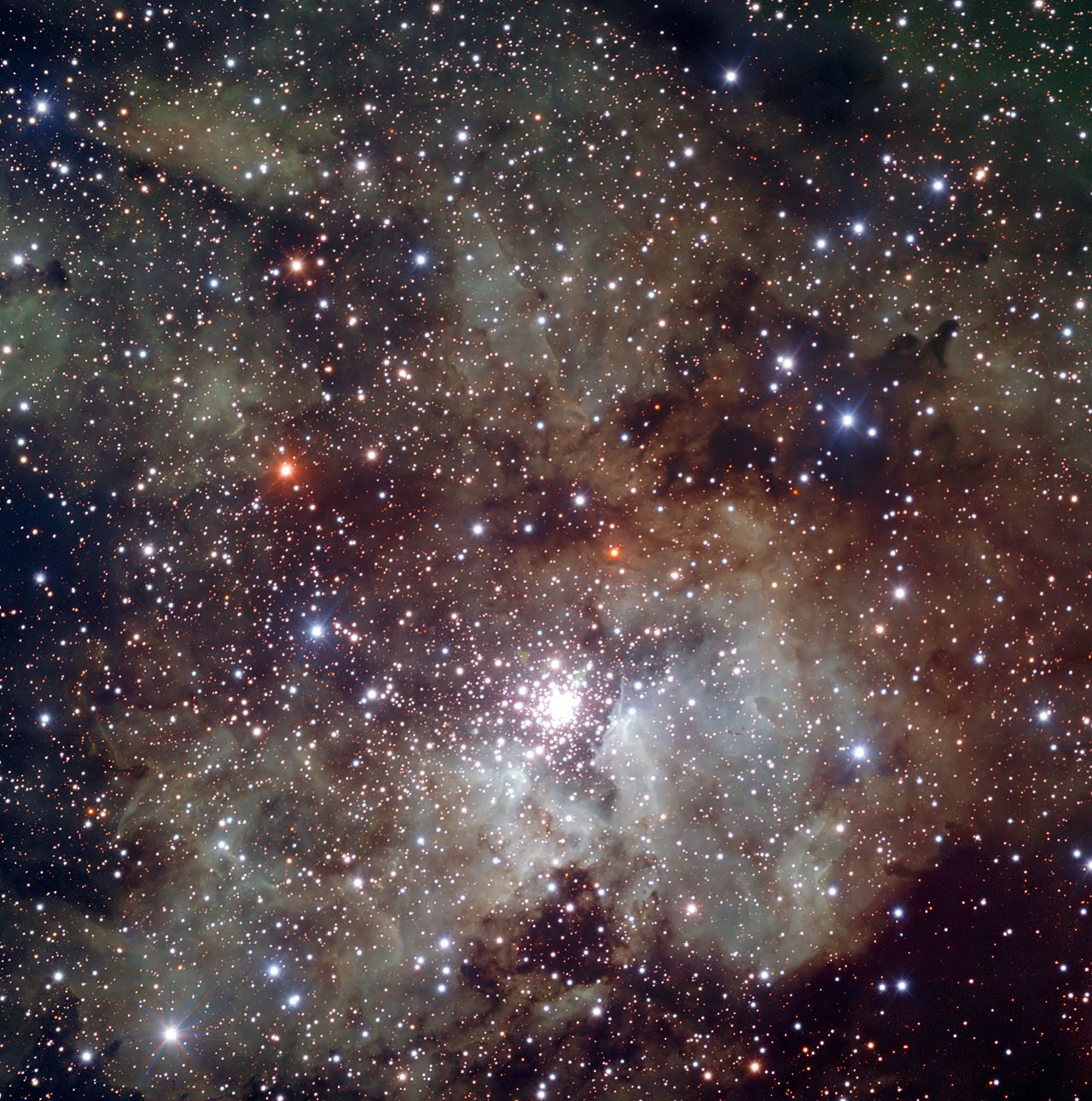
    An image of the stellar nursery in NGC 3603 where stars are actively forming from the nebula’s extended clouds of gas and dust. Credit: ESO

    New research from astronomers at the Harvard-Smithsonian Center for Astrophysics reveals that water in our solar system almost certainly derives in large part from interstellar water, rather than forming locally, and that consequently other stellar systems would be expected to contain water as well.

    Water, the key ingredient for life, is not only abundant on Earth, it is also ubiquitous across the solar system. Either as ice or sometimes as liquid, water has been spotted in comets, the icy moons of the giant planets, and even in the shadowed basins of Mercury. Water has left its mark in hydrated minerals in meteorites that penetrated our atmosphere, in lunar basalts retrieved by the astronauts, and in Martian melt inclusions recovered from rock samples ejected from Mars that found their way to Earth. Comets and asteroids (as traced by meteorites) remain the oldest, most primitive objects with water. They provide a natural time capsule of the conditions present during the Sun’s epoch of planet formation.

    No one knows for sure when and where these ices formed. Water might have been present in the dense interstellar medium from which Sun formed or it might have been made somehow within the solar nebula after it developed. Astronomers are trying to determine which applies because the former suggests that all planet-forming systems will have abundant water ices, whereas the latter presumably means that the abundance of water can vary dramatically from stellar system to system.

    Water is usually made with two atoms of hydrogen and one of oxygen, as H2O, but it can also come in deuterated form in which a deuterium atom replaces one hydrogen atom. The fraction of deuterated water in a sample is a powerful measure of the age and origin of the sample: Interstellar ices are highly enriched in the deuterated species because the chemistry of interstellar space – ionizing radiation in particular – preferentially destroys normal H2O water. Ice in interstellar space can have a two to thirty times higher fraction of deuterated water than is found on Earth.

    CfA astronomer Karin Oberg and her colleagues did comprehensive modeling of the proto-planetary disk that forms around new stars, including the effects of ultraviolet ionization and the influence of radioactive elements in the material. In the latest issue of Science, the team reports a number of key results, including that the young solar nebula must have contained some pristine interstellar ice. A considerable fraction of the solar system’s water therefore predates the Sun. If the solar system is typical, the scientists conclude, then interstellar ices in a stellar birth cloud should be widely available to all young protoplanetary systems.

    Reference: “The Ancient Heritage of Water Ice in the Solar System” by L. Ilsedore Cleeves, Edwin A. Bergin, Conel M. O’D. Alexander, Fujun Du, Dawn Graninger, Karin I. Öberg and Tim J. Harries, 26 September 2014, Science.
    DOI: 10.1126/science.1258055
    arXiv: 1409.7398

    Never miss a breakthrough: Join the SciTechDaily newsletter.
    Follow us on Google and Google News.

    Astronomy Astrophysics Harvard-Smithsonian Center for Astrophysics Water
    Share. Facebook Twitter Pinterest LinkedIn Email Reddit

    Related Articles

    X-Ray Emission From Mysterious Dark Matter

    Analyzing Dust Storm Sequences on Mars

    Intriguing Remains of a Rare Stellar Explosion Discovered in Milky Way Center

    Puzzling Astrophysics of Quasars in the Early Universe

    Four Exoplanets – Including a Super-Earth Planet – Discovered by High School Students

    Massive Rotating Stars in the Pleiades Cluster

    Astronomers Discover First Cloudless, Jupiter-Like Planet – “Smoking Gun Evidence”

    Chandra X-ray Observatory Studies Extraordinary Magnetar [Video]

    Chandra Studies Extraordinary Magnetar: Fastest Spinning and Possibly the Youngest Magnetar Known

    Leave A Reply Cancel Reply

    • Facebook
    • Twitter
    • Pinterest
    • YouTube

    Don't Miss a Discovery

    Subscribe for the Latest in Science & Tech!

    Trending News

    Monster Storms on Jupiter Unleash Lightning Beyond Anything on Earth

    Scientists Create “Liquid Gears” That Spin Without Touching

    The Simple Habit That Could Help Prevent Cancer

    Millions Take These IBS Drugs, But a New Study Finds Serious Risks

    Scientists Unlock Hidden Secrets of 2,300-Year-Old Mummies Using Cutting-Edge CT Scanner

    Bread Might Be Making You Gain Weight Even Without Eating More Calories

    Scientists Discover Massive Magma Reservoir Beneath Tuscany

    Europe’s Most Active Volcano Just Got Stranger – Here’s Why Scientists Are Rethinking It

    Follow SciTechDaily
    • Facebook
    • Twitter
    • YouTube
    • Pinterest
    • Newsletter
    • RSS
    SciTech News
    • Biology News
    • Chemistry News
    • Earth News
    • Health News
    • Physics News
    • Science News
    • Space News
    • Technology News
    Recent Posts
    • 25-Year Study Uncovers Hidden Paths and Early Warning Signs of Blood Cancer
    • Not Just Snoring – New Research Reveals Sleep Apnea May Be Damaging Your Muscles
    • Scientists Discover a Surprising Reason Intermittent Fasting Extends Life
    • Scientists Discover a New Meteor Shower From a Mysterious Crumbling Asteroid
    • This Simple Fruit Wash Could Make Produce Safer and Last Days Longer
    Copyright © 1998 - 2026 SciTechDaily. All Rights Reserved.
    • Science News
    • About
    • Contact
    • Editorial Board
    • Privacy Policy
    • Terms of Use

    Type above and press Enter to search. Press Esc to cancel.