
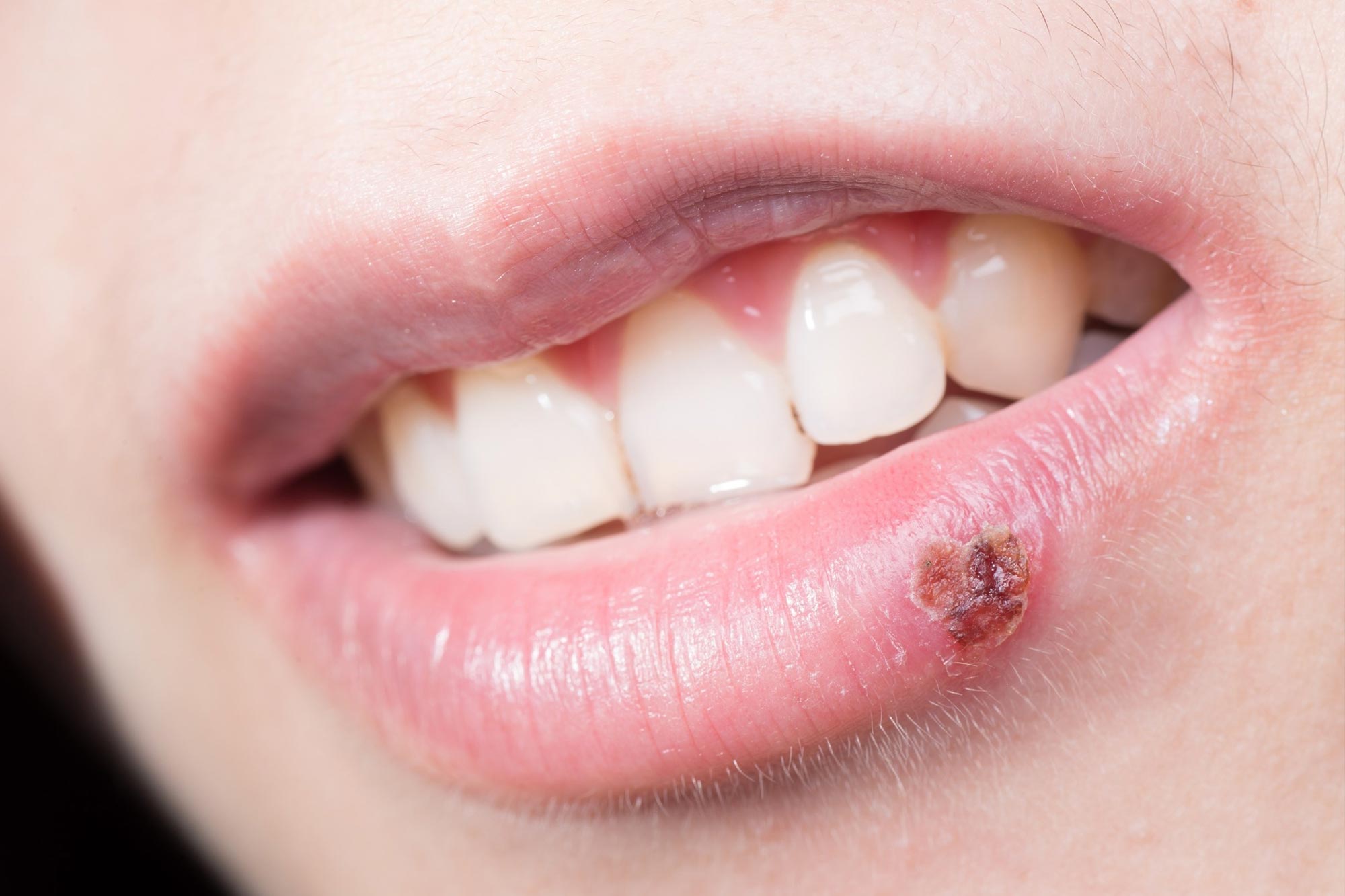
Herpes has long been known to lie dormant in the body, waiting for the right moment to strike.
But new research has revealed a shocking twist—rather than waiting passively, the virus actually wakes itself up by hijacking the immune system’s own defenses. This discovery could pave the way for targeted treatments to prevent outbreaks of both cold sores and genital herpes.
Herpes Virus Awakening: A New Discovery
Scientists have identified a new potential target for preventing cold sores after researchers at the University of Virginia School of Medicine uncovered an unexpected way the herpes virus reactivates in the body. This discovery may also have significant implications for genital herpes, which is caused by the same virus.
Led by Anna Cliffe, PhD, the UVA research team found something surprising: the dormant herpes virus produces a protein that triggers the body’s immune response as part of its reactivation process. At first glance, this seems counterproductive— why would the virus risk alerting the immune system? But instead of being attacked, the virus hijacks the immune response in infected nerve cells to aid its comeback.
“Our findings identify the first viral protein required for herpes simplex virus to wake up from dormancy, and, surprisingly, this protein does so by triggering responses that should act against the virus,” said Cliffe of UVA’s Department of Microbiology, Immunology and Cancer Biology. “This is important because it gives us new ways to potentially prevent the virus from waking up and activating immune responses in the nervous system that could have negative consequences in the long term.”

Understanding Herpes Simplex Virus-Associated Disease
Cold sores are caused primarily by herpes simplex virus 1 (HSV-1), one of two forms of the herpes virus. HSV-1 is very contagious, and more than 60% of people under 50 have been infected worldwide, the World Health Organization estimates. That’s more than 3.8 billion people.
In addition to causing cold sores, herpes simplex virus 1 can also cause genital herpes, a condition most often associated with HSV-1’s cousin, herpes simplex virus 2. Now, however, there are more new cases of genital herpes in the United States caused by HSV-1 than HSV-2. Notably, the UVA researchers found that herpes simplex virus 2 also makes this same protein and may use a similar mechanism to reactivate. So UVA’s new discovery may also lead to new treatments for genital herpes.
The Link Between Herpes and Other Health Risks
In addition to cold sores and gential herpes, HSV-1 can also cause viral encephalitis (brain infammation) and has been linked to the development of Alzheimer’s disease.
Once HSV-1 makes its way into our bodies, it stays forever. Our immune systems can send it into hiding, allowing infected people to be symptom free. But stress, other infections and even sunburns are known to cause it to flare. UVA’s new discovery adds another, surprising way it can spring back into action.
The Surprising Role of Other Infections
The researchers found that while the virus can make a protein called UL12.5 to reactivate, the protein was not needed in the presence of another infection. The scientists believe this is because the infections trigger certain “sensing pathways” that act as the home security system for neurons. Detection of a pathogen alone may be sufficient to trigger the herpes virus to begin replicating, the scientists believe, even in instances of “abortive infections” – when the immune system contains the new pathogen before it can replicate.
The Virus’ Secret Weapon: Sensing Cellular Stress
“We were surprised to find that HSV-1 doesn’t just passively wait for the right conditions to reactivate – it actively senses danger and takes control of the process,” researcher Patryk Krakowiak said. “Our findings suggest that the virus may be using immune signals as a way to detect cellular stress – whether from neuron damage, infections or other threats – as a cue to escape its host and find a new one.”
A New Path to Stopping Herpes Flares
With the new understanding of how herpes flares can be triggered, scientists may be able to target the protein to prevent them, the researchers say.
“We are now following up on this work to investigate how the virus is highjacking this response and testing inhibitors of UL12.5 function,” Cliffe said. “Currently, there are no therapies that can prevent the virus from waking up from dormancy, and this stage was thought to only use host proteins. Developing therapies that specifically act on a viral protein is an attractive approach that will likely have fewer side effects than targeting a host protein.”
The researchers have published their findings in PNAS, the Proceedings of the National Academy of Sciences.
Reference: “Co-option of mitochondrial nucleic acid–sensing pathways by HSV-1 UL12.5 for reactivation from latent infection” by Patryk A. Krakowiak, Matthew E. Flores, Sean R. Cuddy, Abigail L. Whitford, Sara A. Dochnal, Aleksandra Babnis, Tsuyoshi Miyake, Marco Tigano, Daniel A. Engel and Anna R. Cliffe, 24 January 2025, Proceedings of the National Academy of Sciences.
DOI: 10.1073/pnas.2413965122
The research team consisted of Patryk A. Krakowiak, Sean R. Cuddy, Matthew E. Flores, , Abigail L. Whitford, Sara A. Dochnal, Aleksandra Babnis, Tsuyoshi Miyake, Marco Tigano, Daniel A. Engel and Cliffe. The scientists have no financial interest in the work.
The research was supported by National Institute of Health grants R21AI171544, T32AI007046, T32GM008136 and R01AG085782, as well as the Owens Family Foundation, a UVA Global Infectious Disease Institute seed award and UVAWagner Fellowships.
Never miss a breakthrough: Join the SciTechDaily newsletter.
Follow us on Google and Google News.
15 Comments
Topical ethyl ether applied to open lesions may tend to inhibit further breakouts.
My Paternal parent’s and grandparents all had a history of cold sores. My self, children and grandchildren all have this history too!
So, is this condition (Cold sores) in our DNA; making it hereditary?
Same applies for (N A S H)
Thank you,
Vickie
No Vicki, it’s not in your DNA, but Herpes is easily spread by kissing or even touching the virus (usually when there’s a breakout, but not always) and touching a crack 8n the skin on the victim. People’s lips crack easily in the winter so it’s spread very often by kisses from Grandma (or whomever) near the lips. You can even get Herpes in a finger or really any part of your body if there’s a cut and the virus reaches it (e.g. Touch your cold sore and then a cut).
People with cold sores (known Herpes) should be very careful during an outbreak, particularly around their children who may know nothing and give you a kiss.
no, go back to school, more maga educated trumpets
my guess is none of your CLEAN partners you’re infected with this nasty disgusting disease.
This is my Only prejudice against mankind, those who harbour disease and knowingly pass it on because they received it the same way, DIRTY SEX with dirty partners
You all deserve it, Karma is the Best.
That is one of the more ignorant comments I have read, and yet you are railing against conservatives. You have just demonstrated another undesirable characteristic of humans — hypocrisy.
Ahh…no
Phuck off moron.
Anyone can get it – it’s asymptomatic most times. Your opinion is based on fear and prejudice, not logic and facts.
Diseases do exist in the wild, that’s why we have vaccines to prevent diseases and ensuring adults can stay happy, healthy and live long lives
I don’t see any thing about having a natural immunity to cold sores if not exposed to them till after 6 years old. Also I did get cold sores at an early age but using lysine tablets when first signs of blister starting will stop the formation of blister.
Maybe! Without an experimental control, you can’t be sure that your immune system wouldn’t have aborted the outbreak on its own. Then there is the ‘Placebo Effect.’
I’ve had cold sores my entire life until taking Lysine. I have not had one in over 4 years. I swear by it.
I have Tranverse Myelitis am paralyzed under breast and this virus i feel exploded in my spine from supressing it for years with Zovirax stress always started flair up 💯
Same with me it’s in my spine it damage nerves in my face and eye caused sensory peripheral neuropathy I never had a cold sore in my life I was exposed to black mold I got a cold sore it broke out my whole body I Also had Lyme in 2002. I was treated and fine the black mold compromised my immune system I am a mess
“Currently, there are no therapies that can prevent the virus from waking up from dormancy, …”
It is my impression that daily Valacyclovir has shown good efficacy in preventing outbreaks.
It’s also crucial to learn as much as you can about your diagnosis. Seek options check out:( worldrehabilitateclinic. com )