
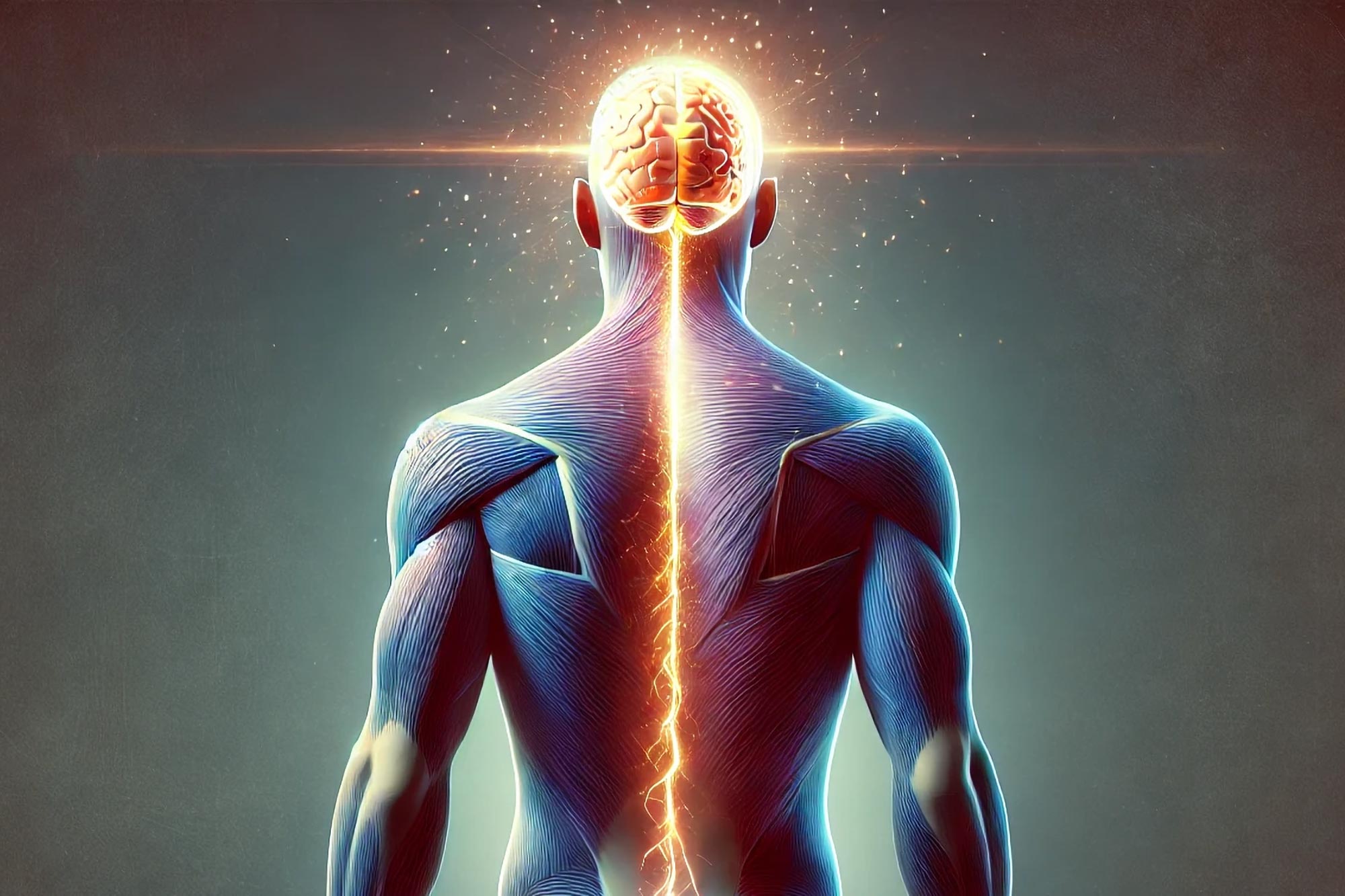
A study reveals that brain inflammation leads to the release of a protein that impairs muscle function, suggesting potential treatments for related muscle fatigue in diseases like Alzheimer’s and long COVID.
Infections and neurodegenerative diseases are known to cause brain inflammation. However, patients with brain inflammation often develop muscle problems that are seemingly independent of the central nervous system.
Now, researchers at Washington University School of Medicine in St. Louis have found that brain inflammation releases a specific protein that travels from the brain to the muscles, causing a decline in muscle function. The study, conducted with fruit flies and mice, has also identified ways to block this process. This could have significant implications for treating or preventing the muscle wasting often seen in inflammatory diseases such as bacterial infections, Alzheimer’s disease, and long COVID.
Discovering Pathways from Brain to Muscle
“We are interested in understanding the very deep muscle fatigue that is associated with some common illnesses,” said senior author Aaron Johnson, PhD, an associate professor of developmental biology. “Our study suggests that when we get sick, messenger proteins from the brain travel through the bloodstream and reduce energy levels in skeletal muscle. This is more than a lack of motivation to move because we don’t feel well. These processes reduce energy levels in skeletal muscle, decreasing the capacity to move and function normally.”
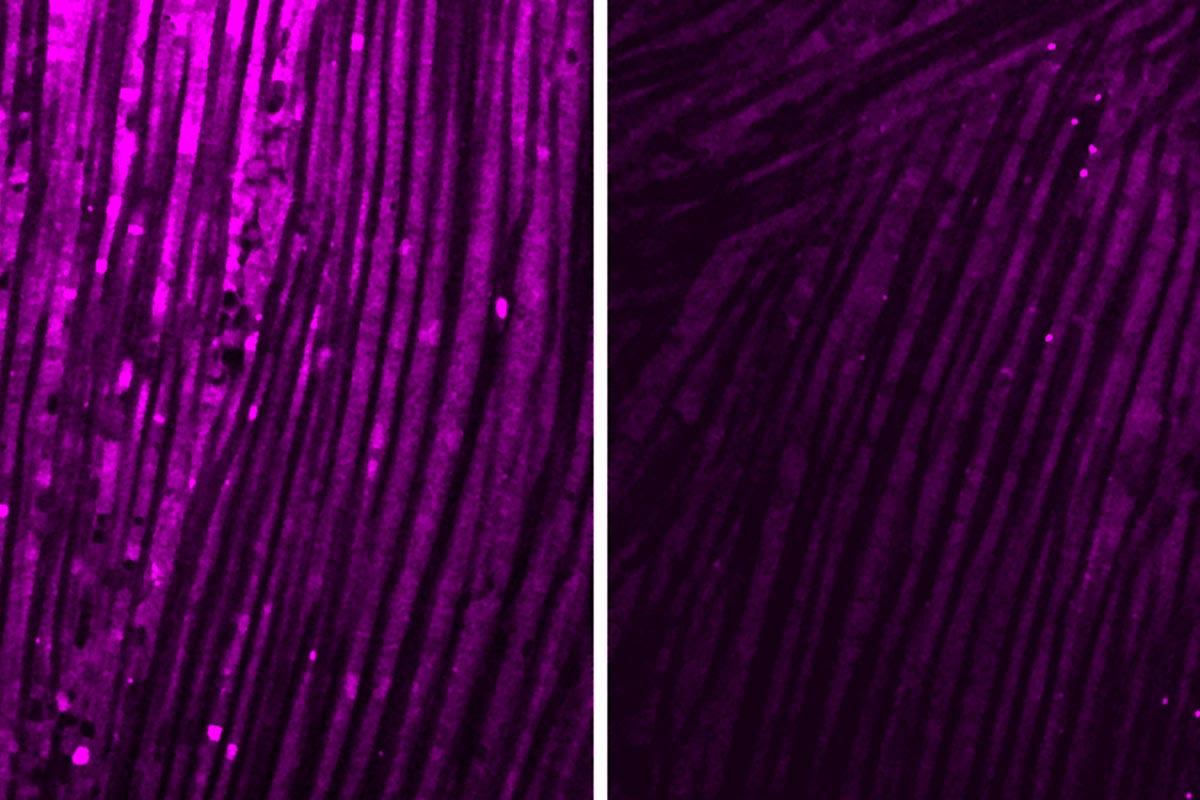
In their study, recently published in Science Immunology, the researchers investigated the effects of brain inflammation on muscle function by modeling three diseases: an E. coli bacterial infection, a SARS-CoV-2 viral infection, and Alzheimer’s. When the brain is exposed to inflammatory proteins characteristic of these diseases, damaging chemicals called reactive oxygen species build-up. The reactive oxygen species cause brain cells to produce an immune-related molecule called interleukin-6 (IL-6), which travels throughout the body via the bloodstream. The researchers found that IL-6 in mice — and the corresponding protein in fruit flies — reduced energy production in muscles’ mitochondria, the energy factories of cells.
Impact of Disease Proteins on Muscle Performance
“Flies and mice that had COVID-associated proteins in the brain showed reduced motor function — the flies didn’t climb as well as they should have, and the mice didn’t run as well or as much as control mice,” Johnson said. “We saw similar effects on muscle function when the brain was exposed to bacterial-associated proteins and the Alzheimer’s protein amyloid beta. We also see evidence that this effect can become chronic. Even if an infection is cleared quickly, the reduced muscle performance remains many days longer in our experiments.”
Johnson, along with collaborators at the University of Florida and first author Shuo Yang, PhD — who did this work as a postdoctoral researcher in Johnson’s lab — make the case that the same processes are likely relevant in people. For instance, the bacterial brain infection meningitis is known to increase IL-6 levels and can be associated with muscle issues in some patients. Among COVID-19 patients, inflammatory SARS-CoV-2 proteins have been found in the brain during autopsy, and many long COVID patients report extreme fatigue and muscle weakness even long after the initial infection has cleared. Patients with Alzheimer’s disease also show increased levels of IL-6 in the blood as well as muscle weakness.
Potential Treatments and Clinical Implications
The study pinpoints potential targets for preventing or treating muscle weakness related to brain inflammation. The researchers found that IL-6 activates what is called the JAK-STAT pathway in muscle, and this is what causes the reduced energy production of mitochondria. Several therapeutics already approved by the Food and Drug Administration for other diseases can block this pathway. JAK inhibitors as well as several monoclonal antibodies against IL-6 are approved to treat various types of arthritis and manage other inflammatory conditions.
“We’re not sure why the brain produces a protein signal that is so damaging to muscle function across so many different disease categories,” Johnson said. “If we want to speculate about possible reasons this process has stayed with us over the course of human evolution, despite the damage it does, it could be a way for the brain to reallocate resources to itself as it fights off disease. We need more research to better understand this process and its consequences throughout the body. In the meantime, we hope our study encourages more clinical research into this pathway and whether existing treatments that block various parts of it can help the many patients who experience this type of debilitating muscle fatigue.”
Funding: This work is supported by the National Institutes of Health (NIH), the National Key Research and Development Plan of China, the National Natural Science Foundation of China, the Shenzhen San-Ming Project for Prevention and Research on Vector-borne Disease, the New Cornerstone Science Foundation through the New Cornerstone Investigator Program, the Xplorer Prize from Tencent Foundation, the Natural Science Foundation of Heilongjiang Province, the Science Fund Program for Distinguished Young Scholars (Overseas), and the Shenzhen Bay Laboratory Startup Fund.
Reference: “Infection and chronic disease activate a systemic brain-muscle signaling axis” by Shuo Yang, Meijie Tian, Yulong Dai, Rong Wang, Shigehiro Yamada, Shengyong Feng, Yunyun Wang, Deepak Chhangani, Tiffany Ou, Wenle Li, Xuan Guo, Jennifer McAdow, Diego E. Rincon-Limas, Xin Yin, Wanbo Tai, Gong Cheng and Aaron Johnson, 12 July 2024, Science Immunology.
DOI: 10.1126/sciimmunol.adm7908
Funding: This work is supported by the National Institutes of Health (NIH), the National Key Research and Development Plan of China, the National Natural Science Foundation of China, the Shenzhen San-Ming Project for Prevention and Research on Vector-borne Disease, the New Cornerstone Science Foundation through the New Cornerstone Investigator Program, the Xplorer Prize from Tencent Foundation, the Natural Science Foundation of Heilongjiang Province, the Science Fund Program for Distinguished Young Scholars (Overseas), and the Shenzhen Bay Laboratory Startup Fund.
Never miss a breakthrough: Join the SciTechDaily newsletter.
Follow us on Google and Google News.
3 Comments
Hope they keep looking for ways to combat long covid chronic fatigue and brain fog. This is a horrible way to live. Nothing helps.
I enjoy playing video games as a typical individual. And having played a variety of games, I can say that the ones I’ve purchased are worth the cost. Because the developers put in a great deal of time and effort to create the perfect game and render the most detailed graphics. Try run 3 to understand what I mean.
“For instance, the bacterial brain infection meningitis is known to increase IL-6 levels and can be associated with muscle issues in some patients.” Would it be possible to treat the brain infection with known therapies?