
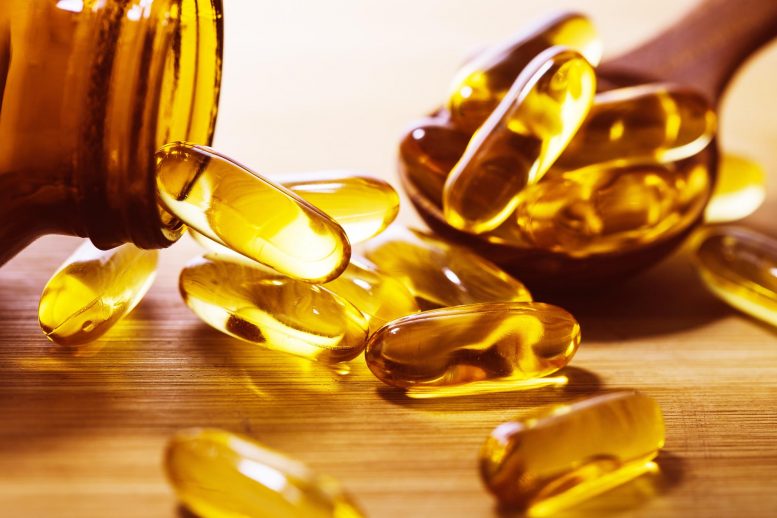
Simple dietary intervention could amount to billions in health care cost savings.
Alzheimer’s disease is the most common cause of dementia in older adults and the 7th leading cause of death in the United States according to the National Institute on Aging. It is a debilitating progressive illness that slowly destroys cognitive function and memory.
Research has found certain genes increase the risk of developing dementia. In particular, the apolipoprotein E gene called APOE4 is the strongest risk factor gene for Alzheimer’s disease.
DHA and Alzheimer’s Prevention
New research published today (June 9, 2022) in the journal Nutrients shows that people with a higher blood DHA level are 49% less likely to develop Alzheimer’s disease vs. those with lower levels, according to the Fatty Acid Research Institute (FARI). The study, led by Aleix Sala-Vila, PhD, suggested that providing extra dietary omega-3 DHA, especially for those carrying the ApoE4 gene (which approximately doubles an individual’s susceptibility to develop AD) might slow the development of the disease. Such a cost-effective, low-risk dietary intervention like this could potentially save billions in health care costs.
In this prospective observational study conducted within the Framingham Offspring Cohort — including 1490 dementia-free participants aged =65 years old — researchers examined the association of red blood cell (RBC) docosahexaenoic acid (DHA) with incident Alzheimer’s Disease (AD), while also testing for an interaction with APOE-e4 carriership.
Risk for incident AD in the highest RBC DHA quintile (Q5, >6.1%) was 49% lower compared with the lowest quintile (Q1, <3.8%). An increase in RBC DHA from Q1 to Q5 was predicted to provide an estimated 4.7 additional years of life free of AD.
Genetic Factors and DHA’s Impact
Further, the researchers noted that an increased intake of DHA might lower risk for developing AD, particularly in higher-risk individuals such as those carrying the APOE-e4 allele, suggesting that they may benefit more from higher DHA levels than non-carriers.
The public health impact of preventing AD with something as simple as a dietary intervention like DHA is also significant. The researchers noted that “Given that estimated health-care payments in 2021 for all patients with AD or other dementias amount to $355 billion in the US (not including caregiving by family members and other unpaid caregivers), any cost-effective strategy for delaying the onset of AD is of utmost public health interest,” and that “Delaying AD by 5 years leads to 2.7 additional years of life, and 4.8 additional AD-free years for an individual who would have acquired AD and is worth over $500,000.”
So how does this paper stack up to others in this area? “Our study is in line with that of Tan et al. who reported cross-sectional associations with RBC DHA on cognitive performance and brain volume measurements (with higher DHA being associated with beneficial outcomes) in the same cohort as studied here,” said William S. Harris, PhD, President of FARI, and senior author on this recent study.
“Most interestingly, 15 years ago similar findings were reported by Schaefer et al. in the parents of the individuals who were the focus of this present investigation (i.e., the Original Framingham Heart Study cohort). Schaefer et al. reported that participants in the top quartile of plasma phosphatidylcholine DHA experienced a significant, 47% reduction in the risk of developing all-cause dementia compared with those with lower levels,” Dr. Harris continued. “Similar findings a generation apart in a similar genetic pool provide considerable confirmation of this DHA-dementia relationship.”
Reference: “Red Blood Cell DHA Is Inversely Associated with Risk of Incident Alzheimer’s Disease and All-Cause Dementia: Framingham Offspring Study” by Aleix Sala-Vila, Claudia L. Satizabal, Nathan Tintle, Debora Melo van Lent, Ramachandran S. Vasan, Alexa S. Beiser, Sudha Seshadri and William S. Harris, 9 June 2022, Nutrients.
DOI: 10.3390/nu14122408
Never miss a breakthrough: Join the SciTechDaily newsletter.
Follow us on Google and Google News.
2 Comments
I did not see what dosage the test subjects were given. i.e. grams/day
Also no recommended dosage of how to get the higher levels. Is fish oil with omega 3 enough?