
Close Menu
    Facebook X (Twitter) Instagram
    SciTechDaily
    • Biology
    • Chemistry
    • Earth
    • Health
    • Physics
    • Science
    • Space
    • Technology
    Facebook X (Twitter) Pinterest YouTube RSS
    SciTechDaily
    Home»Health»Highly Virulent and Transmissible Variant of HIV Discovered in the Netherlands
    Health

    Highly Virulent and Transmissible Variant of HIV Discovered in the Netherlands

    By American Association for the Advancement of Science (AAAS)February 11, 2022No Comments3 Mins Read
    Facebook Twitter Pinterest Telegram LinkedIn WhatsApp Email Reddit
    Share
    Facebook Twitter LinkedIn Pinterest Telegram Email Reddit
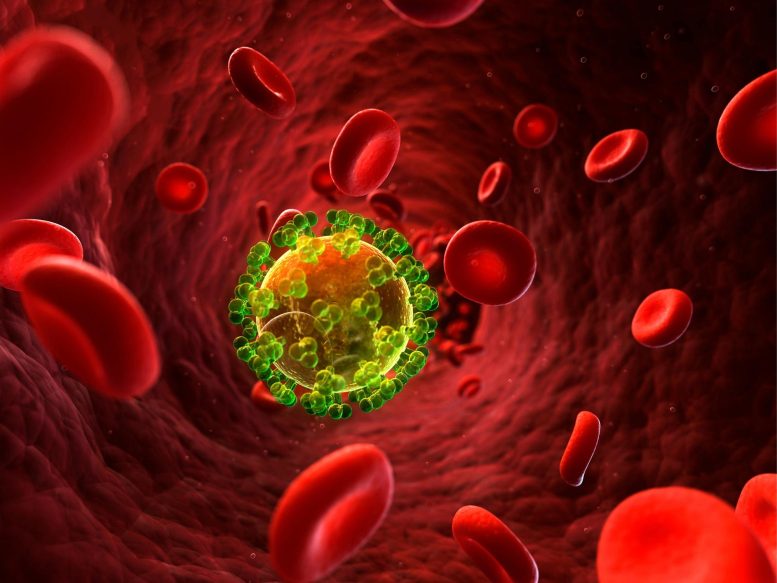
    HIV Infection Illustration
    A highly virulent HIV-1 variant has been circulating in the Netherlands for several decades.

    A highly virulent variant of HIV-1 has been circulating in the Netherlands for the past few decades, researchers report.

    According to the new study, a cluster of more than 100 individuals infected with the subtype showed exceptionally high viral loads, rapid CD4 T cell decline, and increased infectivity. While the findings show that the HIV lineage likely arose de novo around the turn of the millennium, extensive changes in its genome make it hard to discern the mechanisms that underlie its elevated virulence.

    As there are presently 38 million HIV-positive individuals worldwide. It is crucial to monitor the virulence of the virus. Beyond theoretical assessments, there is a lack of understanding about the development of virulence in viruses outside of recent research on SARS-CoV-2 variants.

    Evolution and Impact of the VB Variant

    Within the ongoing BEEHIVE (Bridging the Epidemiology and Evolution of HIV in Europe) project, Chris Wymant and colleagues identified more than 100 individuals with a distinct strain of subtype-B HIV-1 – the “VB variant” – which was characterized by high viral loads and nearly double the rate of CD4 cell decline compared to individuals with other subtype-B HIV strains.

    According to Wymant et al., by the time these individuals were diagnosed, they were vulnerable to developing AIDS within 2 to 3 years. Further analysis of the VB variant showed significant changes across the genome affecting almost 300 amino acids, which make understanding why this particular variant is so virulent difficult.

    Perspective on Viral Evolution and Public Health Response

    “Observing the emergence of more virulent and transmissible HIV is not a public health crisis,” writes Joel Wertheim in an accompanying Perspective, which discusses how and why viruses’ virulence evolves. “Let us not forget the overreaction of the claim of “Super AIDS” in 2005, when alarm was raised over a rapidly progressing, multidrug-resistant HIV infection found in New York that was ultimately restricted to a single individual.”

    Wertheim ends the Perspective by discussing how the findings of the study by Wymant and colleagues are relevant to the COVID-19 pandemic, and the evolution of virulence in SARS-CoV-2.

    For more on this research, see Highly Virulent and Destructive New HIV Variant Discovered in the Netherlands.

    Reference: “A highly virulent variant of HIV-1 circulating in the Netherlands” by Chris Wymant, Daniela Bezemer, François Blanquart, Luca Ferretti, Astrid Gall, Matthew Hall, Tanya Golubchik, Margreet Bakker, Swee Hoe Ong, Lele Zhao, David Bonsall, Mariateresa de Cesare, George Mac, Intyre-Cockett, Lucie Abeler-Dörner, Jan Albert, Norbert Bannert, Jacques Fellay, M. Kate Grabowski, Barbara Gunsenheimer-Bartmeyer, Huldrych F. Günthard, Pia Kivelä, Roger D. Kouyos, Oliver Laeyendecker, Laurence Meyer, Kholoud Porter, Matti Ristola, Ard van Sighem, Ben Berkhout, Paul Kellam, Marion Cornelissen, Peter Reiss, Christophe Fraser, the Netherlands ATHENA HIV Observational Cohort and the BEEHIVE Collaboration, 3 February 2022, Science.
    DOI: 10.1126/science.abk1688

    Never miss a breakthrough: Join the SciTechDaily newsletter.
    Follow us on Google and Google News.

    American Association for the Advancement of Science HIV Infectious Diseases Virology
    Share. Facebook Twitter Pinterest LinkedIn Email Reddit

    Related Articles

    Easy-To-Take Antiretroviral Medicine Better at Suppressing HIV in Children

    Global Spread of the Highly Pathogenic H5N8 Avian Influenza Virus Is a Serious Public Health Concern

    COVID Variant P.1 Is More Transmissible and More Lethal

    New Biochemical Clues in Cell Receptors Help Explain How Coronavirus May Hijack Human Cells

    Spread of Respiratory Virus Linked to a Rare and Mysterious Paralyzing Disease

    COVID-19: An Analysis of Coronavirus Mutations in More Than 1,000 People

    New Therapy for Flu May Help in Fight Against COVID-19, HIV, and Many Other Pathogenic Viruses

    Drug, Already Approved to Treat Multiple Sclerosis, Blocks HIV Infection and Transmission in Human Immune Cells

    FDA Approved Drug May Help Calm Cytokine Storm in COVID-19

    Leave A Reply Cancel Reply

    • Facebook
    • Twitter
    • Pinterest
    • YouTube

    Don't Miss a Discovery

    Subscribe for the Latest in Science & Tech!

    Trending News

    The Universe Is Expanding Too Fast and Scientists Can’t Explain Why

    “Like Liquid Metal”: Scientists Create Strange Shape-Shifting Material

    Early Warning Signals of Esophageal Cancer May Be Hiding in Plain Sight

    Common Blood Pressure Drug Shows Surprising Power Against Deadly Antibiotic-Resistant Superbug

    Scientists Uncover Dangerous Connection Between Serotonin and Heart Valve Disease

    Scientists Discover a “Protector” Protein That Could Help Reverse Hair Loss

    Bone-Strengthening Discovery Could Reverse Osteoporosis

    Scientists Uncover Hidden Trigger Behind Stem Cell Aging

    Follow SciTechDaily
    • Facebook
    • Twitter
    • YouTube
    • Pinterest
    • Newsletter
    • RSS
    SciTech News
    • Biology News
    • Chemistry News
    • Earth News
    • Health News
    • Physics News
    • Science News
    • Space News
    • Technology News
    Recent Posts
    • A Common Diabetes Drug May Hold the Key to Stopping HIV From Coming Back
    • Ancient “Syphilis-Like” Disease in Vietnam Challenges Key Scientific Assumptions
    • Drinking Alcohol To Cope in Your 20s Could Damage Your Brain for Life
    • Scientists Crack Alfalfa’s Chromosome Mystery After Decades of Debate
    • Ancient Ant-Plant Alliance Collapses As Predatory Wasps Move In
    Copyright © 1998 - 2026 SciTechDaily. All Rights Reserved.
    • Science News
    • About
    • Contact
    • Editorial Board
    • Privacy Policy
    • Terms of Use

    Type above and press Enter to search. Press Esc to cancel.