
Close Menu
    Facebook X (Twitter) Instagram
    SciTechDaily
    • Biology
    • Chemistry
    • Earth
    • Health
    • Physics
    • Science
    • Space
    • Technology
    Facebook X (Twitter) Pinterest YouTube RSS
    SciTechDaily
    Home»Earth»How a Selfie Stick and Fishing Rod Accessed an Ancient Skeleton to Shed First Light on 145 Million-Year-Old Reptile
    Earth

    How a Selfie Stick and Fishing Rod Accessed an Ancient Skeleton to Shed First Light on 145 Million-Year-Old Reptile

    By University of PortsmouthMay 24, 2020No Comments3 Mins Read
    Facebook Twitter Pinterest Telegram LinkedIn WhatsApp Email Reddit
    Share
    Facebook Twitter LinkedIn Pinterest Telegram Email Reddit
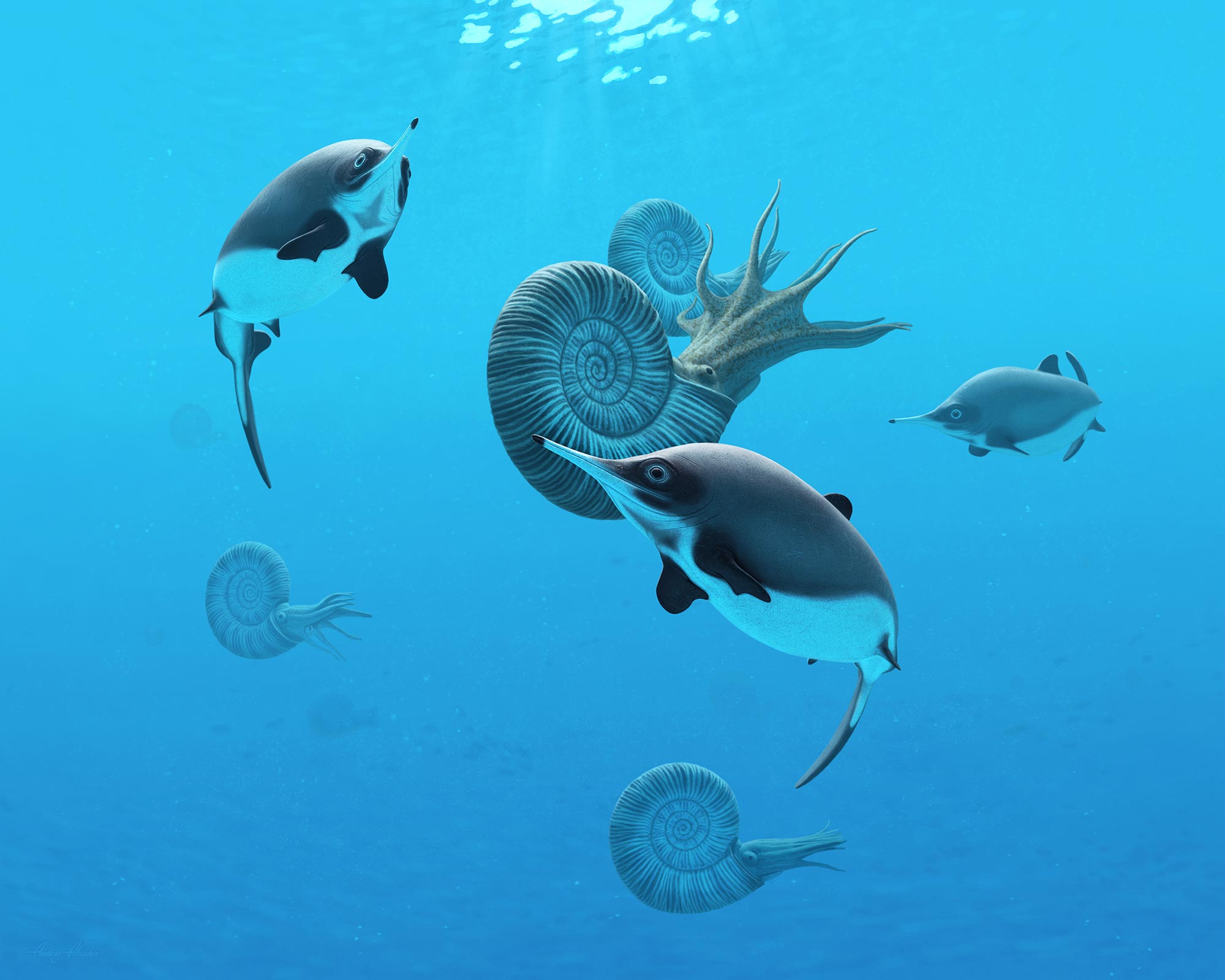
    Nannopterygius Fish Lizard Reconstruction
    This is an artistic life reconstruction of Nannopterygius. Credit: Andrey-Atuchin

    The skeleton of an extinct ‘fish lizard’ locked in a glass case over 16ft from the ground for the last 100 years has finally been studied, thanks to a selfie stick on a fishing rod.

    The 145 million-year-old Nannopterygius is a species of ichthyosaur, which swam the seas of our planet for about 76 million years. It is on display in the Natural History Museum, London, but its glass cabinet is hung too high for easy examination.

    Russian paleontologist Nikolay Zverkov was desperate to see the London specimen as he thought some of the Russian ichthyosaurs might be similar.

    It turns out he was right and that this particular species of swimming prehistoric reptile was common in its day, the Jurassic period.

    To photograph and assess the skeleton, Nikolay attached a digital camera on a selfie stick to a fishing rod and connected it to a PC via a very long USB cable. He passed the photos on to University of Portsmouth paleontologist Megan Jacobs who was working on Ichthyosaurs for her Master’s Degree.
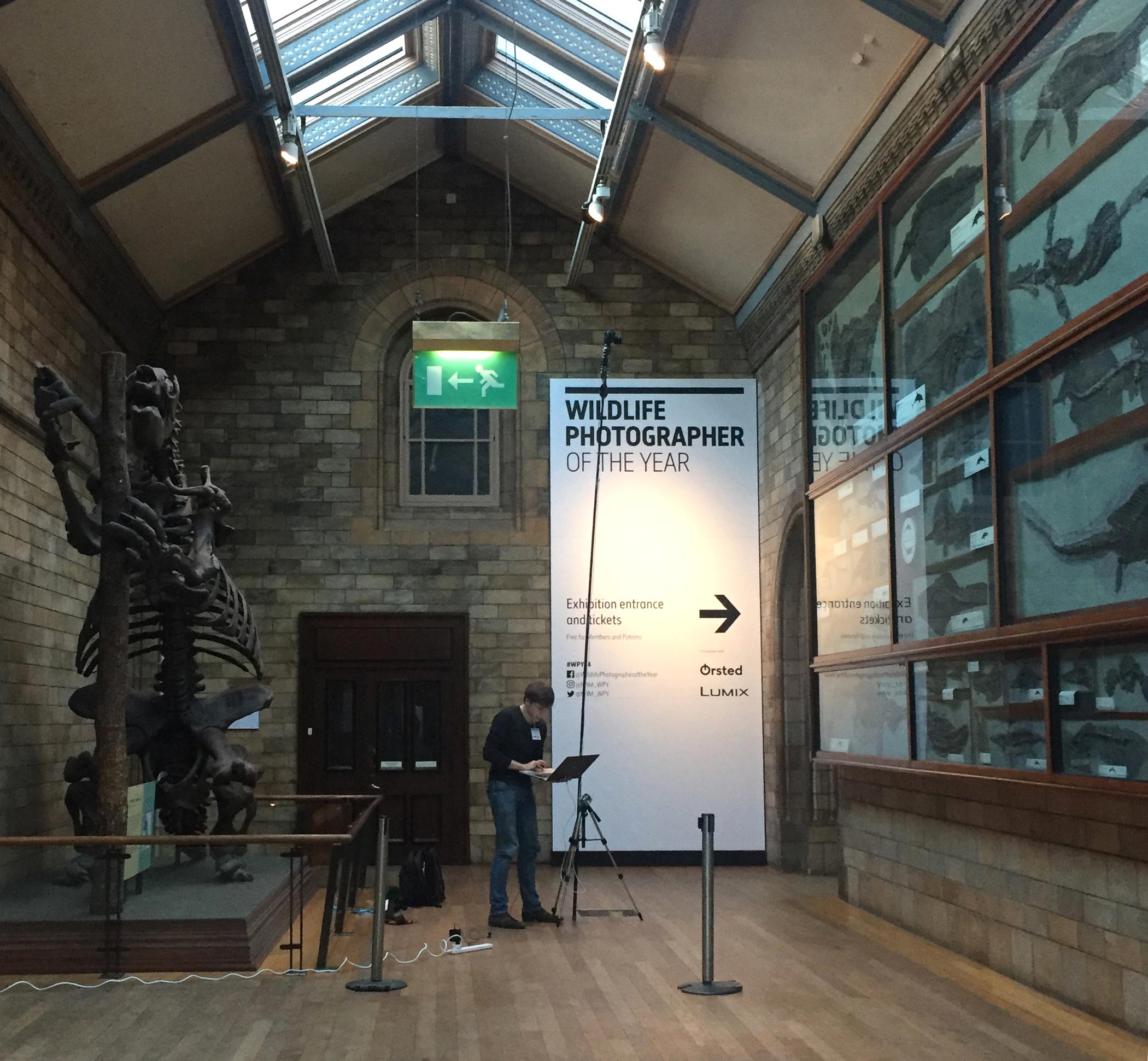
    Nikolay Zverkov Marine Reptile Gallery
    Nikolay Zverkov capturing the ichthyosaur in the Marine Reptile Gallery of the Natural History Museum, London UK. Credit: Nikolay Zverkov

    Megan and Nikolay have now published a paper on the findings in the Zoological Journal of the Linnean Society.

    Megan said: “Nicolay obtained excellent detailed photographs which significantly expand our knowledge of Nannoptergyius enthekiodon.

    “I realized that fossil expert Dr. Steve Etches had also discovered examples of Nannoptergyius near to where the original specimen was found and he’d also discovered other examples across the UK.

    “Finally being able to study this enigmatic animal has shown that it was actually very common and widespread in the Late Jurassic occurring not only in England, but also in European Russia and in the Arctic.”

    Thanks to this new study, several more specimens of Nannopterygius have been found in museum collections across the UK — in Oxford, Cambridge, and in the Etches Collection in Kimmeridge, Dorset, as well as in Russia and Norway, showing this animal to be much more common than previously thought, and making it one of the most widespread of any similar swimming reptile.

    University of Portsmouth Professor of Palaeobiology, Dave Martill, a world-leading expert who supervised Megan’s research, said: “We previously only had detailed knowledge of a type of ichthyosaur called Ophthalmosaurus, which was known from hundreds of specimens, including well-preserved skeletons from the Middle Jurassic Oxford Clay Formation of England.

    “The excellent data available for Ophthalmosaurus contrasted with the impoverished record of other Middle and Late Jurassic ichthyosaurs, so being able to access the Nannopterygius — a formerly inaccessible specimen — has given us fascinating new insight into a particular species of ichthyosaur we knew very little about.”

    Nikolay added: “For decades the scientific community thought that Nannopterygius was the rarest and most poorly known ichthyosaur of England. Finally, we can say that we know nearly every skeletal detail of these small ichthyosaurs, and that these animals were widespread. The answer was very close — we just needed a fishing rod.”

    Reference: ” Revision of Nannopterygius (Ichthyosauria: Ophthalmosauridae): reappraisal of the ‘inaccessible’ holotype resolves a taxonomic tangle and reveals an obscure ophthalmosaurid lineage with a wide distribution” by Nikolay G Zverkov and Megan L Jacobs, 15 May 2020, Zoological Journal of the Linnean Society.
    DOI: 10.1093/zoolinnean/zlaa028

    Never miss a breakthrough: Join the SciTechDaily newsletter.
    Follow us on Google and Google News.

    Paleontology Popular University of Portsmouth
    Share. Facebook Twitter Pinterest LinkedIn Email Reddit

    Related Articles

    Most Intense Burst of Evolution Ever Seen: Fossil Secret May Shed Light on Origins of Many of Earth’s First Animals

    “Most Dangerous Place in the History of Planet Earth” Revealed by Paleontologists

    Scientists Find 550 Million-Year-Old Fossilized Digestive Tract – Solving a Mystery of Primordial Evolution

    Global Mercury Contamination and Warming When Dinosaurs Perished

    Global Warming, Ocean Acidification: Earth Was Stressed Before Dinosaur Extinction

    Mutated Ferns Show Poisonous Factor in Ancient Mass Extinction

    Gap in Fossil Record Filled by Find From School Class Hike – Ancient Rhinos Roamed the Yukon

    It Really Was the Asteroid That Ended the Dinosaurs – Here’s How It Went Down

    The Last Mammoths Died on a Remote Island Where They Had Survived in Isolation for 7,000 Years

    Leave A Reply Cancel Reply

    • Facebook
    • Twitter
    • Pinterest
    • YouTube

    Don't Miss a Discovery

    Subscribe for the Latest in Science & Tech!

    Trending News

    Why Popular Diabetes Drugs Like Ozempic Don’t Work for Everyone: The “Genetic Glitch”

    Scientists Stunned After Finding Plant Thought Extinct for 60 Years

    Scientists Discover Tiny New Spider That Hunts Prey 6x Its Size

    Natural Component From Licorice Shows Promise for Treating Inflammatory Bowel Disease

    Scientists Warn: Popular Sweetener Linked to Dangerous Metabolic Effects

    Monster Storms on Jupiter Unleash Lightning Beyond Anything on Earth

    Scientists Create “Liquid Gears” That Spin Without Touching

    The Simple Habit That Could Help Prevent Cancer

    Follow SciTechDaily
    • Facebook
    • Twitter
    • YouTube
    • Pinterest
    • Newsletter
    • RSS
    SciTech News
    • Biology News
    • Chemistry News
    • Earth News
    • Health News
    • Physics News
    • Science News
    • Space News
    • Technology News
    Recent Posts
    • Trees Emit Tiny Lightning Flashes During Storms and Scientists Finally Prove It
    • Forget Chemicals. This Plant Removes Microplastics From Water
    • Breakthrough Crystal Lets Scientists “Write” Nanoscale Patterns With Light
    • Pomegranate Compound Could Help Protect Against Heart Disease
    • Your Blood Test Might Already Show Alzheimer’s Risk
    Copyright © 1998 - 2026 SciTechDaily. All Rights Reserved.
    • Science News
    • About
    • Contact
    • Editorial Board
    • Privacy Policy
    • Terms of Use

    Type above and press Enter to search. Press Esc to cancel.