
Close Menu
    Facebook X (Twitter) Instagram
    SciTechDaily
    • Biology
    • Chemistry
    • Earth
    • Health
    • Physics
    • Science
    • Space
    • Technology
    Facebook X (Twitter) Pinterest YouTube RSS
    SciTechDaily
    Home»Space»How Ancient Collisions Explain Current Planetary Orbits
    Space

    How Ancient Collisions Explain Current Planetary Orbits

    By American Association for the Advancement of Science (AAAS)November 23, 20244 Comments3 Mins Read
    Facebook Twitter Pinterest Telegram LinkedIn WhatsApp Email Reddit
    Share
    Facebook Twitter LinkedIn Pinterest Telegram Email Reddit
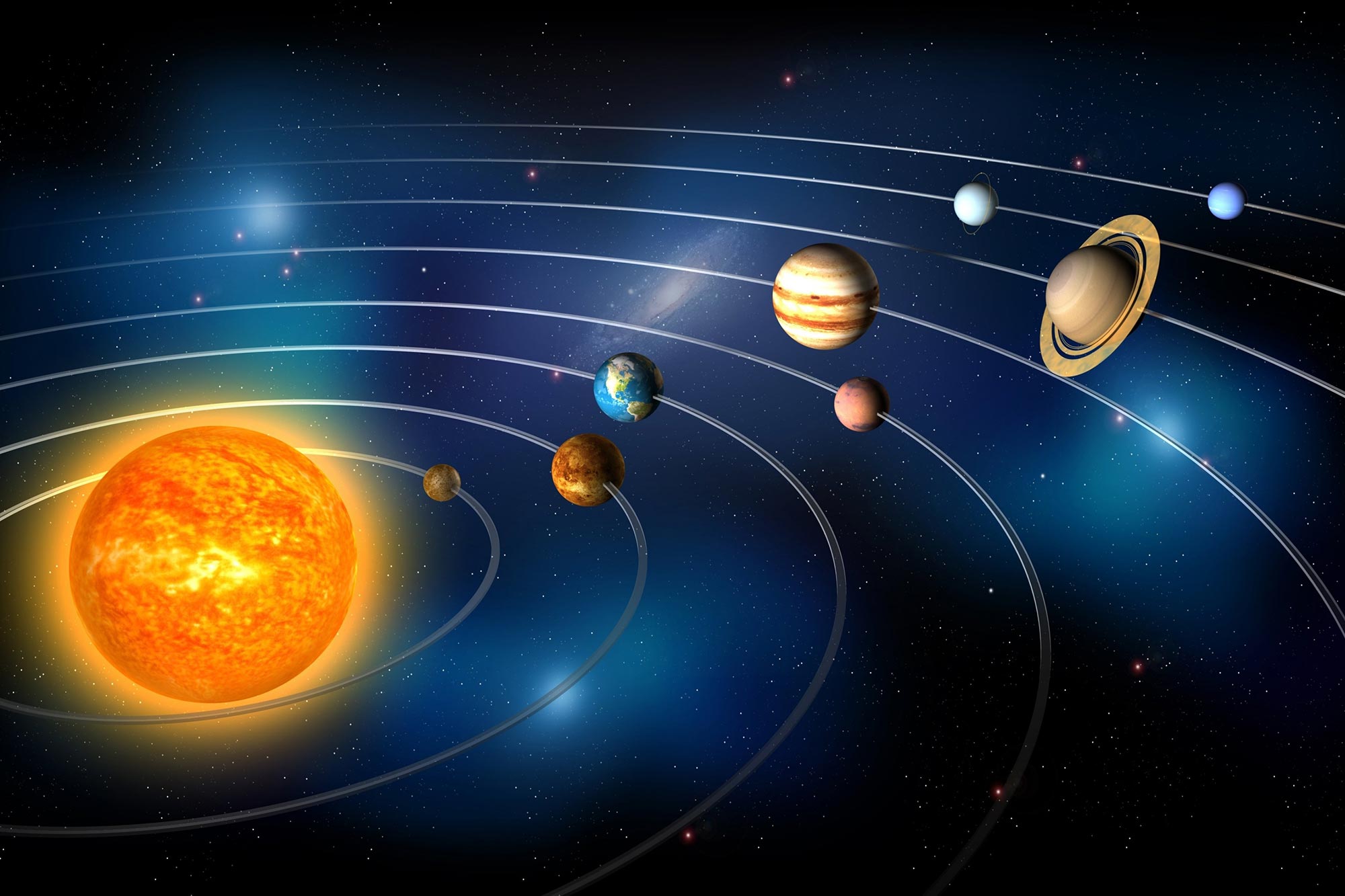
    Solar System Planets in Orbit
    Researchers have discovered that the migration of the Solar System’s giant planets to their present orbits happened between 60 and 100 million years after the Solar System was formed.

    The migration of Jupiter, Saturn, Uranus, and Neptune from closer to wider orbits around the sun occurred 60-100 million years after the Solar System’s formation, possibly influencing the formation of Earth’s moon.

    The migration of the Solar System’s giant planets—Jupiter, Saturn, Uranus, and Neptune—to their current orbits occurred between 60 and 100 million years after the formation of the Solar System, according to new research. These findings, derived from an analysis of low-iron enstatite (EL) chondrites and the Athor family of asteroids, offer fresh insights into the evolution of our Solar System. They may also shed light on the conditions that led to the formation of Earth’s moon.

    Initially, the giant planets formed closer to the Sun and later migrated to their present, more distant positions during a period of orbital instability. While the exact timing of this instability has been difficult to determine, earlier estimates suggested an upper limit of less than 100 million years after the Solar System’s formation. To refine this timeline, Chrysa Avdellidou and her team studied asteroid fragments from the Athor family, which were created by the catastrophic destruction of a progenitor asteroid approximately 3 billion years ago.

    The researchers proposed that the implantation of material from this collision into the Solar System’s main asteroid belt could help date the period of orbital instability. Using thermochronometer models, orbital dynamics simulations, and meteorite data, the team identified a link between EL chondrite meteorites and Athor family asteroids. This connection suggests that the material was implanted into the asteroid belt more than 60 million years after the Solar System began forming, setting a lower limit for the timing of the giant planets’ migration.

    Furthermore, the study highlights a potential connection between this period of orbital instability and the giant impact that created Earth’s moon. The researchers speculate that both events occurred within the same timeframe, between 60 and 100 million years after the Solar System’s formation, indicating they may be interconnected.

    For more on this study, see Tracing Planetary Shifts That Formed the Moon.

    Reference: “Dating the Solar System’s giant planet orbital instability using enstatite meteorites” by Chrysa Avdellidou, Marco Delbo’, David Nesvorný, Kevin J. Walsh and Alessandro Morbidelli, 16 April 2024, Science.
    DOI: 10.1126/science.adg8092

    Never miss a breakthrough: Join the SciTechDaily newsletter.
    Follow us on Google and Google News.

    American Association for the Advancement of Science Asteroid Meteorites Solar System
    Share. Facebook Twitter Pinterest LinkedIn Email Reddit

    Related Articles

    Ancient Asteroid Unlocks 4.6-Billion-Year-Old Magnetic Secrets of the Solar System

    When Giants Moved: Tracing Planetary Shifts That Formed the Moon

    The Far-Flung Origin of Life’s Building Blocks: Researchers Uncover “Completely Unexpected” Findings

    Was Earth’s Water Always Here? Unexpected Meteorite Composition Provides Origin Evidence

    Earth Should Be Dry – An Unexpected Meteorite Discovery Reveals the Origin of Earth’s Vast Oceans

    A Star Disturbed Solar System Comets and Asteroids 70,000 Years Ago

    “Hidden Flux” of Material May Help Explain Earth’s Origins

    Amino Acids Found in Meteorites that Experienced High Temperatures

    Bus-Sized Asteroid Barely Misses Earth

    4 Comments

    1. Phenry on November 24, 2024 6:56 am

      And who created matter?

      Something cannot come from nothing.

      Reply
    2. Richard on November 25, 2024 12:14 am

      Quantum theory suggest that matter and energy can be borrowed for a short time from nothing so long as the sum with gravity is zero, because gravity has negative energy. There is an idea that the big bang was a quantum fluctuation. https://en.wikipedia.org/wiki/Zero-energy_universe

      Reply
    3. Abubakar on November 25, 2024 4:52 am

      I’m a student of a school, in the year 2024 and I hope to be in this group and I want every information about everything in yeah. I love 💕 this group

      Reply
      • Robert Welch on November 26, 2024 8:55 am

        Pull up a chair and stay a while. Glad to have you here.

        Reply
    Leave A Reply Cancel Reply

    • Facebook
    • Twitter
    • Pinterest
    • YouTube

    Don't Miss a Discovery

    Subscribe for the Latest in Science & Tech!

    Trending News

    Millions Take These IBS Drugs, But a New Study Finds Serious Risks

    Scientists Unlock Hidden Secrets of 2,300-Year-Old Mummies Using Cutting-Edge CT Scanner

    Bread Might Be Making You Gain Weight Even Without Eating More Calories

    Scientists Discover Massive Magma Reservoir Beneath Tuscany

    Europe’s Most Active Volcano Just Got Stranger – Here’s Why Scientists Are Rethinking It

    Alzheimer’s Symptoms May Start Outside the Brain, Study Finds

    Millions Take This Popular Supplement – Scientists Discover a Concerning Link to Heart Failure

    The Universe Is Expanding Too Fast and Scientists Can’t Explain Why

    Follow SciTechDaily
    • Facebook
    • Twitter
    • YouTube
    • Pinterest
    • Newsletter
    • RSS
    SciTech News
    • Biology News
    • Chemistry News
    • Earth News
    • Health News
    • Physics News
    • Science News
    • Space News
    • Technology News
    Recent Posts
    • Scientists Say a Hidden Structure May Exist Inside Earth’s Core
    • Doctors Surprised by the Power of a Simple Drug Against Colon Cancer
    • Why Popular Diabetes Drugs Like Ozempic Don’t Work for Everyone: The “Genetic Glitch”
    • Scientists Create Improved Insulin Cells That Reverse Diabetes in Mice
    • Scientists Stunned After Finding Plant Thought Extinct for 60 Years
    Copyright © 1998 - 2026 SciTechDaily. All Rights Reserved.
    • Science News
    • About
    • Contact
    • Editorial Board
    • Privacy Policy
    • Terms of Use

    Type above and press Enter to search. Press Esc to cancel.