
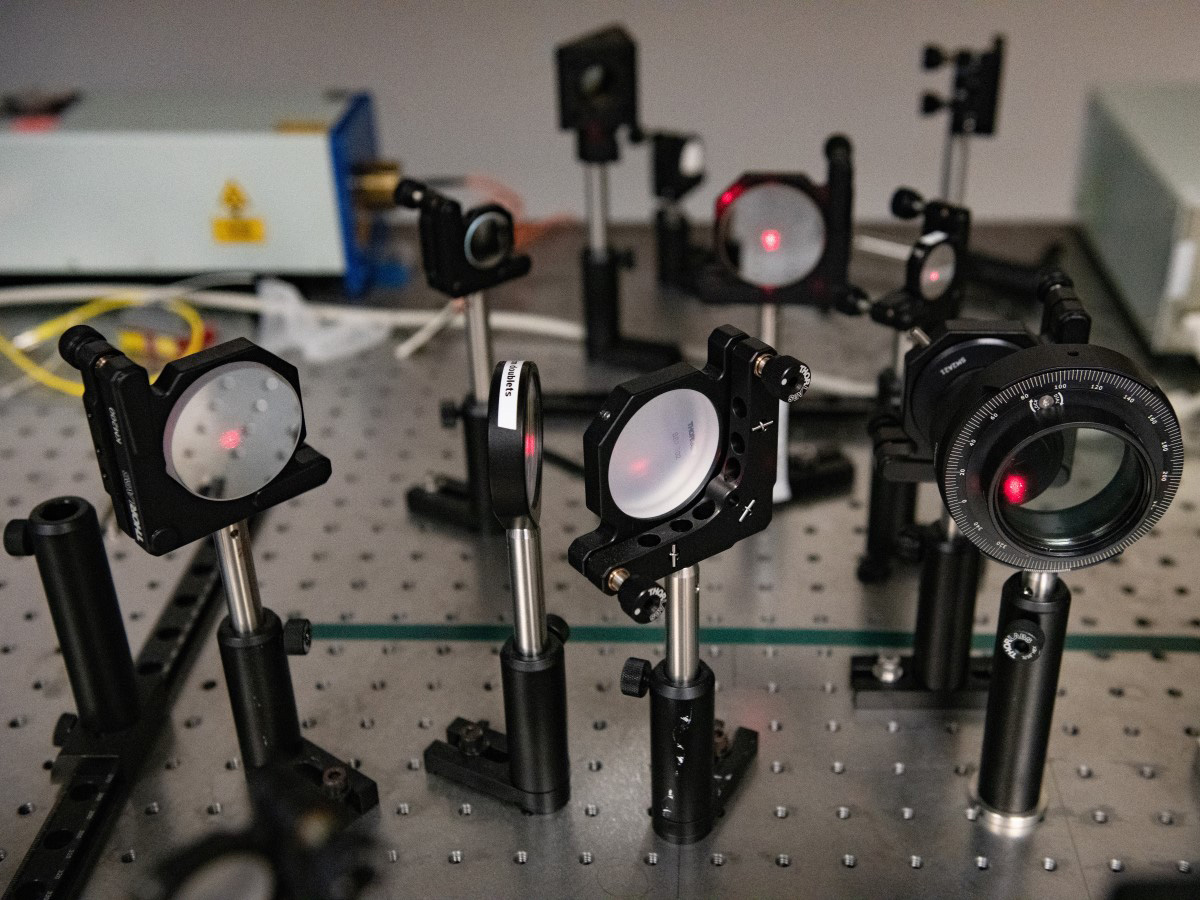
A team has created a laser technique to break down tough plastics into valuable components, offering a new, sustainable approach to tackling global plastic pollution.
A global research team, led by Texas Engineers, has developed a laser-based method to decompose the molecules in plastics and other materials into their fundamental components for future reuse.
The discovery, which involves laying these materials on top of two-dimensional materials called transition metal dichalcogenides and then lighting them up, has the potential to improve how we dispose of plastics that are nearly impossible to break down with today’s technologies.
“By harnessing these unique reactions, we can explore new pathways for transforming environmental pollutants into valuable, reusable chemicals, contributing to the development of a more sustainable and circular economy,” said Yuebing Zheng, professor in the Cockrell School of Engineering’s Walker Department of Mechanical Engineering and one of the leaders on the project. “This discovery has significant implications for addressing environmental challenges and advancing the field of green chemistry.”
The research was recently published in Nature Communications. The team includes researchers from the University of California, Berkeley; Tohoku University in Japan; Lawrence Berkeley National Laboratory; Baylor University; and The Pennsylvania State University.
Tackling Plastic Pollution
Plastic pollution has become a global environmental crisis, with millions of tons of plastic waste accumulating in landfills and oceans each year. Conventional methods of plastic degradation are often energy-intensive, environmentally harmful, and ineffective. The researchers envision using this new discovery to develop efficient plastic recycling technologies to reduce pollution.
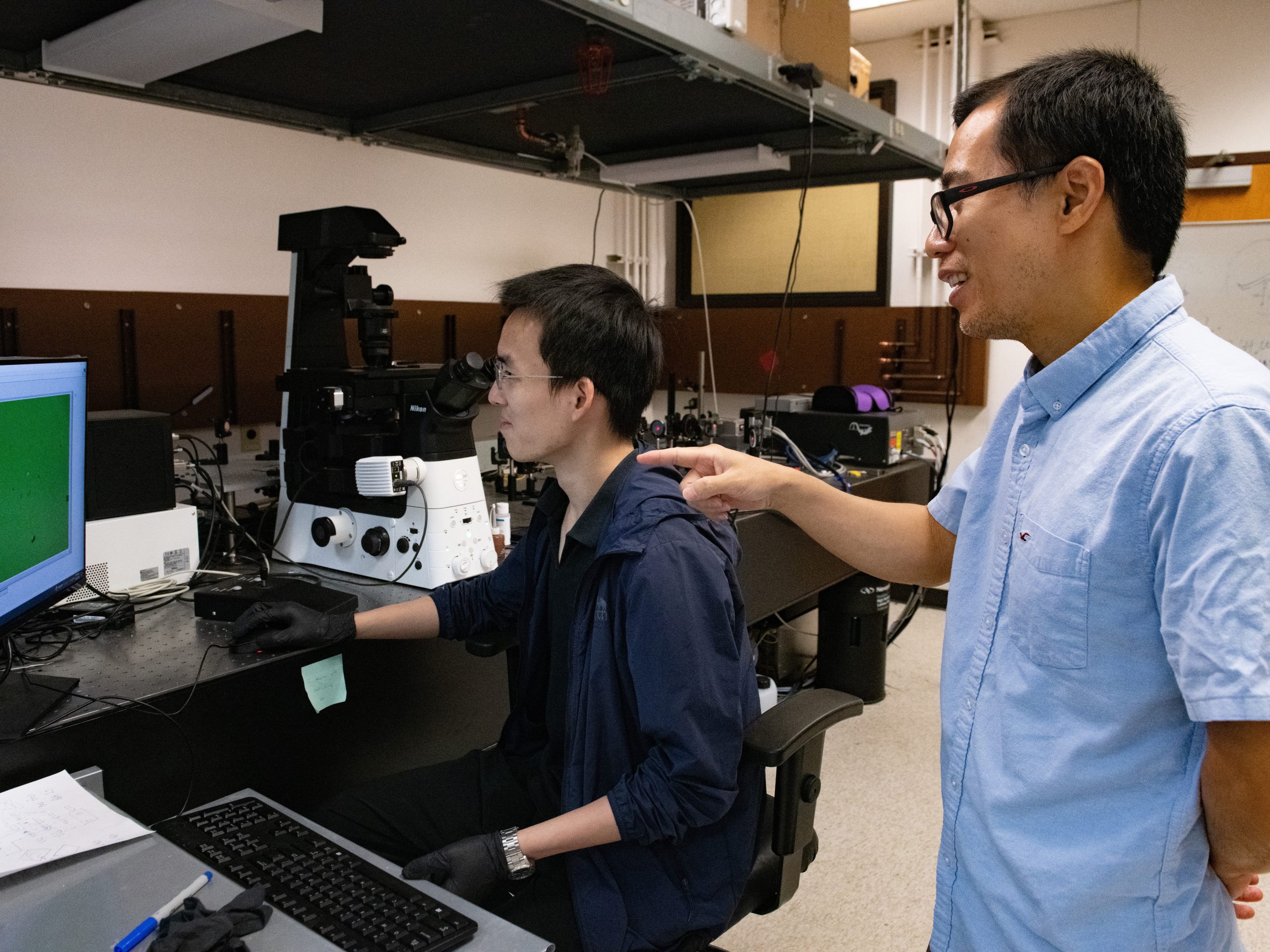
The researchers used low-power light to break the chemical bonding of the plastics and create new chemical bonds that turned the materials into luminescent carbon dots. Carbon-based nanomaterials are in high demand because of their many capabilities, and these dots could potentially be used as memory storage devices in next-generation computer devices.
“It’s exciting to potentially take plastic that on its own may never break down and turn it into something useful for many different industries,” said Jingang Li, a postdoctoral student at University of California, Berkeley who started the research at UT.
Potential for Broader Applications
The specific reaction is called C-H activation, where carbon-hydrogen bonds in an organic molecule are selectively broken and transformed into a new chemical bond. In this research, the two-dimensional materials catalyzed this reaction that led to hydrogen molecules morphing into gas. That cleared the way for carbon molecules to bond with each other to form the information-storing dots.
Further research and development are needed to optimize the light-driven C-H activation process and scale it up for industrial applications. However, this study represents a significant step forward in the quest for sustainable solutions to plastic waste management.
The light-driven C-H activation process demonstrated in this study can be applied to many long-chain organic compounds, including polyethylene and surfactants commonly used in nanomaterials systems.
Reference: “Light-driven C–H activation mediated by 2D transition metal dichalcogenides” by Jingang Li, Di Zhang, Zhongyuan Guo, Zhihan Chen, Xi Jiang, Jonathan M. Larson, Haoyue Zhu, Tianyi Zhang, Yuqian Gu, Brian W. Blankenship, Min Chen, Zilong Wu, Suichu Huang, Robert Kostecki, Andrew M. Minor, Costas P. Grigoropoulos, Deji Akinwande, Mauricio Terrones, Joan M. Redwing, Hao Li and Yuebing Zheng, 2 July 2024, Nature Communications.
DOI: 10.1038/s41467-024-49783-z
The research was funded by various institutions, including the National Institutes of Health, National Science Foundation, Japan Society for the Promotion of Science, the Hirose Foundation and the National Natural Science Foundation of China.
The research team includes Deji Akinwande and Yuqian Gu of UT’s Chandra Family Department of Electrical and Computer Engineering; Zhihan Chen, Zilong Wu and Suichu Huang of the Materials Science and Engineering Program at UT; Hao Li, Di Zhang and Zhongyuan Guo from Tohoku University in Japan; Brian Blankenship, Min Chen and Costas P. Grigoropoulos of the University of California, Berkeley; Xi Jiang, Robert Kostecki and Andrew M. Minor of Lawrence Berkeley National Laboratory; Jonathan M. Larson of Baylor University; and Haoyue Zhu, Tianyi Zhang, Mauricio Terrones and Joan M. Redwing of The Pennsylvania State University.
Never miss a breakthrough: Join the SciTechDaily newsletter.
Follow us on Google and Google News.
2 Comments
Sounds fiddly to me. How would this look on a real life scale where there are millions of tons of plastic to be reprocessed? I seriously doubt a pesky laser can ever do it viably.
great research how can it be scaled up for commercial use . it is badly needed by human race today to fight adverse climate chnage impact. thanks and best rgds