

Researchers at Lehigh University use mayonnaise in experiments to better understand the dynamics of fusion capsules, essential for advancing inertial confinement fusion as a viable energy source.
Mayonnaise continues to be a key ingredient in ongoing research into the physics of nuclear fusion.
“We’re still working on the same problem, which is the structural integrity of fusion capsules used in inertial confinement fusion, and Hellmann’s Real Mayonnaise is still helping us in the search for solutions,” says Arindam Banerjee, the Paul B. Reinhold Professor of Mechanical Engineering and Mechanics at Lehigh University and Chair of the MEM department in the P.C. Rossin College of Engineering and Applied Science.
Powering the Future: Fusion Energy Explained
In simple terms, fusion reactions are what power the sun. If the process could be harnessed on Earth, scientists believe it could offer humanity a nearly limitless and clean energy source. However, replicating the sun’s extreme conditions is an incredibly complex challenge. Researchers across science and engineering disciplines, including Banerjee and his team, are examining the problem from a multitude of perspectives.
Lehigh University researchers are digging deeper into the stability challenges of nuclear fusion—with mayonnaise! The team, led by Arindam Banerjee, the Paul B. Reinhold Professor of Mechanical Engineering and Mechanics, is examining the phases of Rayleigh-Taylor instability with an innovative approach that could inform the design of more stable fusion capsules, contributing to the global effort to harness clean fusion energy. Their most recent paper, published in Physical Review E, explores the critical transitions between elastic and plastic phases in these conditions. Credit: Lehigh University
Challenges of Simulating Sun-like Conditions
Inertial confinement fusion is a process that initiates nuclear fusion reactions by rapidly compressing and heating capsules filled with fuel, in this case, isotopes of hydrogen. When subjected to extreme temperatures and pressure, these capsules melt and form plasma, the charged state of matter that can generate energy.
“At those extremes, you’re talking about millions of degrees Kelvin and gigapascals of pressure as you’re trying to simulate conditions in the sun,” says Banerjee. “One of the main problems associated with this process is that the plasma state forms these hydrodynamic instabilities, which can reduce the energy yield.”
Unique Approach: Mayonnaise as a Research Tool
In their first paper on the topic back in 2019, Banerjee and his team examined that problem, known as Rayleigh-Taylor instability. The condition occurs between materials of different densities when the density and pressure gradients are in opposite directions, creating an unstable stratification.
“We use mayonnaise because it behaves like a solid, but when subjected to a pressure gradient, it starts to flow,” he says. Using the condiment also negates the need for high temperatures and pressure conditions, which are exceedingly difficult to control.
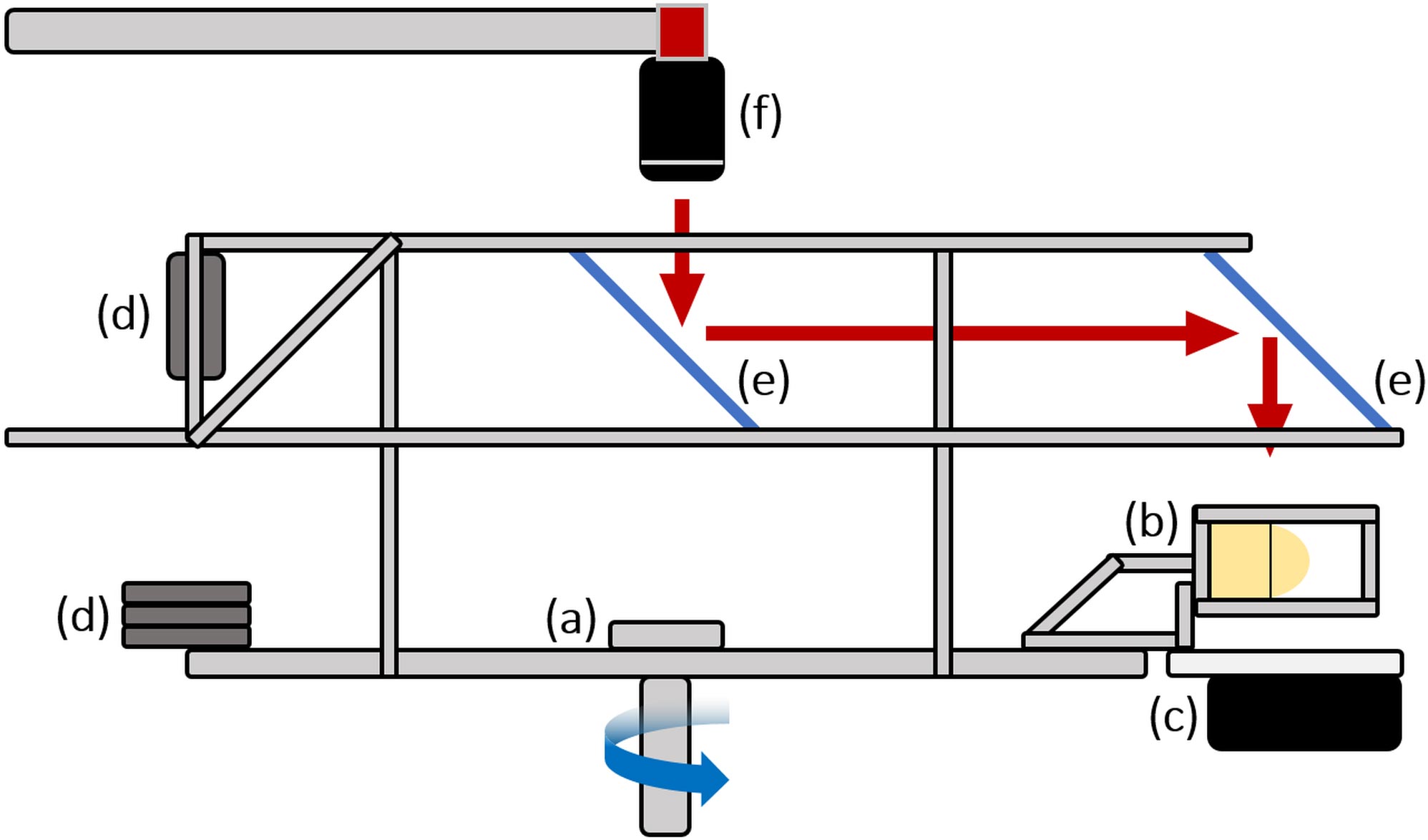
Banerjee’s team used a custom-built, one-of-a-kind rotating wheel facility within Banerjee’s Turbulent Mixing Laboratory to mimic the flow conditions of the plasma. Once the acceleration crossed a critical value, the mayo started to flow.
Insights from Mayo: Understanding Material Behavior
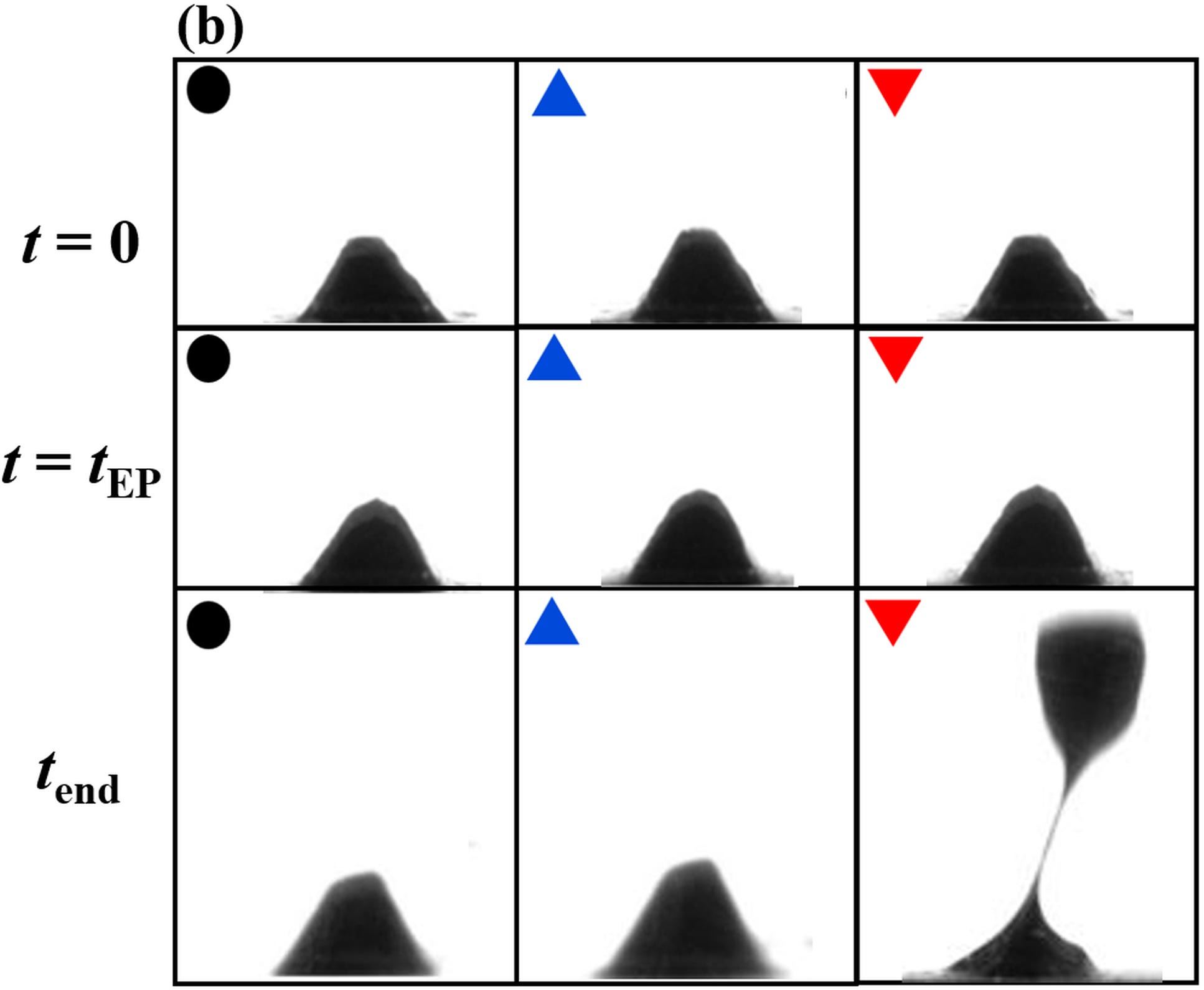
One of the things they figured out during that initial research was that before the flow became unstable, the soft solid, i.e., the mayo, went through a couple of phases.
“As with a traditional molten metal, if you put a stress on mayonnaise, it will start to deform, but if you remove the stress, it goes back to its original shape,” he says. “So there’s an elastic phase followed by a stable plastic phase. The next phase is when it starts flowing, and that’s where the instability kicks in.”
Understanding this transition between the elastic phase and the stable plastic phase is critical, he says, because knowing when the plastic deformation starts might tip off researchers as to when the instability would occur, Banerjee says. Then, they’d look to control the condition to stay within this elastic or stable plastic phase.

Advancing Fusion Research: Recent Discoveries
In their latest paper, published in Physical Review E, the team (including former graduate student and first author of the study, Aren Boyaci ’24 PhD, now working at Rattunde AG as a Data Modeling Engineer in Berlin, Germany), looked at the material properties, the perturbation geometry (amplitude and wavelength), and the acceleration rate of the materials that undergo Rayleigh-Taylor instability.
“We investigated the transition criteria between the phases of Rayleigh-Taylor instability, and examined how that affected the perturbation growth in the following phases,” Boyaci says. “We found the conditions under which the elastic recovery was possible, and how it could be maximized to delay or completely suppress the instability. The experimental data we present are also the first recovery measurements in the literature.”
The finding is an important one as it could inform the design of the capsules in such a way that they never become unstable.
There is, however, the looming question of how the team’s data fit into what happens in actual fusion capsules, the property values of which are orders of magnitude different from the soft solids used in their experiments.
“In this paper, we have non-dimensionalized our data with the hope that the behavior we are predicting transcends these few orders of magnitude,” says Banerjee. “We’re trying to enhance the predictability of what would happen with those molten, high-temperature, high-pressure plasma capsules with these analog experiments of using mayonnaise in a rotating wheel.”
The Road Ahead: Fusion Energy’s Potential
Ultimately, Banerjee and his team are part of a global effort to turn the promise of fusion energy into reality.
“We’re another cog in this giant wheel of researchers,” he says. “And we’re all working towards making inertial fusion cheaper and therefore, attainable.”
References:
“Transition to plastic regime for Rayleigh-Taylor instability in soft solids” by Aren Boyaci and Arindam Banerjee, 15 May 2024, Physical Review E.
DOI: 10.1103/PhysRevE.109.055103
“Rayleigh-Taylor-instability experiments with elastic-plastic materials” by Rinosh Polavarapu, Pamela Roach and Arindam Banerjee, 8 May 2019, Physical Review E.
DOI: 10.1103/PhysRevE.99.053104
Never miss a breakthrough: Join the SciTechDaily newsletter.
Follow us on Google and Google News.
3 Comments
Mayonnaise? Has the budget been slashed or something?
In their latest paper, published in Physical Review E, the team looked at the material properties, the perturbation geometry (amplitude and wavelength), and the acceleration rate of the materials that undergo Rayleigh-Taylor instability.
VERY GOOD.
ASK THE researchers,
Is the so-called peer review in Physics Review reliable?
Scientific research guided by correct theories can help humanity avoid detours, failures, and pomposity. Please witness the exemplary collaboration between theoretical physicists and experimentalists ( https://scitechdaily.com/microscope-spacecrafts-most-precise-test-of-key-component-of-the-theory-of-general-relativity/#comment-854286 ). Is this the peer review that the academic community takes pride in and vigorously promotes today?
They are Physical Review, not Physics Review.