

Johns Hopkins Medicine researchers discovered that a protein receptor involved in sensing odors might explain sex differences in blood pressure.
Using data from both mice and humans, a Johns Hopkins Medicine research team has found that a cell surface protein that senses odors and chemicals may be responsible for — and help explain — sex differences in mammalian blood pressure. The unusual connection between such protein receptors and sex differences in blood pressure, reported in the March 20 issue of Science Advances, may lead to a better understanding of long-known differences in blood pressure between females and males.
Scientific Investigation Into Olfactory Receptors
Blood pressure in premenopausal human and mouse females is typically 10 points lower in both diastolic and systolic pressure than in males. Some studies suggest the difference may be caused by sex hormones, but the biological basis for the variation is not entirely clear.
“Despite the well-known differences in blood pressure between females and males, most clinical guidelines have the same thresholds for treatment,” says Jennifer Pluznick, Ph.D., associate professor of physiology at the Johns Hopkins University School of Medicine. “Taking a closer look at the fundamental, scientific basis for sex differences in blood pressure may eventually help clinicians think about blood pressure treatment in new ways.”
Pluznick is a basic scientist who has found unique roles for so-called olfactory receptors in various organs of the body. The tiny proteins on the surface of cells essentially sniff out nearby odors or other chemicals.
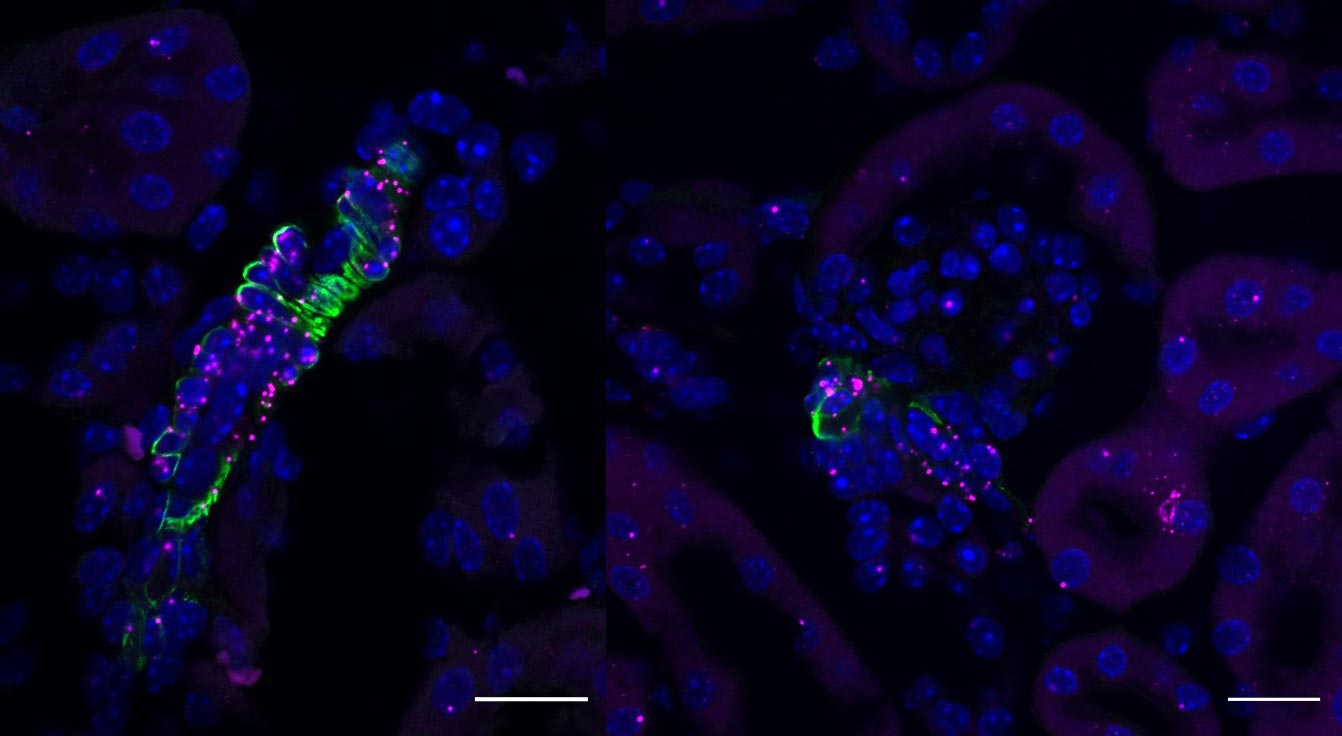
The Johns Hopkins team began their studies looking for the locations in the body where a specific olfactory receptor — Olfr558 — is found. Olfr558 is one of three olfactory receptors (out of about 350 total) that are well-conserved by evolution in many mammals, including humans and mice. The human version of the receptor is called OR51E1.
Previously, the Johns Hopkins team found Olfr558 in the kidney, and other studies have located the receptor in other organs, aside from the cells responsible for scent detection in the nose.
For this study, the researchers found the receptor in blood vessel cells in the kidney and in juxtaglomerular granular cells, a type of kidney cell that secretes the hormone renin, which plays a key role in regulating blood pressure.
“This was our first indication that we should take a closer look at the impact of Olfr558 on blood pressure,” says Pluznick.
Findings and Future Directions
Next, the team, led by Pluznick and research associate Jiaojiao Xu, Ph.D., measured blood pressure in young female and male mice during active and resting timeframes. Male mice with normal levels of the Olfr558 receptor typically had diastolic and systolic blood pressure 10 points higher than female mice.
However, when the researchers looked at young female and male mice genetically engineered to lack the gene for the Olfr558 receptor, they found that blood pressure increased in female mice but decreased in male mice, such that the sex difference in blood pressure disappeared.
Preliminary data from the Johns Hopkins team point to blood vessel stiffness and renin hormone levels in the blood as potential reasons for the lack of blood pressure variation in mice without the receptor.
The research team also analyzed genomic information on human tissue data stored in the U.K. Biobank, focusing on people with a rare variation in the human version of the olfactory receptor OR51E1. Their analysis showed that females and males younger than 50 with the variant do not show the typical sex-linked differences in blood pressure.
The research team cautioned that their work has not identified a direct molecular signaling pathway that would pin down the link between the olfactory receptor and blood pressure variation. Those studies have yet to be done.
Pluznick’s team will try, in future experiments, to pinpoint the precise cell types that govern the receptor-blood pressure link.
“We hope that improving our understanding of the basic biology of this new link will provide insights on blood pressure regulation for both sexes,” says Pluznick.
Reference: “An evolutionarily conserved olfactory receptor is required for sex differences in blood pressure” by Jiaojiao Xu, Rira Choi, Kunal Gupta, Helen R. Warren, Lakshmi Santhanam and Jennifer L. Pluznick, 20 March 2024, Science Advances.
DOI: 10.1126/sciadv.adk1487
Support for this research was provided by the National Institutes of Health’s National Institute of Diabetes and Digestive and Kidney Diseases [R56DK107726], the National Institute on Aging [R21AG081683], the American Heart Association Established Investigator Award, the NIHR Cardiovascular Biomedical Centre at Barts and the Queen Mary University of London.
In addition to Pluznick and Xu, researchers who contributed to this study are Rira Choi, Kunal Gupta and Lakshmi Santhanam from Johns Hopkins and Helen Warren from the Queen Mary University of London.
Never miss a breakthrough: Join the SciTechDaily newsletter.
Follow us on Google and Google News.