
Close Menu
    Facebook X (Twitter) Instagram
    SciTechDaily
    • Biology
    • Chemistry
    • Earth
    • Health
    • Physics
    • Science
    • Space
    • Technology
    Facebook X (Twitter) Pinterest YouTube RSS
    SciTechDaily
    Home»Science»How Some Sloths Grew 20 Feet Tall – And What Wiped Them Out
    Science

    How Some Sloths Grew 20 Feet Tall – And What Wiped Them Out

    By Walter Beckwith, American Association for the Advancement of Science (AAAS)June 15, 2025No Comments4 Mins Read
    Facebook Twitter Pinterest Telegram LinkedIn WhatsApp Email Reddit
    Share
    Facebook Twitter LinkedIn Pinterest Telegram Email Reddit
    Ancient Sloths
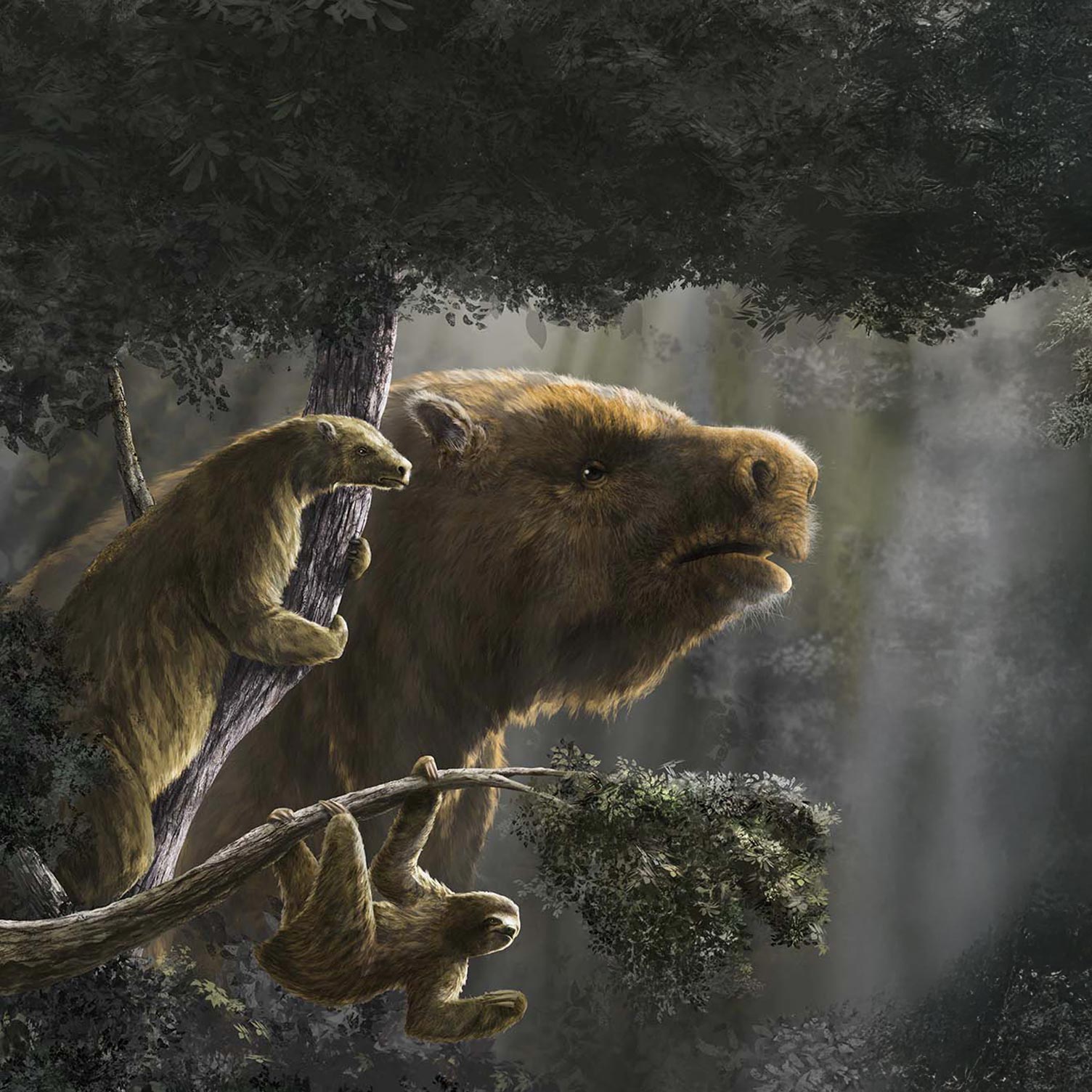
    Ancient sloths lived in trees, on mountains, in deserts, boreal forests, and open savannahs. These differences in habitat are primarily what drove the wide difference in size between sloth species. Credit: Diego Barletta, edited

    Sloths weren’t always the slow, tree-hugging creatures we know today. For millions of years, they came in a wild variety of shapes and sizes, from tiny climbers to massive ground beasts as big as elephants.

    Their evolutionary journey, shaped by shifting habitats and climates, was abruptly halted when humans entered the scene, leading to the extinction of their most colossal members.

    Sloth Diversity: From Tree-Dwellers to Towering Giants

    Long before today’s slow-moving, tree-dwelling sloths, these fascinating animals came in all shapes and sizes—from tiny climbers to towering ground-dwellers the size of elephants. New research reveals that this incredible range in sloth body size was shaped mostly by where they lived.

    And their dramatic disappearance? Likely the result of rising human pressures, especially hunting, which wiped out the largest species. The few sloths that survive today may owe their survival to the fact that they lived high in the treetops, out of reach from early human hunters.

    A Lost Empire of Sloths

    Today, just two small tree-dwelling sloth species live in the rainforests of Central and South America. But not long ago, sloths were everywhere. During the late Cenozoic era, over 100 different kinds of sloths roamed the Americas, thriving in forests, grasslands, and more. Some were massive, standing up to six meters (20 feet) tall and weighing several tons. Yet by the end of the last Ice Age, nearly all of them had vanished.

    Uncovering 35 Million Years of Sloth Evolution

    To understand what drove this dramatic rise and fall, researcher Alberto Boscaini and colleagues looked back across 35 million years of sloth history. Using a combination of fossil data, DNA and protein sequences, and advanced evolutionary modeling, they traced the evolutionary path of 67 different sloth genera. They tested how factors like habitat, diet, climate, and predators influenced changes in body size over time.

    Ancient Sloth Fossils
    Scientists analyzed ancient DNA and compared more than 400 fossils from 17 natural history museums to figure out how and why extinct sloths got so big. Credit: Florida Museum of Natural History photo by Kristen Grace

    Big or Small? It All Came Down to Habitat

    The results were striking. Whether sloths lived on the ground or in trees turned out to be the biggest factor in how large they became. Early sloths were mostly large, land-based grazers. But as forests spread and open spaces gave way to tree cover, sloths evolved smaller bodies and took to the canopy, often independently in separate lineages. Some still grew large again, likely as a response to colder climates and shifting ecosystems.

    A Sudden Fall: Sloths and the Human Arrival

    For millions of years, sloths flourished. Their body size diversity peaked during the Pleistocene. But then, around 15,000 years ago, their numbers crashed. This collapse doesn’t line up with major climate shifts, but it does match the timeline of humans arriving in the Americas. The evidence strongly points to human hunting as the key factor behind the extinction of the giant, ground-dwelling sloths. Their smaller, treetop cousins survived—barely—while the giants disappeared forever.

    Explore Further: They Were 8,000-Pound Sloths With Claws and Armor – Then Humans Showed Up

    Reference: “The emergence and demise of giant sloths” by Alberto Boscaini, Daniel M. Casali, Néstor Toledo, Juan L. Cantalapiedra, M. Susana Bargo, Gerardo De Iuliis, Timothy J. Gaudin, Max C. Langer, Rachel Narducci, François Pujos, Eduardo M. Soto, Sergio F. Vizcaíno and Ignacio M. Soto, 22 May 2025, Science.
    DOI: 10.1126/science.adu0704

    Never miss a breakthrough: Join the SciTechDaily newsletter.
    Follow us on Google and Google News.

    American Association for the Advancement of Science Evolution Extinction Mammals Paleontology
    Share. Facebook Twitter Pinterest LinkedIn Email Reddit

    Related Articles

    Brawn Before Brains: Mammals Bulked Up To Survive Post-Dinosaur World

    Strange Animals That Lived Before the Dinosaurs Reveal the Evolutionary Origin of Tusks

    Fossil Dental Exams Reveal How Tusks Evolved – Originated in “Very Weird Animals” Called Dicynodonts

    New Prehistoric “Hobbit” Creature: One of Three Discoveries Suggesting Rapid Evolution of Mammals After Dinosaur Extinction

    New Research Shows Dinosaurs Were in Decline for Million Years Before the Final Asteroid Death Blow

    Two New Species of Ancient, Burrowing Mammal Ancestors Discovered in China

    Modern Human-Like Brains Evolved Long After Earliest Humans First Dispersed From Africa

    Indian Fossils Support New Hypothesis for Origin of the Horse, Rhino, and Tapir

    Dawn of the Dinosaurs Triggered by Newly Discovered Mass Extinction Event

    Leave A Reply Cancel Reply

    • Facebook
    • Twitter
    • Pinterest
    • YouTube

    Don't Miss a Discovery

    Subscribe for the Latest in Science & Tech!

    Trending News

    Artificial Sweeteners May Harm Future Generations, Study Suggests

    Splashdown! NASA Artemis II Returns From Record-Breaking Moon Mission

    What If Consciousness Exists Beyond Your Brain

    Scientists Finally Crack the 100-Million-Year Evolutionary Mystery of Squid and Cuttlefish

    Beyond “Safe Levels”: Study Challenges What We Know About Pesticides and Cancer

    Researchers Have Found a Dietary Compound That Increases Longevity

    Scientists Baffled by Bizarre “Living Fossil” From 275 Million Years Ago

    Your IQ at 23 Could Predict Your Wealth at 27, Study Finds

    Follow SciTechDaily
    • Facebook
    • Twitter
    • YouTube
    • Pinterest
    • Newsletter
    • RSS
    SciTech News
    • Biology News
    • Chemistry News
    • Earth News
    • Health News
    • Physics News
    • Science News
    • Space News
    • Technology News
    Recent Posts
    • What if Dark Matter Has Two Forms? Bold New Hypothesis Could Explain a Cosmic Mystery
    • Researchers Expose Hidden Chemistry of “Ore-Forming” Elements in Biology
    • Geologists Reveal the Americas Collided Earlier Than We Thought
    • 20x Difference: Study Reveals True Source of Airborne Microplastics
    • Scientists Uncover Hidden Force Powering Yellowstone’s Supervolcano
    Copyright © 1998 - 2026 SciTechDaily. All Rights Reserved.
    • Science News
    • About
    • Contact
    • Editorial Board
    • Privacy Policy
    • Terms of Use

    Type above and press Enter to search. Press Esc to cancel.