
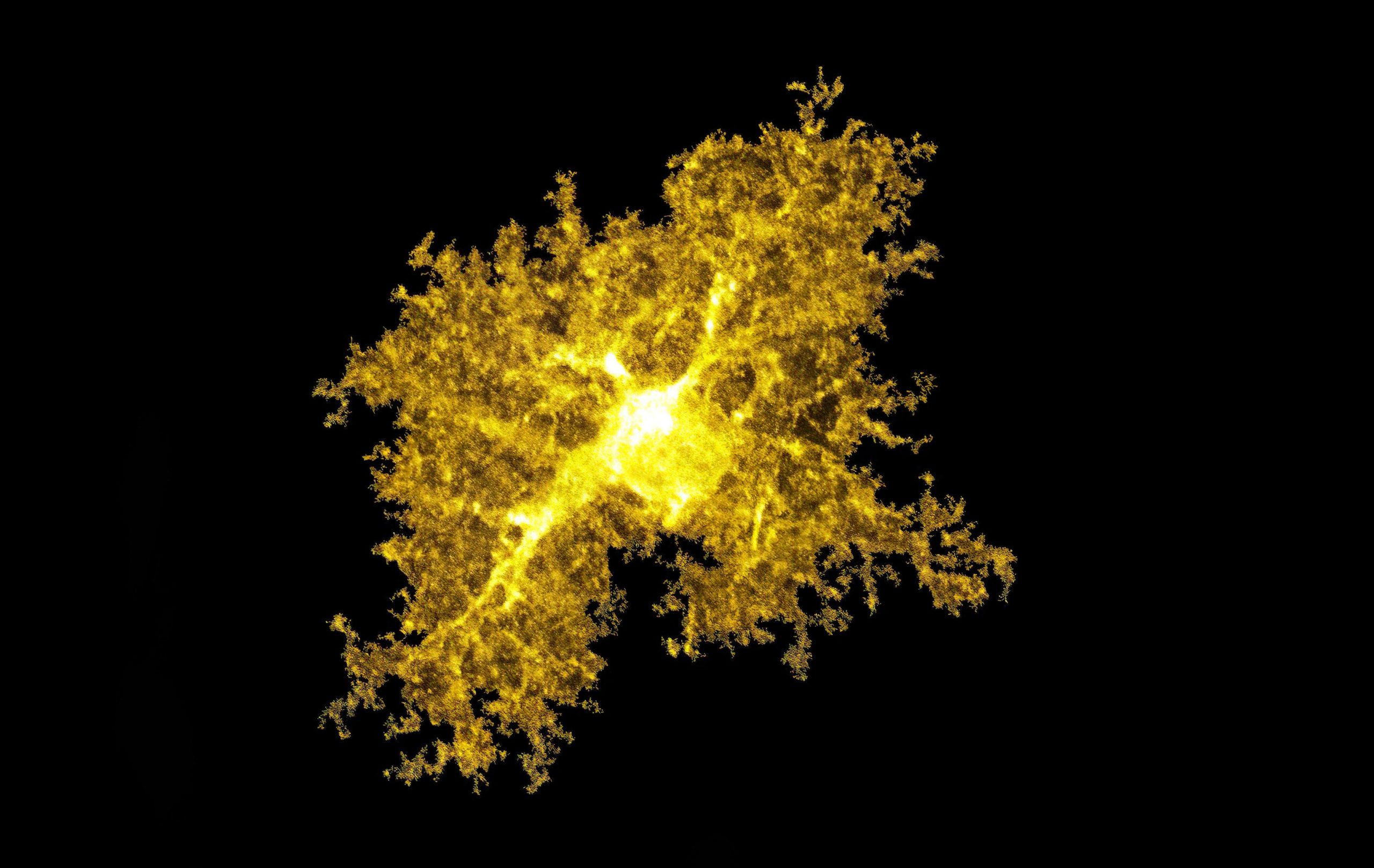
An Effort To Map Complex and Understudied Cells Leads to a Surprise Discovery
In a recent UCLA study, researchers discovered that astrocytes, brain support cells, play a significant role in OCD-related behaviors. This finding suggests that targeting both astrocytes and neurons may offer new treatment options for OCD and other brain disorders.
A type of cell usually characterized as the brain’s support system appears to play an important role in obsessive-compulsive disorder-related behaviors, according to new University of California, Los Angeles Health research published on April 12 in the journal Nature.
The new clue about the brain mechanisms behind OCD, a disorder that is incompletely understood, came as a surprise to researchers. They originally sought to study how neurons interact with star-shaped “helper” cells known as astrocytes, which are known to provide support and protection to neurons.
However, scientists are still trying to understand the apparent role these complex cells play in psychiatric and neurodegenerative diseases.
The Discovery of SAPAP3 in Neurons and Astrocytes
By studying the proteins expressed by neurons and astrocytes in mice, UCLA researchers found a protein associated with OCD and repetitive behaviors in neurons was also found in astrocytes. The discovery suggests therapeutic strategies targeting astrocytes and neurons may be useful for OCD and potentially other brain disorders.
“Our research has revealed a new cellular mechanism, which not only involves neurons – something we already knew – but also involves astrocytes, working together,” said corresponding author Baljit Khakh, a professor of physiology and neurobiology at the David Geffen School of Medicine at UCLA. “Now we could expand our research in this area to cover additional mechanisms and cells.”
OCD, a lifelong anxiety disorder characterized by repetitive thoughts and actions, affects an estimated 2-3% of the U.S. population in their lifetimes, though its prevalence may be higher due to underreporting and underdiagnosis. Psychotherapy, antidepressant medication, or both are typically prescribed for OCD, but available treatment is ineffective for a sizable share of patients.
A brain region known as the striatum, which is involved in decision-making and motor control, is thought to play a key role in OCD. That is exactly the area of the brain the UCLA researchers studied when they sought to examine the interactions between astrocytes and neurons.
Insights From Protein Expression in OCD Studies
Khakh is among the researchers in recent years who have extensively studied astrocytes, thanks to technological advances that have made it more feasible to study these complex cells. While previous research has compared gene expression between neurons and astrocytes, this new study advanced our understanding of the interplay between the two cell types by analyzing protein expression.
“We really have to look at the proteins because they are very complex and diverse,” said co-author Joselyn Soto, a neuroscience PhD student at UCLA’s medical school. “Depending on which cell expresses which proteins, we can predict the functions of that cell.”
The researchers used multiple approaches to isolate and visualize proteins across neurons and astrocytes within the striatum. When they compared proteins found in neurons and astrocytes, they unexpectedly discovered both contained a protein associated with OCD known as SAPAP3.
The researchers tested their findings by inserting the SAPAP3 protein back into neurons and astrocytes of mice that had been genetically modified to lack the gene that makes the protein. They found that the two types of cells interacted in different ways when they measured the protein’s effects on compulsion and anxiety, two of the typical hallmarks of OCD.
Potential Therapeutic Targets for Compulsion and Anxiety
The mice no longer compulsively groomed themselves after the SAPAP3 protein was delivered back to astrocytes and neurons, suggesting that both types of cells could be valid targets for treatments aimed at curbing compulsion. However, only neurons with the SAPAP3 protein were associated with reduced anxiety in the mice, suggesting that astrocytes would not be a good target for anxiety treatments in OCD.
Soto said future research would delve deeper into how the interactions between these cells affect behavior.
“These are both major cell types – one doesn’t work without the other,” Soto said. “We really wanted to understand how these multicellular interactions within this brain region give rise to these complex behaviors, including compulsion and anxiety.”
Adding that there needs to be more work to even understand how astrocytes are formed and maintained, Khakh said this new study’s unexpected findings demonstrated the value of pursuing basic biology questions to help form new ideas about the basis of diseases.
“This started from a basic question: What proteins make up this complex cell?” he said. “At the outset, we couldn’t have predicted its potential relevance to OCD.”
Reference: “Astrocyte–neuron subproteomes and obsessive–compulsive disorder mechanisms” by Joselyn S. Soto, Yasaman Jami-Alahmadi, Jakelyn Chacon, Stefanie L. Moye, Blanca Diaz-Castro, James A. Wohlschlegel and Baljit S. Khakh, 12 April 2023, Nature.
DOI: 10.1038/s41586-023-05927-7
Other authors include Yasaman Jami-Alahmadi, Jakelyn Chacon, Stefanie L. Moye, Blanca Diaz-Castro, and James A. Wohlschlegel, all of UCLA.
Never miss a breakthrough: Join the SciTechDaily newsletter.
Follow us on Google and Google News.