
Research Highlights:
- Adults with obsessive-compulsive disorder (OCD) were more than three times as likely as those without the disorder to have an ischemic stroke later in life.
- Adults with OCD should maintain a healthy lifestyle, including not smoking, exercising, and managing a healthy weight, to help prevent stroke.
- Health care professionals should closely monitor patients with OCD for increased risk of ischemic stroke.
Adults who have obsessive-compulsive disorder (OCD) were more than three times as likely to have an ischemic stroke later in life compared to adults who do not have OCD, according to new research published today (May 27, 2021) in Stroke, a journal of the American Stroke Association, a division of the American Heart Association.
“The results of our study should encourage people with OCD to maintain a healthy lifestyle, such as quitting or not smoking, getting regular physical activity, and managing a healthy weight to avoid stroke-related risk factors,” said study senior author Ya-Mei Bai, M.D., Ph.D., a professor in the department of psychiatry at Taipei Veterans General Hospital and National Yang Ming Chiao Tung University College of Medicine, both in Taiwan.
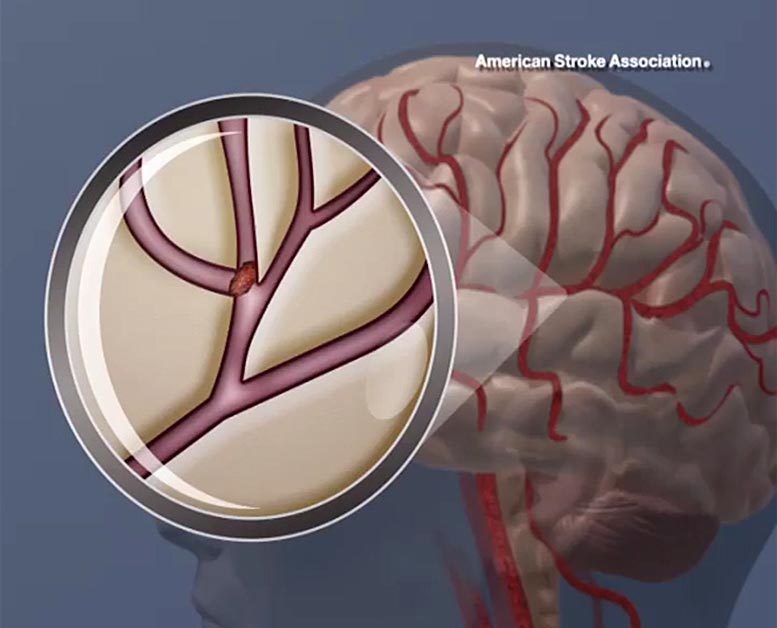
Worldwide, stroke is the second-leading cause of death after heart disease. Stroke is a medical emergency that occurs when blood and oxygen flow to the brain are interrupted, usually by a blood clot (ischemic stroke). Less common is stroke from a burst blood vessel that causes bleeding in the brain (hemorrhagic stroke). In both types of stroke, immediate treatment is critical to prevent brain damage, disability or death. The abbreviation F.A.S.T. can help people remember the warning signs and what to do: F-face drooping, A-arm weakness, S-speech difficulty, T-time to call 9-1-1.
Investigating a Possible Reverse Link
OCD is a common, sometimes debilitating, mental health condition characterized by intrusive, unwanted thoughts, ideas or sensations (obsessions) that make a person feel driven to do something repetitively (compulsions). The repetitive behaviors characteristic of OCD, such as hand washing, checking on things or continuously cleaning, can significantly interfere with a person’s daily activities and social interactions. Previous research found that OCD often occurs after stroke or other brain injury. What remained unclear was whether the reverse is true: can OCD increase stroke risk?

To find out, researchers examined health records from 2001-2010 from the Taiwan National Health Insurance Research Database to compare stroke risk between 28,064 adults with OCD and 28,064 adults who did not have OCD. The average age at diagnosis with OCD was 37 years, and women and men were nearly equally represented in the data. Researchers compared stroke risk between the two groups for up to 11 years.
The analysis found:
- Adults with OCD were more than three times as likely to have a stroke from a blood clot compared to adults who did not have OCD; the greatest risk was among adults ages 60 and older.
- OCD was an independent risk factor for ischemic stroke even after controlling for other factors known to increase stroke risk, including obesity, heart disease, smoking, high blood pressure, high cholesterol, and Type 2 diabetes.
- No difference in risk was found for a hemorrhagic stroke (burst blood vessel).
- Similarly, medications to treat OCD were not associated with an increased risk of stroke.
“For decades, studies have found a relationship between stroke first and OCD later,” Bai said. “Our findings remind clinicians to closely monitor blood pressure and lipid profiles, which are known to be related to stroke in patients with OCD.”
Limitations of the study were that only stroke among patients who sought health care were included, so some cases may have been missed, and information on disease severity was not included along with family medical history or environmental influences. The study also was observational, so it could only show an association between OCD and later stroke; it does not prove cause and effect.
“More research is needed to understand how the mental processes connected to OCD may increase the risk of ischemic stroke,” Bai said.
Reference: “Increased Risk of Stroke in Patients With Obsessive-Compulsive Disorder: A Nationwide Longitudinal Study” by Mu-Hong Chen, Shih-Jen Tsai, Tung-Ping Su, Cheng-Ta Li, Wei-Chen Lin, Tzeng-Ji Chen, Tai-Long Pan and Ya-Mei Bai, 27 May 2021, Stroke: Journal of the American Heart Association.
DOI: 10.1161/STROKEAHA.120.032995
Co-authors are Mu-Hong Chen, M.D., Ph.D.; Shih-Jen Tsai, M.D.; Tung-Ping Su, M.D.; Cheng-Ta Li, M.D., Ph.D.; Wei-Chen Lin, M.D.; Tzeng-Ji Chen, M.D., Ph.D.; and Tai-Long Pan, Ph.D. Author disclosures are listed in the manuscript.
Taipei Veterans General Hospital, Yen Tjing Ling Medical Foundation and the Ministry of Science and Technology, Taiwan funded the study.
Never miss a breakthrough: Join the SciTechDaily newsletter.
Follow us on Google and Google News.