
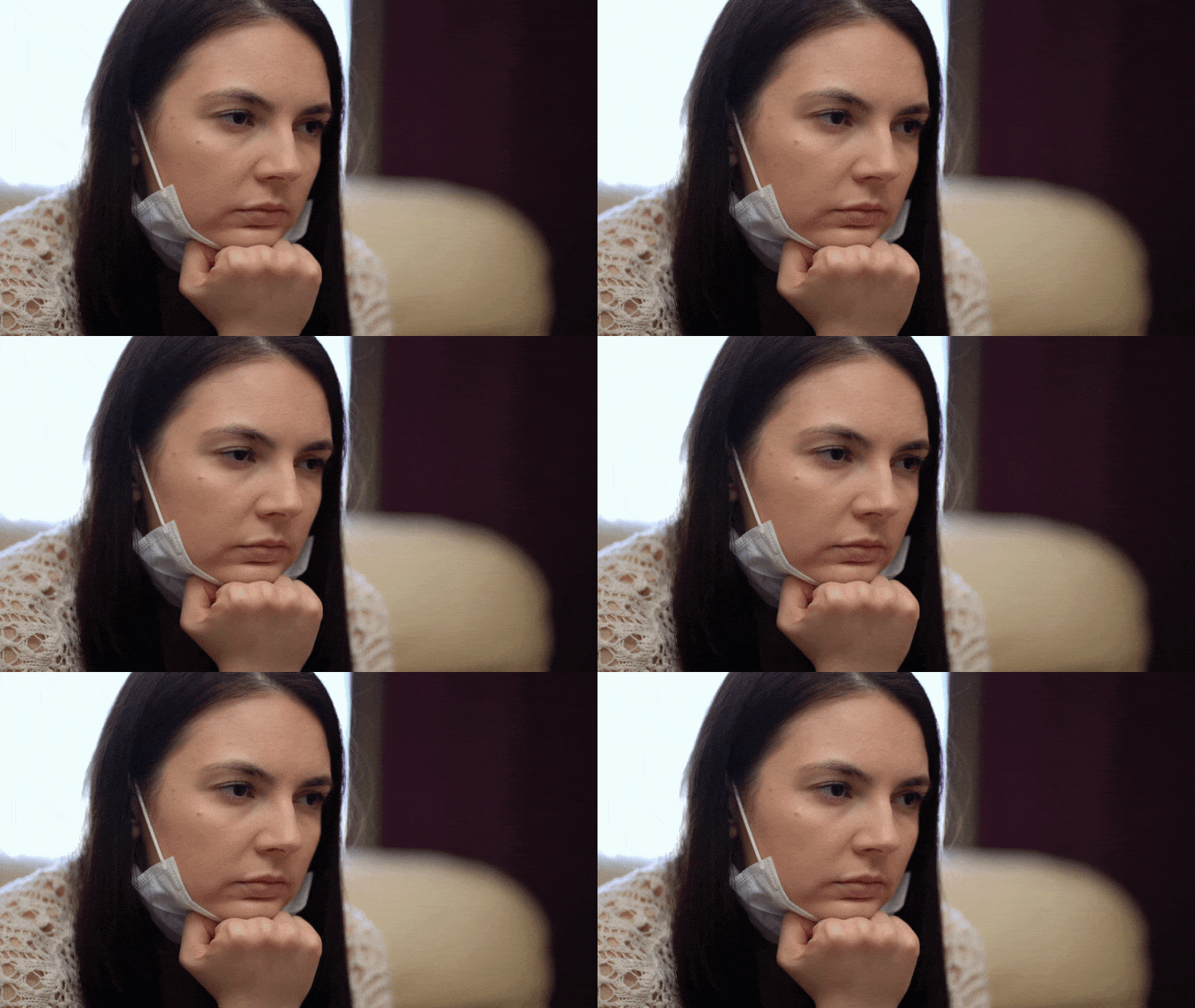
The COVID-19 pandemic is impacting people’s mental health. But what helps and hinders people in getting through a lockdown? A new study led by researchers at the University of Basel addressed this question using data from 78 countries across the world. The results hint at the pivots and hinges on which the individual’s psyche rests in the pandemic.
At the outset of the COVID-19 pandemic, little was known about the impact of population-wide governmental lockdowns. What was known was taken from restricted quarantines of small groups of people. “On the one hand, such drastic changes to daily routines can be detrimental to mental health,” explains Professor Andrew Gloster from the University of Basel, co-leader of the study now published in PLOS One. “On the other hand, because the entire population was more or less equally affected during the lockdown, it remained unclear whether this impact would occur.”
To address this question, Gloster and his international colleagues conducted an online survey in 18 languages. Almost 10,000 people from 78 countries participated, giving information about their mental health and overall situation during the COVID-19 lockdown.
One in ten respondents reported low levels of mental health – including negative affect, stress, depressive behaviors, and a pessimistic view of society. Another 50% had only moderate mental health, which has previously been found to be a risk factor for further complications. These figures are consistent with other studies addressing the impact of the pandemic on mental health.
Lowest Levels of Well-Being in Hong Kong and Italy
Overall, the responses in the different surveyed countries were largely similar. However, although no country emerged as either consistently better or worse across all outcomes, there were some differences. Hong Kong and Turkey reported more stress than other countries; the USA reported more depressive symptoms; and well-being was lowest in Hong Kong and Italy. Participants in Austria, Germany, and Switzerland, on the other hand, reported significantly fewer negative emotions (negative affect) than the average level across all countries.
These differences are likely due to a combination of chance, nation-specific responses to the pandemic, cultural differences and factors such as political unrest. Beyond that, they may in part be explained by factors the researchers found to be connected to outcomes. Loss of financial income compared to pre-lockdown levels and not having access to basic supplies were consistently associated with worse outcomes. Factors that consistently improved outcomes were having social support, higher education levels, and being able to respond and adapt flexibly to the situation.
“Public health initiatives should target people without social support and those whose finances worsen as a result of the lockdown. Based on these results, interventions that promote psychological flexibility like acceptance and commitment therapy hold promise when it comes to mitigating the impact of the pandemic and lockdowns,” says Gloster. Given the continued fluid development of the pandemic and its economic consequences, attention to people’s mental health remains important.
Reference: “Impact of COVID-19 pandemic on mental health: An international study” by Andrew T. Gloster, Demetris Lamnisos, Jelena Lubenko, Giovambattista Presti, Valeria Squatrito, Marios Constantinou, Christiana Nicolaou, Savvas Papacostas, Gökçen Aydin, Yuen Yu Chong, Wai Tong Chien, Ho Yu Cheng, Francisco J. Ruiz, Maria B. Garcia-Martin, Diana P. Obando-Posada, Miguel A. Segura-Vargas, Vasilis S. Vasiliou, Louise McHugh, Stefan Höfer, Adriana Baban, David Dias Neto, Ana Nunes da Silva, Jean-Louis Monestès, Javier Alvarez-Galvez, Marisa Paez-Blarrina, Francisco Montesinos, Sonsoles Valdivia-Salas, Dorottya Ori, Bartosz Kleszcz, Raimo Lappalainen, Iva Ivanovic, David Gosar, Frederick Dionne, Rhonda M. Merwin, Angelos P. Kassianos and Maria Karekla, 31 December 2020, PLOS One.
DOI: 10.1371/journal.pone.0244809
Never miss a breakthrough: Join the SciTechDaily newsletter.
Follow us on Google and Google News.