

Life may arise quickly on Earth-like worlds, but that doesn’t mean it’s common. With only one data point, Earth, we’re still guessing, but new findings offer exciting support for a rapid origin of life.
At some point in Earth’s ancient past, something extraordinary happened. A mix of complex chemicals, energized by their environment, managed to organize themselves into the very first cell, capable of making energy and copying itself. This wasn’t just a turning point; it was the beginning of life as we know it. But pinning down exactly when this happened is tough, thanks to the blur of billions of years.
Still, science is closing in. Evidence of life stretches back as far as 4.2 billion years ago—shockingly close to Earth’s formation. Fossilized mats of cyanobacteria, known as stromatolites, date to 3.7 billion years. Rocks from Australia show isotope signs of life dating to 4.1 billion years ago. And some ancient rocks in Canada contain tiny filament-like structures that may be biological, possibly from 4.28 billion years ago.
LUCA: Tracing Life’s Deepest Roots
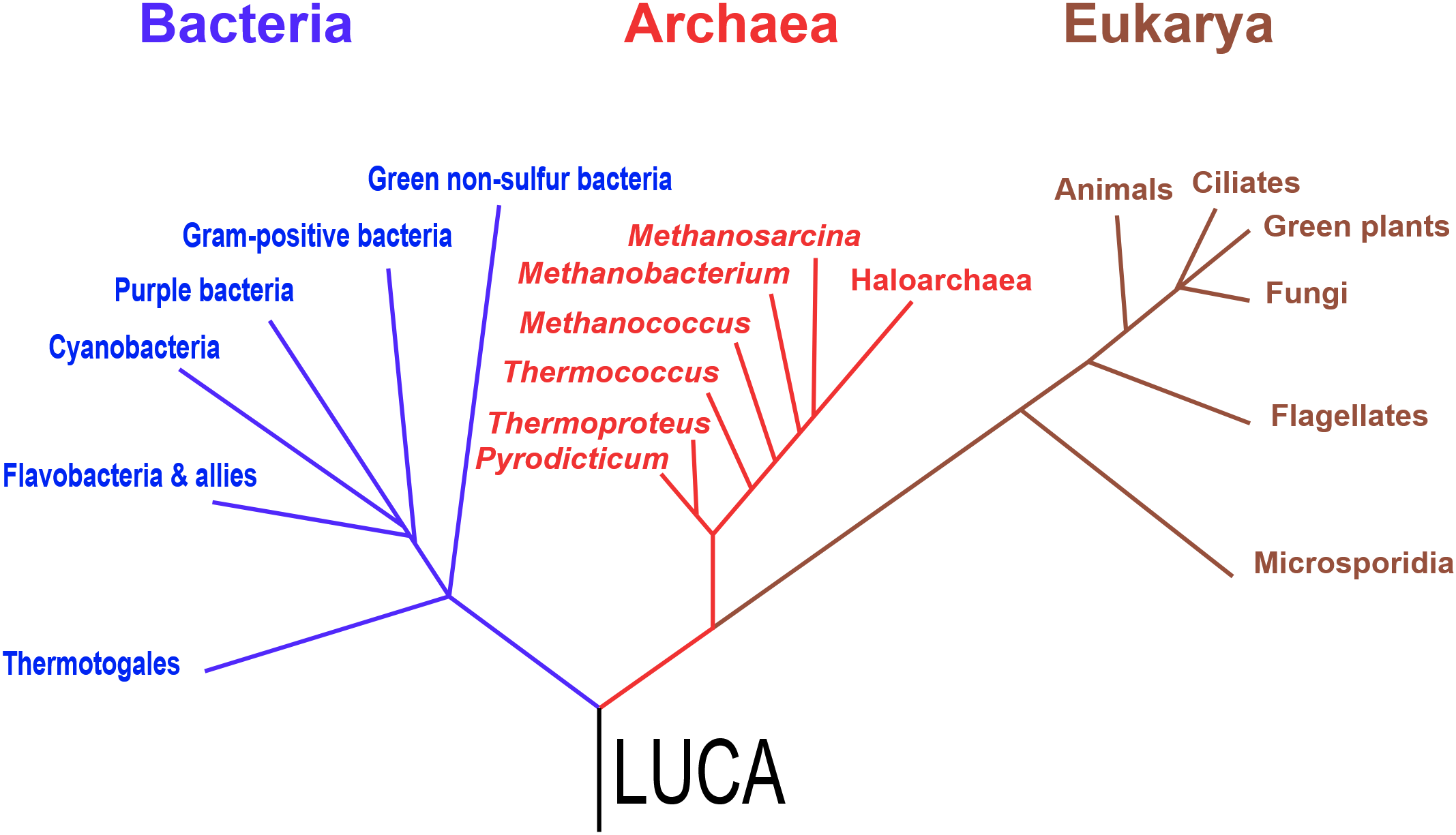
To understand life’s early journey, scientists turn to genetics. They study something called LUCA, the Last Universal Common Ancestor. This hypothetical organism gave rise to all forms of life on Earth—bacteria, archaea, and eventually complex cells like ours. LUCA likely existed at least 3.6 billion years ago, and possibly as far back as 4.3 billion years.
While researchers are still debating the exact timeline, one thing is becoming clear. Life didn’t take long to get started. In fact, it may have appeared astonishingly soon after Earth cooled enough to allow it.
A New Analysis: David Kipping’s Take on Abiogenesis
In a new paper, American astronomer David Kipping analyzes the evidence for rapid abiogenesis on Earth and other Earth-like planets. It’s titled “Strong Evidence That Abiogenesis Is a Rapid Process on Earth Analogs.” The paper was recently published in the journal Astrobiology.
“For the first time, we have formally strong evidence that favours the hypothesis that life rapidly emerges in Earth-like conditions.”
David Kipping, Columbia University
“The early start to life naively suggests that abiogenesis is a rapid process on Earth-like planets,” Kipping writes. “However, if evolution typically takes ~4 Gyr to produce intelligent life-forms like us, then the limited lifespan of Earth’s biosphere (~5-6 Gyr) necessitates an early (and possibly highly atypical) start to our emergence – an example of the weak anthropic principle.”
The weak anthropic principle states that if our planet weren’t suitable for intelligent life, then we wouldn’t be here. Astronomer Brandon Carter introduced the idea of the Anthropic Principle in the 1970s, saying that there’s no coincidence involved, and basically, no reason to ask why we’re here.
Big Questions: Does Earth’s Timeline Apply Elsewhere?
But there’s some tension involved in all of this. There’s an apparent contradiction between the early appearance of life and the time it took for intelligent life—us—to appear. Does our existence as intelligent observers bias our understanding of when abiogenesis took place?
There’s a more concrete issue here, too. On other Earth-like worlds, if they exist, does this same timescale exist? Does life get an early foothold on these planets? Is the trajectory from abiogenesis to intelligent life the same?
Time Pressure: A Narrow Window for Intelligence
Earth won’t remain habitable forever. According to some research, the aging Sun will render it lifeless in about 900 million years. It will become about 10% more luminous and could render Earth uninhabitable. That means that life has to start soon after a planet’s formation if intelligent life is to arise before a planet becomes uninhabitable, if Earth is a representative example. “In this picture, life must start (3.6 ± 0.8) Gya – else we would not be here to talk about it. Hence, the observed value of 3.7 Gya is hardly surprising,” Kipping writes. 3.7 Gya is the age of Earth’s oldest known microfossils.
Kipping uses Bayesian analysis to understand when life appeared on Earth. In previous work based on 3.7 billion-year-old microfossils, he arrived at odds of 3:1 in favour of rapid abiogenesis. Evidence of carbon ratios in ancient rock led to 9:1 odds in favour of rapid abiogenesis. A ratio of 10:1 is considered to be strong evidence, while anything below that is not.
Bayesian analysis leads to new results as new evidence is uncovered. His newest research takes into account the newest findings about LUCA, which say that it existed as long ago as 4.2 billion years.
Reaching the Threshold: 13:1 Odds and Strong Evidence
“However, the recent result of a 4.2 Gya LUCA pushes the odds over the threshold for the first time (nominally 13:1),” Kipping writes. “For the first time, we have formally strong evidence that favours the hypothesis that life rapidly emerges in Earth-like conditions (although such environments may themselves be rare).”
Kipping also writes, “In fact, the odds ratio is >10:1 for all possible values of the biosphere’s ultimate lifespan and speculative hypotheses of ancient civilizations.” When he mentions the hypotheses of ancient civilizations, he’s talking about the Silurian hypothesis, a thought experiment that asks us to consider if science could find evidence of an ancient civilization, perhaps from the Carboniferous Period.
This is a lot to digest, and if it’s stretching your mind, you’re not alone. Overall, Kipping’s analysis suggests that rapid abiogenesis is not very sensitive to a biosphere’s lifespan.
Countering Bias: Objective Support for Rapid Abiogenesis
This research addresses the concern about the weak anthropic principle: Are we observing an atypically quick appearance of life just because we wouldn’t be here if we weren’t? The odds ratio that Kipping arrives at is a more objective measure of how evidence strongly supports rapid abiogenesis.
In his conclusion, he clarifies that his analysis is based on life beginning on Earth rather than from panspermia. He also points out a couple of caveats: the date given for LUCA is a new result. It may not withstand deeper scrutiny from the scientific community. Kipping also reminds us that none of this means life, and especially intelligent life, is common. Earth is rare as far as we can tell, and it may be likely that planets experience habitable periods that are much more abbreviated than Earth’s.
Looking Beyond: One Planet, One Data Point
Research and thinking in this vein always suffer from the same limitation, though. We only have one data point for life, and that’s our planet. If we find evidence of ancient life on Mars, extant life on an ocean moon, or conclusive evidence of life on an exoplanet, our thinking will take a leap forward.
“… our result does not establish that life is common, since Earth’s conditions could be incredibly rare,” Kipping writes in his conclusion.
“Our next task is clearly to look out and address this question: How common are conditions analogous to those of Earth?”
Adapted from an article originally published on Universe Today.
Reference: “Strong Evidence that Abiogenesis Is a Rapid Process on Earth Analogs” by David Kipping, 17 April 2025, Astrobiology.
DOI: 10.1089/ast.2025.0009
Never miss a breakthrough: Join the SciTechDaily newsletter.
Follow us on Google and Google News.
13 Comments
Some say it took six days…
Hmph. It really should have taken only three days…
I want to talk to the manager.
You will, one day.
Game, set, match!
Nice dream. The guy didn’t even show up. It’s called a default. Bye.
Actually, he did. And the result was; God exists; two falls to a submission.( Monty Python.@1970 )
Exactly
Take a number.
It’s not the LUCA that’s important. It’s the FUCA.. If life evolved and required 20 amino acids for the genetic code, the evolution of the first universal common ancestor took place on land, not in the ocean.
Richard Dickerson, 1978 Scientific American: explained:
”The central problem in understanding how the polymers were formed on the primitive earth is understanding how reactions requiring both the input of energy and the removal of water could take place in the ocean.”
What that means is the planet was fully exposed to the Sun’s deadly UVC radiation. But, since life obviously wasn’t destroyed the early atmosphere must have had oxygen and ozone…especially before photosynthesis which evolved late according to these “tree” of life.
There is much speculation on the subject of just how life arose on our planet. But why so much? The answer is painfully simple, it is that certain people want to find an answer that excludes our creator God! Struggle on as much as you want, but you will not be able to construct a ‘Godless world’. Such a concept is an impossibility.
So why do researchers insist on pursuing this line of research? Why is it that they find the concept of a creator God so objectionable? Is it to secure their pensions? Ouch – that was a painful question. Or perhaps they object to God’s moral code, but does their’s work with more success? Why do they worship Darwin? Has he become a replacement for our real God?
Research into these matters is not proscribed, not at all, but presently it is most certainly intended to disprove the existance of a creator God. When I read the results of research into the working of the biological world I see very clear evidence of a Creator who understands the working of chemical processes at a molecular level, and sometimes also at an even lower and more fundamental level. Do you remember the concept of ‘irreducible complexity’?
What some persons yearn for, a Godless world, is an impossibility. Many readers will object to this conclusion, but that is their loss, their sad loss. This is my carefully considered opinion.
I like to believe that we are just transportation for bacteria and viruses.
Look for the living planet or moon, you will find the life on it.
It’s amazing how blinded some people are and stuck in their religious beliefs. As evidence mounts that life appeared suddenly and rapidly some religious zealots now feel the need to twist that into evidence for the rapid occurrence of a process that all intelligent, open minds know from various scientific fields, especially chemistry and information science, is impossible, namely abiogenesis. When will these pseudoscientists ever allow the data to speak for itself? Please let your preconceived notions go and stop reading your religious beliefs into the data. It’s a sad truth, but we live in a true dark age scientifically and someday, hopefully soon, more than a century’s worth of “science” is going to come crashing down around us.