
Close Menu
    Facebook X (Twitter) Instagram
    SciTechDaily
    • Biology
    • Chemistry
    • Earth
    • Health
    • Physics
    • Science
    • Space
    • Technology
    Facebook X (Twitter) Pinterest YouTube RSS
    SciTechDaily
    Home»Space»Hubble Image of the Week: The Crammed Center of Messier 22
    Space

    Hubble Image of the Week: The Crammed Center of Messier 22

    By Hubble Space TelescopeApril 6, 20151 Comment2 Mins Read
    Facebook Twitter Pinterest Telegram LinkedIn WhatsApp Email Reddit
    Share
    Facebook Twitter LinkedIn Pinterest Telegram Email Reddit
    Hubble Views Globular Cluster Messier 22
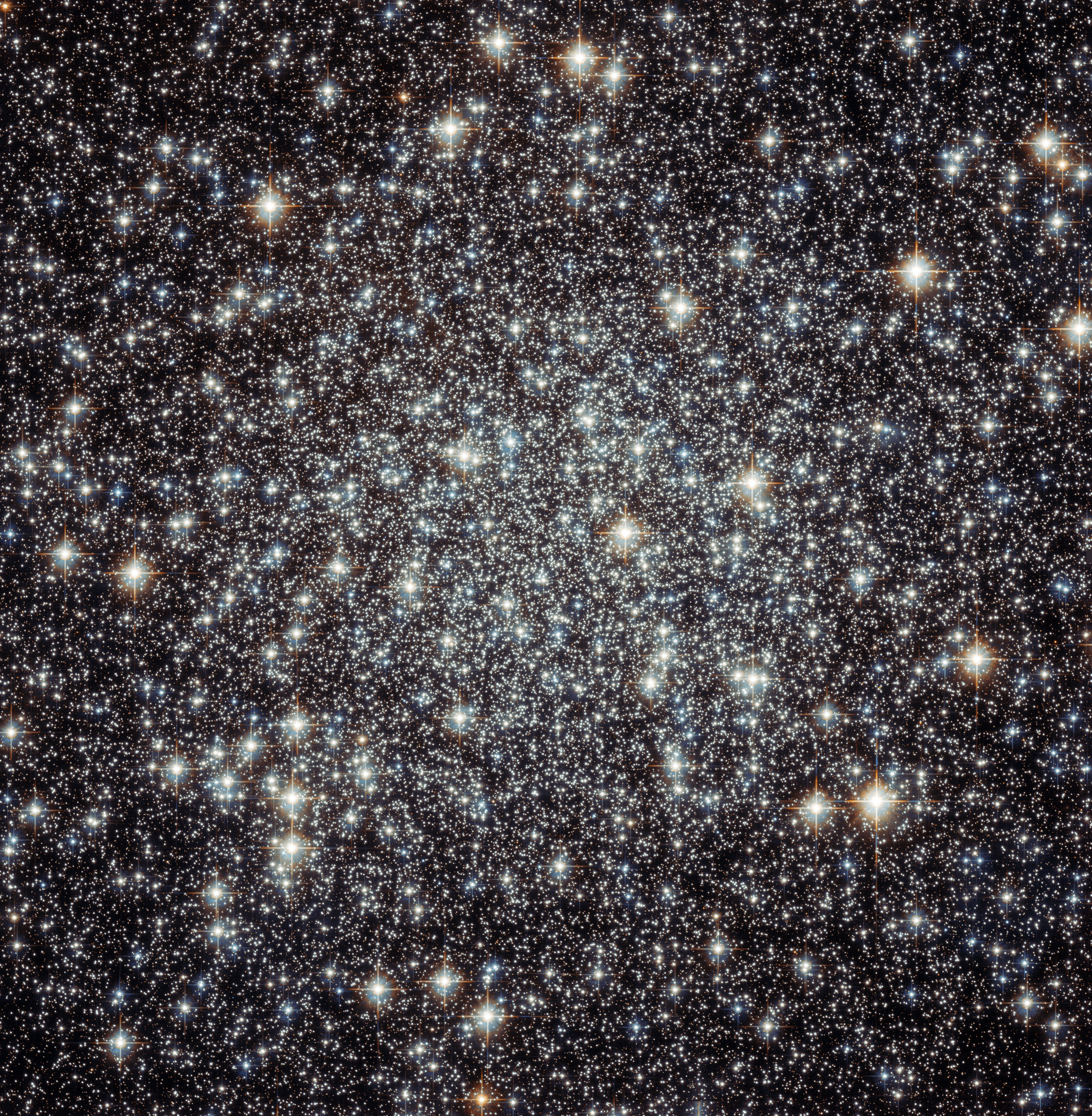
    Messier 22 is one of about 150 globular clusters in the Milky Way and at just 10,000 light-years away it is also one of the closest to Earth. Credit: ESA/Hubble & NASA

    This newly released Hubble image shows the center of the globular cluster Messier 22, also known as M22.

    Globular clusters are spherical collections of densely packed stars, relics of the early years of the Universe, with ages of typically 12 to 13 billion years. This is very old considering that the Universe is only 13.8 billion years old.

    Messier 22 is one of about 150 globular clusters in the Milky Way and at just 10,000 light-years away it is also one of the closest to Earth. It was discovered in 1665 by Abraham Ihle, making it one of the first globulars ever to be discovered. This is not so surprising as it is one of the brightest globular clusters visible from the northern hemisphere, located in the constellation of Sagittarius, close to the Galactic Bulge — the dense mass of stars at the center of the Milky Way.

    The cluster has a diameter of about 70 light-years and, when looking from Earth, appears to take up a patch of sky the size of the full Moon. Despite its relative proximity to us, the light from the stars in the cluster is not as bright as it should be as it is dimmed by dust and gas located between us and the cluster.

    As they are leftovers from the early Universe, globular clusters are popular study objects for astronomers. M22 in particular has fascinating additional features: six planet-sized objects that are not orbiting a star have been detected in the cluster, it seems to host two black holes, and the cluster is one of only three ever found to host a planetary nebula — a short-lived gaseous shells ejected by massive stars at the ends of their lives.

    Never miss a breakthrough: Join the SciTechDaily newsletter.
    Follow us on Google and Google News.

    Astronomy Hubble Space Telescope Popular
    Share. Facebook Twitter Pinterest LinkedIn Email Reddit

    Related Articles

    Astronomers Puzzled by Dark Storm’s U-Turn on Neptune, Appearance of New Dark Spot

    Rings of Relativity: A Truly Strange and Very Rare Phenomenon

    Hubble Discovers a Strange Exoplanet That Resembles the Long-Sought “Planet Nine”

    Ethereal Orange Glow Radiates From Heart of Stellar Forge

    Hubble Captures Unprecedented Fading of Stingray Nebula – “This Is Very, Very Dramatic, and Very Weird”

    Hubble Space Telescope Explains Oddball Galaxy’s Missing Dark Matter

    ULLYSES: Hubble Embarks on Largest Observing Program of Its Career

    Hubble Spots a Gorgeous Waterfall of Stars

    Hubble Spots Giant Space “Pumpkin” [Video]

    1 Comment

    1. rowlandw on April 6, 2015 6:13 pm

      Incomplete! You could tell us how many stars are in the cluster, their type, and their density per cubic light year at the center. Can you imagine the night sky for anyone living near the center of the cluster?

      Reply
    Leave A Reply Cancel Reply

    • Facebook
    • Twitter
    • Pinterest
    • YouTube

    Don't Miss a Discovery

    Subscribe for the Latest in Science & Tech!

    Trending News

    Scientists May Have Discovered How To Heal Damaged Kidneys

    Interstellar Visitor 3I/ATLAS Is Bursting With an Unexpected Chemical

    Scientists Just Found All 5 Genetic “Letters” of DNA and RNA on an Asteroid

    The 4,000-Year-Old City That Defied History’s Rules on Wealth and Power

    The World’s Biggest Population Fear Has Flipped – and It Could Change Everything

    This “Fake” Pill Improved Memory and Physical Performance in Just 3 Weeks

    Scientists Say Frequent Ejaculation May Improve Sperm Quality and Fertility

    Scientists Have Found “The Heaven Sword” After Years of Looking

    Follow SciTechDaily
    • Facebook
    • Twitter
    • YouTube
    • Pinterest
    • Newsletter
    • RSS
    SciTech News
    • Biology News
    • Chemistry News
    • Earth News
    • Health News
    • Physics News
    • Science News
    • Space News
    • Technology News
    Recent Posts
    • Scientists Discover the Oldest Known Fossils of Humans’ Closest Invertebrate Relatives
    • Watch What Happened When a Lost Elephant Calf Returned to Her Family
    • 17,000 Brain Scans Reveal Surprising Ethnic Differences in Alzheimer’s Biology
    • New Autism Treatment Strategy Restores Key Brain Receptor Function
    • Younger Generations Are Aging Faster – and It May Be Fueling a Surge in Cancer
    Copyright © 1998 - 2026 SciTechDaily. All Rights Reserved.
    • Science News
    • About
    • Contact
    • Editorial Board
    • Privacy Policy
    • Terms of Use

    Type above and press Enter to search. Press Esc to cancel.