
Close Menu
    Facebook X (Twitter) Instagram
    SciTechDaily
    • Biology
    • Chemistry
    • Earth
    • Health
    • Physics
    • Science
    • Space
    • Technology
    Facebook X (Twitter) Pinterest YouTube RSS
    SciTechDaily
    Home»Space»Hubble Image of the Week – The Darkness Within?
    Space

    Hubble Image of the Week – The Darkness Within?

    By Hubble Space TelescopeFebruary 4, 20192 Comments2 Mins Read
    Facebook Twitter Pinterest Telegram LinkedIn WhatsApp Email Reddit
    Share
    Facebook Twitter LinkedIn Pinterest Telegram Email Reddit
    Hubble Image of the Week The Darkness Within
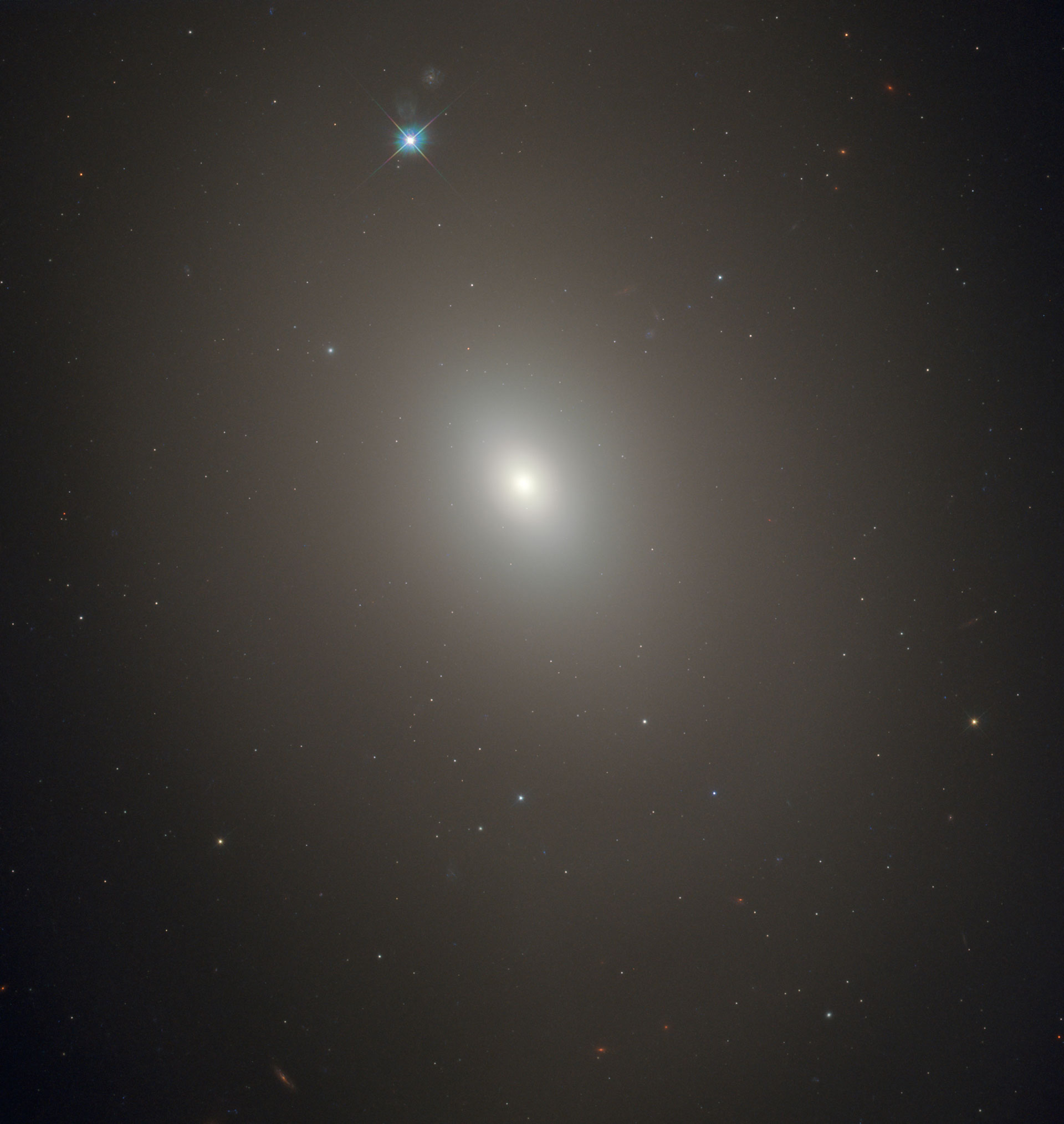
    This atmospheric image shows a galaxy named Messier 85, captured in all its delicate, hazy glory by the NASA/ESA Hubble Space Telescope. Credit: ESA/Hubble & NASA, R. O’Connell

    This atmospheric image shows a galaxy named Messier 85, captured in all its delicate, hazy glory by the NASA/ESA Hubble Space Telescope. Messier 85 slants through the constellation of Coma Berenices (Berenice’s Hair), and lies around 50 million light-years from Earth. It was first discovered by Charles Messier’s colleague Pierre Méchain in 1781, and is included in the Messier catalog of celestial objects.

    Messier 85 is intriguing — its properties lie somewhere between those of a lenticular and an elliptical galaxy, and it appears to be interacting with two of its neighbors: the beautiful spiral NGC 4394, located out of frame to the upper left, and the small elliptical MCG 3-32-38, located out of frame to the center bottom.

    The galaxy contains some 400 billion stars, most of which are very old. However, the central region hosts a population of relatively young stars of just a few billion years in age; these stars are thought to have formed in a late burst of star formation, likely triggered as Messier 85 merged with another galaxy over four billion years ago. Messier 85 has a further potentially strange quality. Almost every galaxy is thought to have a supermassive black hole at its center, but from measurements of the velocities of stars in this galaxy, it is unclear whether Messier 85 contains such a black hole.

    This image combines infrared, visible, and ultraviolet observations from Hubble’s Wide Field Camera 3.

    Never miss a breakthrough: Join the SciTechDaily newsletter.
    Follow us on Google and Google News.

    Astronomy Hubble Space Telescope
    Share. Facebook Twitter Pinterest LinkedIn Email Reddit

    Related Articles

    A Morphing Spiral Galaxy Amongst Friends

    Hubble Views Magnificent Lopsided Galaxy NGC 2276

    Hubble Captures Fantastic Detail of Eponymous Spiral Galaxy NGC 691

    Spectacular Image Captured by Hubble Shows a Strangely Contorted Spiral Galaxy

    A Distant Spiral in Virgo: Extraordinary Detail Seen in a Galaxy 150 Million Light-Years Away From Earth

    Magnetic Monsters: Hubble Tracks Down Location of Mysterious Radio Signals From Intergalactic Space

    A Menagerie of Galaxies: Hubble Captures a Cluster With Galaxies of All Shapes and Sizes

    How Habitable Are Planets That Orbit Red Dwarfs – The Most Common Type of Stars in the Galaxy?

    Cosmic Silver Lining: Hubble Spots V565 Surrounded by Four Prominent Diffraction Spikes

    2 Comments

    1. Matt on February 5, 2019 3:11 am

      I would love to know how the redshift of stars in this galaxy can be measured – surely individual stars can’t be resolved. Can it be done without resolving single star? Perhaps someone in this forum knows?

      Reply
    2. John Campbell on February 5, 2019 3:28 pm

      I am thinking that this galaxy is very ancient indeed and that the reason for its unusual appearance is that its black hole originator has now fizzled out, leaving thw centre core to become becalmed, dispersing material that would otherwise have been too turbulent to trigger stellar formation.

      What we see now (IMHO) is effectively the final stages of a galaxy, with young stars emerging from the freshly released material that was trapped around the old black hole and allowing the outer reaches to gently disperse.

      Reply
    Leave A Reply Cancel Reply

    • Facebook
    • Twitter
    • Pinterest
    • YouTube

    Don't Miss a Discovery

    Subscribe for the Latest in Science & Tech!

    Trending News

    Massive Study Warns Marijuana Use in Teens Is Linked to Serious Mental Illness

    Scientists Discover a Completely Unexpected Way T Cells Kill Cancer

    Scientists Just Found the Solar System’s Original “Planet Factory”

    Study Warns Widely Used Food Preservatives Linked to High Blood Pressure and Heart Disease

    New Treatment Could Reverse Osteoarthritis Within Weeks

    Physicists Have Measured “Negative Time” in Bizarre Quantum Experiment

    The Deadly Tapeworm Spreading Across America Has Reached the Pacific Northwest

    Could Low Vitamin D Be Making Your Pain Worse?

    Follow SciTechDaily
    • Facebook
    • Twitter
    • YouTube
    • Pinterest
    • Newsletter
    • RSS
    SciTech News
    • Biology News
    • Chemistry News
    • Earth News
    • Health News
    • Physics News
    • Science News
    • Space News
    • Technology News
    Recent Posts
    • Breakthrough Technique Reveals Atomic Secrets of Record-Breaking Superconductors
    • The Future of Work Belongs to People Who Master AI
    • Scientists Challenge a 70-Year-Old Theory of Language With a Surprising Discovery
    • Scientists Discover Mysterious Creature Living in the Great Salt Lake – and It Exists Nowhere Else on Earth
    • It’s Alive? Surprising Discovery Changes What We Know About Fog
    Copyright © 1998 - 2026 SciTechDaily. All Rights Reserved.
    • Science News
    • About
    • Contact
    • Editorial Board
    • Privacy Policy
    • Terms of Use

    Type above and press Enter to search. Press Esc to cancel.