
Close Menu
    Facebook X (Twitter) Instagram
    SciTechDaily
    • Biology
    • Chemistry
    • Earth
    • Health
    • Physics
    • Science
    • Space
    • Technology
    Facebook X (Twitter) Pinterest YouTube RSS
    SciTechDaily
    Home»Space»Hubble Spies a Stunning Spiral in Constellation Coma Berenices
    Space

    Hubble Spies a Stunning Spiral in Constellation Coma Berenices

    By ESA/HubbleMarch 20, 2022No Comments2 Mins Read
    Facebook Twitter Pinterest Telegram LinkedIn WhatsApp Email Reddit
    Share
    Facebook Twitter LinkedIn Pinterest Telegram Email Reddit
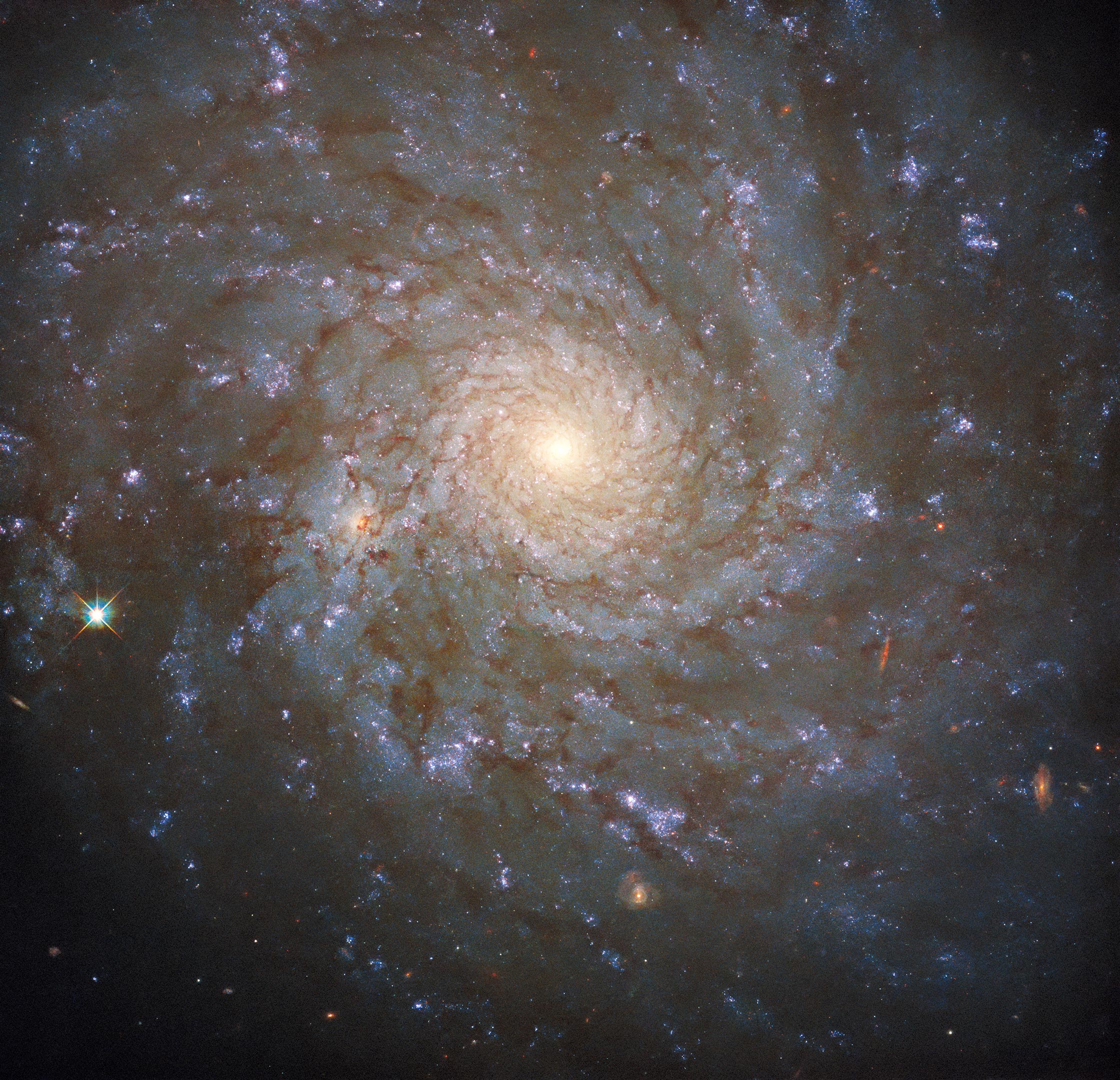
    Spiral Galaxy NGC 4571
    Hubble Space Telescope’s Wide Field Camera 3 was used to capture this cosmic portrait that features a stunning view of the spiral galaxy NGC 4571, which lies approximately 60 million light-years from Earth in the constellation Coma Berenices. Credit: ESA/Hubble & NASA, J. Lee and the PHANGS-HST Team

    Stunning View of Spiral Galaxy NGC 4571

    This cosmic portrait — captured with the NASA/ESA Hubble Space Telescope’s Wide Field Camera 3 (WFC3) — shows a stunning view of the spiral galaxy NGC 4571, which lies approximately 60 million light-years from Earth in the constellation Coma Berenices. This constellation — whose name translates as Bernice’s Hair — was named after an Egyptian queen who lived more than 2200 years ago.

    As majestic as spiral galaxies like NGC 4571 are, they are far from the largest structures known to astronomers. NGC 4571 is part of the Virgo cluster, which contains more than a thousand galaxies. This cluster is in turn part of the larger Virgo supercluster, which also encompasses the Local Group which contains our own galaxy, the Milky Way. Even larger than superclusters are galaxy filaments  — the largest known structures in the Universe.

    This image comes from a large program of observations designed to produce a treasure trove of combined observations from two great observatories: Hubble and ALMA. ALMA, The Atacama Large Millimeter/submillimeter Array, is a vast telescope consisting of 66 high-precision antennas high in the Chilean Andes, which together observe at wavelengths between infrared and radio waves. This allows ALMA to detect the clouds of cool interstellar dust which give rise to new stars. Hubble’s razor-sharp observations at ultraviolet wavelengths, meanwhile, allows astronomers to pinpoint the location of hot, luminous, newly formed stars. Together, the ALMA and Hubble observations provide a vital repository of data to astronomers studying star formation, as well as laying the groundwork for future science with the NASA/ESA/CSA James Webb Space Telescope.

    Never miss a breakthrough: Join the SciTechDaily newsletter.
    Follow us on Google and Google News.

    Astronomy European Space Agency Hubble Space Telescope NASA
    Share. Facebook Twitter Pinterest LinkedIn Email Reddit

    Related Articles

    Hubble’s Newest Discovery Isn’t a Star, It’s a Window Into the Dark Universe

    This Nearby Galaxy Shows How Frozen Clouds Ignite Into Stars

    This Chaotic Spiral Galaxy Is Still Recovering From a Cosmic Collision

    This Strange Spiral Galaxy Is Hiding a Massive Black Hole

    Hubble Zooms In on a Galaxy That Maps the Universe’s Expansion

    Hubble Captures a Dazzling Spiral Galaxy Alive With Birth and Destruction

    Hubble Spots a Glowing “Ring of Fire” in a Distant Spiral Galaxy

    Dust, Light & Ancient Collisions: The Sombrero Galaxy Like You’ve Never Seen It

    Star Formation in Motion: Hubble Reveals Spiraling Stars and Sculpted Nebulae

    Leave A Reply Cancel Reply

    • Facebook
    • Twitter
    • Pinterest
    • YouTube

    Don't Miss a Discovery

    Subscribe for the Latest in Science & Tech!

    Trending News

    Popular Supplement Ingredient Linked to Shorter Lifespan in Men

    Scientists May Have Found a Way To Repair Nerve Damage in Multiple Sclerosis

    “Totally Unexpected” – Scientists Discover Pancreatic Cancer’s Fatal Addiction

    A Strange Quantum Effect May Explain One of Biology’s Greatest Mysteries

    James Webb Telescope Reveals the Universe’s Hidden Cosmic Web in Stunning Detail

    Scientists Identify Simple Supplement That Greatly Reduces Alzheimer’s Damage

    You May Have a Dangerous Type of Cholesterol Even if Your Tests Look Normal

    Your Blood Pressure Reading Could Be Wrong Because of One Simple Mistake

    Follow SciTechDaily
    • Facebook
    • Twitter
    • YouTube
    • Pinterest
    • Newsletter
    • RSS
    SciTech News
    • Biology News
    • Chemistry News
    • Earth News
    • Health News
    • Physics News
    • Science News
    • Space News
    • Technology News
    Recent Posts
    • After 50 Years of Mystery, Researchers Identify New Human Blood Group
    • Leading Climate Scientist Rebuts “Factually Incorrect” US Government Climate Claims
    • You’re Breathing Plastic: Study Finds 4% of City Air Pollution Is Microplastics
    • Cancer Mystery Solved: Scientists Discover How Melanoma Becomes “Immortal”
    • Scientists Uncover Cancer-Fighting Power of Popular Fatty Liver Drug
    Copyright © 1998 - 2026 SciTechDaily. All Rights Reserved.
    • Science News
    • About
    • Contact
    • Editorial Board
    • Privacy Policy
    • Terms of Use

    Type above and press Enter to search. Press Esc to cancel.