
Close Menu
    Facebook X (Twitter) Instagram
    SciTechDaily
    • Biology
    • Chemistry
    • Earth
    • Health
    • Physics
    • Science
    • Space
    • Technology
    Facebook X (Twitter) Pinterest YouTube RSS
    SciTechDaily
    Home»Space»Hubble Views a Busy Patch of the Great Attractor
    Space

    Hubble Views a Busy Patch of the Great Attractor

    By NASAJanuary 21, 2013No Comments2 Mins Read
    Facebook Twitter Pinterest Telegram LinkedIn WhatsApp Email Reddit
    Share
    Facebook Twitter LinkedIn Pinterest Telegram Email Reddit
    The Norma Cluster
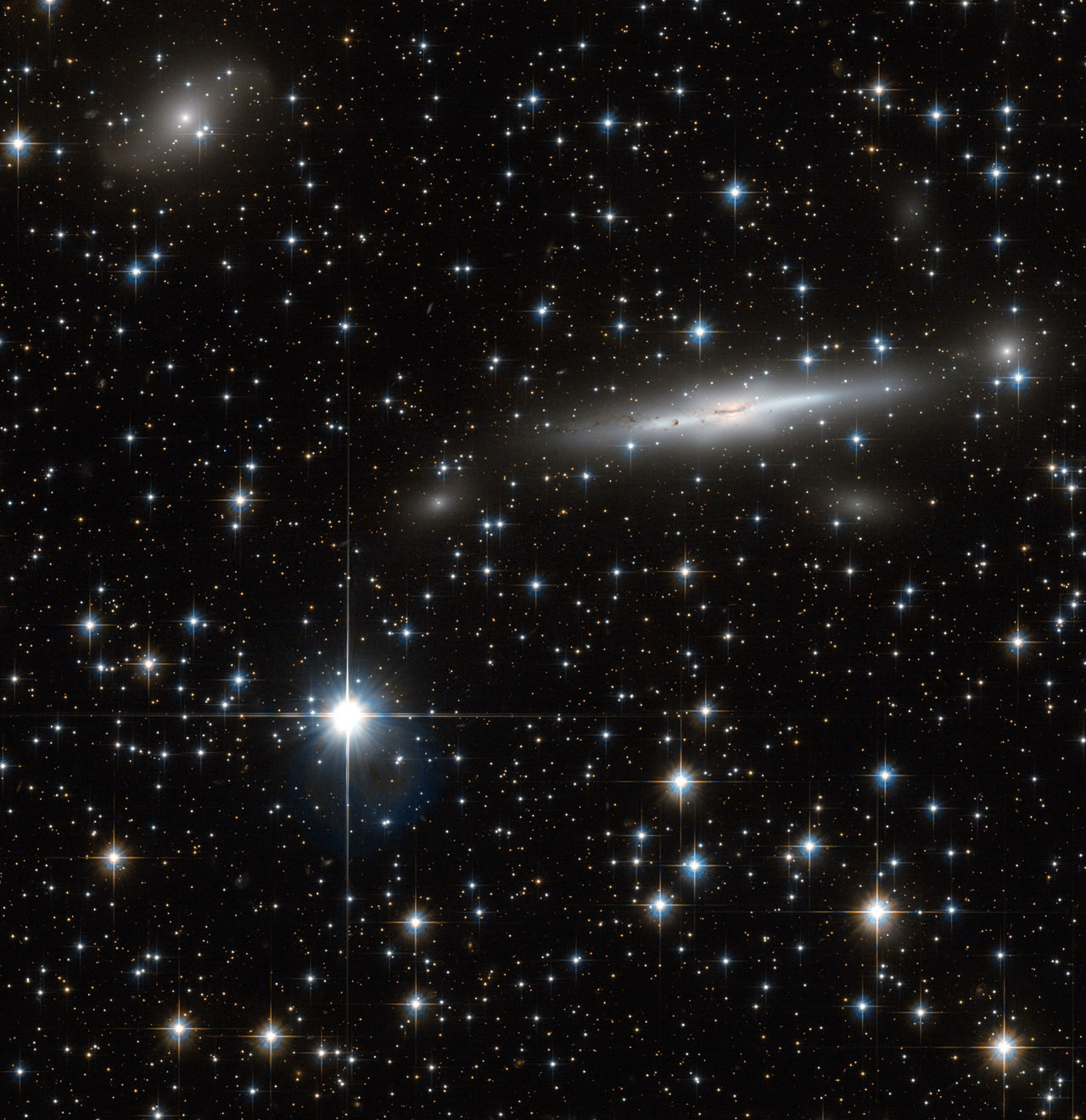
    This image covers an area that lies between Triangulum Australe (The Southern Triangle) and Norma (The Carpenter’s Square), covering a section of the Norma Cluster (Abell 3627) and a dense part of our galaxy, the Milky Way. Credit: ESA/Hubble & NASA

    A new image from the Hubble Space Telescope shows part of the Norma Cluster (Abell 3627), spiral galaxy ESO 137-002 and a dense area of the Milky Way.

    A busy patch of space has been captured in this image from the NASA/ESA Hubble Space Telescope. Scattered with many nearby stars, the field also has numerous galaxies in the background.

    Located on the border of Triangulum Australe (The Southern Triangle) and Norma (The Carpenter’s Square), this field covers part of the Norma Cluster (Abell 3627) as well as a dense area of our own galaxy, the Milky Way.

    The Norma Cluster is the closest massive galaxy cluster to the Milky Way, and lies about 220 million light-years away. The enormous mass concentrated here, and the consequent gravitational attraction, mean that this region of space is known to astronomers as the Great Attractor, and it dominates our region of the Universe.

    The largest galaxy visible in this image is ESO 137-002, a spiral galaxy seen edge on. In this image from Hubble, we see large regions of dust across the galaxy’s bulge. What we do not see here is the tail of glowing X-rays that has been observed extending out of the galaxy — but which is invisible to an optical telescope like Hubble.

    Observing the Great Attractor is difficult at optical wavelengths. The plane of the Milky Way — responsible for the numerous bright stars in this image — both outshines (with stars) and obscures (with dust) many of the objects behind it. There are some tricks for seeing through this — infrared or radio observations, for instance — but the region behind the center of the Milky Way, where the dust is thickest, remains an almost complete mystery to astronomers.

    This image consists of exposures in blue and infrared light taken by Hubble’s Advanced Camera for Surveys.

    Never miss a breakthrough: Join the SciTechDaily newsletter.
    Follow us on Google and Google News.

    Astronomy Hubble Space Telescope NASA Popular
    Share. Facebook Twitter Pinterest LinkedIn Email Reddit

    Related Articles

    The Great Escape: NASA’s Hubble and MAVEN Help Solve Mystery of Mars’ Vanishing Water

    Webb and Hubble Unite: A Breathtaking 3D Journey Through the Pillars of Creation

    Stellar Sleuths: Citizen Scientists and AI Uncover Hidden Asteroids With Hubble

    Stellar Fireworks: Hubble Revisits a Strange Star’s 40-Year Nova Mystery

    Cosmic Geode: Hubble Captures the Birth of a Sun-like Star

    Hubble Celebrates 34th Anniversary With a Spectacular View of the Little Dumbbell Nebula

    Jupiter Unveiled: Hubble Captures the Giant’s Roaring Storms and Volcanic Moon Io

    Galaxies Collide, Stars Awaken: Hubble’s Stunning Revelation

    Hubble Spots Water Vapor in Small Exoplanet’s Atmosphere

    Leave A Reply Cancel Reply

    • Facebook
    • Twitter
    • Pinterest
    • YouTube

    Don't Miss a Discovery

    Subscribe for the Latest in Science & Tech!

    Trending News

    New Molecule Restores the Brain’s Natural Defenses Against Alzheimer’s

    Could Creatine Boost More Than Muscles? It May Also Help Depression

    Scientists Discover a Natural Molecule That Could Help Prevent Vision Loss

    Scientists Thought Royal Jelly Made Queen Bees. They Were Wrong

    One Tiny Change May Explain How Viruses Jump From Bats to Humans

    The Secret to Healthy Aging May Be More Protein and More Exercise

    These 567-Million-Year-Old Fossils Are Rewriting the Story of Life on Earth

    The Spider-Like Creatures Helping Scientists Decode the Origins of Fatherhood

    Follow SciTechDaily
    • Facebook
    • Twitter
    • YouTube
    • Pinterest
    • Newsletter
    • RSS
    SciTech News
    • Biology News
    • Chemistry News
    • Earth News
    • Health News
    • Physics News
    • Science News
    • Space News
    • Technology News
    Recent Posts
    • Archaeologists May Have Been Wrong About Olive Oil for Decades, New Study Finds
    • Scientists Discover an Alarming Trend Climate Models Are Missing
    • The “Hobbits” Mysteriously Disappeared 50,000 Years Ago – Scientists Have Revealed What Happened to Their Home
    • Rethinking Movement Disorders: Scientists Uncover a Surprising Disconnect Deep Inside the Brain
    • Groundbreaking Study Challenges 40 Years of Beliefs About Mad Cow Disease
    Copyright © 1998 - 2026 SciTechDaily. All Rights Reserved.
    • Science News
    • About
    • Contact
    • Editorial Board
    • Privacy Policy
    • Terms of Use

    Type above and press Enter to search. Press Esc to cancel.