
Close Menu
    Facebook X (Twitter) Instagram
    SciTechDaily
    • Biology
    • Chemistry
    • Earth
    • Health
    • Physics
    • Science
    • Space
    • Technology
    Facebook X (Twitter) Pinterest YouTube RSS
    SciTechDaily
    Home»Space»Hubble Views Galaxy UGC 477
    Space

    Hubble Views Galaxy UGC 477

    By European Space AgencyApril 29, 2016No Comments2 Mins Read
    Facebook Twitter Pinterest Telegram LinkedIn WhatsApp Email Reddit
    Share
    Facebook Twitter LinkedIn Pinterest Telegram Email Reddit
    Hubble Sees Galaxy Hiding in the Night Sky
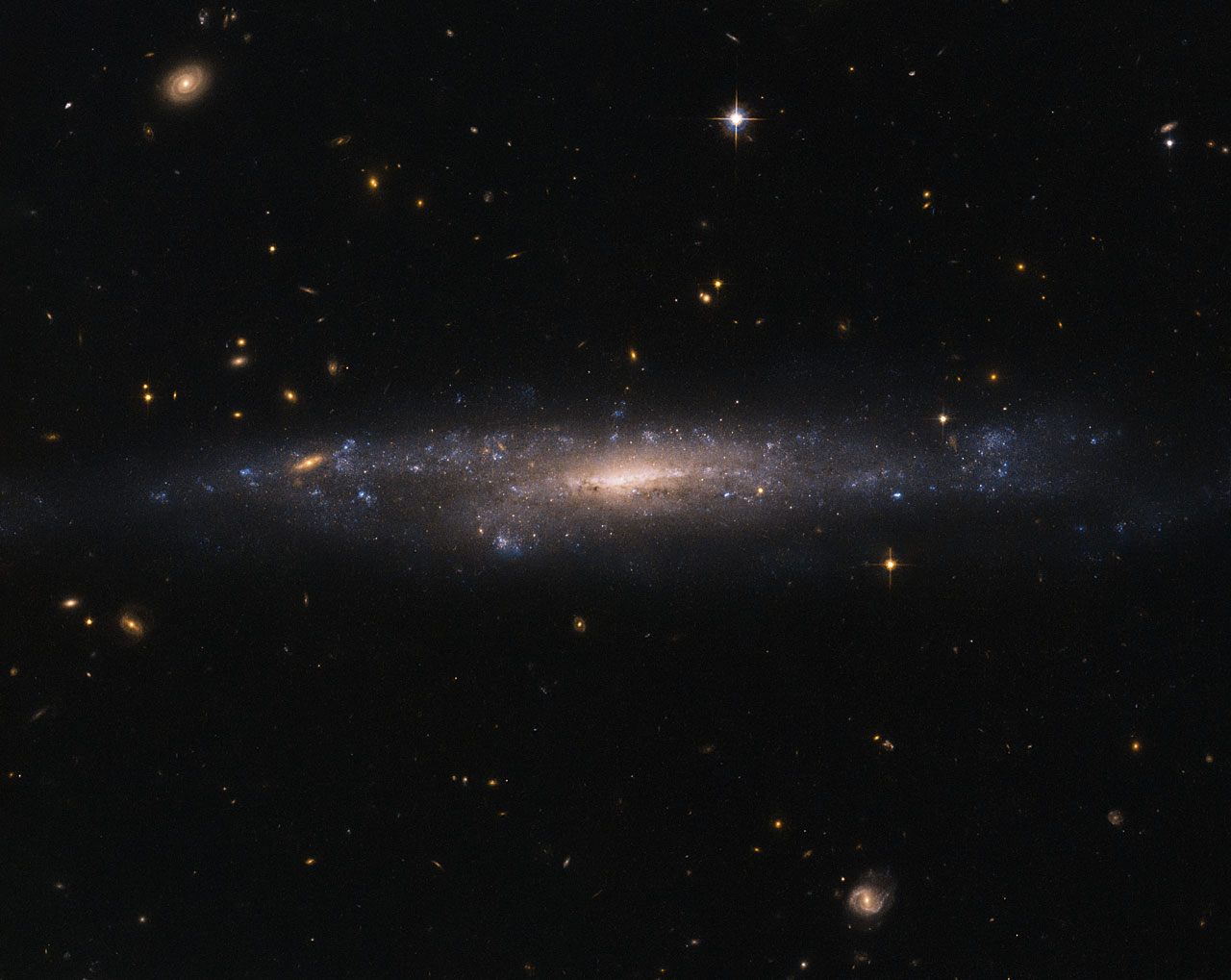
    Galaxy UGC 477 is located just over 110 million light-years away in the constellation of Pisces (The Fish).

    This newly released Hubble image shows galaxy UGC 477, which is located just over 110 million light-years away in the constellation of Pisces (The Fish).

    UGC 477 is a low surface brightness (LSB) galaxy. First proposed in 1976 by Mike Disney, the existence of LSB galaxies was confirmed only in 1986 with the discovery of Malin 1. LSB galaxies like UGC 477 are more diffusely distributed than galaxies such as Andromeda and the Milky Way. With surface brightnesses up to 250 times fainter than the night sky, these galaxies can be incredibly difficult to detect.

    Most of the matter present in LSB galaxies is in the form of hydrogen gas, rather than stars. Unlike the bulges of normal spiral galaxies, the centers of LSB galaxies do not contain large numbers of stars. Astronomers suspect that this is because LSB galaxies are mainly found in regions devoid of other galaxies, and have therefore experienced fewer galactic interactions and mergers capable of triggering high rates of star formation.

    LSB galaxies such as UGC 477 instead appear to be dominated by dark matter, making them excellent objects to study to further our understanding of this elusive substance. However, due to an underrepresentation in galactic surveys — caused by their characteristic low brightness — their importance has only been realized relatively recently.

    Never miss a breakthrough: Join the SciTechDaily newsletter.
    Follow us on Google and Google News.

    Astronomy Cosmology Hubble Space Telescope NASA
    Share. Facebook Twitter Pinterest LinkedIn Email Reddit

    Related Articles

    Hubble Image of the Week – Dwarf Galaxy Leo A

    Hubble Image of the Week – Swimming in Sculptor

    Astronomers Measure the Farthest Galaxy Ever Seen in the Universe

    Hubble Image of the Week – Peculiar Galaxy NGC 1487

    Hubble Image of the Week: Infant Star’s Artistic Outburst

    Hubble Views Turbulent Birthing Ground Orion B Molecular Cloud Complex

    Magnified Image Reveals the Faintest Known Galaxy from the Early Universe

    Hubble Image of the Week: Quadruple Star System DI Cha

    Hubble Image of the Week – Evolution in Slow Motion

    Leave A Reply Cancel Reply

    • Facebook
    • Twitter
    • Pinterest
    • YouTube

    Don't Miss a Discovery

    Subscribe for the Latest in Science & Tech!

    Trending News

    Breakthrough Parkinson’s Drug Targets Disease at Its Genetic Roots

    Just 4 Weeks of Simple Diet Changes Reversed Signs of Aging in Older Adults

    Scientists May Have Finally Solved Why Humans Are Right-Handed

    NASA’s Hubble Accidentally Witnesses a Comet Shattering in Space

    Researchers Discover the Body’s Hidden “Off Switch” for Inflammation

    Scientists Discover Metformin Doesn’t Work the Way We Thought

    Tea or Coffee? Your Daily Choice Could Affect Osteoporosis Risk

    Vitamin C May Fight Cancer in a Surprising Way

    Follow SciTechDaily
    • Facebook
    • Twitter
    • YouTube
    • Pinterest
    • Newsletter
    • RSS
    SciTech News
    • Biology News
    • Chemistry News
    • Earth News
    • Health News
    • Physics News
    • Science News
    • Space News
    • Technology News
    Recent Posts
    • Scientists Stunned by Hybrid California Bees That Beat Deadly Mites
    • Scientists Discover Terrifying Giant Crocodile That Hunted Human Ancestors
    • Scientists Finally Think They Know Why T. rex Had Tiny Arms
    • Scientists Are Turning Ocean Trash Into Roads – and It’s Actually Working
    • This Alien Planet Has Rock Clouds That Vaporize Before Sunset
    Copyright © 1998 - 2026 SciTechDaily. All Rights Reserved.
    • Science News
    • About
    • Contact
    • Editorial Board
    • Privacy Policy
    • Terms of Use

    Type above and press Enter to search. Press Esc to cancel.