
Close Menu
    Facebook X (Twitter) Instagram
    SciTechDaily
    • Biology
    • Chemistry
    • Earth
    • Health
    • Physics
    • Science
    • Space
    • Technology
    Facebook X (Twitter) Pinterest YouTube RSS
    SciTechDaily
    Home»Space»Astronomers Develop New Method to Determine Oxygen Abundance in Stars
    Space

    Astronomers Develop New Method to Determine Oxygen Abundance in Stars

    By Harvard-Smithsonian Center for AstrophysicsApril 29, 2016No Comments3 Mins Read
    Facebook Twitter Pinterest Telegram LinkedIn WhatsApp Email Reddit
    Share
    Facebook Twitter LinkedIn Pinterest Telegram Email Reddit
    Chromospheric Models and the Oxygen Abundance in Giant Stars
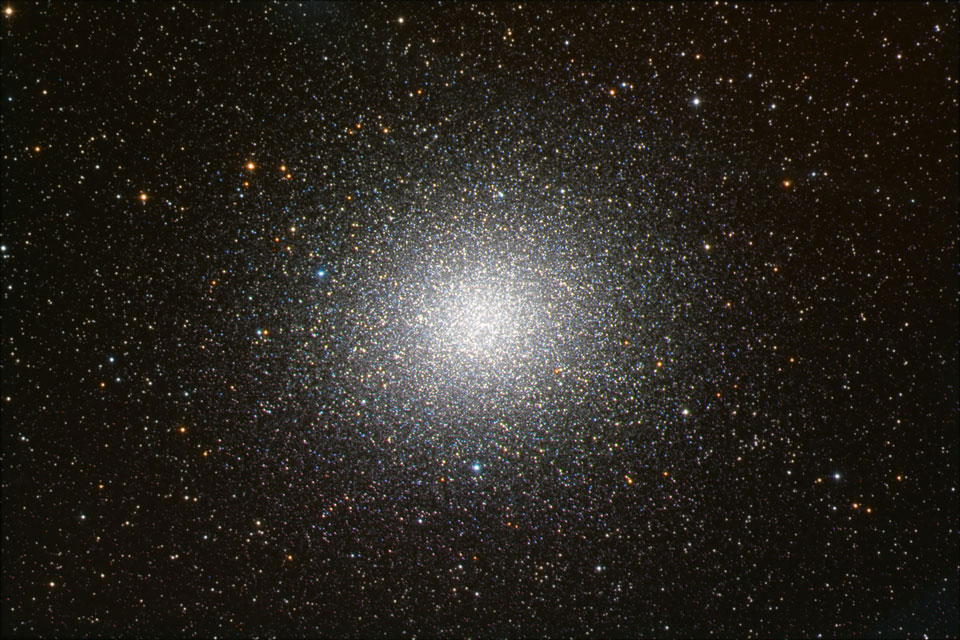
    An optical image of the brightest globular cluster, Omega Centauri, a group of over ten million stars older than the Sun.

    Astronomers from the Harvard-Smithsonian Center for Astrophysics have developed a new computational method to determine the abundance of oxygen in these and similar stars, and in particular in giant stars. The code finds values that are more self-consistent than previous estimates.

    Oxygen is the third most abundant element in the universe, after hydrogen and helium. It is an important constituent of the clouds of gas and dust in space, especially when combined in molecules with other atoms like carbon, and it is from this interstellar material that new stars and planets develop. Oxygen is, of course, also essential for life as we know it, and all known life forms require liquid water and its oxygen content. Oxygen in molecular form, especially as water, was supposed to be relatively abundant, but over the past decade considerable attention has been paid to observations suggesting that at least in molecular form oxygen is scarcer than expected, a deficit that has not yet been entirely resolved.

    Atomic oxygen by contrast, seen most prominently in the light of stars, was thought to be in good agreement with expectations. The neutral oxygen atom produces strong lines that are frequently used to calculate its abundance. Models fit the line strengths by taking into account the radiation field, the star’s hot gas motions, and the internal structure of the star (for example, the way the temperature and pressure change with radius).

    It turns out, however, that varying assumptions in these calculations can result in oxygen abundance predictions that differ significantly, and in the case of giant stars, which are larger and cooler and often have hot outer chromospheres, those abundance results can disagree with one another by as much as a factor of 15. This discrepancy has often been discounted by scientists arguing that some of the proposed stellar models are themselves unrealistic.

    CfA astronomers Andrea Dupree, Eugene Avrett, and Bob Kurucz have tacked this fundamental problem with Avrett’s PANDORA code for stellar atmospheres. In particular, they include the effects of a hot outer atmosphere in giant stars, something that was typically ignored. Moreover, they do not tie the excitation of oxygen atoms (and the corresponding line strengths) to the local temperature. That constraint, imposed by most previous methods in order to simplify the calculations, does not take more complex situations (like the hot atmosphere) adequately into account.

    The astronomers find that their new computations can resolve several outstanding issues. The lines themselves are actually as much as three times stronger than previously thought, reducing the implied oxygen abundances, and thereby also affecting details of the stellar interior models, especially for giants seen in globular clusters of stars. Similar improvements are seen in the results for stars known to be lacking other heavier elements, and even some normal, Sun-like stars. The possible implications extend to estimating more accurately the amount of oxygen present in a solar nebula when exoplanets form.

    Reference: “Chromospheric Models and the Oxygen Abundance in Giant Stars” by A. K. Dupree, E. H. Avrett and R. L. Kurucz, 7 April 2016, The Astrophysical Journal Letters.
    DOI: 10.3847/2041-8205/821/1/L7
    arXiv:1603.07381

    Never miss a breakthrough: Join the SciTechDaily newsletter.
    Follow us on Google and Google News.

    Astronomy Cosmology Harvard-Smithsonian Center for Astrophysics Popular
    Share. Facebook Twitter Pinterest LinkedIn Email Reddit

    Related Articles

    Webb’s Mysterious “Little Red Dots” May Be the Cradle of the First Black Holes

    Mysterious Radio Signals Reveal What’s Hiding Between Galaxies

    Cosmic Mystery Solved: Astronomers Have Discovered the Universe’s “Missing” Matter

    Preliminary Reference Earth Model Shows Earth-like Planets Have Earth-like Interiors

    Scientists Believe Globular Clusters Could Nurture Interstellar Civilizations

    Astronomers Conclude That Fewer Than 1% of Stars Have a MMSN Disk

    The Changing Frequency of Galaxy Collisions

    Astronomers Measure the Rotation Periods of Thirty Sun-Like Stars

    A Deficit of Ultra-Luminous X-Ray Sources in Starburst Galaxies

    Leave A Reply Cancel Reply

    • Facebook
    • Twitter
    • Pinterest
    • YouTube

    Don't Miss a Discovery

    Subscribe for the Latest in Science & Tech!

    Trending News

    Scientists Discover How Obesity May Trigger Alzheimer’s Disease

    Scientists Confirm Alcohol Causes Widespread Health Damage

    Researchers Discover Cannabis Compounds That May Fight Obesity Without the High

    Scientists Just Found Evidence That Asteroids May Have Helped Create Life on Earth

    Scientists Create “Trojan Horse” Weight Loss Drug That Supercharges Results

    Cats Have a Unique Kidney Chemistry That Could Be Harming Their Health

    Scientists Discover Major Errors in Al Gore-Founded Climate Pollution Database

    New Vitamin B12-Based Therapy Could Change How Brain Cancer Is Treated

    Follow SciTechDaily
    • Facebook
    • Twitter
    • YouTube
    • Pinterest
    • Newsletter
    • RSS
    SciTech News
    • Biology News
    • Chemistry News
    • Earth News
    • Health News
    • Physics News
    • Science News
    • Space News
    • Technology News
    Recent Posts
    • Researchers Say NASA Could Be Overlooking Signs of Alien Life
    • Loneliness May Hurt Memory but Not in the Way You Think
    • Scientists Identify Hidden Brain Pathway Behind GLP-1 Weight-Loss Effects
    • Study Warns Widely Used Food Preservatives Linked to High Blood Pressure and Heart Disease
    • Scientists Uncover Hidden Rare Earth Treasure Map Beneath Ancient Continents
    Copyright © 1998 - 2026 SciTechDaily. All Rights Reserved.
    • Science News
    • About
    • Contact
    • Editorial Board
    • Privacy Policy
    • Terms of Use

    Type above and press Enter to search. Press Esc to cancel.