
Close Menu
    Facebook X (Twitter) Instagram
    SciTechDaily
    • Biology
    • Chemistry
    • Earth
    • Health
    • Physics
    • Science
    • Space
    • Technology
    Facebook X (Twitter) Pinterest YouTube RSS
    SciTechDaily
    Home»Space»Hubble Views Lenticular Galaxy NGC 524
    Space

    Hubble Views Lenticular Galaxy NGC 524

    By NASAJuly 29, 2013No Comments2 Mins Read
    Facebook Twitter Pinterest Telegram LinkedIn WhatsApp Email Reddit
    Share
    Facebook Twitter LinkedIn Pinterest Telegram Email Reddit
    Hubble Views NGC 524
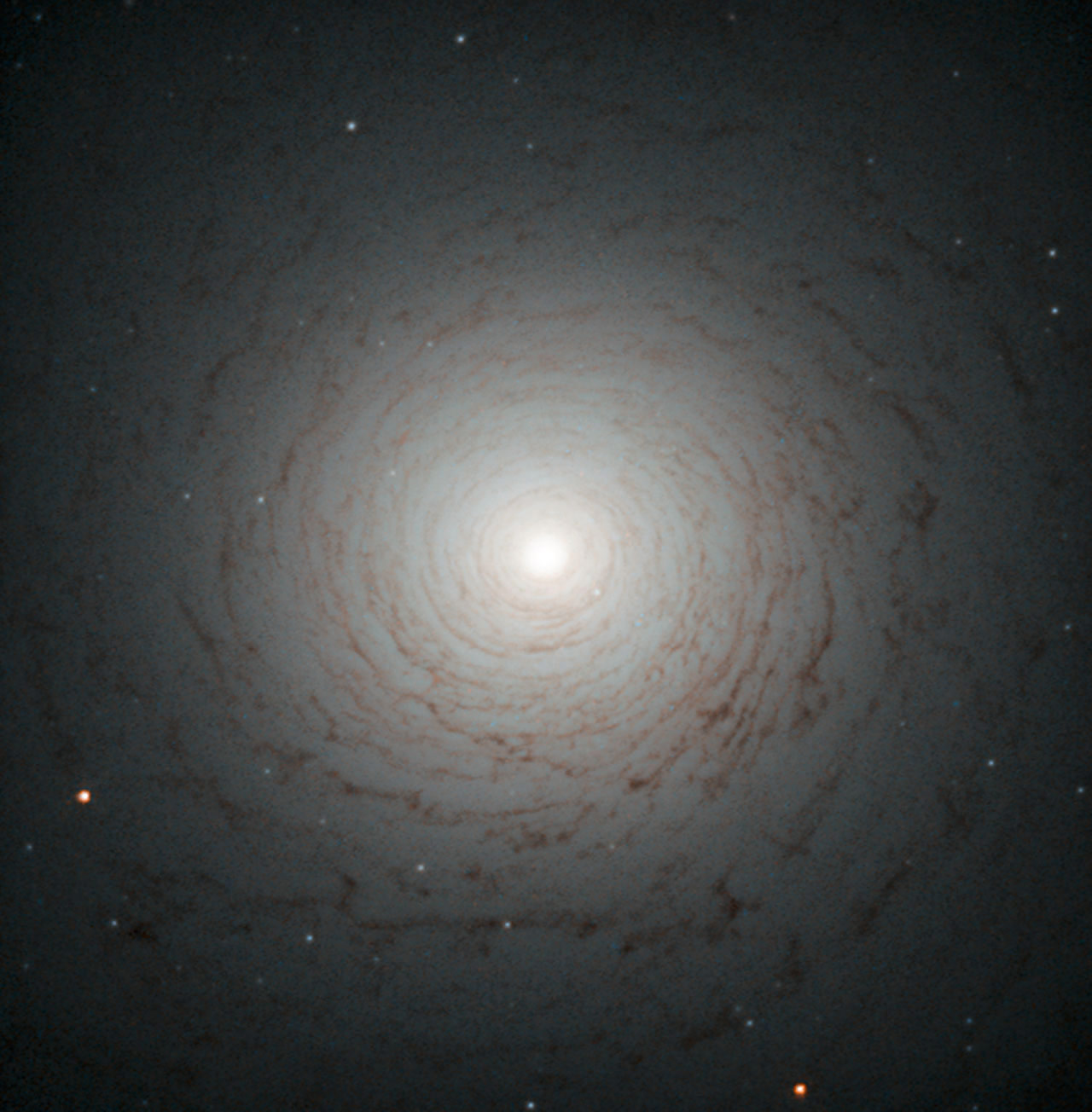
    The lenticular galaxy NGC 524 is situated in the constellation Pisces, approximately 90 million light-years away from Earth. Credit: ESA/Hubble & NASA, Acknowledgement: Judy Schmidt

    This Hubble image reveals the mysterious structure of galaxy NGC 524, which is formed by the remaining gas surrounding the galaxy’s central bulge.

    This striking cosmic whirl is the center of galaxy NGC 524, as seen with the NASA/ESA Hubble Space Telescope. This galaxy is located in the constellation of Pisces, some 90 million light-years from Earth.

    NGC 524 is a lenticular galaxy. Lenticular galaxies are believed to be an intermediate state in galactic evolution — they are neither elliptical nor spiral. Spirals are middle-aged galaxies with vast, pin wheeling arms that contain millions of stars. Along with these stars are large clouds of gas and dust that, when dense enough, are the nurseries where new stars are born. When all the gas is either depleted or lost into space, the arms gradually fade away and the spiral shape begins to weaken. At the end of this process, what remains is a lenticular galaxy — a bright disc full of old, red stars surrounded by what little gas and dust the galaxy has managed to cling on to.

    This image shows the shape of NGC 524 in detail, formed by the remaining gas surrounding the galaxy’s central bulge. Observations of this galaxy have revealed that it maintains some spiral-like motion, explaining its intricate structure.

    Never miss a breakthrough: Join the SciTechDaily newsletter.
    Follow us on Google and Google News.

    Astronomy European Space Agency Hubble Space Telescope NASA
    Share. Facebook Twitter Pinterest LinkedIn Email Reddit

    Related Articles

    Hubble’s Newest Discovery Isn’t a Star, It’s a Window Into the Dark Universe

    This Nearby Galaxy Shows How Frozen Clouds Ignite Into Stars

    This Chaotic Spiral Galaxy Is Still Recovering From a Cosmic Collision

    This Strange Spiral Galaxy Is Hiding a Massive Black Hole

    Hubble Zooms In on a Galaxy That Maps the Universe’s Expansion

    Hubble Captures a Dazzling Spiral Galaxy Alive With Birth and Destruction

    Hubble Spots a Glowing “Ring of Fire” in a Distant Spiral Galaxy

    Dust, Light & Ancient Collisions: The Sombrero Galaxy Like You’ve Never Seen It

    Star Formation in Motion: Hubble Reveals Spiraling Stars and Sculpted Nebulae

    Leave A Reply Cancel Reply

    • Facebook
    • Twitter
    • Pinterest
    • YouTube

    Don't Miss a Discovery

    Subscribe for the Latest in Science & Tech!

    Trending News

    Scientists Discover New Compound That Burns Fat Without Killing Your Appetite

    Mount Vesuvius Buried These Scrolls for 2,000 Years – Now Scientists May Read Them

    The Asteroid That Killed the Dinosaurs Was Stranger Than We Thought

    Scientists Rewrite the Atomic Structure of Glass While It Melts

    DNA Has a Four-Letter Alphabet. Scientists Just Expanded It to Eight

    A Little-Known Protein Could Point to a New Way To Treat Alzheimer’s

    Scientists Turn Plastic Waste Into Protein-Rich Cookies

    New Findings Could Help Build Computers That Think More Like Your Brain

    Follow SciTechDaily
    • Facebook
    • Twitter
    • YouTube
    • Pinterest
    • Newsletter
    • RSS
    SciTech News
    • Biology News
    • Chemistry News
    • Earth News
    • Health News
    • Physics News
    • Science News
    • Space News
    • Technology News
    Recent Posts
    • Scientists Reassess a Major Risk of Breast Cancer Screening
    • Every Breath Leaves a Unique Signature in Your Brain, Study Finds
    • Natural Compound May Help Protect the Brain and Heart From Excess Salt
    • Could This Cellular “Cleanup Crew” Hold New Clues to Chronic Inflammation?
    • Four Million Ancient Coins Reveal What Really Held the Roman Empire Together
    Copyright © 1998 - 2026 SciTechDaily. All Rights Reserved.
    • Science News
    • About
    • Contact
    • Editorial Board
    • Privacy Policy
    • Terms of Use

    Type above and press Enter to search. Press Esc to cancel.