
Close Menu
    Facebook X (Twitter) Instagram
    SciTechDaily
    • Biology
    • Chemistry
    • Earth
    • Health
    • Physics
    • Science
    • Space
    • Technology
    Facebook X (Twitter) Pinterest YouTube RSS
    SciTechDaily
    Home»Space»Hubble’s Final Gaze: Unraveling the Mysteries of Jellyfish Galaxies
    Space

    Hubble’s Final Gaze: Unraveling the Mysteries of Jellyfish Galaxies

    By ESA/HubbleJune 4, 2023No Comments2 Mins Read
    Facebook Twitter Pinterest Telegram LinkedIn WhatsApp Email Reddit
    Share
    Facebook Twitter LinkedIn Pinterest Telegram Email Reddit
    Jellyfish Galaxy JO206
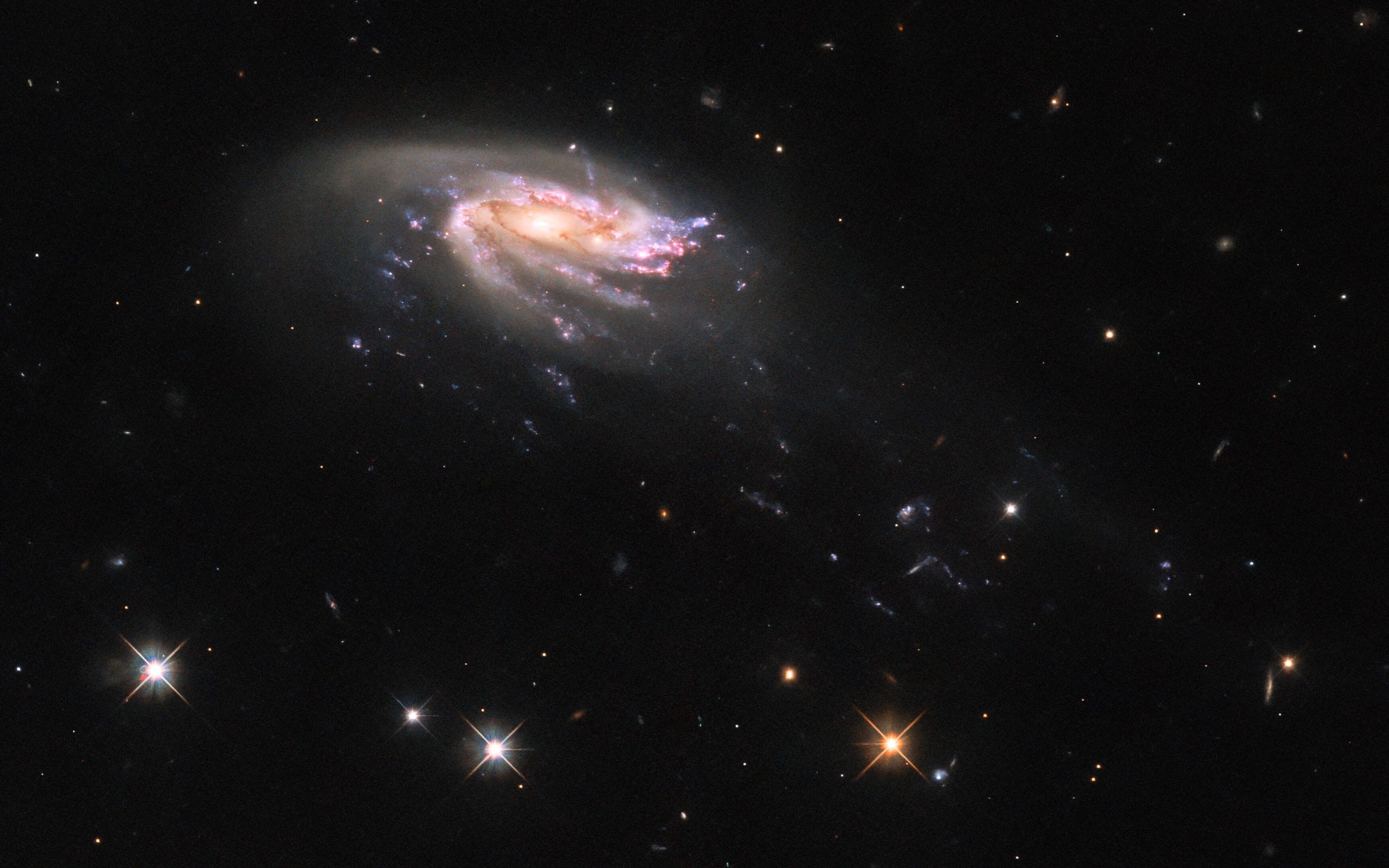
    The NASA/ESA Hubble Space Telescope has captured a striking image of the Jellyfish galaxy JO206, located over 700 million light-years away in the Aquarius constellation. This image marks the final observation in a series dedicated to jellyfish galaxies, named for their distinctive shape, which resembles a jellyfish with trailing tendrils of star formation. Credit: ESA/Hubble & NASA, M. Gullieuszik and the GASP team

    The Hubble Space Telescope has released its final image in a series of jellyfish galaxies, showcasing JO206 in the Aquarius constellation. Named for their resemblance to jellyfish, these galaxies have tendrils of star formation caused by interaction with intra-cluster medium in galaxy clusters. Hubble’s findings suggest that environmental conditions minimally affect star formation, as evident from the similarities between star formations in the galaxy’s main disc and its tendrils.

    The jellyfish galaxy JO206 trails across this image from the Hubble Space Telescope, showcasing a colorful star-forming disc surrounded by a pale, luminous cloud of dust. A handful of bright stars with criss-cross diffraction spikes stand out against an inky black backdrop at the bottom of the image. JO206 lies over 700 million light-years from Earth in the constellation Aquarius, and this image of the galaxy is the sixth and final instalment in a series of observations of jellyfish galaxies. Some of Hubble’s other observations of these peculiar galaxies — which range from grandiose to ghostly — are available here.

    Jellyfish galaxies are so-called because of their resemblance to their aquatic namesakes. In this image, the disc of JO206 is trailed by long tendrils of bright star formation that stretch towards the bottom right of this image, just as jellyfish trail tentacles behind them. The tendrils of jellyfish galaxies are formed by the interaction between galaxies and the intra-cluster medium, a tenuous superheated plasma that pervades galaxy clusters. As galaxies move through galaxy clusters they ram into the intracluster medium, which strips gas from the galaxies and draws it into the long tendrils of star formation.

    The tentacles of jellyfish galaxies give astronomers a unique opportunity to study star formation under extreme conditions, far from the influence of the main disc of the galaxy. Surprisingly, Hubble revealed that there are no striking differences between star formation in the discs of jellyfish galaxies and star formation in their tentacles, which suggests the environment of newly-formed stars has only a minor influence on their formation.

    Never miss a breakthrough: Join the SciTechDaily newsletter.
    Follow us on Google and Google News.

    Astronomy European Space Agency Hubble Space Telescope
    Share. Facebook Twitter Pinterest LinkedIn Email Reddit

    Related Articles

    A Diamond Necklace of Cosmic Proportions

    Hubble Snaps a Stunning Close-Up of a Magnificent Spiral Galaxy

    Extraordinary Hubble Image: Light Bends From the Beyond

    Hubble Space Telescope Sees Volcanic Activity Reforming the Atmosphere on a Rocky Exoplanet

    Hubble Spies a Luminous Heart With Dark Tendrils

    Spectacular Return to the Veil Nebula

    Hubble Spots a Peculiar Sight: Unusual Spiral Galaxy With a Heavy Arm

    A Flash of Life: Hubble Spies an Unusual Planetary Nebula

    Through the Cosmic Clouds: Hubble Spots a Beautiful Stellar Nursery

    Leave A Reply Cancel Reply

    • Facebook
    • Twitter
    • Pinterest
    • YouTube

    Don't Miss a Discovery

    Subscribe for the Latest in Science & Tech!

    Trending News

    The Universe Is Expanding Too Fast and Scientists Can’t Explain Why

    “Like Liquid Metal”: Scientists Create Strange Shape-Shifting Material

    Early Warning Signals of Esophageal Cancer May Be Hiding in Plain Sight

    Common Blood Pressure Drug Shows Surprising Power Against Deadly Antibiotic-Resistant Superbug

    Scientists Uncover Dangerous Connection Between Serotonin and Heart Valve Disease

    Scientists Discover a “Protector” Protein That Could Help Reverse Hair Loss

    Bone-Strengthening Discovery Could Reverse Osteoporosis

    Scientists Uncover Hidden Trigger Behind Stem Cell Aging

    Follow SciTechDaily
    • Facebook
    • Twitter
    • YouTube
    • Pinterest
    • Newsletter
    • RSS
    SciTech News
    • Biology News
    • Chemistry News
    • Earth News
    • Health News
    • Physics News
    • Science News
    • Space News
    • Technology News
    Recent Posts
    • Scientists Overcome Major Quantum Bottleneck, Potentially Transforming Teleportation and Computing
    • Quantum Physics’ Strangest Problem May Hold the Key to Time Itself
    • Scientists Create “Liquid Gears” That Spin Without Touching
    • The Simple Habit That Could Help Prevent Cancer
    • Forgotten Medicinal Plant Shows Promise in Fighting Dangerous Superbugs
    Copyright © 1998 - 2026 SciTechDaily. All Rights Reserved.
    • Science News
    • About
    • Contact
    • Editorial Board
    • Privacy Policy
    • Terms of Use

    Type above and press Enter to search. Press Esc to cancel.