
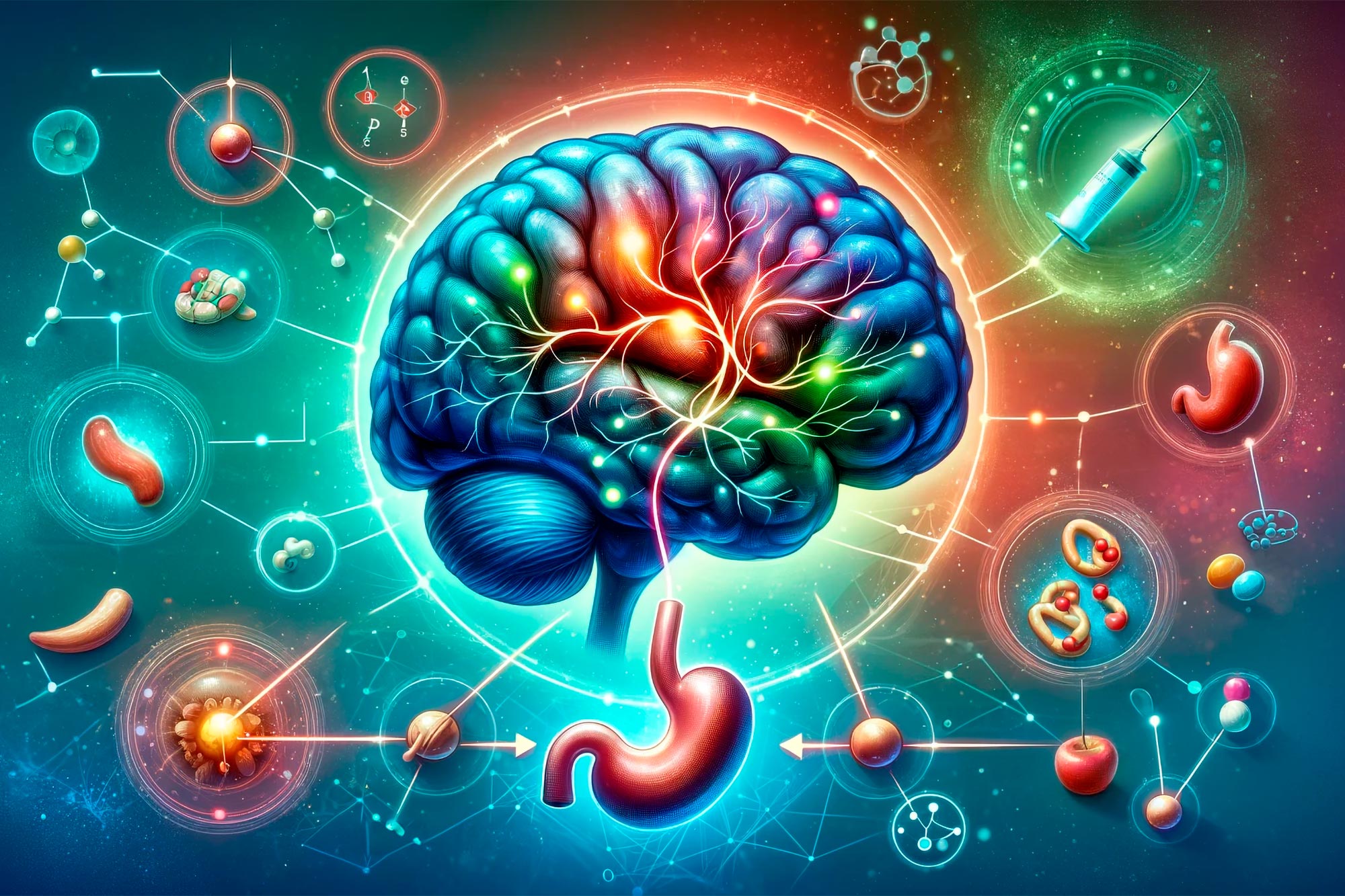
Researchers have found that hunger hormones in the gut directly affect the brain’s hippocampus, influencing eating decisions. This discovery, made through a study on mice, shows how the brain regulates eating based on hunger levels and could have implications for understanding and treating eating disorders.
A hunger hormone produced in the gut can directly impact a decision-making part of the brain in order to drive an animal’s behavior, finds a new study by UCL (University College London) researchers.
The study in mice, published in the journal Neuron, is the first to show how hunger hormones can directly impact activity of the brain’s hippocampus when an animal is considering food.
Study Findings and Implications
Lead author Dr. Andrew MacAskill (UCL Neuroscience, Physiology & Pharmacology) said: “We all know our decisions can be deeply influenced by our hunger, as food has a different meaning depending on whether we are hungry or full. Just think of how much you might buy when grocery shopping on an empty stomach. But what may seem like a simple concept is actually very complicated in reality; it requires the ability to use what’s called ‘contextual learning’.
“We found that a part of the brain that is crucial for decision-making is surprisingly sensitive to the levels of hunger hormones produced in our gut, which we believe is helping our brains to contextualize our eating choices.”
For the study, the researchers put mice in an arena that had some food, and looked at how the mice acted when they were hungry or full, while imaging their brains in real time to investigate neural activity. All of the mice spent time investigating the food, but only the hungry animals would then begin eating.
The researchers were focusing on brain activity in the ventral hippocampus (the underside of the hippocampus), a decision-making part of the brain that is understood to help us form and use memories to guide our behavior.
The scientists found that activity in a subset of brain cells in the ventral hippocampus increased when animals approached food, and this activity inhibited the animal from eating.
But if the mouse was hungry, there was less neural activity in this area, so the hippocampus no longer stopped the animal from eating. The researchers found this corresponded to high levels of the hunger hormone ghrelin circulating in the blood.
Experimental Insights and Broader Implications
Adding further clarity, the UCL researchers were able to experimentally make mice behave as if they were full, by activating these ventral hippocampal neurons, leading animals to stop eating even if they were hungry. The scientists achieved this result again by removing the receptors for the hunger hormone ghrelin from these neurons.
Prior studies have shown that the hippocampus of animals, including non-human primates, has receptors for ghrelin, but there was scant evidence for how these receptors work.
This finding has demonstrated how ghrelin receptors in the brain are put to use, showing the hunger hormone can cross the blood-brain barrier (which strictly restricts many substances in the blood from reaching the brain) and directly impact the brain to drive activity, controlling a circuit in the brain that is likely to be the same or similar in humans.
Future Research Directions
Dr. MacAskill added: “It appears that the hippocampus puts the brakes on an animal’s instinct to eat when it encounters food, to ensure that the animal does not overeat – but if the animal is indeed hungry, hormones will direct the brain to switch off the brakes, so the animal goes ahead and begins eating.”
The scientists are continuing their research by investigating whether hunger can impact learning or memory, by seeing if mice perform non-food-specific tasks differently depending on how hungry they are. They say additional research might also shed light on whether there are similar mechanisms at play for stress or thirst.
The researchers hope their findings could contribute to research into the mechanisms of eating disorders, to see if ghrelin receptors in the hippocampus might be implicated, as well as with other links between diet and other health outcomes such as risk of mental illnesses.
First author Dr. Ryan Wee (UCL Neuroscience, Physiology & Pharmacology) said: “Being able to make decisions based on how hungry we are is very important. If this goes wrong it can lead to serious health problems. We hope that by improving our understanding of how this works in the brain, we might be able to aid in the prevention and treatment of eating disorders.”
Reference: “Internal-state-dependent control of feeding behavior via hippocampal ghrelin signaling” by Ryan W.S. Wee, Karyna Mishchanchuk, Rawan AlSubaie, Timothy W. Church, Matthew G. Gold and Andrew F. MacAskill, 16 November 2023, Neuron.
DOI: 10.1016/j.neuron.2023.10.016
Never miss a breakthrough: Join the SciTechDaily newsletter.
Follow us on Google and Google News.
1 Comment
A better study should involve K2 students given a few tablespoons of Yakult and studied for and on their feedbacks. Surely this would beat mice studies as Yakult is known to have hunger repressing qualities as well. At least the Japs would approve of it.