
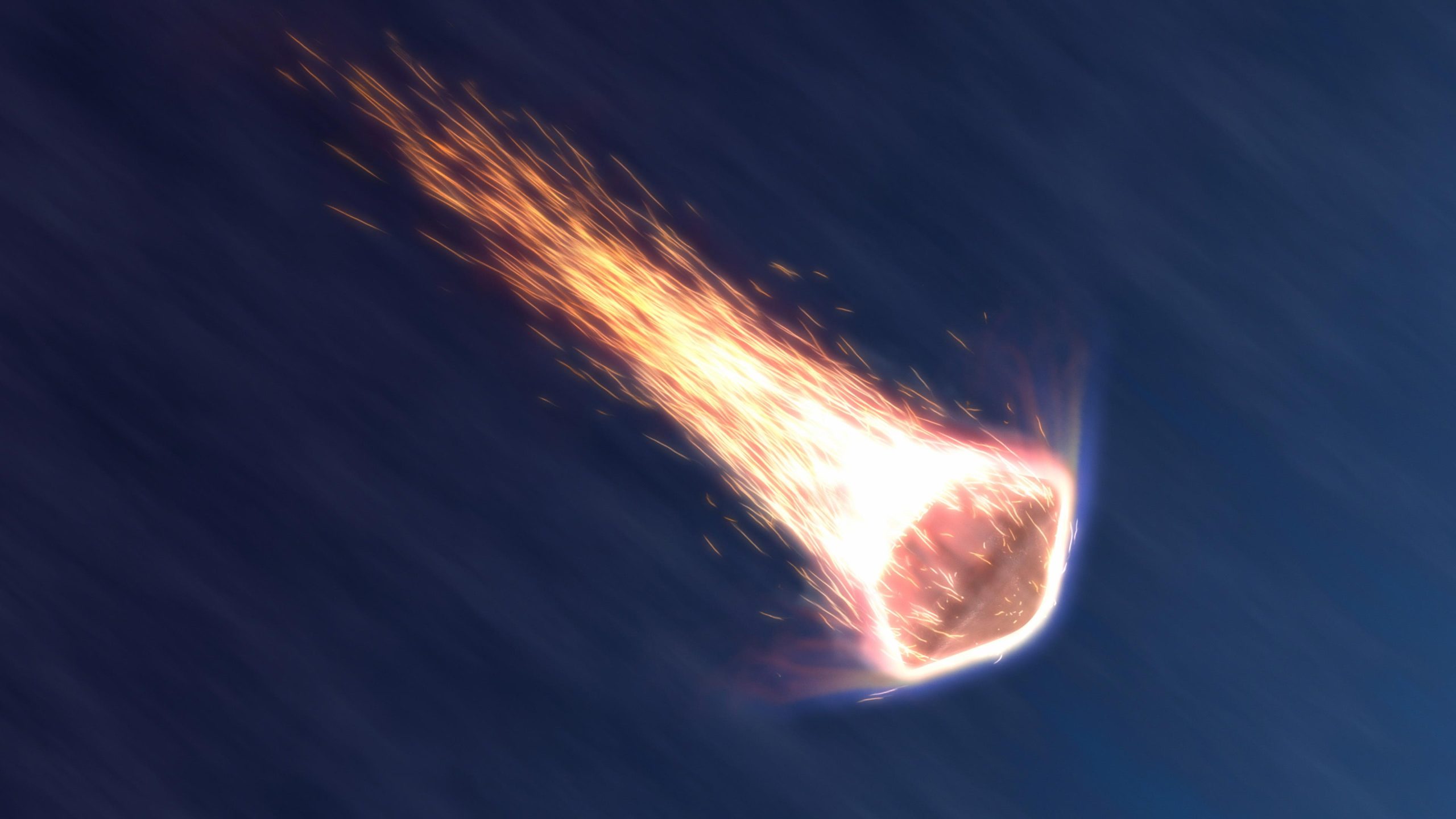
The OSIRIS-REx mission returned asteroid samples, enabling a vast observation campaign that provided new insights into atmospheric entry using innovative distributed acoustic sensing technology.
This success prepares the spacecraft, now OSIRIS-APEX, for its 2029 mission to asteroid Apophis.
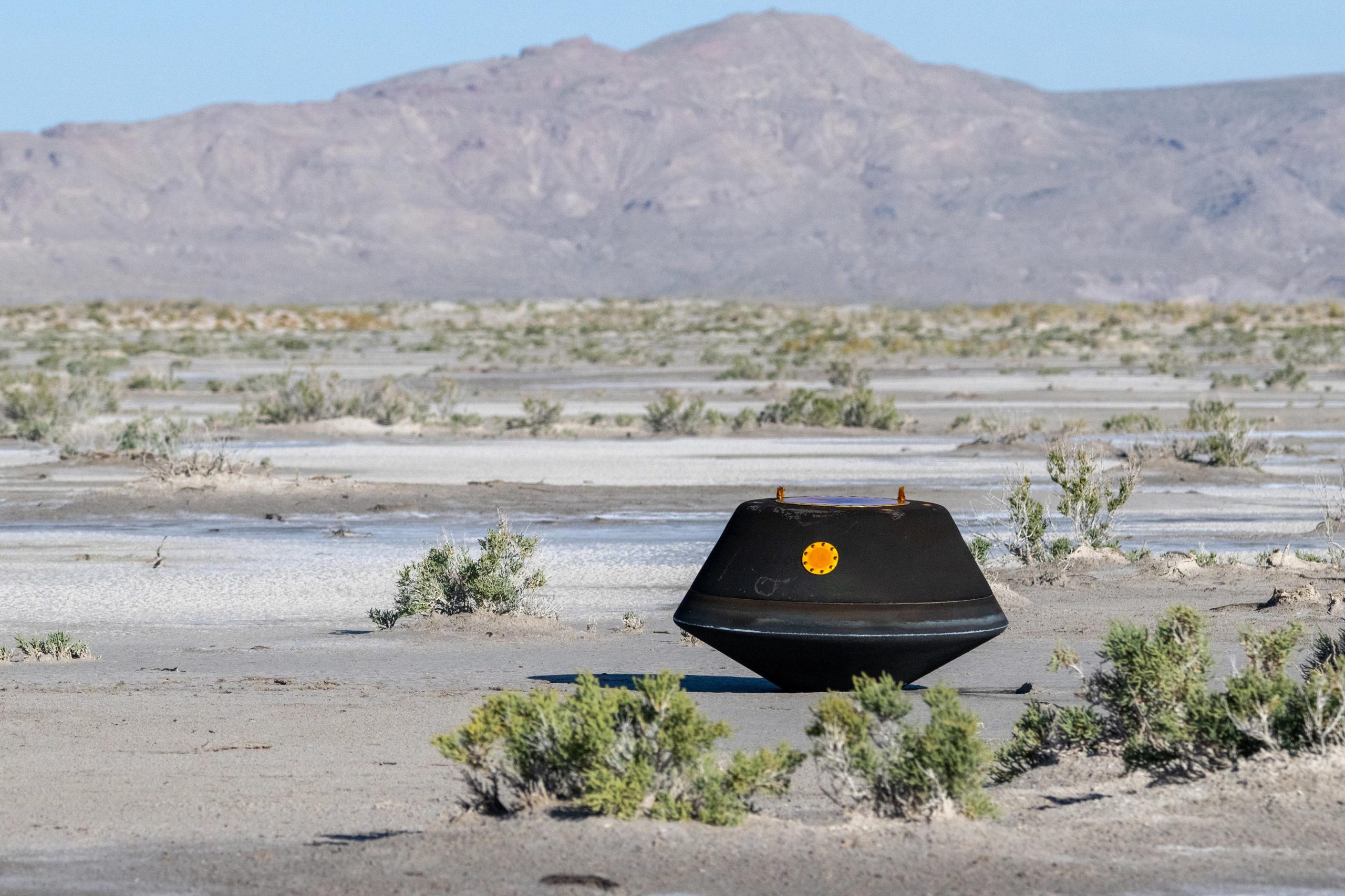
The OSIRIS-REx mission achieved a historic milestone last year as the first U.S. mission to return an asteroid sample to Earth, bringing with it a wealth of groundbreaking data. An international team, led by Sandia National Laboratories and including researchers from Los Alamos National Laboratory, has now shared preliminary findings from the capsule’s atmospheric reentry.
Unprecedented Geophysical Campaign
The capsule’s return marked the largest geophysical observation effort of its kind. “This project was a unique opportunity for us to observe the geophysical signals produced by a meter-sized object traveling at hypersonic speeds,” said Chris Carr, lead researcher at Los Alamos National Laboratory. “There are few chances for scientists to be prepared to collect this type of data that we need to propel scientific inquiry for years to come.”
The campaign involved over 400 sensors, many of which were stationed near Eureka, NV along the “loneliest road in America.” Given the size of the project, there were many objectives among the more than 80 collaborators. One team of Los Alamos scientists focused on distributed acoustic sensing (DAS), and the paper as a whole encompasses many methods to obtain data during the capsule’s return.
Breakthrough in Space Matter Observation
Though space matter does pass through Earth’s atmosphere, it is difficult to determine where and when the object will make its entry. Even when it is possible to determine those factors, the financial and logistic constraints will almost certainly render it a non-starter. This results in very limited real-time observational data about the behavior of foreign objects entering the atmosphere. The OSIRIS-REx sample return capsule gave researchers a unique opportunity to collect this data.
“For our DAS sub-team, it was the fact that we recorded the signal using a surface-laid cable,” Carr said. “This was the first time such a signal was recorded by DAS, and going into the fieldwork, we weren’t sure if we’d be successful. We were very excited to see the first plots of our data and see that we recorded it.”
Enhancing Future Space Research
The preliminary findings of the campaign show implications for future projects in space and on the ground; specifically, aiding the development of entry and propagation models. This paper documents the process used to detect and record the entry of the capsule, and it shows that the methods are capable of handling the kind of observation needed in this large of a campaign. It has substantially increased knowledge of entry detection for space objects and will allow researchers to better understand how objects enter the Earth’s atmosphere.

Preparing for the Next Mission
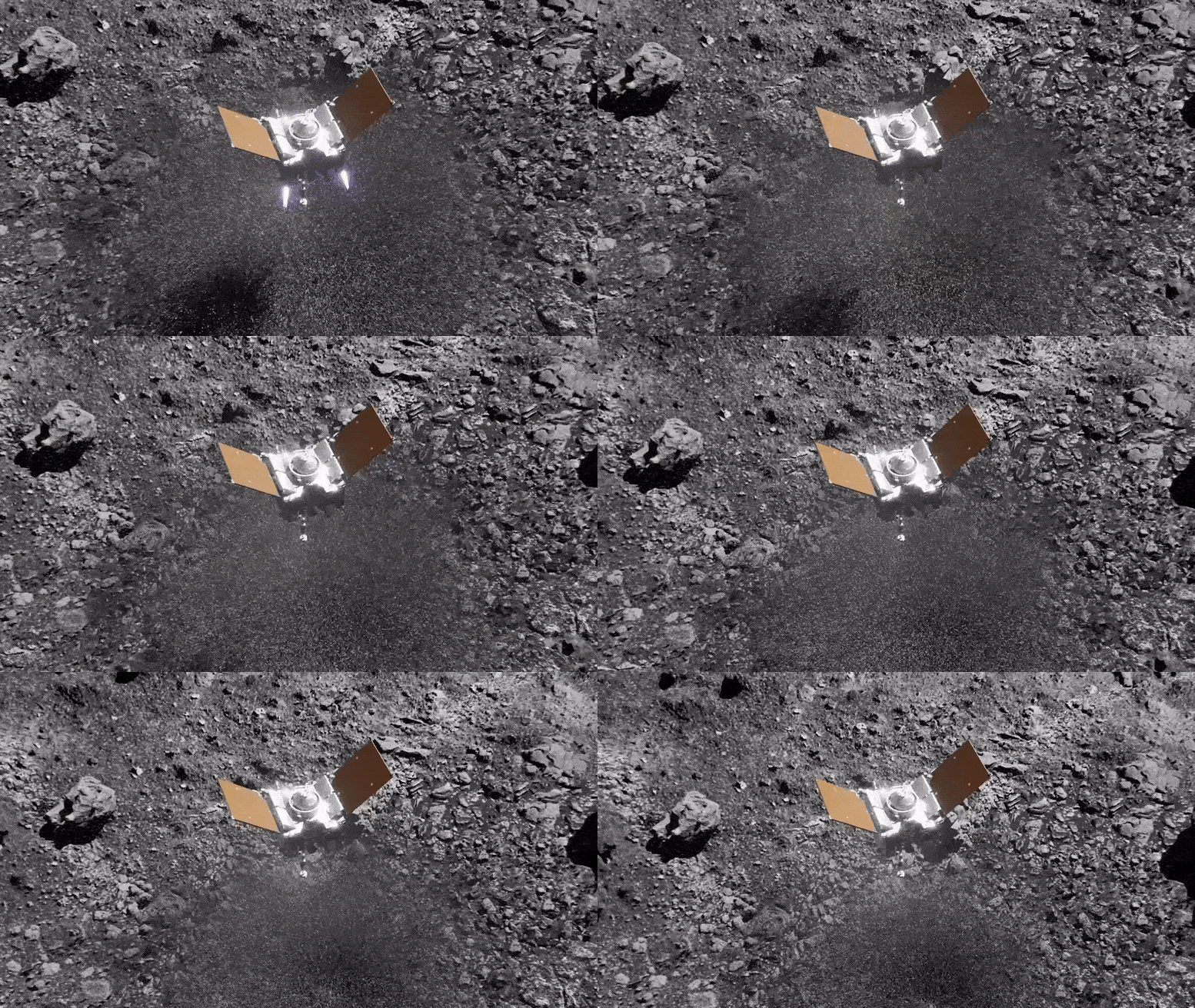
Now that the capsule has touched down and the data is ready for release, OSIRIS-REx is being made ready for its next mission. NASA renamed the spacecraft OSIRIS-APEX as it is prepared for a 2029 arrival to the asteroid Apophis.
Reference: “Geophysical Observations of the 2023 September 24 OSIRIS-REx Sample Return Capsule Reentry” by Elizabeth A. Silber, Daniel C. Bowman, Chris G. Carr, David P. Eisenberg, Brian R. Elbing, Benjamin Fernando, Milton A. Garcés, Robert Haaser, Siddharth Krishnamoorthy, Charles A. Langston, Yasuhiro Nishikawa, Jeremy Webster, Jacob F. Anderson, Stephen Arrowsmith, Sonia Bazargan, Luke Beardslee, Brant Beck, Jordan W. Bishop, Philip Blom, Grant Bracht, David L. Chichester, Anthony Christe, Jacob Clarke, Kenneth Cummins, James Cutts, Lisa Danielson, Carly Donahue, Kenneth Eack, Michael Fleigle, Douglas Fox, Ashish Goel, David Green, Yuta Hasumi, Chris Hayward, Dan Hicks, Jay Hix, Stephen Horton, Emalee Hough, David P. Huber, Madeline A. Hunt, Jennifer Inman, S. M. Ariful Islam, Jacob Izraelevitz, Jamey D. Jacob, James Johnson, Real J. KC, Attila Komjathy, Eric Lam, Justin LaPierre, Kevin Lewis, Richard D. Lewis, Patrick Liu, Léo Martire, Meaghan McCleary, Elisa A. McGhee, Ipsita Mitra, Amitabh Nag, Luis Ocampo Giraldo, Karen Pearson, Mathieu Plaisir, Sarah K. Popenhagen, Hamid Rassoul, Miro Ronac Giannone, Mirza Samnani, Nicholas Schmerr, Kate Spillman, Girish Srinivas, Samuel K. Takazawa, Alex Tempert, Reagan Turley, Cory Van Beek, Loïc Viens, Owen A. Walsh, Nathan Weinstein, Robert White, Brian Williams, Trevor C. Wilson, Shirin Wyckoff, Masa-yuki Yamamoto, Zachary Yap, Tyler Yoshiyama and Cleat Zeiler, 30 September 2024, The Planetary Science Journal.
DOI: 10.3847/PSJ/ad5b5e
Funding: Center for Space and Earth Science and LDRD award 20220188DR
Never miss a breakthrough: Join the SciTechDaily newsletter.
Follow us on Google and Google News.