
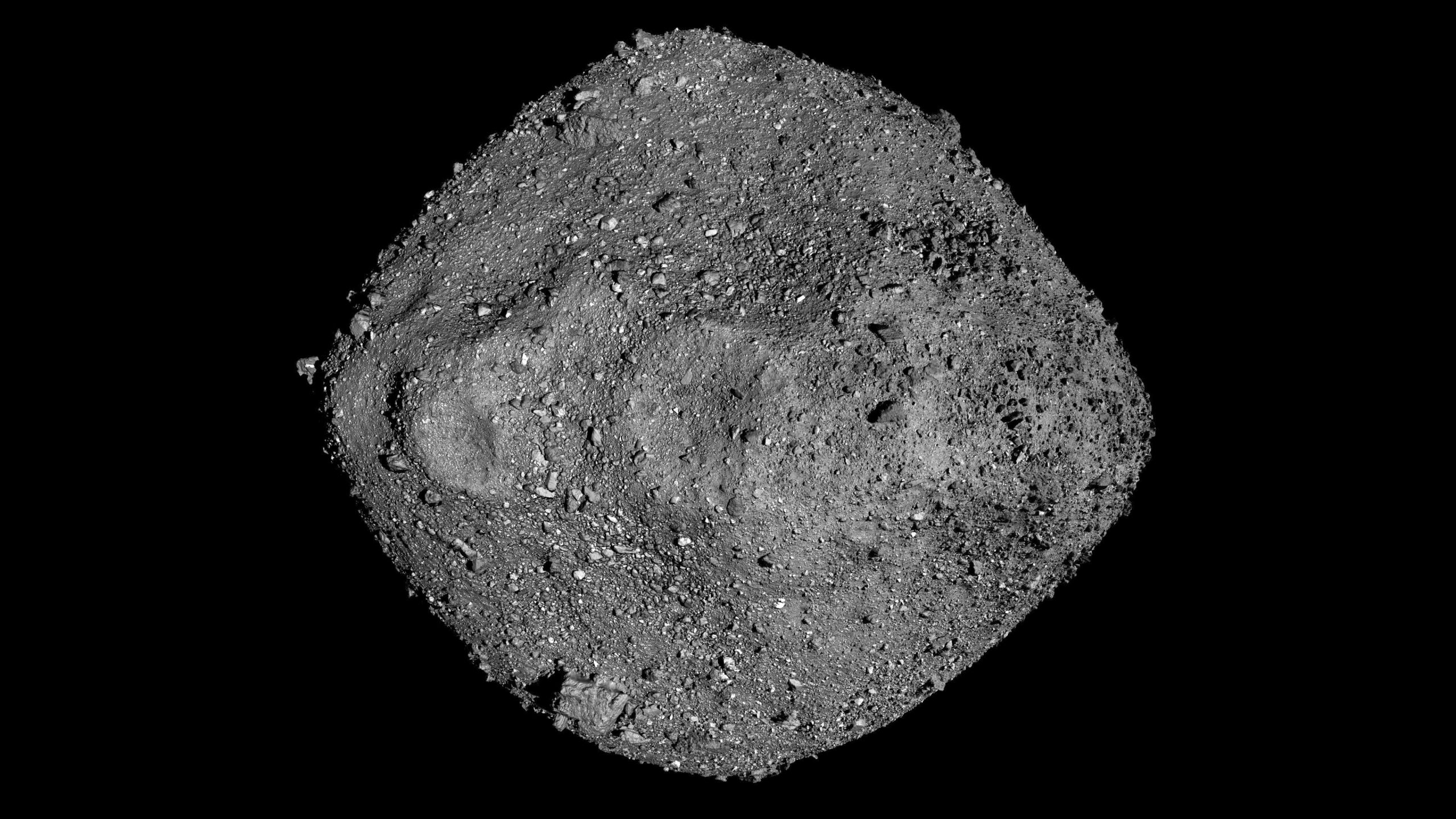
Scientists at Berkeley Lab are unraveling the mysteries of Bennu, a 4.5-billion-year-old asteroid, using cutting-edge technology.
The asteroid harbors traces of ancient briny water, salty minerals, and even organic molecules – potential clues to life’s origins. Researchers are using X-ray and electron microscopy to analyze these space rocks at the atomic level, revealing how early planetary systems formed. Even more exciting, they’ve found amino acids and nucleobases, the essential building blocks of life, suggesting asteroids like Bennu may have played a role in seeding life on Earth.
Ancient Asteroid Samples at Berkeley Lab
Over the past year, researchers at the Department of Energy’s Lawrence Berkeley National Laboratory (Berkeley Lab) have been analyzing a remarkable set of samples: material collected from the 4.5-billion-year-old asteroid Bennu, located about 200 million miles from Earth at the time of collection.
Berkeley Lab is among more than 40 institutions studying Bennu’s chemical composition to gain deeper insights into the formation of our solar system and planets. A study published in Nature reveals that Bennu likely originated from an ancient, water-rich world and contains material from the coldest reaches of the solar system, possibly beyond Saturn’s orbit.
Scientists discovered that the asteroid holds salty mineral deposits formed in a precise sequence as briny water evaporated, preserving evidence of liquid water that once flowed billions of years ago. Similar minerals exist in dried lake beds on Earth, such as California’s Searles Lake. They have also been detected on Jupiter’s moon Europa and Saturn’s moon Enceladus, places where subsurface oceans might support the ingredients for life.
Unlocking Bennu’s Secrets with Advanced Technology
“It’s an amazing privilege to be able to study asteroid material, direct from space,” said Matthew Marcus, a Berkeley Lab scientist who runs the Advanced Light Source (ALS) beamline where some of the samples were studied and who wrote one of the programs used to analyze their chemical composition. “We have highly specialized instruments that can tell us what Bennu is made of and help reveal its history.”
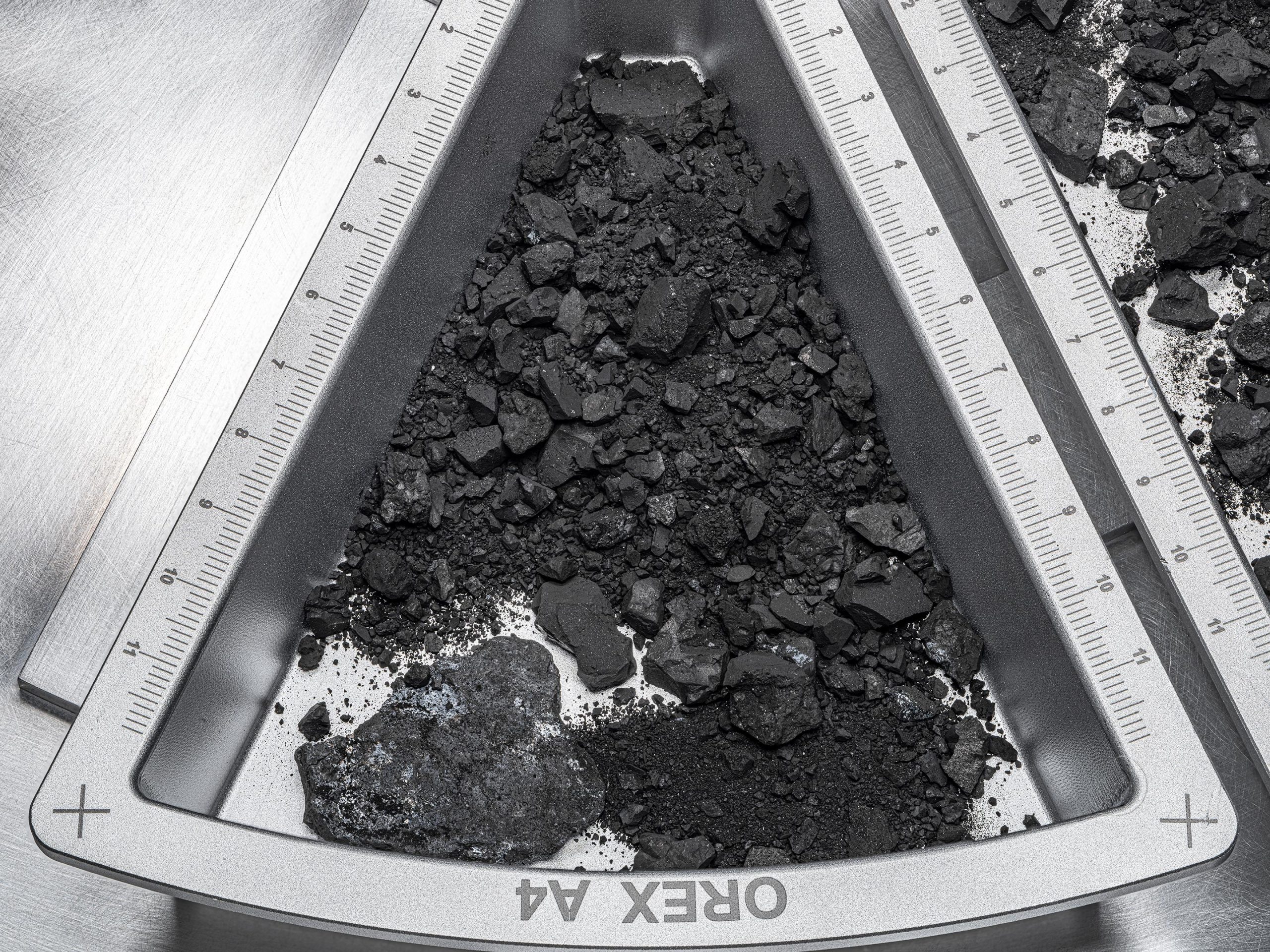
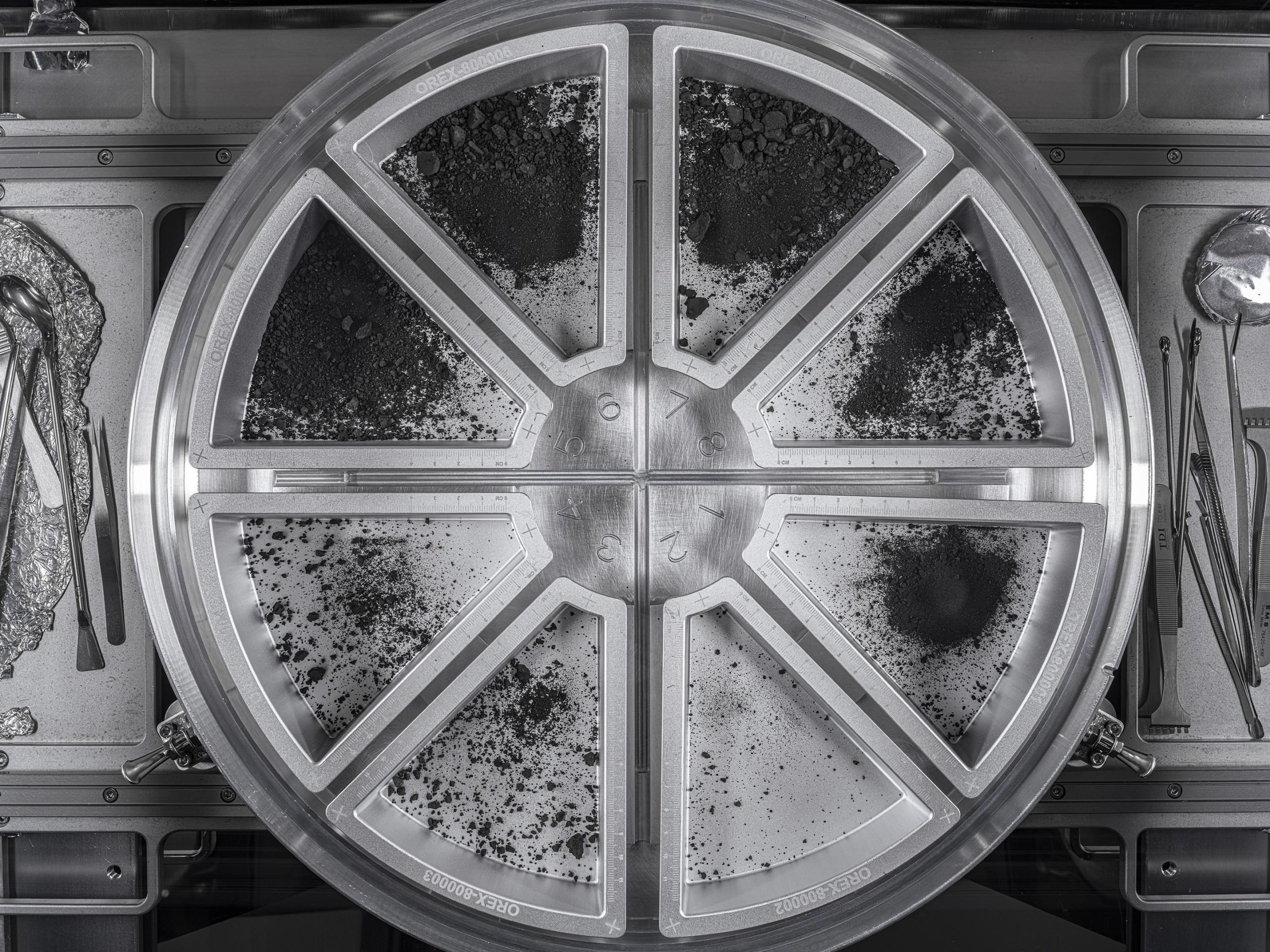
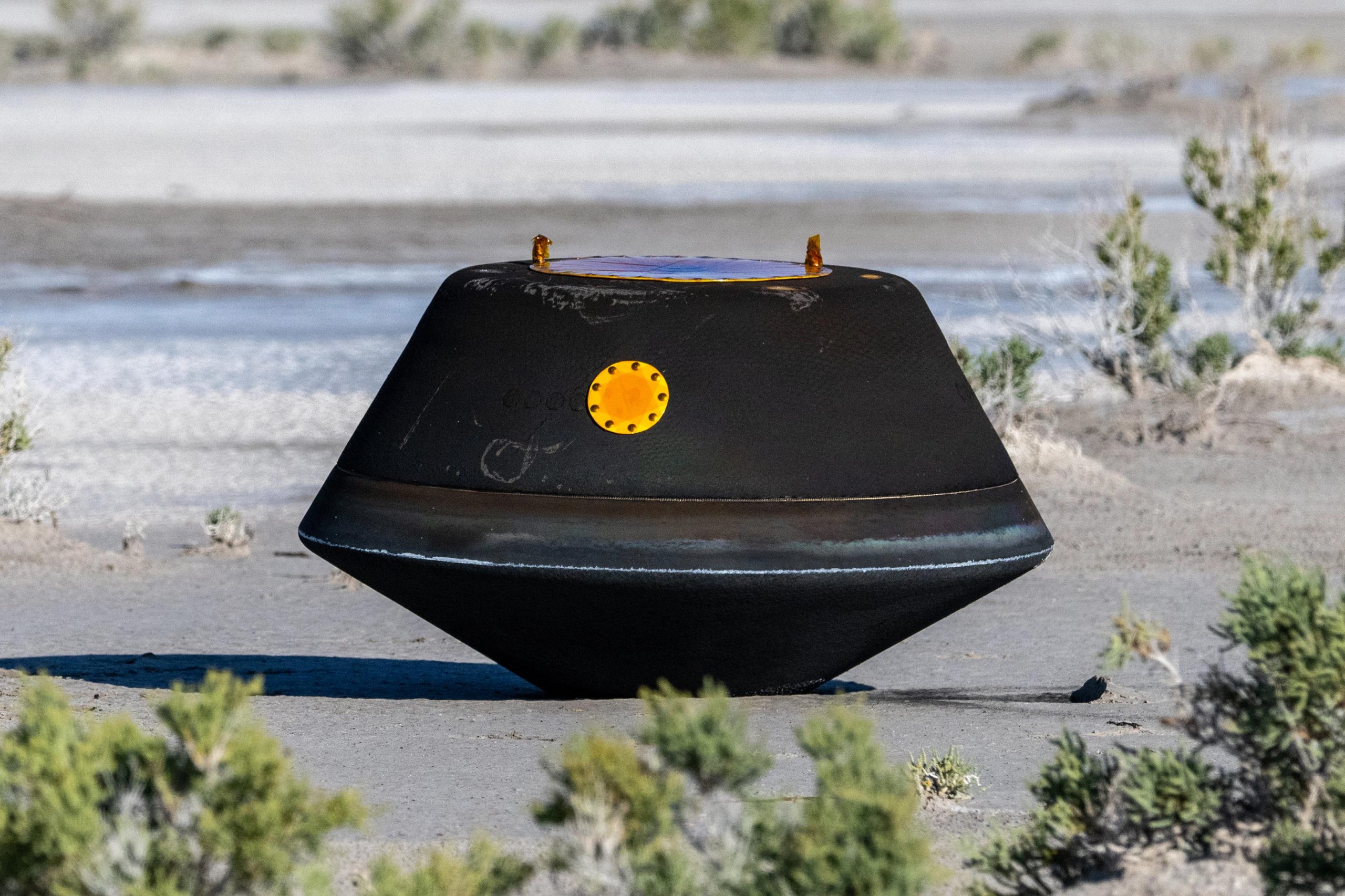
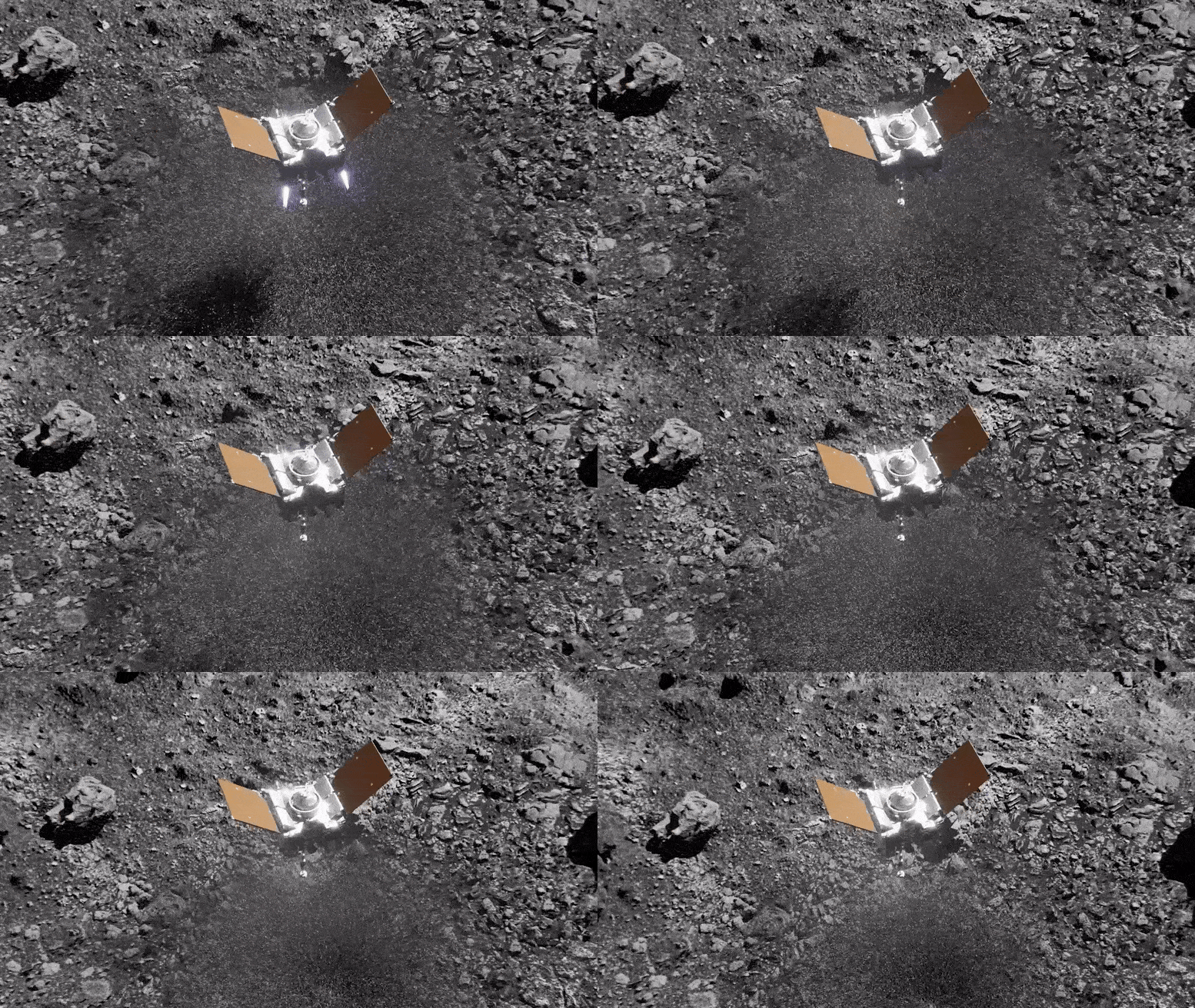
The samples from Bennu were gathered by NASA’s OSIRIS-REx mission, the first U.S. mission to return samples from an asteroid. The mission returned nearly 122 grams of material from Bennu – the largest sample ever captured in space and returned to Earth from an extraterrestrial body beyond the Moon.
Investigating Bennu’s Chemical Composition
Marcus teamed up with Scott Sandford from NASA Ames Research Center and Zack Gainsforth from the UC Berkeley Space Sciences Laboratory to study the Bennu sample using scanning transmission X-ray microscopy (STXM) at the ALS. By varying the energy of the X-rays, they were able to determine the presence (or absence) of specific chemical bonds at the nanometer scale and map out the different chemicals found in the asteroid. The science team discovered that some of the last salts to evaporate from the brine were mixed into the rock at the finest levels.
“This sort of information provides us with important clues about the processes, environments, and timing that formed the samples,” Sandford said. “Understanding these samples is important, since they represent the types of materials that were likely seeded on the surface of the early Earth and may have played a role in the origins and early evolution of life.”
High-Tech Imaging to Reveal Ancient Clues
At Berkeley Lab’s Molecular Foundry, researchers used a beam of electrons to image the same Bennu samples with transmission electron microscopy (TEM). The Foundry also helped prepare the samples for the experiments run at the ALS. Experts used an ion beam to carve out microscopic sections of the material that are about a thousand times thinner than a sheet of paper.
“Being able to examine the same exact atoms using both STXM and TEM removed many of the uncertainties in interpreting our data,” Gainsforth said. “We were able to confirm that we really were seeing a ubiquitous phase formed by evaporation. It took a lot of work to get Bennu to give up its secrets, but we are delighted with the final result.”
This is not the first time the ALS and Molecular Foundry have studied material from space. Researchers also used the two facilities to investigate samples from the asteroid Ryugu, building up our understanding of our early solar system. And there’s still more to come, with additional studies of Bennu at both the STXM and infrared beamlines at the ALS planned for the coming year.
Building Blocks of Life Hidden in Bennu
Berkeley Lab researchers also contributed to a second paper published today in Nature Astronomy that analyzed organic materials found on the asteroid. Within the Bennu sample, the science team identified 14 of the 20 amino acids that life on Earth uses to build proteins. They also found all five nucleobases, the ring-shaped molecules that form DNA and RNA, as well as ammonia, which on Earth might have helped spark the emergence of early life.
The results support the idea that asteroids like Bennu may have delivered water and essential chemical building blocks of life to Earth in the distant past. Based on the similarities between asteroid Bennu and the icy dwarf planets and moons of our outer solar system, these potential ingredients for life could be widespread.
Explore Further:
- Scientists Just Found DNA’s Building Blocks in Asteroid Bennu
- NASA Uncovers Life’s Building Blocks in Asteroid Bennu’s Pristine Sample
- Briny Traces in NASA’s Asteroid Sample Hold Clues to the Chemistry of Life
- A Billion-Year-Old Secret Unlocked in Asteroid Bennu’s Dust
References:
- “An evaporite sequence from ancient brine recorded in Bennu samples” by T. J. McCoy, S. S. Russell, T. J. Zega, K. L. Thomas-Keprta, S. A. Singerling, F. E. Brenker, N. E. Timms, W. D. A. Rickard, J. J. Barnes, G. Libourel, S. Ray, C. M. Corrigan, P. Haenecour, Z. Gainsforth, G. Dominguez, A. J. King, L. P. Keller, M. S. Thompson, S. A. Sandford, R. H. Jones, H. Yurimoto, K. Righter, S. A. Eckley, P. A. Bland, M. A. Marcus, D. N. DellaGiustina, T. R. Ireland, N. V. Almeida, C. S. Harrison, H. C. Bates, P. F. Schofield, L. B. Seifert, N. Sakamoto, N. Kawasaki, F. Jourdan, S. M. Reddy, D. W. Saxey, I. J. Ong, B. S. Prince, K. Ishimaru, L. R. Smith, M. C. Benner, N. A. Kerrison, M. Portail, V. Guigoz, P.-M. Zanetta, L. R. Wardell, T. Gooding, T. R. Rose, T. Salge, L. Le, V. M. Tu, Z. Zeszut, C. Mayers, X. Sun, D. H. Hill, N. G. Lunning, V. E. Hamilton, D. P. Glavin, J. P. Dworkin, H. H. Kaplan, I. A. Franchi, K. T. Tait, S. Tachibana, H. C. Connolly Jr. and D. S. Lauretta, 29 January 2025, Nature.
DOI: 10.1038/s41586-024-08495-6 - “Abundant ammonia and nitrogen-rich soluble organic matter in samples from asteroid (101955) Bennu” by Daniel P. Glavin, Jason P. Dworkin, Conel M. O’D. Alexander, José C. Aponte, Allison A. Baczynski, Jessica J. Barnes, Hans A. Bechtel, Eve L. Berger, Aaron S. Burton, Paola Caselli, Angela H. Chung, Simon J. Clemett, George D. Cody, Gerardo Dominguez, Jamie E. Elsila, Kendra K. Farnsworth, Dionysis I. Foustoukos, Katherine H. Freeman, Yoshihiro Furukawa, Zack Gainsforth, Heather V. Graham, Tommaso Grassi, Barbara Michela Giuliano, Victoria E. Hamilton, Pierre Haenecour, Philipp R. Heck, Amy E. Hofmann, Christopher H. House, Yongsong Huang, Hannah H. Kaplan, Lindsay P. Keller, Bumsoo Kim, Toshiki Koga, Michael Liss, Hannah L. McLain, Matthew A. Marcus, Mila Matney, Timothy J. McCoy, Ophélie M. McIntosh, Angel Mojarro, Hiroshi Naraoka, Ann N. Nguyen, Michel Nuevo, Joseph A. Nuth III, Yasuhiro Oba, Eric T. Parker, Tanya S. Peretyazhko, Scott A. Sandford, Ewerton Santos, Philippe Schmitt-Kopplin, Frederic Seguin, Danielle N. Simkus, Anique Shahid, Yoshinori Takano, Kathie L. Thomas-Keprta, Havishk Tripathi, Gabriella Weiss, Yuke Zheng, Nicole G. Lunning, Kevin Righter, Harold C. Connolly Jr. and Dante S. Lauretta, 29 January 2025, Nature Astronomy.
DOI: 10.1038/s41550-024-02472-9
OSIRIS-REx (Origins, Spectral Interpretation, Resource Identification, and Security–Regolith Explorer) is NASA’s first mission to collect and return samples from an asteroid. Managed by NASA’s Goddard Space Flight Center in Greenbelt, Maryland, the mission was designed to study asteroid Bennu, a carbon-rich remnant from the early solar system. The mission’s principal investigator, Dante Lauretta of the University of Arizona, Tucson, leads the science team and oversees data analysis and observation planning. Lockheed Martin Space in Littleton, Colorado, built the spacecraft and handles flight operations. OSIRIS-REx successfully retrieved a sample from Bennu in 2020 and returned it to Earth in 2023, providing invaluable material for studying the origins of planets and life.
Never miss a breakthrough: Join the SciTechDaily newsletter.
Follow us on Google and Google News.