
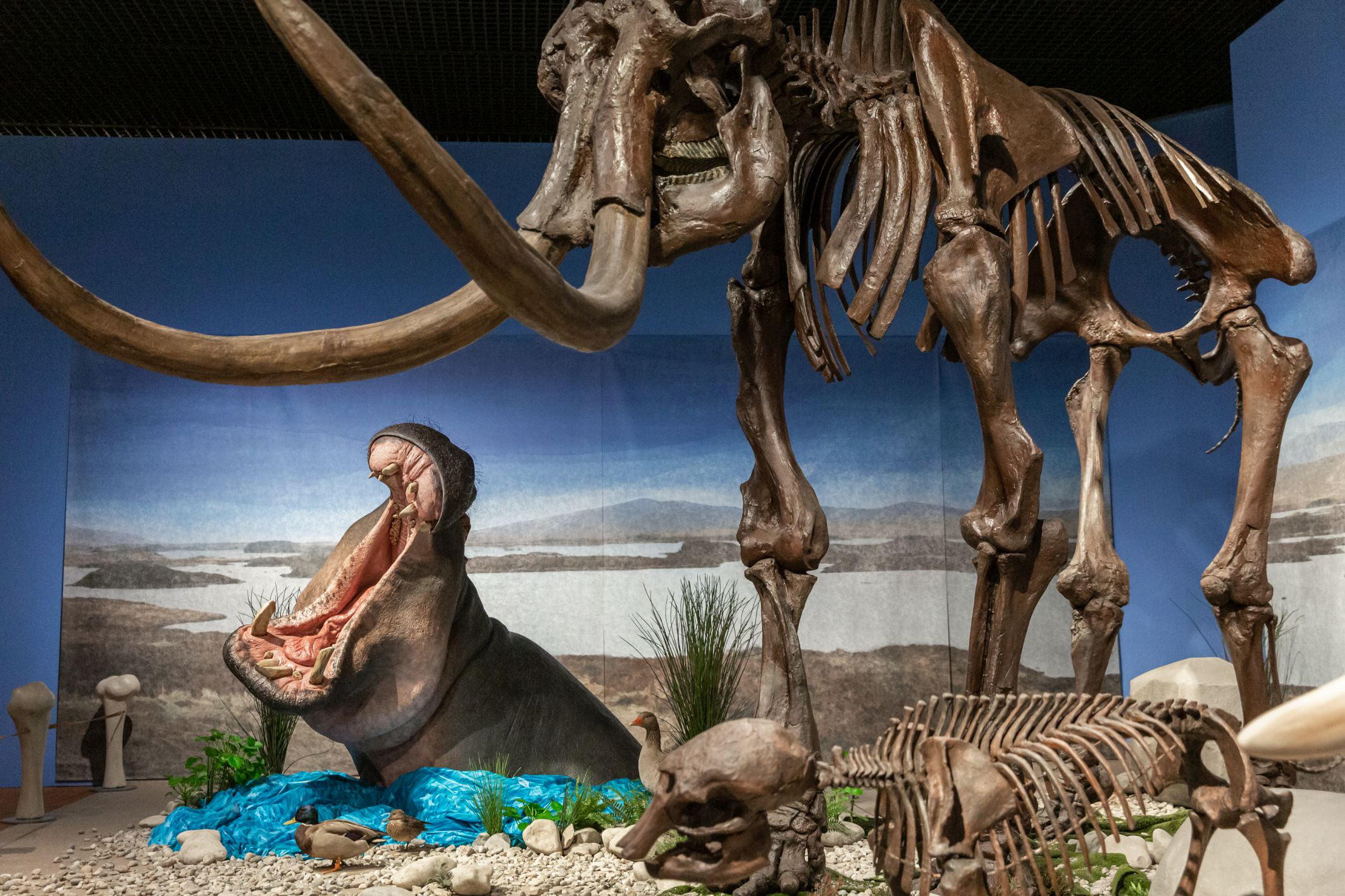
Hippos in Ice Age Germany? New research reveals that these warm-loving giants roamed central Europe far later than believed.
Hippos, which today live only in sub-Saharan Africa, managed to survive in central Europe much longer than scientists once thought. New analyses of fossilized bones reveal that these animals lived in the Upper Rhine Graben between roughly 47,000 and 31,000 years ago, during the midst of the last ice age.
The findings were published in Current Biology by an international team of researchers from the University of Potsdam, the Reiss-Engelhorn-Museen Mannheim, and the Curt-Engelhorn-Zentrum Archäometrie.
For decades, scientists believed that common hippos (Hippopotamus amphibius) disappeared from central Europe about 115,000 years ago, marking the end of the last interglacial period.
However, the new research, led by experts from the University of Potsdam, the Reiss-Engelhorn-Museen Mannheim, the Curt-Engelhorn-Zentrum Archäometrie Mannheim, ETH Zurich, and other international collaborators, reveals that hippos continued to inhabit the Upper Rhine Graben in what is now southwestern Germany between approximately 47,000 and 31,000 years ago. This means they endured far into the last ice age, surviving in a region once believed too cold for such heat-loving animals.
A Window Into the Past
The Upper Rhine Graben is an important continental climate archive. Animal bones that have survived for thousands of years in gravel and sand deposits are a valuable source for research. “It’s amazing how well the bones have been preserved. At many skeletal remains, it was possible to take samples suitable for analysis – that is not a given after such a long time,” emphasizes Dr. Ronny Friedrich, expert in age determination at the Curt-Engelhorn-Zentrum Archäometrie.
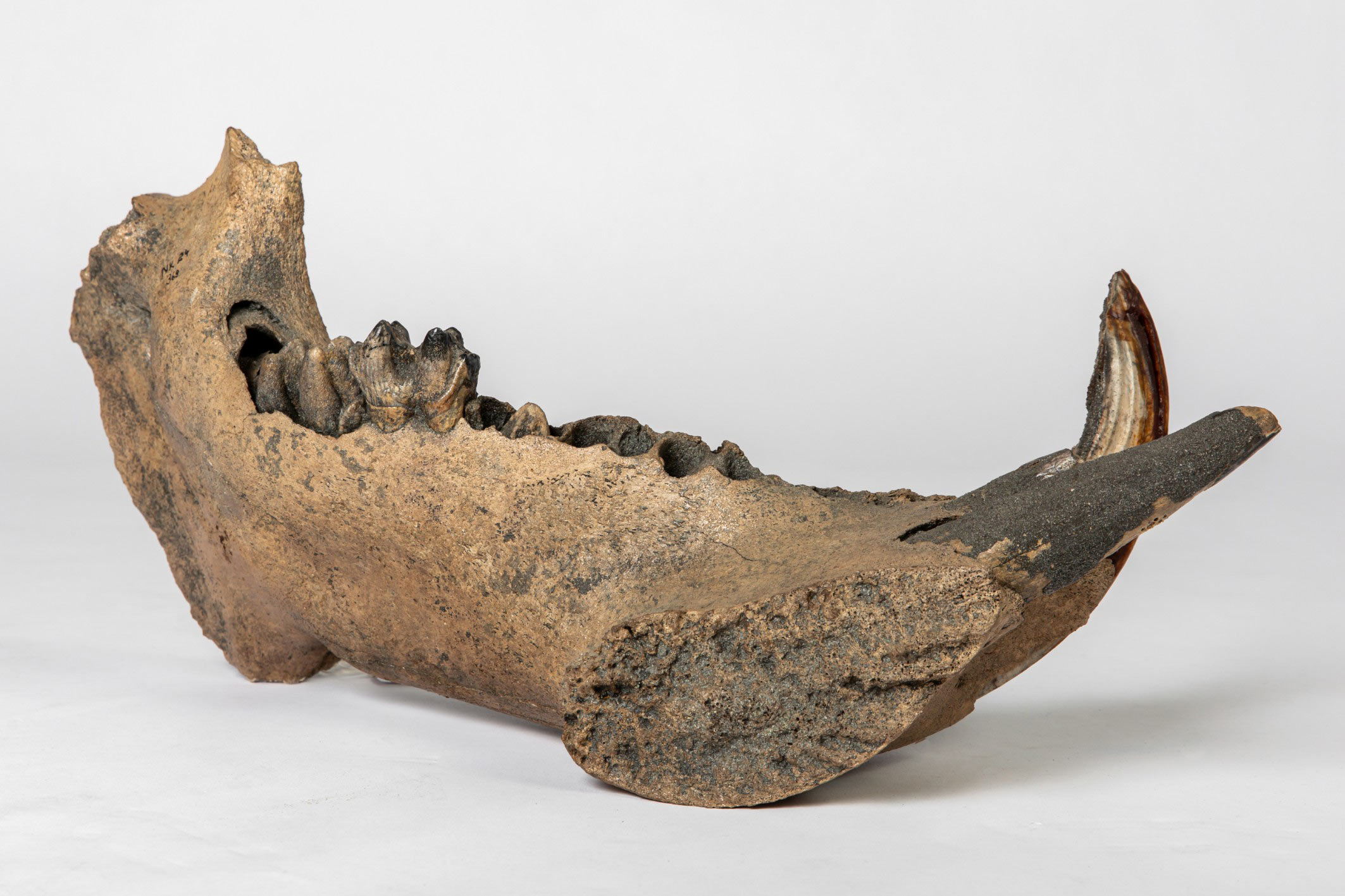
The team examined numerous hippopotamus finds and combined paleogenomic and radiocarbon analyses. Ancient DNA sequencing showed that European ice age hippos are closely related to African hippos living today and belong to the same species. Radiocarbon dating confirmed their presence during a milder climatic phase in the middle Weichselian glaciation.
Additional genome-wide analysis indicated very low genetic diversity, suggesting that the population in the Upper Rhine Graben was small and isolated. These results and further fossil evidence show that heat-loving hippos appeared in the same time frame as species adapted to cold temperatures, such as mammoths and woolly rhinos.
Rewriting the Timeline
“The results demonstrate that hippos did not vanish from middle Europe at the end of the last interglacial, as previously assumed,” summarizes first author Dr. Patrick Arnold. “Therefore, we should re-analyze other continental European hippo fossils traditionally attributed to the last interglacial period.”
Prof. Dr. Wilfried Rosendahl, general director of the Reiss-Engelhorn-Museen Mannheim and project leader of “Eiszeitfenster Oberrheingraben” is convinced that ice age research still holds many exciting questions: “The current study provides important new insights which impressively prove that the ice age was not the same everywhere, but local peculiarities taken together form a complex overall picture – similar to a puzzle. It would now be interesting and important to further examine other heat-loving animal species, attributed so far to the last interglacial.”
Reference: “Ancient DNA and dating evidence for the dispersal of hippos into central Europe during the last glacial” by Patrick Arnold, Doris Döppes, Federica Alberti, Andreas Füglistaler, Susanne Lindauer, Christian Hoselmann, Ronny Friedrich, Irka Hajdas, Marc Dickinson, Frank Menger, Johanna L.A. Paijmans, Love Dalén, Daniel Wegmann, Kirsty E.H. Penkman, Axel Barlow, Wilfried Rosendahl and Michael Hofreiter, 8 October 2025, Current Biology.
DOI: 10.1016/j.cub.2025.09.035
The study was conducted within the framework of the project “Eiszeitfenster Oberrheingraben”, funded by the Klaus Tschira Stiftung Heidelberg. The interdisciplinary project contributes to understanding climate and environmental developments in the Upper Rhine Graben and southwestern Germany over the last 400,000 years. Objects of investigation are ice age bone finds from the Reis collection, located at the Reiss-Engelhorn-Museen.
Never miss a breakthrough: Join the SciTechDaily newsletter.
Follow us on Google and Google News.
1 Comment
45 000-31 000 years ago sounds about the time when H sap got into Europe. Those hippos would be convenient meaty bush-tucker for a cold and hungry H sap.