
Close Menu
    Facebook X (Twitter) Instagram
    SciTechDaily
    • Biology
    • Chemistry
    • Earth
    • Health
    • Physics
    • Science
    • Space
    • Technology
    Facebook X (Twitter) Pinterest YouTube RSS
    SciTechDaily
    Home»Science»“There’s Nothing Like Them” – Bizarre New Fossils Offer Glimpse Into Earth’s Ancient Oceans
    Science

    “There’s Nothing Like Them” – Bizarre New Fossils Offer Glimpse Into Earth’s Ancient Oceans

    By University of LeicesterDecember 10, 2023No Comments3 Mins Read
    Facebook Twitter Pinterest Telegram LinkedIn WhatsApp Email Reddit
    Share
    Facebook Twitter LinkedIn Pinterest Telegram Email Reddit
    Fossil Plankton
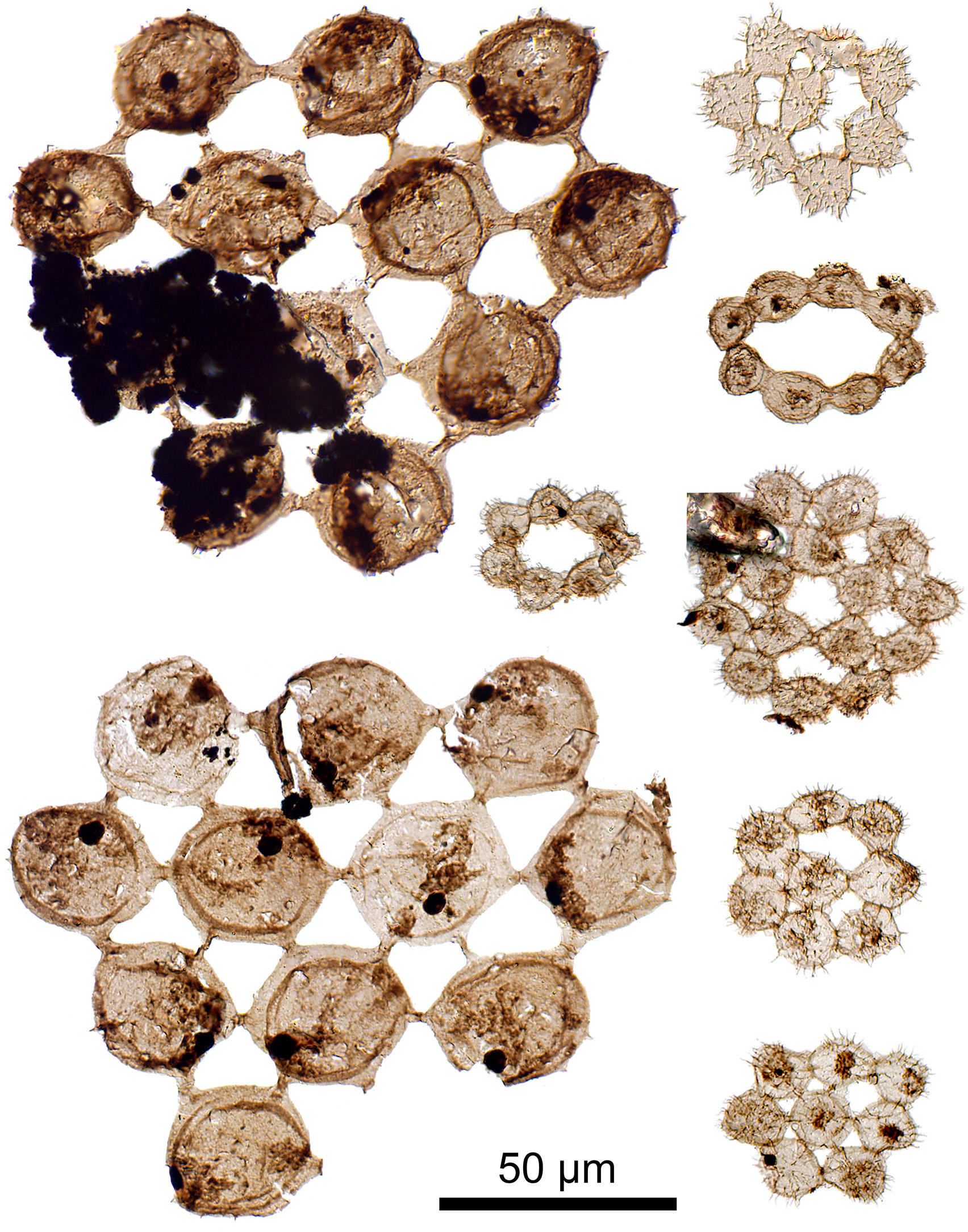
    Fossil plankton from half a billion years ago. These tiny algae measure much less than a millimetre in size. They evolved their colonial structure to avoid being eaten by early animals. Credit: THP Harvey

    Microfossils dating back half a billion years have been discovered by a scientist from the University of Leicester.

    A scientist from the University of Leicester has discovered a new type of fossil that reveals life in the oceans half a billion years ago.

    The tiny organisms, detailed in a new study in the journal Proceedings of the Royal Society B, resemble modern-day algae and might also give scientists an insight into the climate changes that affected our oceans.

    The fossils are microscopic and look like spiny balls connected together. The study’s author Dr Tom Harvey, from the University of Leicester School of Geography, Geology and the Environment, said: “When I first saw them, I had no idea what they were. I wondered if they could be animal eggs, or some new type of organism. There’s nothing quite like them, living or extinct.”
    Tom Harvey
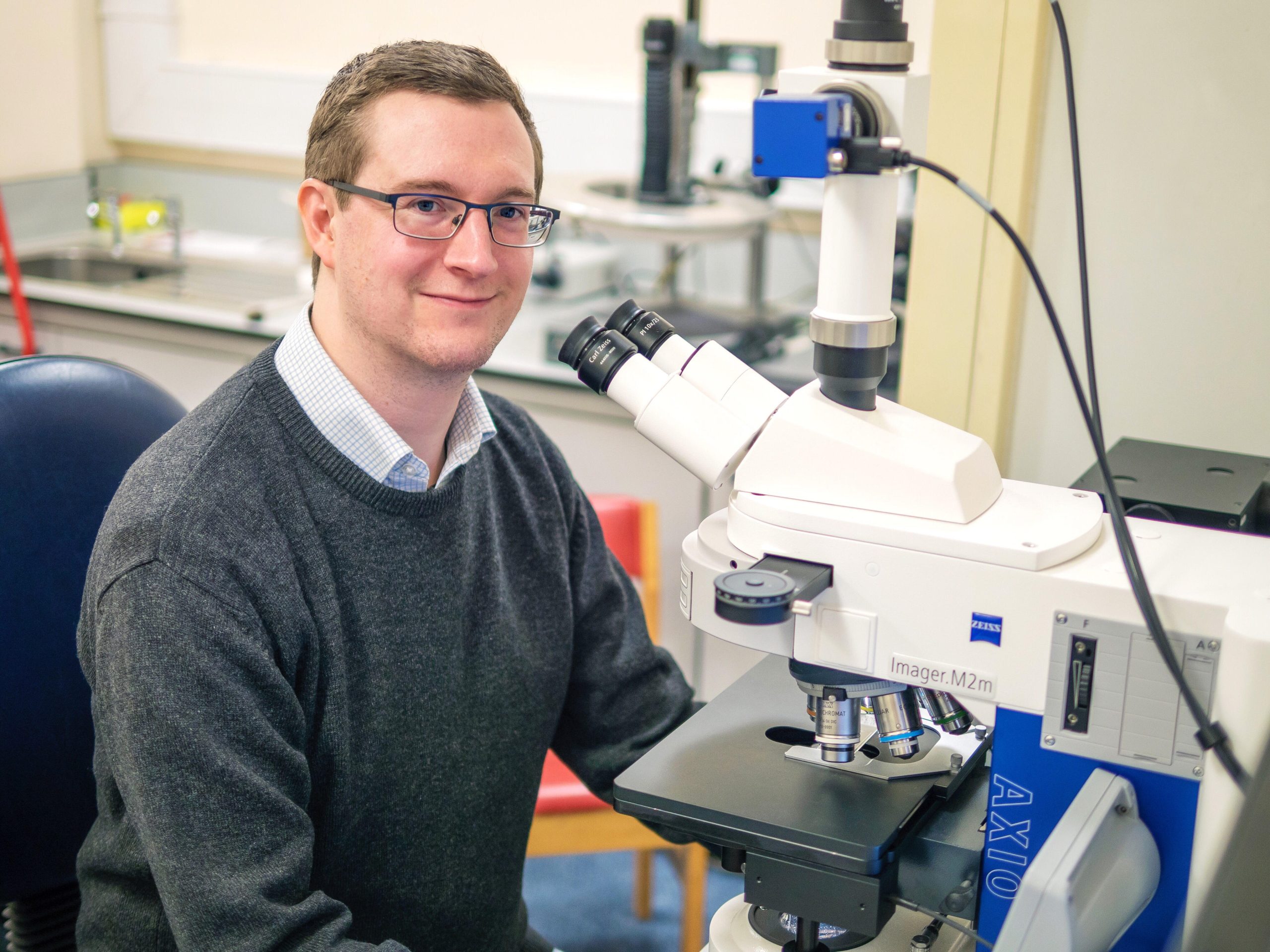
    Dr Tom Harvey from the University of Leicester School of Geography, Geology and the Environment. Credit: THP Harvey

    But as further specimens came to light, Dr Harvey identified similarities with modern green algae that live floating in the plankton of ponds and lakes. He explains: “The fossils have the same sort of colonial structure as the modern algae, with cells linking together, explaining their neat, geometric arrangements. Surprisingly, though, the fossil examples lived in the sea, giving a rare glimpse of the early marine plankton.”

    A Link to the Cambrian Explosion

    The importance of the fossils lies in their immense age. They lived around the time when animals were first evolving, during the Cambrian ‘explosion’ of life – and this is probably no coincidence. In today’s world, phytoplankton provides the fundamental food source for almost all life in the oceans. However, the modern groups of phytoplankton evolved relatively recently, and we do not know which groups inhabited the Cambrian oceans.

    Dr Harvey explains: “When we look at modern plankton, we see that algae develop colonies when animals are trying to eat them. It’s a defense mechanism. So, the existence of colonial algae in the Cambrian Period suggests that early animals were evolving to feed in the plankton, starting a predator-prey relationship that has continued ever since.

    “Considering that the plankton underpins life in the oceans, and fossil plankton helps us build ancient climate models, these small fossils have a big role in telling the history of life on Earth.”

    The new discovery will prompt a re-think on other early microfossils. For years, scientists have thought that the spiny balls found individually were the dormant cysts of single-celled life.

    For Dr Harvey, the new fossils seriously challenge this view: “I wonder if we’ve been getting it all wrong, and in fact lots of these microfossils were living as colonies in the plankton. It’s easy to accidentally break up the fossils as we extract them from the rocks, so we all need to get back to the collections, back to our labs, and find out how common they really were.”

    Reference: “Colonial green algae in the Cambrian plankton” by Thomas H. P. Harvey, 24 October 2023, Proceedings of the Royal Society B.
    DOI: 10.1098/rspb.2023.1882

    Never miss a breakthrough: Join the SciTechDaily newsletter.
    Follow us on Google and Google News.

    Climate Change Fossils Paleontology Plankton University of Leicester
    Share. Facebook Twitter Pinterest LinkedIn Email Reddit

    Related Articles

    Ancient Fossils Reveal Survival Secrets of Earth’s Worst Mass Extinction

    Identification of Mysterious Fossil Seed Solves 47,000-Year-Old Tar Pit Mystery

    Scientists Uncover Terrestrial Secret Behind Pterosaurs’ Enormous Size

    Frozen in Time: Scientists Discover 45-Million-Year-Old Ancient Walnuts on Remote Arctic Island

    Gondwana’s Secret: 390-Million-Year-Old Marine Mystery Unraveled

    Three-Eyed “Fossil Monster” – 520 Million-Year-Old Fossil Reveals Amazing Detail of Early Animal Evolution

    Scientists Discover “Ghost” Fossils – “Completely Unexpected”

    Genetic Evidence From Fossilized Remains Show Climate Change Drove Mastodons Vast Distances Across North America

    New Research: Abrupt Climate Warming Killed Mammoths

    Leave A Reply Cancel Reply

    • Facebook
    • Twitter
    • Pinterest
    • YouTube

    Don't Miss a Discovery

    Subscribe for the Latest in Science & Tech!

    Trending News

    Scientists Uncover Potential Brain Risks of Popular Fish Oil Supplements

    Scientists Discover a Surprising Way To Make Bread Healthier and More Nutritious

    After 60 Years, Scientists Uncover Unexpected Brain Effects of Popular Diabetes Drug Metformin

    New Research Uncovers Hidden Side Effects of Popular Weight-Loss Drugs

    Scientists Rethink Extreme Warming After Surprising Ocean Discovery

    Landmark Study Links Never Marrying to Significantly Higher Cancer Risk

    Researchers Discover Unknown Beetle Species Just Steps From Their Lab

    Largest-Ever Study Finds Medicinal Cannabis Ineffective for Anxiety, Depression, PTSD

    Follow SciTechDaily
    • Facebook
    • Twitter
    • YouTube
    • Pinterest
    • Newsletter
    • RSS
    SciTech News
    • Biology News
    • Chemistry News
    • Earth News
    • Health News
    • Physics News
    • Science News
    • Space News
    • Technology News
    Recent Posts
    • Early Warning Signals of Esophageal Cancer May Be Hiding in Plain Sight
    • Researchers Have Discovered a THC-Free Cannabis Compound That May Replace Opioids
    • Common Blood Pressure Drug Shows Surprising Power Against Deadly Antibiotic-Resistant Superbug
    • Students Build Dark Matter Detector and Set New Experimental Limits
    • Scientists Discover Caffeine Can Repair Key Memory Circuits After Sleep Loss
    Copyright © 1998 - 2026 SciTechDaily. All Rights Reserved.
    • Science News
    • About
    • Contact
    • Editorial Board
    • Privacy Policy
    • Terms of Use

    Type above and press Enter to search. Press Esc to cancel.