
Close Menu
    Facebook X (Twitter) Instagram
    SciTechDaily
    • Biology
    • Chemistry
    • Earth
    • Health
    • Physics
    • Science
    • Space
    • Technology
    Facebook X (Twitter) Pinterest YouTube RSS
    SciTechDaily
    Home»Space»Igniting the Future: NASA’s RS-25 Engine Test Blazes a Trail for Artemis Moonshots
    Space

    Igniting the Future: NASA’s RS-25 Engine Test Blazes a Trail for Artemis Moonshots

    By NASAMarch 10, 2024No Comments3 Mins Read
    Facebook Twitter Pinterest Telegram LinkedIn WhatsApp Email Reddit
    Share
    Facebook Twitter LinkedIn Pinterest Telegram Email Reddit
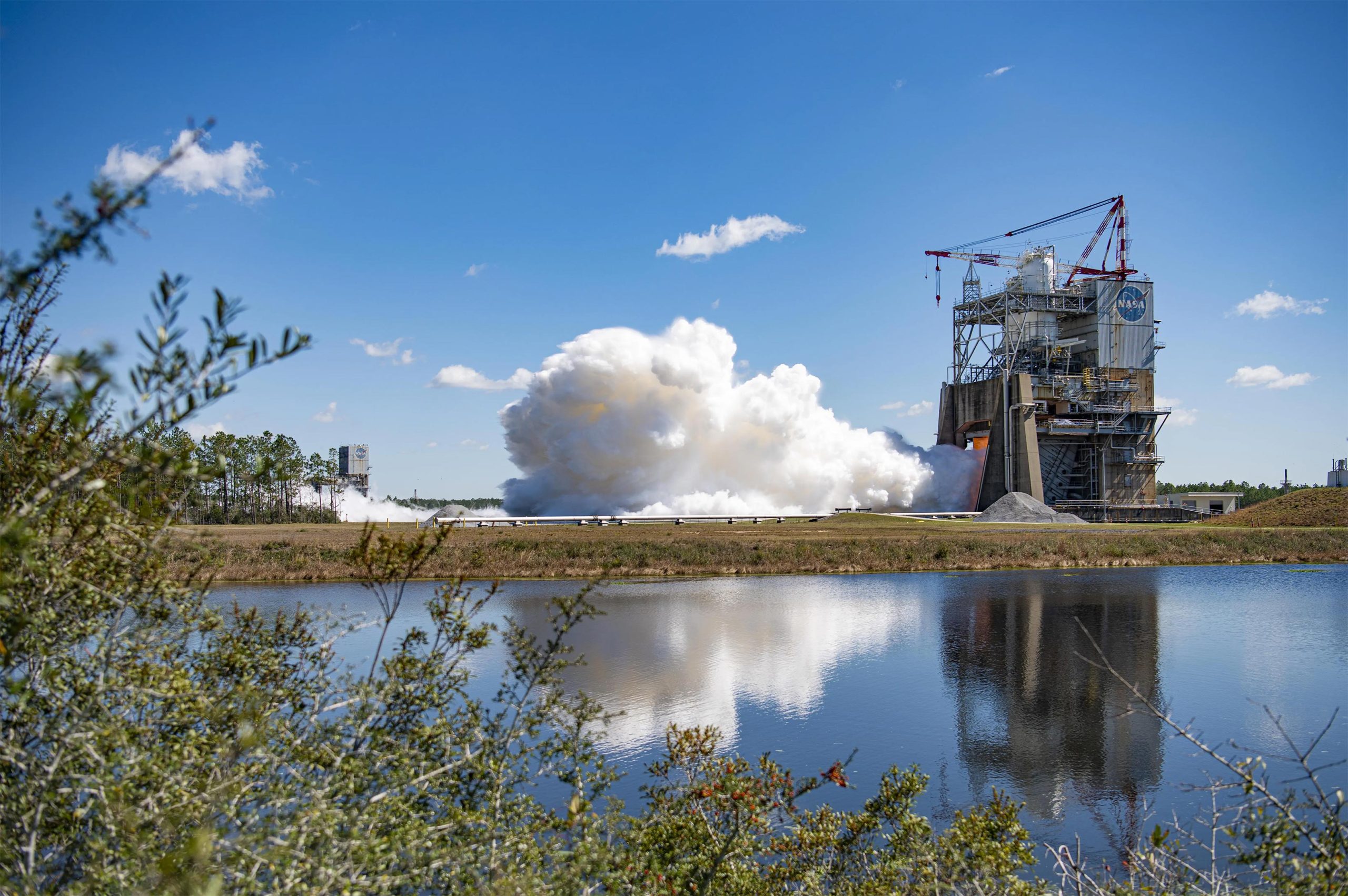
    Full-Duration RS-25 Engine Hot Fire Test
    At NASA Stennis, a crucial full-duration RS-25 hot fire engine test marks significant progress in the Artemis program, aiming for lunar and Martian exploration. Credit: NASA/Danny Nowlin

    NASA’s recent full-duration RS-25 engine hot fire test at Stennis Space Center marks a significant step in certifying new engines for the SLS rocket, intended for future Artemis missions to the Moon and beyond, showcasing the collaborative efforts between NASA, Aerojet Rocketdyne, and Syncom Space Services.

    NASA conducted a full-duration RS-25 engine hot fire on March 6, continuing a final round of certification testing for the production of new engines to help power the SLS (Space Launch System) rocket on future Artemis missions to the Moon and beyond.
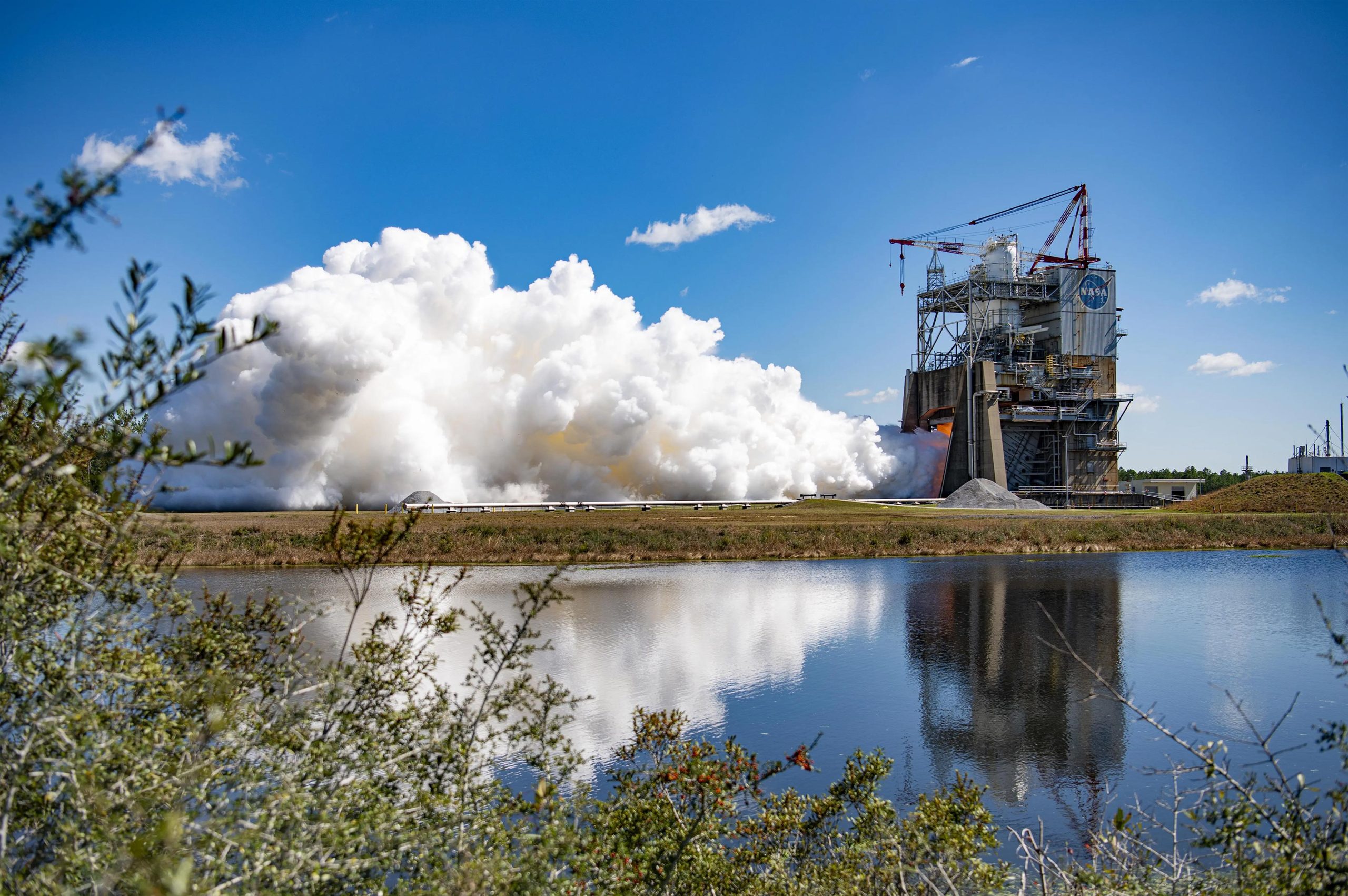
    Full-Duration RS-25 Engine Hot Fire
    The RS-25 engine hot fire test exceeded launch duration needs, proving its readiness for the Artemis missions to the Moon. Credit: NASA/Danny Nowlin

    The full-duration test on the Fred Haise Test Stand at NASA’s Stennis Space Center near Bay St. Louis, Mississippi, marked the ninth in a scheduled 12-test series. Engineers are collecting test data to certify an updated engine production process, using innovative manufacturing techniques, for lead engines contractor Aerojet Rocketdyne, an L3Harris Technologies company.
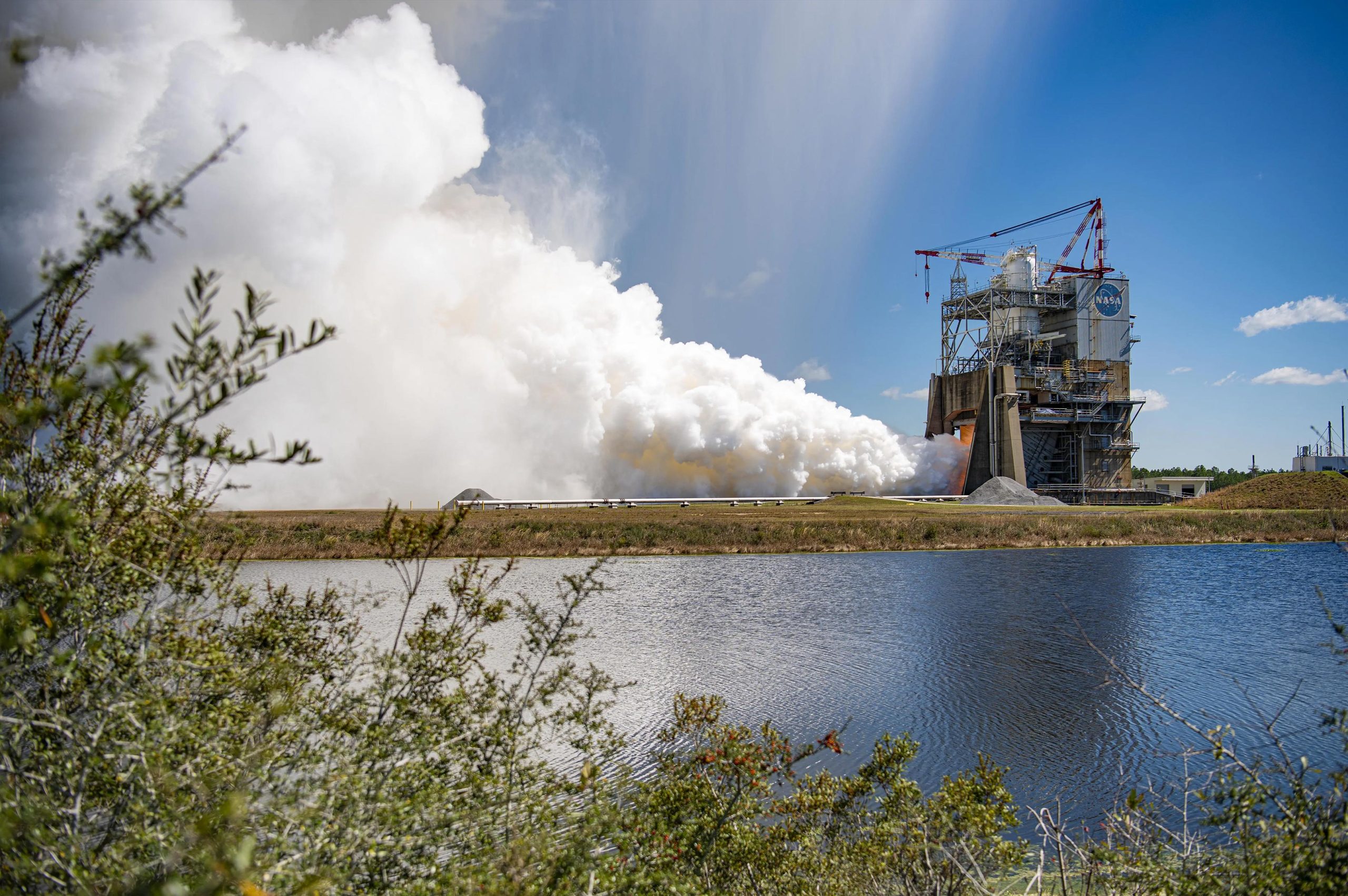
    NASA Full-Duration RS-25 Engine Hot Fire Test
    NASA engineers at Stennis validate the RS-25 engine’s performance for the Space Launch System, essential for upcoming Artemis flights. Credit: NASA/Danny Nowlin

    During the March 6 test, Operators fired the certification engine for 10 minutes (600 seconds), longer than the amount of time needed to help launch the SLS rocket and send astronauts aboard the Orion spacecraft into orbit. The test team also fired the engine at power levels between 80% and 113% to test performance in multiple scenarios.

    Four RS-25 engines, along with a pair of solid rocket boosters, launch NASA’s powerful SLS rocket, producing more than 8.8 million pounds of thrust at liftoff for Artemis missions.
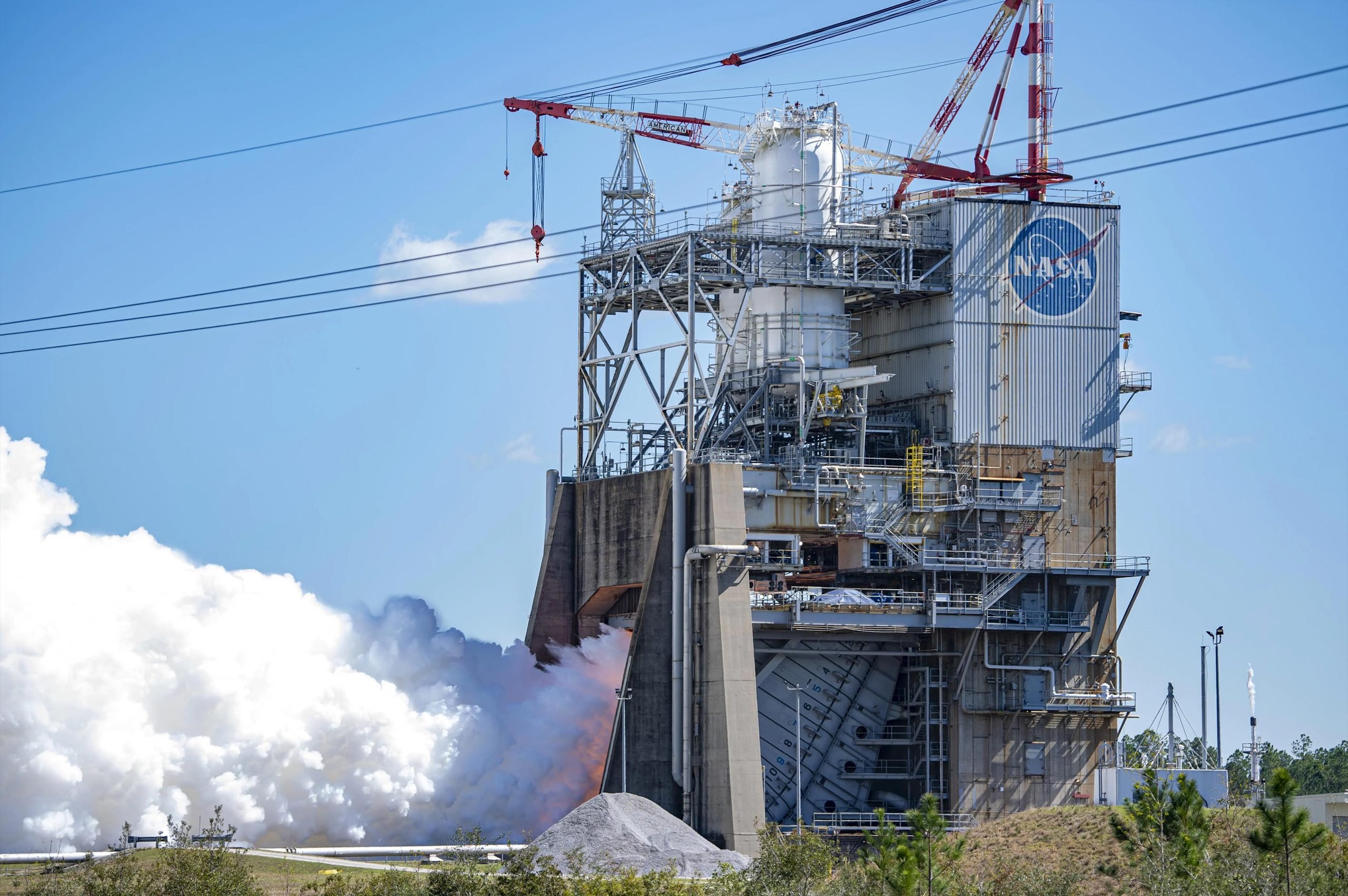
    NASA Full-Duration RS-25 Engine Hot Fire
    NASA’s full-duration test of the RS-25 engine at the Stennis Center paves the way for the next generation of lunar exploration. Credit: NASA/Danny Nowlin

    Through Artemis, NASA will establish the foundation for long-term scientific exploration at the Moon, land the first woman, first person of color, and first international partner astronaut on the lunar surface, and prepare for human expeditions to Mars for the benefit of all. RS-25 tests at NASA Stennis are conducted by a diverse team of operators from NASA, Aerojet Rocketdyne, and Syncom Space Services, prime contractor for site facilities and operations.

    Never miss a breakthrough: Join the SciTechDaily newsletter.
    Follow us on Google and Google News.

    ARTEMIS Mission NASA Rocket Space Launch System
    Share. Facebook Twitter Pinterest LinkedIn Email Reddit

    Related Articles

    NASA’s Artemis II Is on the Launch Pad and the Moon Is Next

    NASA Fires Up RS-25 at 111% Power for Artemis Moon Launches

    NASA Artemis I Space Launch System (SLS) Rocket and Orion Spacecraft Integrated Testing Update

    NASA Awards Artemis Contract for Future SLS Mega Moon Rocket Boosters

    NASA to Roll Out Artemis Mega Moon Rocket for First Time

    NASA’s Powerful SLS Rocket Fully Stacked for Artemis I Moon Mission – Liftoff for Deep Space in February 2022

    One Step Closer: Orion Spacecraft Stacked on Top SLS Rocket for NASA’s Artemis I Mission

    Final Piece of Rocket Hardware Added to Artemis I Stack

    NASA Readies for Future Artemis Moon Missions With SLS Rocket Engine Test Series

    Leave A Reply Cancel Reply

    • Facebook
    • Twitter
    • Pinterest
    • YouTube

    Don't Miss a Discovery

    Subscribe for the Latest in Science & Tech!

    Trending News

    Scientists Finally Uncover How a “Forever Chemical” Causes Birth Defects

    Scientists Uncover the Earliest Brain Changes That May Predict Alzheimer’s Decades Before Symptoms

    Surprising New Study Challenges a Century-Old Theory of Habit Formation

    Scientists Turn Seawater Into Drinking Water Without Toxic Brine

    Vitamin D Drug Shows Surprising Promise Against One of the Deadliest Cancers

    NASA’s X-59 Sonic Boom Killer Is Ready for Its Biggest Test Yet

    The Best Exercise Combination for Longevity, According to a 30-Year Study

    Popular Weight-Loss Drug Found To Slow Biological Aging in Landmark Human Trial

    Follow SciTechDaily
    • Facebook
    • Twitter
    • YouTube
    • Pinterest
    • Newsletter
    • RSS
    SciTech News
    • Biology News
    • Chemistry News
    • Earth News
    • Health News
    • Physics News
    • Science News
    • Space News
    • Technology News
    Recent Posts
    • The Probiotic Breakthrough for Natural Anxiety Relief and Better Mental Health
    • Animal vs. Plant Protein: Scientists Found a Surprising Nutritional Difference
    • Tiny Genetic Change Turns Female Mice Into Males, Scientists Discover
    • Scientists Discover Strange New Spider Species That Disguises Itself as a Fungus
    • This Simple Drink Could Help Calm the Inflammation Behind Many Diseases
    Copyright © 1998 - 2026 SciTechDaily. All Rights Reserved.
    • Science News
    • About
    • Contact
    • Editorial Board
    • Privacy Policy
    • Terms of Use

    Type above and press Enter to search. Press Esc to cancel.