
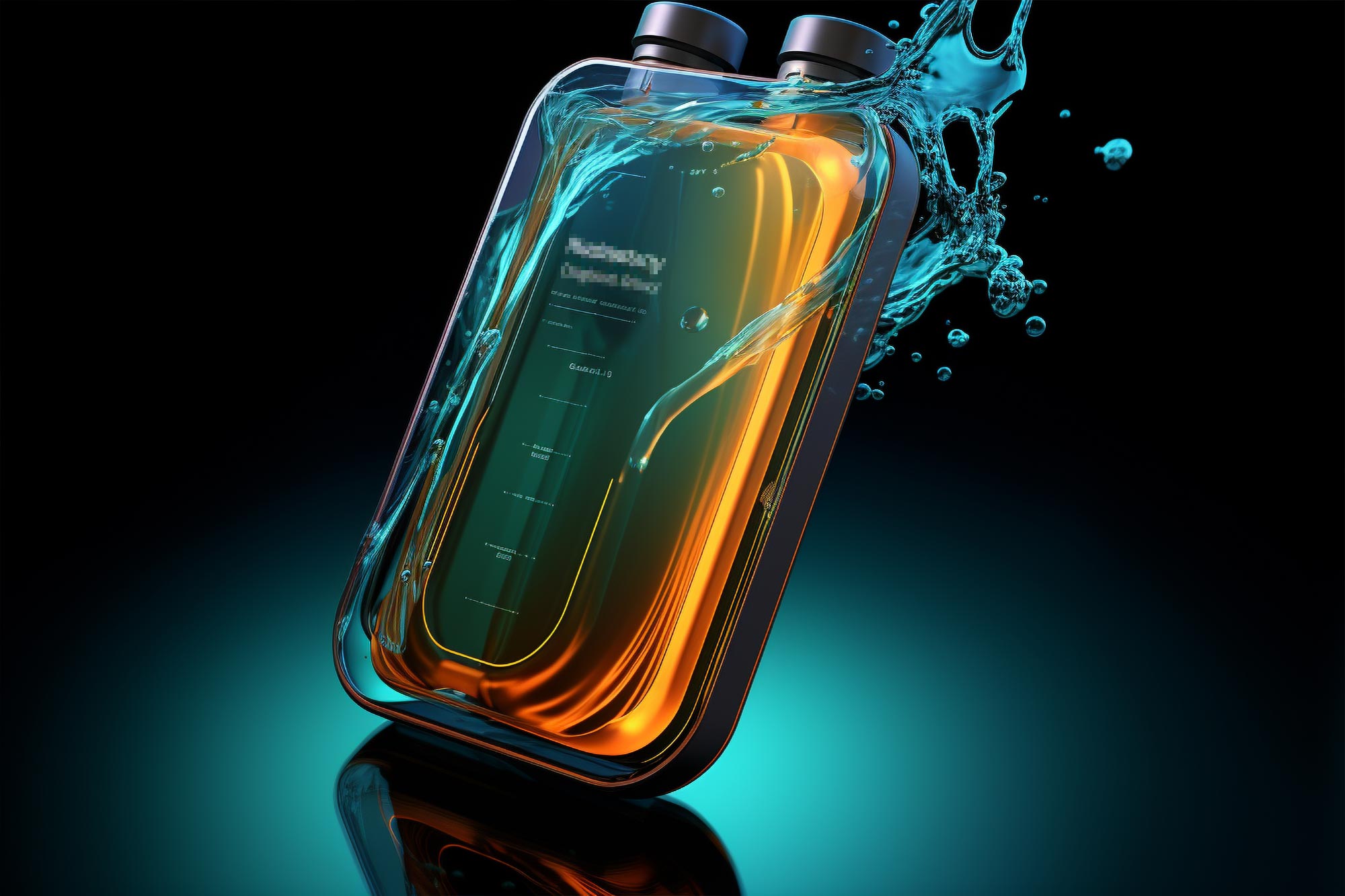
A global team of researchers and industry collaborators led by RMIT University has developed recyclable ‘water batteries’ that won’t catch fire or explode.
Lithium-ion energy storage dominates the market due to its technological maturity, but its suitability for large-scale grid energy storage is limited by safety concerns with the volatile materials inside.
Lead researcher Distinguished Professor Tianyi Ma said their batteries were at the cutting edge of an emerging field of aqueous energy storage devices, with breakthroughs that significantly improve the technology’s performance and lifespan.
“What we design and manufacture are called aqueous metal-ion batteries – or we can call them water batteries,” said Ma, from RMIT’s School of Science.
The team uses water to replace organic electrolytes – which enable the flow of electric current between the positive and negative terminals – meaning their batteries can’t start a fire or blow up – unlike their lithium-ion counterparts.
“Addressing end-of-life disposal challenges that consumers, industry, and governments globally face with current energy storage technology, our batteries can be safely disassembled and the materials can be reused or recycled,” Ma said.
The simplicity of manufacturing processes for their water batteries helped make mass production feasible, he said.
“We use materials such as magnesium and zinc that are abundant in nature, inexpensive, and less toxic than alternatives used in other kinds of batteries, which helps to lower manufacturing costs and reduces risks to human health and the environment.”
What’s the energy storage and life-cycle potential?
The team has made a series of small-scale trial batteries for numerous peer-reviewed studies to tackle various technological challenges, including boosting energy storage capacity and lifespan.
In their latest work, published in Advanced Materials, they’ve triumphed over a major challenge – the growth of disruptive dendrites, which are spiky metallic formations that can lead to short circuits and other serious faults.
The team coated affected battery parts with a metal called bismuth and its oxide (otherwise known as rust) as a protective layer that prevented dendrite formation.
The result?
“Our batteries now last significantly longer – comparable to the commercial lithium-ion batteries in the market – making them ideal for high-speed and intensive use in real-world applications. With impressive capacity and extended lifespan, we’ve not only advanced battery technology but also successfully integrated our design with solar panels, showcasing efficient and stable renewable energy storage.”
The team’s water battery is closing the gap with lithium-ion technology in terms of energy density, with the aim of using as little space per unit of power as possible. “We recently made a magnesium-ion water battery that has an energy density of 75 watt-hours per kilogram (Wh kg-1) – up to 30% that of the latest Tesla car batteries.”
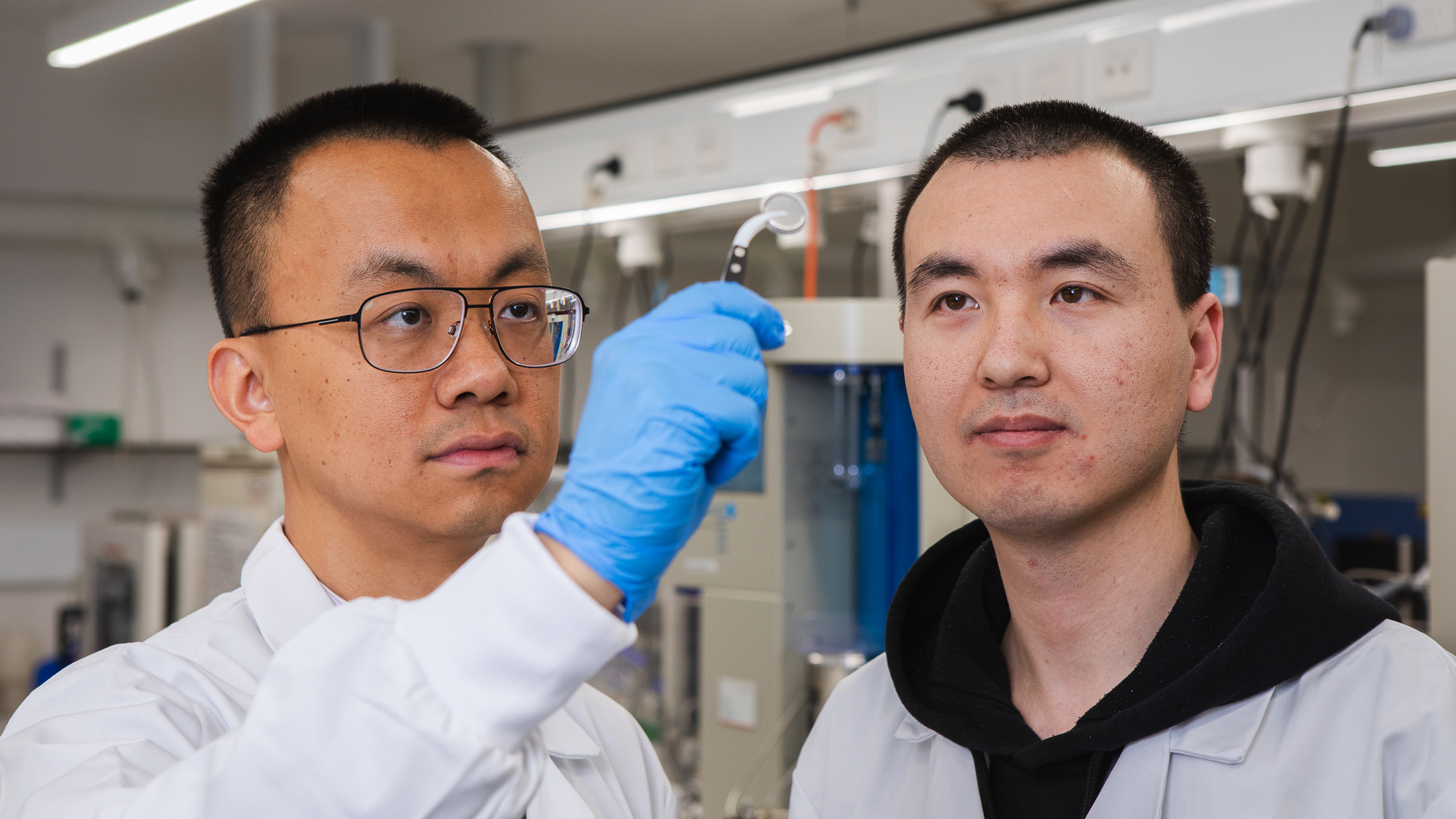
This research is published in Small Structures.
“The next step is to increase the energy density of our water batteries by developing new nanomaterials as the electrode materials.”
Ma said magnesium was likely to be the material of choice for future water batteries.
“Magnesium-ion water batteries have the potential to replace lead-acid batteries in the short term – like one to three years – and to replace potentially lithium-ion batteries in the long term, 5 to 10 years from now. Magnesium is lighter than the alternative metals, including zinc and nickel, has a greater potential energy density, and will enable batteries with faster charging times and better capability to support power-hungry devices and applications.”
Ptential applications
Ma said the team’s batteries were well suited for large-scale applications, making them ideal for grid storage and renewable energy integration – especially in terms of safety considerations.
“As our technology advances, other kinds of smaller-scale energy storage applications such as powering people’s homes and entertainment devices could become a reality.”
Technology supported by peer-reviewed research, government funding and industry engagement
As part of an ARC Linkage project, Ma’s team is continually developing their water batteries in collaboration with industry partner, GrapheneX, a tech innovator based in Sydney.
“We also collaborate closely with researchers and experts from renowned universities and research institutions in Australia, US, UK, Japan, Singapore, China, and elsewhere. These collaborations facilitate knowledge exchange and access to cutting-edge facilities. By drawing on this global team’s expertise in different areas, we can tackle the complex challenges involved from various angles.”
Reference: “Synergy of Dendrites-Impeded Atomic Clusters Dissociation and Side Reactions Suppressed Inert Interface Protection for Ultrastable Zn Anode” by Xiaomeng Tian, Qin Zhao, Mengmeng Zhou, Xinjun Huang, Ying Sun, Xiaoguang Duan, Lei Zhang, Hui Li, Dawei Su, Baohua Jia and Tianyi Ma, 6 February 2024, Advanced Materials.
DOI: 10.1002/adma.202400237
Never miss a breakthrough: Join the SciTechDaily newsletter.
Follow us on Google and Google News.