
Close Menu
    Facebook X (Twitter) Instagram
    SciTechDaily
    • Biology
    • Chemistry
    • Earth
    • Health
    • Physics
    • Science
    • Space
    • Technology
    Facebook X (Twitter) Pinterest YouTube RSS
    SciTechDaily
    Home»Chemistry»Improving COVID-19 Test Sensitivity With Ultra-Absorptive Nanofiber Swabs
    Chemistry

    Improving COVID-19 Test Sensitivity With Ultra-Absorptive Nanofiber Swabs

    By American Chemical SocietyJanuary 27, 2021No Comments3 Mins Read
    Facebook Twitter Pinterest Telegram LinkedIn WhatsApp Email Reddit
    Share
    Facebook Twitter LinkedIn Pinterest Telegram Email Reddit
    Ultra-Absorptive Nanofiber Swabs
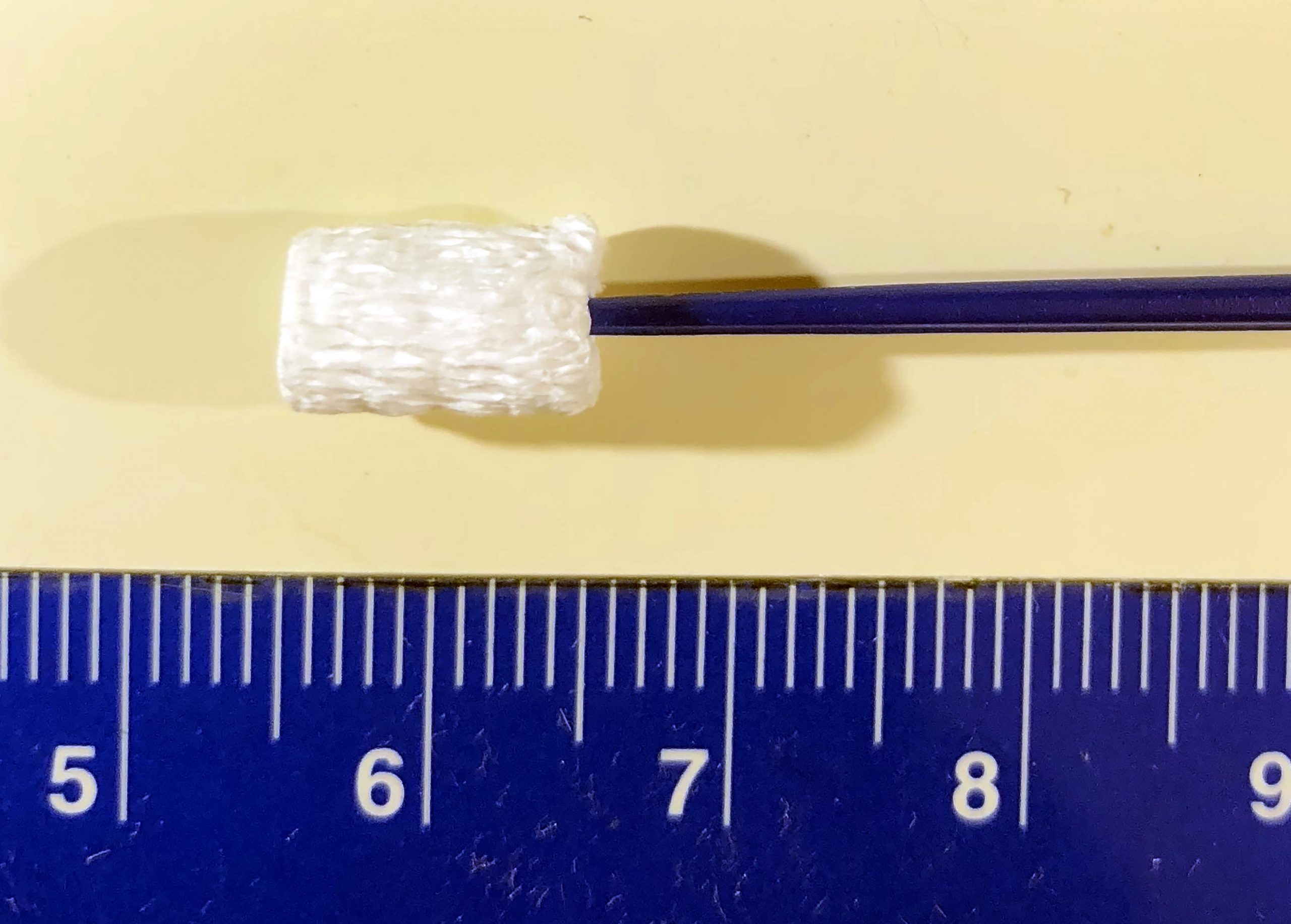
    A new type of nanofiber swab could improve sample collection and test sensitivity for SARS-CoV-2 and other biological specimens; ruler at left shows centimeters. Credit: Adapted from Nano Letters 2021, DOI: 10.1021/acs.nanolett.0c04956

    New nanofiber swabs increase COVID-19 test sensitivity by detecting the virus at much lower concentrations than standard swabs.

    Rapid, sensitive diagnosis of COVID-19 is essential for early treatment, contact tracing, and reducing viral spread. However, some people infected with SARS-CoV-2 receive false-negative test results, which might put their and others’ health at risk. Now, researchers reporting in ACS’ Nano Letters have developed ultra-absorptive nanofiber swabs that could reduce the number of false-negative tests by improving sample collection and test sensitivity.

    Currently, the most sensitive test for COVID-19 involves using a long swab to collect a specimen from deep inside a patient’s nose, and then using a method called reverse transcriptase-polymerase chain reaction (RT-PCR) to detect SARS-CoV-2 RNA. But if the viral load is low, which can occur early in the course of infection, the swab might not pick up enough virus to be detectable.

    Jingwei Xie and colleagues wanted to develop a nanofiber swab that could absorb and then release more viruses and other biological specimens, improving the sensitivity of diagnostic tests.

    The researchers used an electrospinning technique to make 1-cm-long cylinders composed of aligned nanofiber layers, which they coated with a thin layer of gelatin and bonded to plastic swab sticks.

    In lab tests, the porous nanofiber cylinders absorbed and released more proteins, cells, bacteria, DNA, and viruses from liquids and surfaces than the cotton or flocked swabs commonly used for COVID-19 testing. The team made dilutions of SARS-CoV-2 virus, swabbed the liquid samples, and tested for viral RNA with RT-PCR. Compared with the two other types of swabs, the nanofiber ones reduced the false-negative rate and detected SARS-CoV-2 at a 10-times lower concentration.

    In addition to allowing more accurate and sensitive COVID-19 testing, the nanofiber swabs have far-reaching potential in diagnosing other diseases, testing for foodborne illnesses, and helping forensic teams identify crime suspects from miniscule biological specimens, the researchers say.

    Reference: “Ultra-absorptive Nanofiber Swabs for Improved Collection and Test Sensitivity of SARS-CoV-2 and other Biological Specimens” by Alec McCarthy, Lorenzo Saldana, Daniel N. Ackerman, Yajuan Su, Johnson V. John, Shixuan Chen, Shelbie Weihs, St. Patrick Reid, Joshua L. Santarpia, Mark A. Carlson and Jingwei Xie, 26 January 2021, Nano Letters.
    DOI: 10.1021/acs.nanolett.0c04956

    Never miss a breakthrough: Join the SciTechDaily newsletter.
    Follow us on Google and Google News.

    American Chemical Society COVID-19 Nanotechnology Public Health
    Share. Facebook Twitter Pinterest LinkedIn Email Reddit

    Related Articles

    AI-Driven Dynamic Face Mask Adapts To Exercise and Pollution Levels

    Copper Foam Is Highly Efficient, Durable as a Filter for Reusable Masks and Air Cleaners

    Microfluidic Chip Simplifies COVID-19 Testing, Delivers Results on a Phone in 55 Minutes or Less

    Disinfected by the Sun: New Cotton Face Mask Kills Up to 99.9999% of Bacteria and Viruses in Daylight

    You’re Using Disinfectants Wrong. Here’s How to Destroy 99.9% of Viruses/Coronaviruses and Bacteria [Video]

    Researchers Develop a Replaceable, More Efficient Filter for N95 Masks

    Diagnostic Biosensor Detects SARS-CoV-2 From Nasopharyngeal Swab in Less Than a Minute

    New COVID-19 Test Accurately Detects Viral DNA in Minutes

    Does Soap Actually ‘Kill’ the Coronavirus? Here’s the Chemistry [Video]

    Leave A Reply Cancel Reply

    • Facebook
    • Twitter
    • Pinterest
    • YouTube

    Don't Miss a Discovery

    Subscribe for the Latest in Science & Tech!

    Trending News

    One of the Universe’s Largest Stars May Be Getting Ready To Explode

    Scientists Discover Enzyme That Could Supercharge Ozempic-Like Weight Loss Drugs

    Popular Sweetener Linked to DNA Damage – “It’s Something You Should Not Be Eating”

    Ancient “Rock” Microbes May Reveal How Complex Life Began

    Researchers Capture Quantum Interference in One of Nature’s Rarest Atoms

    “A Plague Is Upon Us”: The Mass Death That Changed an Ancient City Forever

    Scientists Discover Game-Changing New Way To Treat High Cholesterol

    This Small Change to Your Exercise Routine Could Be the Secret to Living Longer

    Follow SciTechDaily
    • Facebook
    • Twitter
    • YouTube
    • Pinterest
    • Newsletter
    • RSS
    SciTech News
    • Biology News
    • Chemistry News
    • Earth News
    • Health News
    • Physics News
    • Science News
    • Space News
    • Technology News
    Recent Posts
    • Natural Compounds Boost Bone Implant Success While Killing Bacteria and Cancer Cells
    • After 60 Years, Scientists Uncover Unexpected Brain Effects of Popular Diabetes Drug Metformin
    • New Research Uncovers Hidden Side Effects of Popular Weight-Loss Drugs
    • Scientists Rethink Extreme Warming After Surprising Ocean Discovery
    • The Surprising Role of Asteroids in the Origin of Life
    Copyright © 1998 - 2026 SciTechDaily. All Rights Reserved.
    • Science News
    • About
    • Contact
    • Editorial Board
    • Privacy Policy
    • Terms of Use

    Type above and press Enter to search. Press Esc to cancel.