
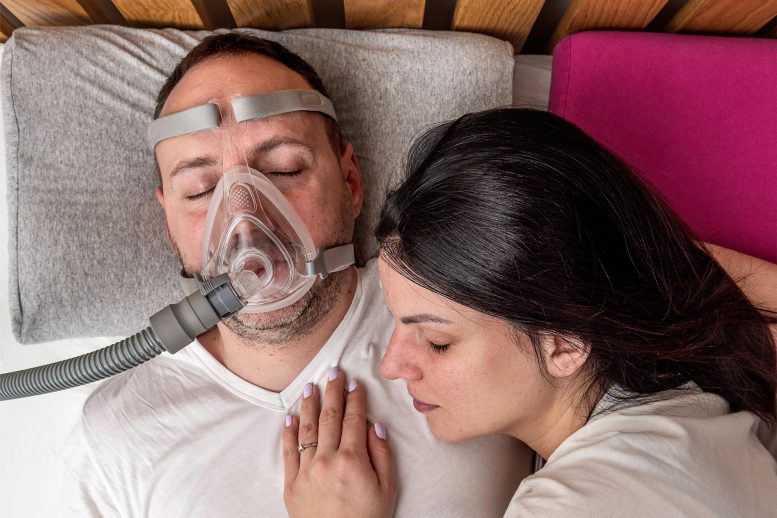
Study suggests adults with both the sleep disorder and COVID may benefit from clinical monitoring.
A NIH-backed study reveals a higher risk of developing long COVID among adults with obstructive sleep apnea. The research used data from over 2.2 million COVID-19 patients, showing that sleep apnea patients have up to a 75% higher chance of experiencing long COVID, with the risk being greater among women. Despite controlling for various factors, the association remains significant. The reasons for this link are still uncertain.
Among people who have had COVID-19, adults with obstructive sleep apnea were more likely to experience long-term symptoms suggestive of long COVID than those without the sleep disorder, according to a large study supported by the National Institutes of Health (NIH). In fact, multiple analyses of electronic health records (EHR) identified adults with sleep apnea may have up to a 75% higher risk of developing long COVID. The findings, part of the NIH’s Researching COVID to Enhance Recovery (RECOVER) Initiative, published in the journal SLEEP.
The research, which came from EHR data of more than 2.2 million Americans with COVID-19, suggests close monitoring after a COVID-19 infection may help adults with sleep apnea. The findings may also strengthen understanding of why some people are more likely to develop long COVID after acute infection.
What causes sleep apnea?
Central sleep apnea is caused by problems with the way your brain controls your breathing while you sleep.
Obstructive sleep apnea is caused by conditions that block airflow through your upper airways during sleep. For example, your tongue may fall backward and block your airway.
Your age, family history, lifestyle habits, other medical conditions, and some features of your body can raise your risk of sleep apnea.
“We still have a lot to learn about the long-term effects of this virus, but this study could inform clinical care by identifying patients who may benefit from closer monitoring,” said Marishka K. Brown, Ph.D., director of the National Center on Sleep Disorders Research at the National Heart, Lung, and Blood Institute (NHLBI).
“People with obstructive sleep apnea should also keep up with their vaccinations to minimize the risk of infection,” said Lorna E. Thorpe, Ph.D., M.P.H., the study’s senior author and director of the Division of Epidemiology in the Department of Population Health at New York University’s Grossman School of Medicine, New York City.
The data for this analysis came from three RECOVER EHR research networks: the National COVID Cohort Collaborative (N3C), which included 1.7 million adults; PCORnet®, which included 330,000 adults; and PEDSnet, a pediatric-focused research network participating in PCORnet, which included 102,000 children. All participants included in this analysis had tested positive for COVID-19 between March 2020 and February 2022.
Statistical Associations
Within each network, researchers used diagnostic codes from EHRs to identify participants who had obstructive sleep apnea, which occurred among 5% of adults and less than 2% of children. They also used machine learning to assess follow-up symptoms and medical visits to determine which people likely had long COVID. About 5% of adults in the N3C study, 17% of adults in PCORnet, and less than 5% of children in PEDSnet were suspected to have developed long COVID.
After controlling for similarities among patients, including COVID-19 severity, age, sex, race and ethnicity, and underlying medical conditions, researchers found adults with obstructive sleep apnea in N3C, the largest study, were 75% more likely to experience long COVID. For adults in PCORnet, the increased odds of having long COVID was 12%. No significant links between sleep apnea and long COVID in children were found after researchers controlled for other medical conditions, including obesity.
A follow-up analysis with additional patients confirmed these associations – showing a link between obstructive sleep apnea and increased odds for long COVID in adults.
“Part of the challenge is that many of the risk factors for sleep apnea are also risk factors for COVID-19 outcomes,” said Thorpe. “We don’t know entirely why we are seeing this association.”
Variations Between Men and Women
The researchers also found women in the N3C study had an 89% increased likelihood of having long COVID if they had obstructive sleep apnea, compared to a 59% increased chance for men. The underlying associations aren’t clear. However, women diagnosed with obstructive sleep apnea included in this study may have had more severe conditions than men. Severity of obstructive sleep apnea was not controlled for, but sleep apnea is more likely to be undiagnosed in women – which could create a sample with women who have more severe cases. Other studies have also found that women may be more likely to be diagnosed with long COVID and seek health care for the condition.
Long COVID is an umbrella term for one or more symptoms that people can experience for weeks, months, or years after a COVID-19 infection. Multiple definitions were included in this review. The Centers for Disease Control and Prevention defines long COVID as symptoms that last for at least four weeks after infection, while the World Health Organization defines long COVID as symptoms that persist for at least three months.
Obstructive sleep apnea occurs when the upper airway becomes blocked during sleep, which interrupts breathing. The condition affects about 1 in 8 adults but is often underdiagnosed.
For more on this research, see Sleep Apnea Linked With Increased Long COVID Risks.
Reference: “Risk of post-acute sequelae of SARS-CoV-2 infection associated with pre-coronavirus disease obstructive sleep apnea diagnoses: an electronic health recordbased analysis from the researching coronavirus disease to enhance recovery initiative” by Hannah L Mandel, Gunnar Colleen, Sajjad Abedian, Nariman Ammar, L Charles Bailey, Tellen D Bennett, M Daniel Brannock, Shari B Brosnahan, Yu Chen, Christopher G Chute, Jasmin Divers, Michael D Evans, Melissa Haendel, Margaret A Hall, Kathryn Hirabayashi, Mady Hornig, Stuart D Katz, Ana C Krieger, Johanna Loomba, Vitaly Lorman, Diego R Mazzotti, Julie McMurry, Richard A Moffitt, Nathan M Pajor, Emily Pfaff, Jeff Radwell, Hanieh Razzaghi, Susan Redline, Elle Seibert, Anisha Sekar, Suchetha Sharma, Tanayott Thaweethai, Mark G Weiner, Yun Jae Yoo, Andrea Zhou and Lorna E Thorpe on behalf of the RECOVER Consortium, 11 May 2023, Sleep.
DOI: 10.1093/sleep/zsad126
The study was funded by RECOVER (OT2HL161847) and received additional support from the National Center for Advancing Translational Sciences (UL1TR002494).
The National Institutes of Health Researching COVID to Enhance Recovery (NIH RECOVER) Initiative is a $1.15 billion effort, including support through the American Rescue Plan Act of 2021, that seeks to identify how people recuperate from a COVID-19 infection, and who are at risk for developing post-acute sequelae of SARS-CoV-2 (PASC). Researchers are also working with patients, clinicians, and communities across the United States to identify strategies to prevent and treat the long-term effects of COVID – including long COVID.
Never miss a breakthrough: Join the SciTechDaily newsletter.
Follow us on Google and Google News.