
Close Menu
    Facebook X (Twitter) Instagram
    SciTechDaily
    • Biology
    • Chemistry
    • Earth
    • Health
    • Physics
    • Science
    • Space
    • Technology
    Facebook X (Twitter) Pinterest YouTube RSS
    SciTechDaily
    Home»Health»Investigations of Deceased COVID-19 Patients Reveal Lung Damage Caused by Persistence of “Abnormal Cells”
    Health

    Investigations of Deceased COVID-19 Patients Reveal Lung Damage Caused by Persistence of “Abnormal Cells”

    By King's College LondonNovember 3, 2020No Comments3 Mins Read
    Facebook Twitter Pinterest Telegram LinkedIn WhatsApp Email Reddit
    Share
    Facebook Twitter LinkedIn Pinterest Telegram Email Reddit
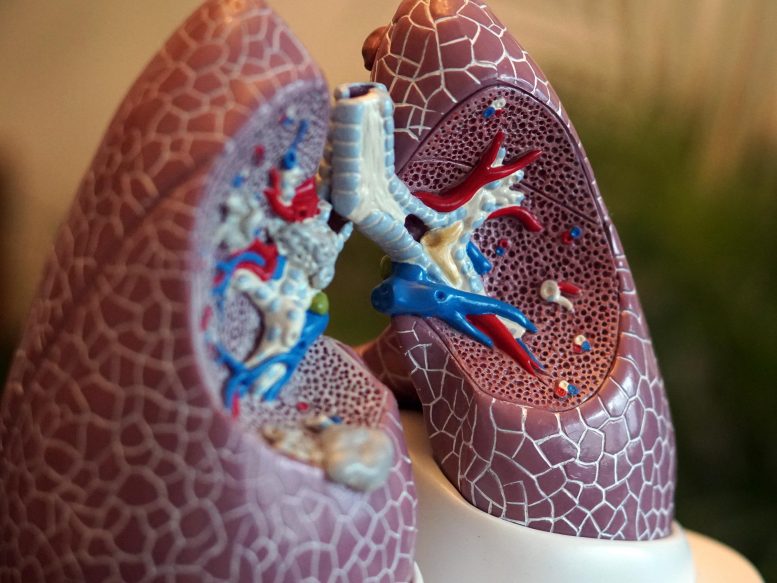
    Lungs Anatomy
    A study on COVID-19 patients found extensive lung damage, blood clotting, and fused cells caused by the virus’s spike protein. Viral genome persisted in lung and blood vessel cells, potentially explaining long-term lung changes and ‘long COVID.’

    Investigations of deceased COVID-19 patients have shed light on possible lung damage caused by the virus.

    The study, published today (November 3, 2020) in The Lancet’s eBioMedicine, by King’s College London in collaboration with University of Trieste and the International Centre for Genetic Engineering and Biology in Italy, shows the unique characteristics of the SARS-CoV-2 virus and may explain why patients suffer from ‘long COVID’.

    Patients with COVID-19 can experience symptoms such as blood clotting and loss of smell and taste. Some who survive the infection can experience the effects of the disease for months — known as ‘long COVID’ — with a feeling of fatigue and lack of breath. There have been a limited number of studies that have analyzed the organs of COVID-19 patients which means the characteristics of the disease are still largely unknown.

    Researchers analyzed the organs of 41 patients who died of COVID-19 at the University Hospital of Trieste, Italy, from February to April 2020, at the start of the pandemic. The team took lung, heart, liver, and kidney samples to examine the behavior of the virus.

    Findings show extensive lung damage in most cases, with patients experiencing profound disruption of the normal lung structure and the transformation of respiratory tissue into fibrotic material.

    Almost 90% of patients showed two additional characteristics that were quite unique to COVID-19 compared to other forms of pneumonia. First, patients showed extensive blood clotting of the lung arteries and veins (thrombosis). Second, several lung cells were abnormally large and had many nuclei, resulting from the fusion of different cells into single large cells. This formation of fused cells (syncytia) is due to the viral spike protein, which the virus uses to enter the cell. When the protein is present on the surface of cells infected by the COVID-19 virus, it stimulates their fusion with other normal lung cells, which can be a cause of inflammation and thrombosis.

    Additionally, research showed the long-term persistence of the viral genome in respiratory cells and in cells lining the blood vessels, along with the infected cell syncytia. The presence of these infected cells can cause the major structural changes observed in the lungs, which can persist for several weeks or months and could eventually explain ‘long COVID’.

    The study found no overt signs of viral infection or prolonged inflammation detected in other organs.

    Professor Mauro Giacca, at the British Heart Foundation Centre at King’s College London, said: “These findings are very exciting. The findings indicate that COVID-19 is not simply a disease caused by the death of virus-infected cells but is likely the consequence of these abnormal cells persisting for long periods inside the lungs.”

    The team is now actively testing the effect of these abnormal cells on blood clotting and inflammation and are searching for new drugs that can block the viral spike protein which causes cells to fuse.

    Reference: “Persistence of viral RNA, pneumocyte syncytia and thrombosis are hallmarks of advanced COVID-19 pathology” by Rossana Bussani, Edoardo Schneider, Lorena Zentilin, Chiara Collesi, Hashim Ali, Luca Braga, Maria Concetta Volpe, Andrea Colliva, Fabrizio Zanconati, Giorgio Berlot and Furio Silvestri, 3 November 2020, eBioMedicine.
    DOI: 10.1016/j.ebiom.2020.103104

    Never miss a breakthrough: Join the SciTechDaily newsletter.
    Follow us on Google and Google News.

    COVID-19 Infectious Diseases King’s College London Lungs Popular Pulmonary
    Share. Facebook Twitter Pinterest LinkedIn Email Reddit

    Related Articles

    Most Lungs Recover Well After COVID-19 – According to Extensive Health Assessment 3 Months After Recovery

    “Like Multiple Wildfires” – Why COVID-19 Lasts Longer, Causes More Damage Than Typical Pneumonia

    Initial Severity of COVID-19 Is Not Associated With Later Respiratory Complications

    New Research May Explain Severe Virus Attacks on the Lungs, Contribute to Future Treatments for COVID-19

    Pneumolysis: High Altitude Specialists Explain COVID-19 Lung Destruction

    New Blood Test Accurately Predicts Which COVID-19 Patients Will Develop Severe Infection

    Coronavirus Researchers Discover How COVID-19 May Trigger Fatal Levels of Lung Inflammation

    COVID-19 Patients Suffer Long-Term Lung and Heart Damage – But They Can Recover With Time

    Lung Ultrasound Reveals Duration and Severity of COVID-19

    Leave A Reply Cancel Reply

    • Facebook
    • Twitter
    • Pinterest
    • YouTube

    Don't Miss a Discovery

    Subscribe for the Latest in Science & Tech!

    Trending News

    Largest-Ever Study Finds Medicinal Cannabis Ineffective for Anxiety, Depression, PTSD

    250-Million-Year-Old Egg Solves One of Evolution’s Biggest Mysteries

    Living With Roommates Might Be Changing Your Gut Microbiome Without You Knowing

    Century-Old Cleaning Chemical Linked to 500% Increased Risk of Parkinson’s Disease

    What if Your Memories Never Happened? Physicists Take a New Look at the Boltzmann Brain Paradox

    One of the Universe’s Largest Stars May Be Getting Ready To Explode

    Scientists Discover Enzyme That Could Supercharge Ozempic-Like Weight Loss Drugs

    Popular Sweetener Linked to DNA Damage – “It’s Something You Should Not Be Eating”

    Follow SciTechDaily
    • Facebook
    • Twitter
    • YouTube
    • Pinterest
    • Newsletter
    • RSS
    SciTech News
    • Biology News
    • Chemistry News
    • Earth News
    • Health News
    • Physics News
    • Science News
    • Space News
    • Technology News
    Recent Posts
    • The Surprising Diet Rule That Makes “Good” Parasites Work
    • This Simple Blood Test Could Outperform “Bad Cholesterol” in Preventing Heart Disease
    • Scientists Uncover Potential Brain Risks of Popular Fish Oil Supplements
    • Scientists Prove There Are Just Six Degrees of Separation in a Social Network
    • Bee Bacteria Could Fix a Major Flaw in Plant-Based Milk
    Copyright © 1998 - 2026 SciTechDaily. All Rights Reserved.
    • Science News
    • About
    • Contact
    • Editorial Board
    • Privacy Policy
    • Terms of Use

    Type above and press Enter to search. Press Esc to cancel.