
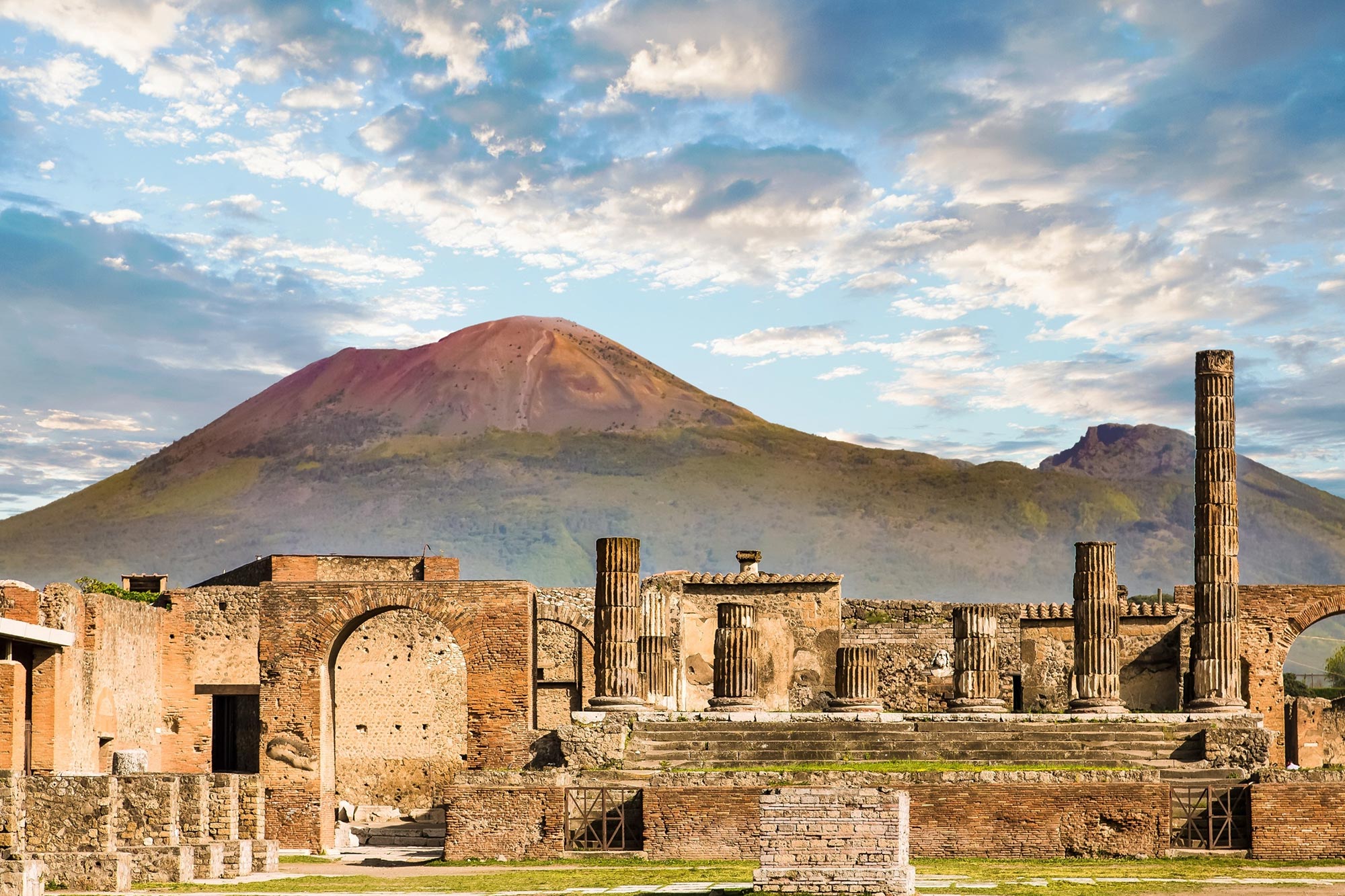
Located near Naples, Italy, Vesuvius last had a violent eruption in 1944, towards the end of the Second World War. It could be a few hundred years before another dangerous, explosive eruption occurs, finds a new study by volcano experts at ETH Zurich.
Vesuvius is one of Europe’s most dangerous volcanoes. More than three million people live in its immediate vicinity, and in historical and prehistoric times, there were explosive eruptions that destroyed entire settlements and towns in the area.
So, the pressing question is: When will Vesuvius erupt again and how strong could the eruption be?
To answer this question, a research group at ETH Zurich, in collaboration with researchers from Italy, has taken a close look at the four largest eruptions of Vesuvius over the last 10,000 years so that they can better assess whether a dangerous event might be expected in the foreseeable future.
The four eruptions studied include the Avellino eruption of 3,950 years ago, which is considered a possible “worst case scenario” for future eruptions, and the eruption of AD 79 that buried the Roman cities of Pompeii and Herculaneum. The latter was documented by the Roman writer Pliny the Younger, and so all eruptions of this type are referred to as “Plinian” eruptions. Further, the volcanologists studied eruptions of 472 AD and 8890 y BP. The sub-Plinian eruption of AD 472 is the smallest of the investigated eruptions but still similar in size compared to the recent Tonga eruption.

Garnets allow precise dating
In their study, which has just been published in the journal Science Advances, the researchers working with lead author Jörn-Frederik Wotzlaw and ETH Zurich Professor Olivier Bachmann determined the age of garnet crystals present in the volcanic deposits. This mineral grows from the magma as it is stored in the magma chamber in the upper crust beneath Vesuvius. Knowing the age of these minerals makes it possible to infer how long magma resided in this chamber before the volcano spewed it out.
Garnet is an unusual choice for determining the age of volcanic ejecta. Researchers typically use zircons, which are tiny accessory minerals found in many igneous rocks. Magma from Vesuvius, however, is too alkaline to crystallize zircons, but it is rich in garnet.
To determine the age of the garnets, the researchers used the radioactive elements uranium and thorium. The crystal structure of garnet incorporates both in small but measurable quantities, with a preference for uranium. Using the ratio of the isotopes uranium-238 to thorium-230, the researchers can calculate the crystallization age of the minerals.
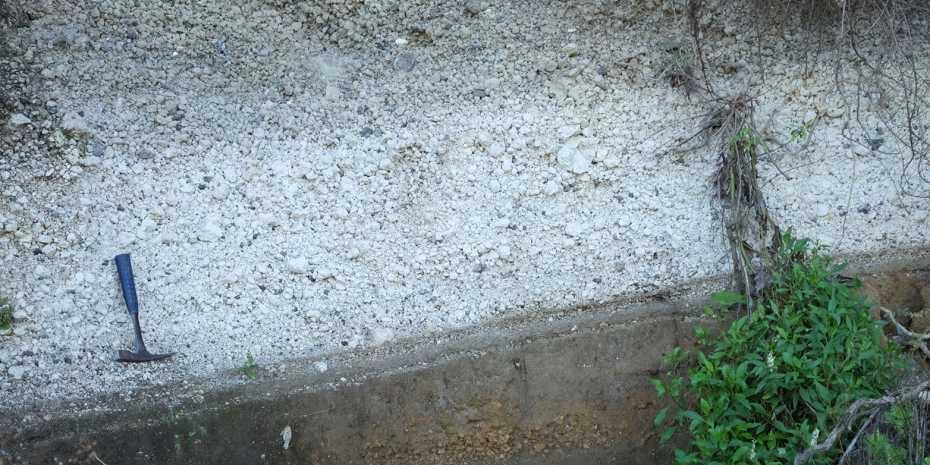
The garnets for this study all came from material that the ETH team collected on site with the help of colleagues from the Universities of Milan and Bari. For this purpose, they searched for corresponding sites where the volcanic deposits from the four eruptions mentioned above are exposed at the surface and are accessible for sampling.
Intervals become shorter
By using the crystallization ages of garnets, the researchers can now show that the most explosive magma type at Vesuvius (so called “phonolitic” magma) is stored in a reservoir in the upper crust for several thousand years before the influx of more primitive, and hotter, magma from the lower crust triggers an eruption.
For the two prehistoric events, the researchers determined that the phonolitic magma resided in the chamber for about 5,000 years. Before the eruptions in the historical period, it was stored in this reservoir for only about 1,000 years.
For all the eruptions, the residence time of the phonolitic magma in the upper crustal chamber coincides with Vesuvius’ quiescent periods.
“We think it’s likely that a large body of phonolitic magma in the upper crust blocked the upwelling of more primitive, hotter magma from deeper reservoirs,” Bachmann says. “Vesuvius has quite a complicated plumbing system,” he adds with a grin.
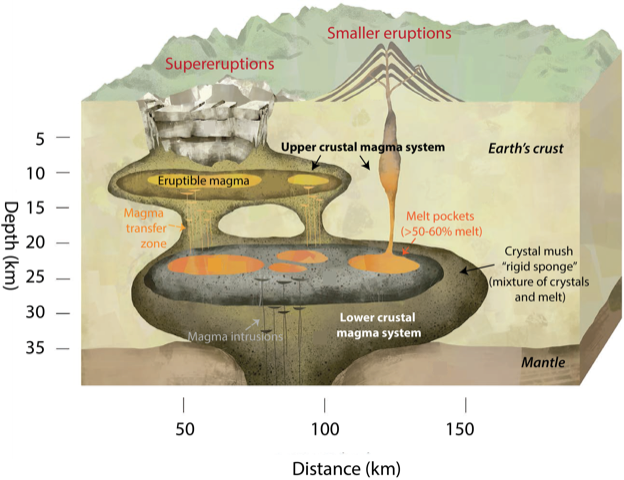
Below the volcano are several magma chambers connected by a system of pipes. The top chamber, which is critical for the eruptions, fills with magma from one of the lower chambers in a fairly short time. In this colder environment, the magma cools and crystallizes, leading to chemical changes of the residual melt (a process called “magmatic differentiation”). Experts call the “differentiated” magma of Vesuvius phonolite. At some point (probably at relatively regular intervals), more primitive, or “mafic” magma flows into the upper chamber from greater depths. This recharge leads to a pressure rise within the chamber, which can force the phonolitic magma upwards, potentially all the way to the surface, starting an eruption.
A reservoir of phonolitic magma appears to have almost always existed beneath Vesuvius for the last 10’000 years. However, the question is whether one today that could feed a dangerous eruption like the one of 3,950 years ago or the one of AD 79.
Magma build-up rather unlikely
Seismic surveys indicate that there is indeed a reservoir at a depth of about six to eight kilometers (3.7 to 5 miles) underneath Vesuvius. However, the composition of the magma it contains – i.e., whether it is phonolitic, or more mafic – cannot be determined using seismic technology. However, since Vesuvius has been producing mostly mafic magma since 1631, researchers believe it is unlikely that differentiated phonolite is currently accumulating. “The last major eruption in 1944 is now nearly 80 years ago, which may well be the beginning of a prolonged quiescent period during which differentiated magma can accumulate. Still, a dangerous eruption comparable to the one in AD 79 probably needs the quiescent period to last much longer,” Wotzlaw says.
If predominantly mafic magma is ejected in the coming decades, this could indicate that the magma body detected by seismic surveys is not composed of differentiated magma and that none is currently present beneath Vesuvius. “That’s why we think it’s more likely that a large, explosive eruption of Vesuvius would occur only after a quiescent period lasting for centuries,” Bachmann says. Wotzlaw adds: “However, smaller but still very dangerous eruptions like the one in 1944 or even the one in 1631 can occur after shorter periods of quiescence. Accurate forecasting of the size and style of volcanic eruptions is so far not possible. However, the reawakening of the magma reservoirs beneath volcanoes are now recognizable by monitoring.”
Close monitoring
To avoid any nasty surprises, Vesuvius and its activity, together with its big brother to the west, the Phlegraean Fields, are monitored around the clock. For example, Italy’s National Institute of Geophysics and Volcanology measures every earthquake around the volcanoes, analyses gases emitted from fumaroles, and observes ground deformation, which are indicators of underground activity. There is also an emergency plan outlining how to evacuate the greater Naples area should surveillance conclude that an eruption is imminent.
Reference: “Garnet petrochronology reveals the lifetime and dynamics of phonolitic magma chambers at Somma-Vesuvius” by Jörn-Frederik Wotzlaw, Lena Bastian, Marcel Guillong, Francesca Forni, Oscar Laurent, Julia Neukampf, Roberto Sulpizio, Cyril Chelle-Michou and Olivier Bachmann, 12 January 2022, Science Advances.
DOI: 10.1126/sciadv.abk2184
Never miss a breakthrough: Join the SciTechDaily newsletter.
Follow us on Google and Google News.
2 Comments
Written with the financial support of the Naples Real Estate Consortium.
i was visit this city or land long time ago calling a city trip and it was borring just the volcano en the city pompii the people in the motel was oke but when you go to eat outside your motel it was extremely very expensive the food the same like france paris