
Close Menu
    Facebook X (Twitter) Instagram
    SciTechDaily
    • Biology
    • Chemistry
    • Earth
    • Health
    • Physics
    • Science
    • Space
    • Technology
    Facebook X (Twitter) Pinterest YouTube RSS
    SciTechDaily
    Home»Space»Jezero Crater – Landing Site of Mars Perseverance Rover – Was a Lake in Mars’ Ancient Past
    Space

    Jezero Crater – Landing Site of Mars Perseverance Rover – Was a Lake in Mars’ Ancient Past

    By NASAOctober 27, 20202 Comments1 Min Read
    Facebook Twitter Pinterest Telegram LinkedIn WhatsApp Email Reddit
    Share
    Facebook Twitter LinkedIn Pinterest Telegram Email Reddit
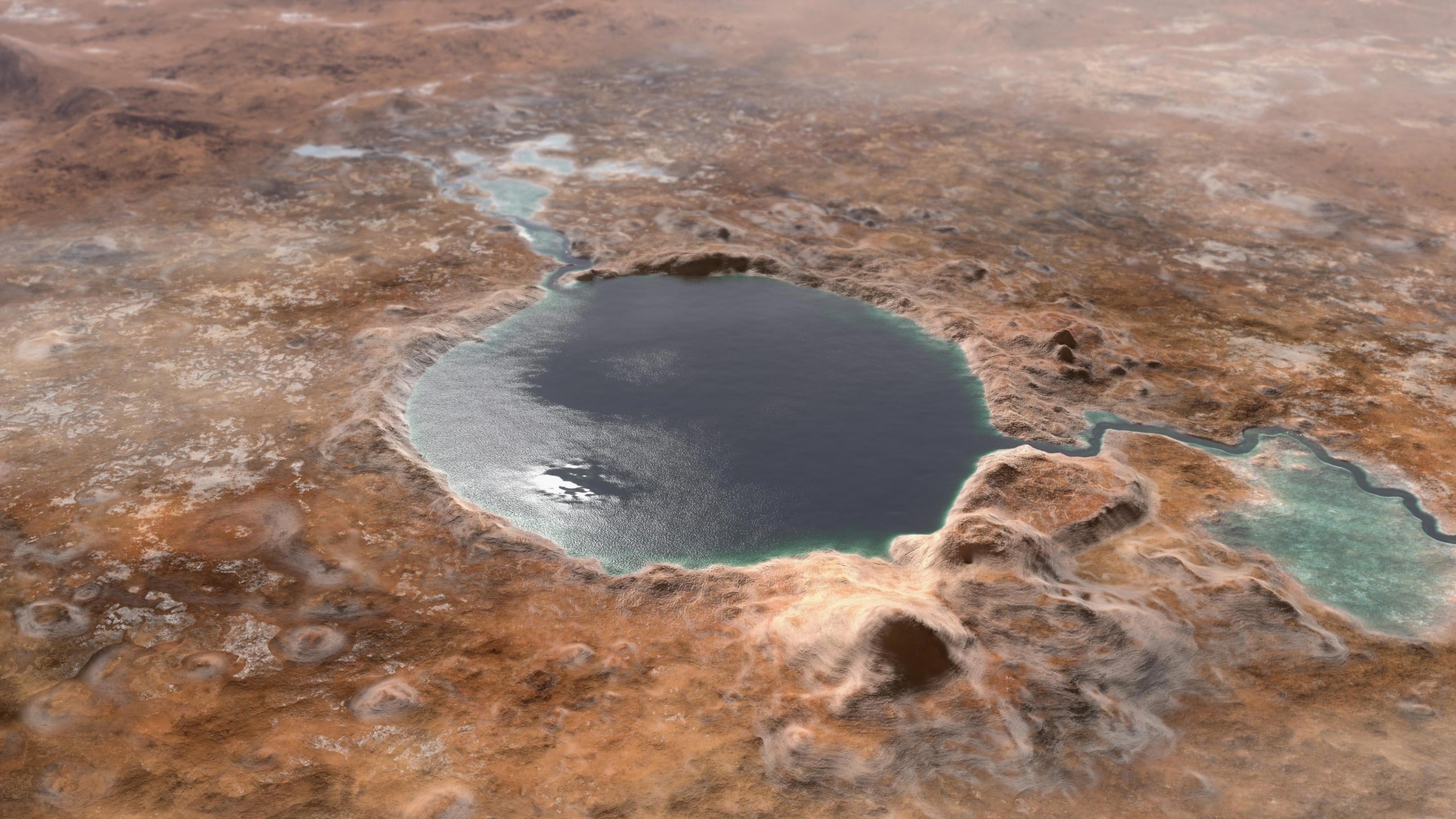
    Mars Jezero Crater Lake
    This illustration depicts Jezero Crater on Mars in its ancient state as a lake billions of years ago, complete with visible inlet and outlet points on either side. Credit: NASA/JPL-Caltech

    This illustration shows Jezero Crater — the landing site of the Mars 2020 Perseverance rover — as it may have looked billions of years ago on Mars, when it was a lake. An inlet and outlet are also visible on either side of the lake.

    A key objective for Perseverance’s mission on Mars is astrobiology, including the search for signs of ancient microbial life. The rover will characterize the planet’s geology and past climate, pave the way for human exploration of the Red Planet, and be the first mission to collect and cache Martian rock and regolith (broken rock and dust).

    Subsequent missions, currently under consideration by NASA in cooperation with the European Space Agency, would send spacecraft to Mars to collect these cached samples from the surface and return them to Earth for in-depth analysis.

    Never miss a breakthrough: Join the SciTechDaily newsletter.
    Follow us on Google and Google News.

    Mars Mars 2020 Perseverance Rover NASA
    Share. Facebook Twitter Pinterest LinkedIn Email Reddit

    Related Articles

    How Mars Is Shredding Spacesuits: NASA’s Perseverance Tests the Future of Astronaut Gear

    NASA’s Perseverance Rover Just Smooshed a Rock on Mars and Uncovered Hidden Clues

    Evidence of Life on Mars? NASA’s Bold Strategy to Recover the Proof

    NASA’s Perseverance Rover Conquers Jezero Crater Rim Revealing Mars’ Hidden History

    Eerie Eclipse on the Red Planet: NASA’s Perseverance Spots “Googly Eye” in Mars Sky [Video]

    Breathtaking Views: NASA’s Perseverance Rover Battles Slippery Terrain To Reach Mars’ Summit

    NASA’s Perseverance Mars Rover Navigates Jezero’s Steep Crater Rim

    NASA’s Perseverance Rover Discovers Mysterious Striped Rock on Mars

    NASA’s Perseverance Rover Begins Ambitious Ascent of Jezero Crater Rim

    2 Comments

    1. Sekar Vedaraman on October 27, 2020 7:02 am

      Interesting.

      Curiosity.

      Was wondering what algorithmms were used to create the image, and whether the same is the exact replica of the images that the eyes would perceive, if a a human was in a Space ship circulating the panet?

      Can much more detailed images be created by taking the planet earth as the baseline and creating extremely accurate algorithms which can further improve the accuracy and detail of these images , so that what you see is what you encounter when we reach the planet?

      Lake beds on earth as they exist currently and also as they probably existed on the planet in the past, should be the baseline for benchmarking and for predicting what we could expect to find on the surface of the Red planet —- and a great deal of analysis can be done on board of the next Roover, and the information sent back to the scientists in Houston rather than wait for the flight back.

      A great deal of information and analysis can be completed long before the actual samples are brouught back to stations and off-planet bases set up in the space station and the moon or other heavenly bodies. Most of this can be done with the Existing “Eyes in the sky”.

      Retthinking and reimagining the processes and technologies, is extremely criticalfor all of humanity.

      Reply
    2. Rudy brown jr on October 29, 2020 11:06 am

      Good to know we could ask a question about thories of space.Like our sun rah dying.the flares that are burning, Is rah getting smaller or bigger in size?

      Reply
    Leave A Reply Cancel Reply

    • Facebook
    • Twitter
    • Pinterest
    • YouTube

    Don't Miss a Discovery

    Subscribe for the Latest in Science & Tech!

    Trending News

    Artificial Sweeteners May Harm Future Generations, Study Suggests

    Splashdown! NASA Artemis II Returns From Record-Breaking Moon Mission

    What If Consciousness Exists Beyond Your Brain

    Scientists Finally Crack the 100-Million-Year Evolutionary Mystery of Squid and Cuttlefish

    Beyond “Safe Levels”: Study Challenges What We Know About Pesticides and Cancer

    Researchers Have Found a Dietary Compound That Increases Longevity

    Scientists Baffled by Bizarre “Living Fossil” From 275 Million Years Ago

    Your IQ at 23 Could Predict Your Wealth at 27, Study Finds

    Follow SciTechDaily
    • Facebook
    • Twitter
    • YouTube
    • Pinterest
    • Newsletter
    • RSS
    SciTech News
    • Biology News
    • Chemistry News
    • Earth News
    • Health News
    • Physics News
    • Science News
    • Space News
    • Technology News
    Recent Posts
    • Geologists Reveal the Americas Collided Earlier Than We Thought
    • 20x Difference: Study Reveals True Source of Airborne Microplastics
    • Scientists Uncover Hidden Force Powering Yellowstone’s Supervolcano
    • This Metal Melts in Your Hand – and Scientists Just Discovered Something Strange
    • Why Losing Too Much Fat Can Be Just As Dangerous as Obesity
    Copyright © 1998 - 2026 SciTechDaily. All Rights Reserved.
    • Science News
    • About
    • Contact
    • Editorial Board
    • Privacy Policy
    • Terms of Use

    Type above and press Enter to search. Press Esc to cancel.