
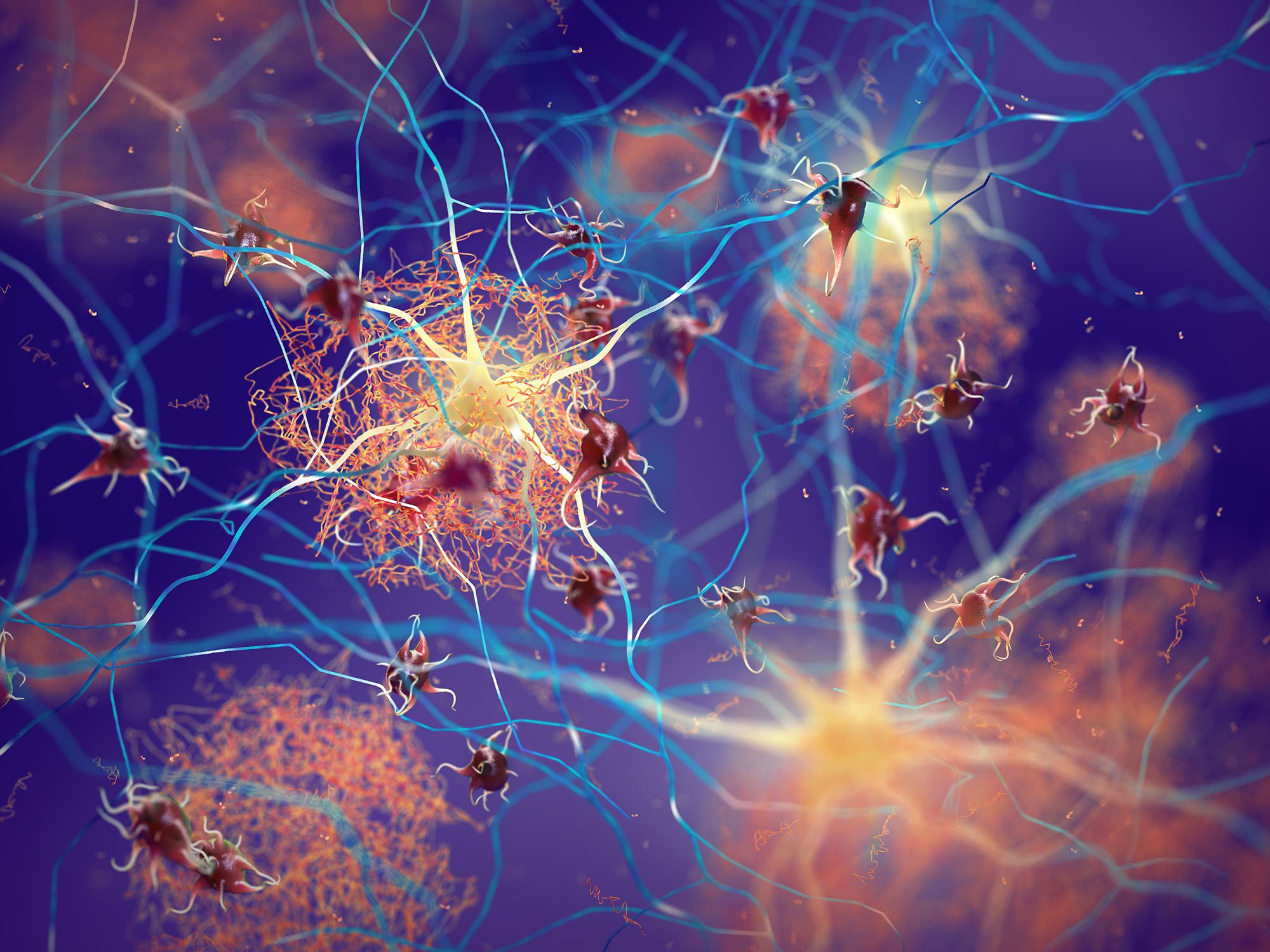
Researchers have identified a brain protein whose absence leads to memory loss and Alzheimer’s-like damage in mice.
Researchers at Johns Hopkins Medicine report that findings from a new study funded by the National Institutes of Health are helping to identify a promising new biological target for Alzheimer’s disease. The focus is a protein that produces a crucial gas within the brain.
Studies in genetically engineered mice show that the protein Cystathionine γ-lyase, also known as CSE, plays an essential role in forming memories, says Bindu Paul, M.S., Ph.D., an associate professor of pharmacology, psychiatry and neuroscience at the Johns Hopkins University School of Medicine who led the research. CSE is best known for generating hydrogen sulfide, the gas responsible for the smell of rotten eggs, but the new findings highlight its importance in brain function.
Understanding CSE as a drug target
The study, published in Proceedings of the National Academy of Sciences, was designed to clarify how this protein functions at a basic biological level and to assess its potential as a target for drugs. Such treatments could increase CSE expression in people, with the goal of supporting brain cell health and slowing the progression of neurodegenerative disease.
Earlier research has suggested that hydrogen sulfide can protect neurons in mice, Paul says. However, because the gas becomes toxic at high concentrations and cannot be safely delivered directly to the brain, scientists must determine how to regulate and maintain it at the extremely low levels naturally present in neurons.
Loss of CSE mimics Alzheimer’s hallmarks
The new findings show that mice engineered to lack the CSE enzyme develop memory and learning deficits along with increased oxidative stress, DNA damage, and weakened blood-brain barrier integrity, says Paul, the study’s corresponding author. These features are widely recognized as key characteristics of Alzheimer’s disease.
These recent experiments grew out of a 2014 report from the laboratory of Solomon Snyder, M.D., D.Sc., D.Phil., professor emeritus of neuroscience, pharmacology, and psychiatry, in which CSE was shown to benefit brain health in mice with Huntington’s disease. For this, scientists used genetically engineered mice lacking the CSE protein, originally generated in 2008, when CSE was shown to be important for vascular function and blood pressure regulation. In 2021, the team showed that CSE malfunctioned in mice with Alzheimer’s disease and that minuscule amounts of hydrogen sulfide injections helped protect brain health.
Those previous studies, however, were conducted in mice genetically engineered with other mutations known to cause neurodegenerative disease and did not focus on CSE by itself.
CSE alone drives cognitive decline
“This most recent work indicates that CSE alone is a major player in cognitive function and could provide a new avenue for treatment pathways in Alzheimer’s disease,” says co-corresponding author Snyder, who retired from the Johns Hopkins Medicine faculty in 2023.
Using the same line of CSE-lacking mice from the 2008 study in this recent study, scientists compared the spatial memory (ability to remember directions and follow cues) in CSE-lacking mice and in normal mice.
In the experiments, scientists placed mice on a platform known as the Barnes maze, in which the mice learned to seek shelter when a bright light appeared. At the age of two months, both the CSE-lacking mice and normal mice avoided the bright light and consistently found the shelter within a three-minute period. At the age of six months, however, these CSE-lacking mice were unable to find the escape route, while normal six-month-old mice continued to do so.
“The decline in spatial memory indicates a progressive onset of neurodegenerative disease that we can attribute to CSE loss,” says first author Suwarna Chakraborty, a researcher in Paul’s lab.
Cellular damage across brain systems
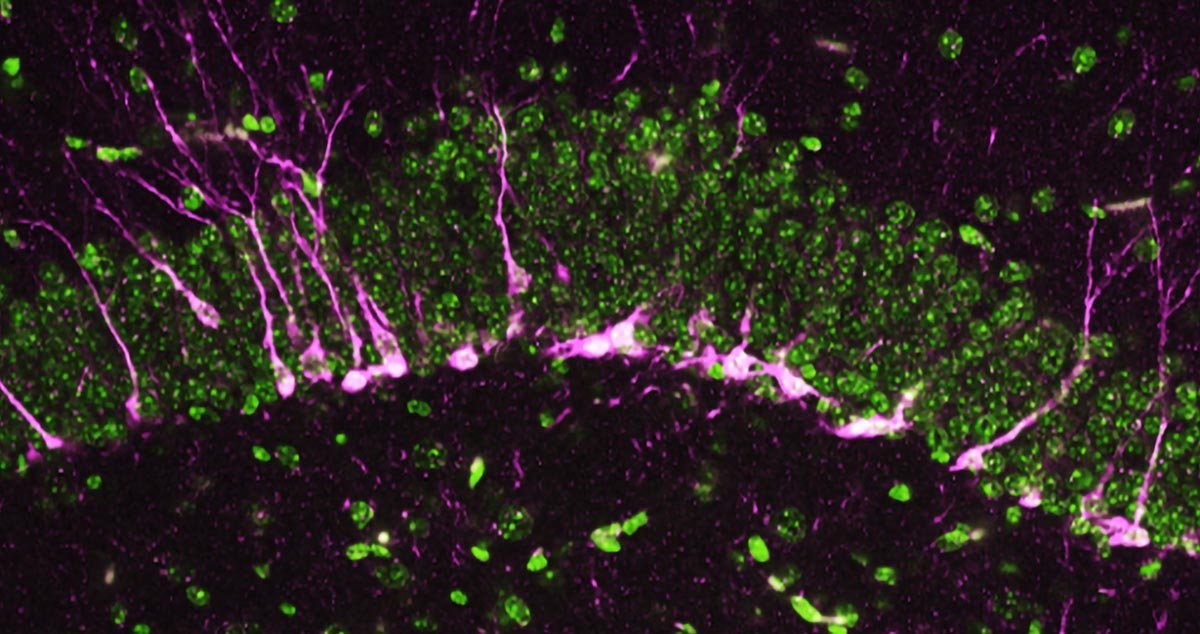
Disruptions in the formation of new neurons in the hippocampus region of the brain (critical to learning and memory) are thought to be a hallmark of neurodegenerative disease, the scientists say. Using biochemical and analytical techniques, the researchers determined that neurogenesis-related proteins were expressed less often or not at all in mice lacking CSE when compared with normal mice.
Then, using high-powered electron microscopes, the scientists observed the brains of CSE-lacking mice and found big breaks in blood vessels, indicating that they had suffered damage to the blood-brain barrier, another symptom seen in people with Alzheimer’s disease. Furthermore, new neurons had a difficult time migrating to the hippocampus region, where they would ordinarily help form new memories.
“The mice lacking CSE were compromised at multiple levels, which correlated with symptoms that we see in Alzheimer’s disease,” says co-first author Sunil Jamuna Tripathi, a researcher in Paul’s lab.
More than 6 million people in the United States have Alzheimer’s disease, according to the U.S. Centers for Disease Control and Prevention, and prevalence is on the rise. To date, there are no cures or treatments that have been proven to consistently slow disease progression. Harnessing CSE and its production of hydrogen sulfide could be an avenue for therapeutic benefit, the scientists say.
Reference: “Cystathionine γ-lyase is a major regulator of cognitive function through neurotrophin signaling and neurogenesis” by Suwarna Chakraborty, Sunil Jamuna Tripathi, Edwin Vázquez-Rosa, Kalyani Chaubey, Hisashi Fujioka, Emiko Miller, Richa Tyagi, Thibaut Vignane, Sudarshana M. Sharma, Bobby Thomas, Zachary M. Weil, Randy J. Nelson, Milos R. Filipovic, Benjamin C. Orsburn, Solomon H. Snyder, Andrew A. Pieper and Bindu D. Paul, 26 December 2025, Proceedings of the National Academy of Sciences.
DOI: 10.1073/pnas.2528478122
Funding support for this research was provided by the National Institutes of Health (1R01AG071512, P50 DA044123,1R21AG073684, O1AGs066707, U01 AG073323, AG077396, NS101967, NS133688, P01CA236778), the Department of Defense (HT94252310443), the American Heart Association, AHA-Allen Initiative in Brain Health and Cognitive Impairment, the Solve ME/CFS Initiative, the Catalyst Award from Johns Hopkins University, the Valour Foundation, the Wick Foundation, Department of Veterans Affairs Merit Award (I01BX005976), the Louis Stokes Cleveland Department of Medical Affairs Veterans Center, the Mary Alice Smith Funds for Neuropsychiatry Research, the Lincoln Neurotherapeutics Research Fund, the Gordon and Evie Safran Neuropsychiatry Fund; and the Leonard Krieger Fund of the Cleveland Foundation.
Never miss a breakthrough: Join the SciTechDaily newsletter.
Follow us on Google and Google News.
1 Comment
This is a living Helll