
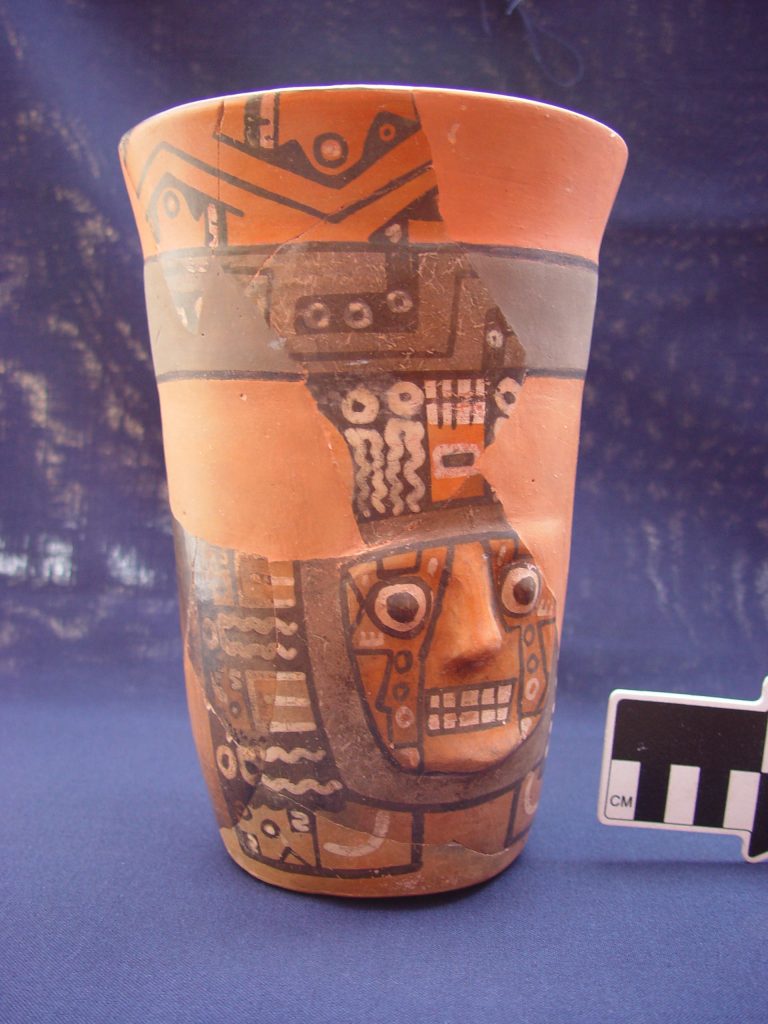
Researchers used laser-based chemical analysis to reveal that Wari pottery was often locally crafted, blending imperial style with regional materials, highlighting local agency and economic independence within the empire.
The Wari Empire, Peru’s earliest major civilization, spanned over a thousand miles across the Andes Mountains and the coastal region from 600-1000 CE. The remnants of their pottery provide valuable insights for archaeologists seeking to understand how the ancient empire functioned.
A recent study published in the Journal of Archaeological Science: Reports reveals that potters throughout the Wari Empire were crafting their own ceramics instead of using “official” pottery imported from the capital. These locally-made ceramics featured decorations mimicking the traditional Wari style. To uncover this information, researchers analyzed the chemical composition of the pottery using laser beam technology.
“In this study, we looked at the idea of cosmopolitanism, of incorporating different cultures and practices into a society,” says M. Elizabeth Grávalos, a postdoctoral researcher at the Field Museum in Chicago and the study’s lead author. “We’re trying to show that potters were influenced by the Wari, but this influence was blended with their own local cultural practices.”
Grávalos says this model of cosmopolitanism is a little like trying to replicate a recipe from another culture, but with a local spin. “If you live in the US and you’re making pad thai at home, you might not have access to all the ingredients that someone living in Thailand would have, so you substitute some things,” she says. “Wari ceramics are a little like that — people throughout the empire were interested in Wari material culture, but they weren’t necessarily getting it directly from the Wari heartland. More often than not, we see local people trying to make their own version of Wari pottery.”
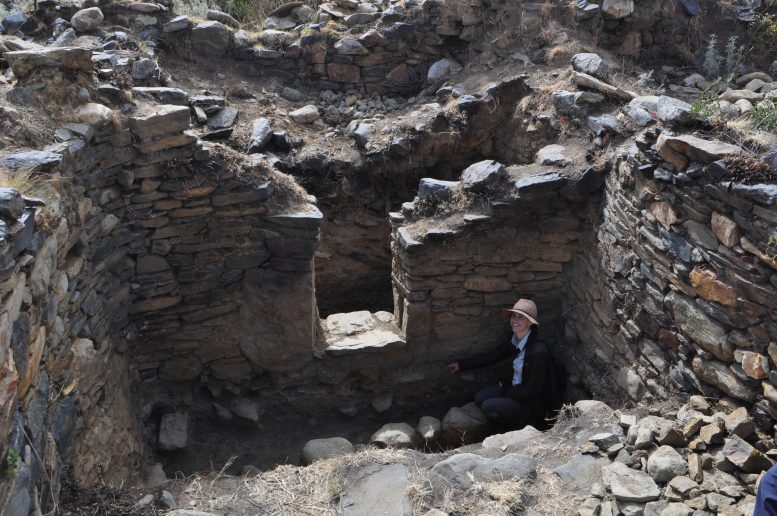
Grávalos and her colleagues led archaeological digs throughout Peru, working with local communities to excavate the thousand-year-old remains of households, tombs, and administrative centers, in search of Wari lifeways. The researchers were then granted permission from Peru’s Ministry of Culture to bring samples of ceramics from their excavations to Chicago for analysis.
Clay from different regions has a different chemical makeup, so studying the ceramics’ chemical makeup could tell the researchers if the pots were produced in different places or if they were all imported from the Wari capital.
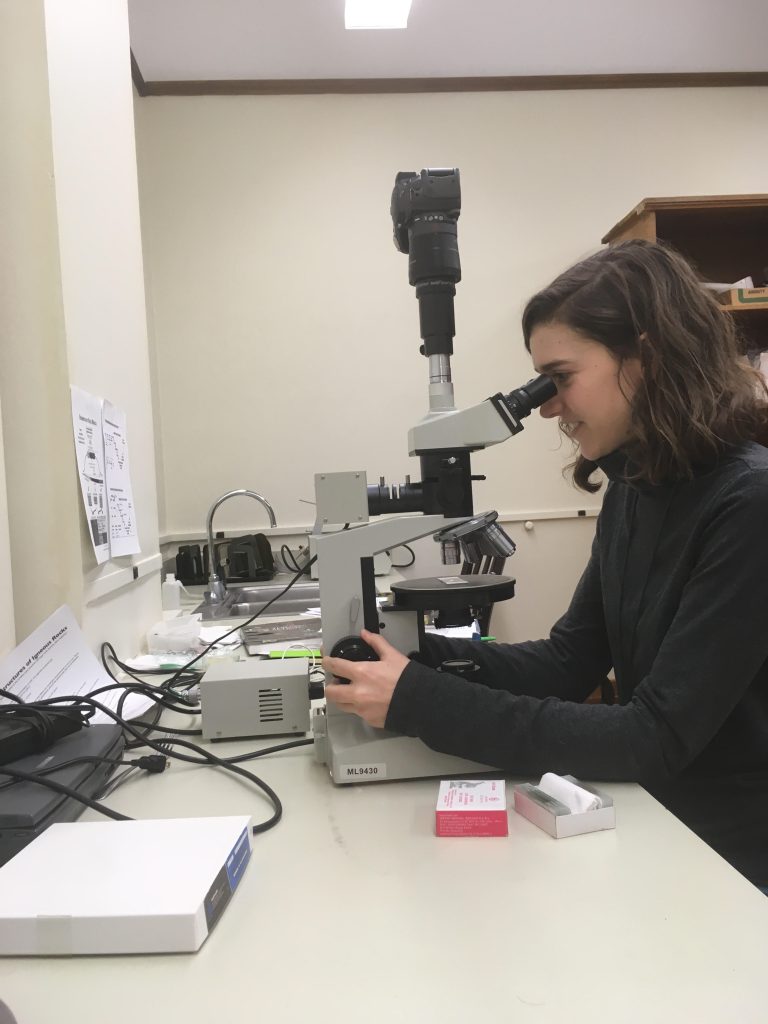
“We’d take a tiny piece of a pot and used a laser to cut an even tinier piece, basically extracting a piece of the ceramic’s clay paste,” says Grávalos. “Then helium gas carried it to the mass spectrometer, which measures the elements present in the clay paste.” (The lab set-up didn’t have open laser beams and floating shards of pottery cutting across the room, though — the whole process takes place on a microscopic scale inside a big boxy machine.)
The analysis showed that the pots excavated from distinct regions of Peru have different chemical signatures, and were therefore made with distinct clays. That helps show how the Wari culture spread.
Bottom-Up Cultural Influence
Some empires, like the ancient Romans, took a “top-down” approach to spreading their aesthetic, shipping pottery across the Mediterranean so that people throughout the empire were using the official Roman style. Local potters emulating the traditional Wari style in their own work seems to hint at a more “bottom-up” approach.
“Of course, local people in all empires have some degree of agency and creative control — the only empire that’s truly top-down is the Borg from Star Trek,” says Patrick Ryan Williams, Curator of Archaeological Science and Director of the Elemental Analysis Facility at the Field Museum and the study’s senior author. “Even the Romans had local people doing things their own way. But what we’re finding in this study is the agency of local peoples and the importance of local economies. In some regions, we find that Wari colonists had their own production centers and were recreating Wari lifeways locally. In other areas, we see that local communities made Wari pottery in their own way. I think that’s what’s really important about this study.”
The researchers say that the patterns revealed by this pottery could help explain why the Wari empire was able to thrive for so long. “Local production, even in a cosmopolitan society with lots of far-flung connections, makes a society more resilient,” says Williams. “If you’re entirely dependent on someone far away sending you things you need, you’re extremely vulnerable.”
Beyond the economic lessons that we might learn from the Wari, Grávalos says that the study matters because “this work challenges some of the assumptions we have about how societies work, particularly Indigenous groups who are often misrepresented or left out of broader narratives of world history. There are many people whose stories haven’t been told, and this study shows their resilience and their accomplishments.”
Reference: “Crafting cosmopolitanism: Ceramic production and exchange during Wari imperialism (600–1000 CE)” by M. Elizabeth Grávalos, David A. Reid, Donna J. Nash and Patrick Ryan Williams, 14 March 2023, Journal of Archaeological Science: Reports.
DOI: 10.1016/j.jasrep.2023.103878
Never miss a breakthrough: Join the SciTechDaily newsletter.
Follow us on Google and Google News.