
Close Menu
    Facebook X (Twitter) Instagram
    SciTechDaily
    • Biology
    • Chemistry
    • Earth
    • Health
    • Physics
    • Science
    • Space
    • Technology
    Facebook X (Twitter) Pinterest YouTube RSS
    SciTechDaily
    Home»Space»Lasers Using Neural Networks Accurately Spot Space Junk in Earth’s Orbit
    Space

    Lasers Using Neural Networks Accurately Spot Space Junk in Earth’s Orbit

    By American Institute of PhysicsDecember 24, 2019No Comments3 Mins Read
    Facebook Twitter Pinterest Telegram LinkedIn WhatsApp Email Reddit
    Share
    Facebook Twitter LinkedIn Pinterest Telegram Email Reddit
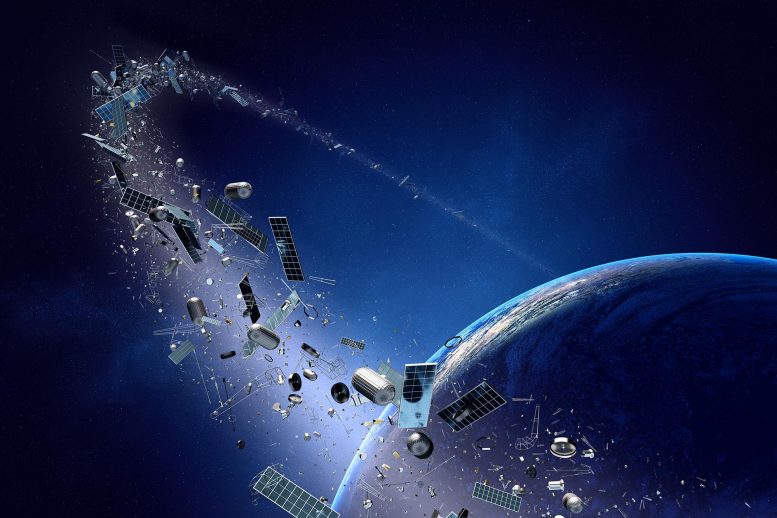
    Space Junk Illustration
    Artist illustration of space junk

    Scientists applied a set of algorithms to laser-ranging telescopes and succeeded in increasing accurate detection of the space litter in Earth’s orbit threatening spacecraft safety.

    Chinese researchers have improved the accuracy in detecting space junk in earth’s orbit, providing a more effective way to plot safe routes for spacecraft maneuvers.

    “The possibility of successfully navigating an asteroid field is approximately 3,720 to one!” exclaimed C-3PO as Han Solo directed the Millennium Falcon into an asteroid field in “Star Wars: The Empire Strikes Back.” Earth’s orbit is nowhere near as dangerous, but after more than half a century of space activity, collisions between jettisoned engines and disintegrated spacecraft have formed a planetary scrap heap that spacecraft need to evade.

    Scientists have developed space junk identification systems, but it has proven tricky to pinpoint the swift, small specks of space litter. A unique set of algorithms for laser ranging telescopes, described in the Journal of Laser Applications, by AIP Publishing, has significantly improved the success rate of space debris detection.
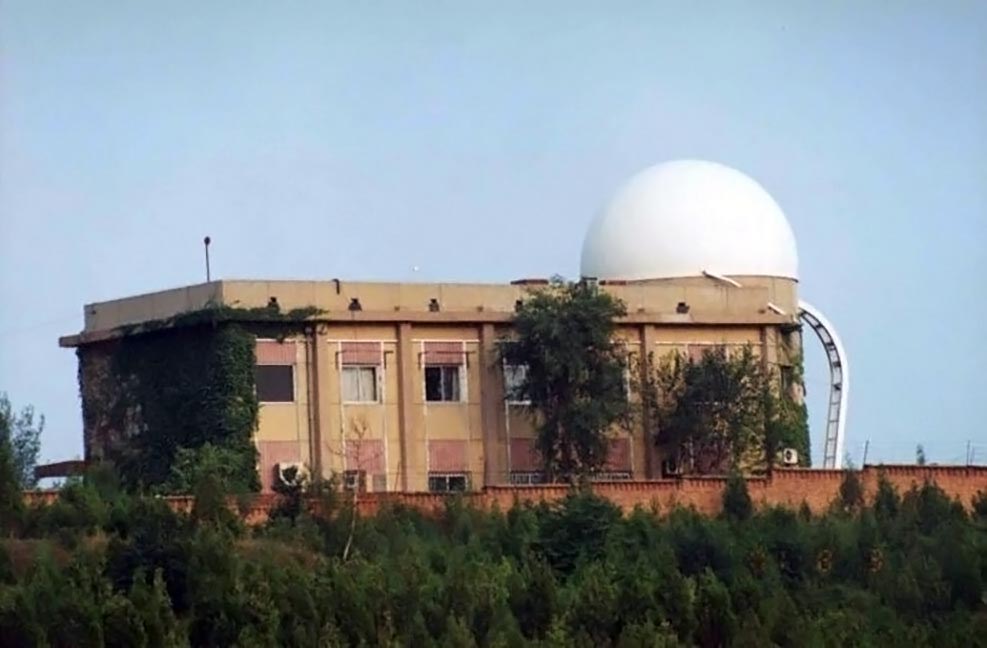
    Beijing Fangshan Satellite Laser Observatory
    Beijing Fangshan Satellite Laser Observatory. Credit: Beijing Fangshan Satellite Laser Observatory

    “After improving the pointing accuracy of the telescope through a neural network, space debris with a cross-sectional area of 1 meter squared (11 feet squared) and a distance of 1,500 kilometers (900 miles) can be detected,” said Tianming Ma, from the Chinese Academy of Surveying and Mapping, Beijing and Liaoning Technical University, Fuxin.

    Laser ranging technology uses laser reflection from objects to measure their distance. But the echo signal reflected from the surface of space debris is very weak, reducing the accuracy. Previous methods improved laser ranging pinpointing of debris but only to a 1-kilometer (0.6-mile) level.

    Application of neural networks — algorithms modeled on the human brain’s sensory inputs, processing, and output levels — to laser ranging technologies has been proposed previously. However, Ma’s study is the first time a neural network has significantly improved the pointing accuracy of a laser-ranging telescope.

    Ma and colleagues trained a back propagation neural network to recognize space debris using two correcting algorithms. The Genetic Algorithm and Levenberg-Marquardt optimized the neural network’s thresholds for recognition of space debris, ensuring the network wasn’t too sensitive and could be trained on localized areas of space. The team demonstrated the improved accuracy by testing against three traditional methods at the Beijing Fangshen laser range telescope station.

    The observation data of 95 stars was used to solve the algorithm coefficients from each method, and the accuracy of detecting 22 other stars was assessed. The new pointing correction algorithms proved the most accurate, as well as easy to operate with good real-time performance.

    Ma aims to further refine the method. “Obtaining the precise orbit of space debris can provide effective help for the safe operation of spacecraft in orbit.”

    Reference: “Research on Pointing Correction Algorithm of Laser Ranging Telescope Oriented to Space Debris” by Tianming Ma, Chunmei Zhao and Zhengbin He, 24 December 2019, Journal of Laser Applications.
    DOI: 10.2351/1.5110748

    Never miss a breakthrough: Join the SciTechDaily newsletter.
    Follow us on Google and Google News.

    American Institute of Physics Astronomy Machine Learning
    Share. Facebook Twitter Pinterest LinkedIn Email Reddit

    Related Articles

    Artificial Intelligence Reveals a Stunning, High-Definition View of M87’s Big Black Hole

    Peering Into the Abyss: Machine Learning Enhances M87 Black Hole Image

    Stellar Revelation: AI Discovers the Universe’s First Stars Weren’t Alone

    Scientists Identify Thousands of New Cosmic Objects Using Machine Learning

    The Search for Extraterrestrial Life: Machine Learning Uncovers Previously Undetected Signals of Interest

    AI Reveals Unsuspected Connections Hidden in the Complex Math Underlying Search for Exoplanets

    Artificial Intelligence Helps Resolve Long-Running Astrophysics Debate on Supermassive Black Holes

    Solar Dynamics Observatory: Artificial Intelligence Helps Improve NASA’s Eyes on the Sun

    AI Detects Incredible Stream of Stars That Extends Thousands of Light-Years Across the Milky Way

    Leave A Reply Cancel Reply

    • Facebook
    • Twitter
    • Pinterest
    • YouTube

    Don't Miss a Discovery

    Subscribe for the Latest in Science & Tech!

    Trending News

    Popular Sugar-Free Sweetener Linked to Liver Disease, Study Warns

    What Is Hantavirus? The Deadly Disease Raising Alarm Worldwide

    Scientists Just Discovered How the Universe Builds Monster Black Holes

    Scientists Unveil New Treatment Strategy That Could Outsmart Cancer

    A Simple Vitamin May Hold the Key to Treating Rare Genetic Diseases

    Scientists Think the Real Fountain of Youth May Be Hiding in Your Gut

    Ravens Don’t Follow Wolves, They Predict Them

    This Common Knee Surgery May Be Doing More Harm Than Good

    Follow SciTechDaily
    • Facebook
    • Twitter
    • YouTube
    • Pinterest
    • Newsletter
    • RSS
    SciTech News
    • Biology News
    • Chemistry News
    • Earth News
    • Health News
    • Physics News
    • Science News
    • Space News
    • Technology News
    Recent Posts
    • Why Are So Many New Fathers Dying? Scientists Say the U.S. Has a Dangerous Blind Spot
    • Scientists Identify Simple Supplement That Greatly Reduces Alzheimer’s Damage
    • You May Have a Dangerous Type of Cholesterol Even if Your Tests Look Normal
    • Study Reveals Dangerous Flaw in AI Symptom Checkers
    • New MRI Breakthrough Captures Stunningly Clear Images of the Eye and Brain
    Copyright © 1998 - 2026 SciTechDaily. All Rights Reserved.
    • Science News
    • About
    • Contact
    • Editorial Board
    • Privacy Policy
    • Terms of Use

    Type above and press Enter to search. Press Esc to cancel.