
Close Menu
    Facebook X (Twitter) Instagram
    SciTechDaily
    • Biology
    • Chemistry
    • Earth
    • Health
    • Physics
    • Science
    • Space
    • Technology
    Facebook X (Twitter) Pinterest YouTube RSS
    SciTechDaily
    Home»Earth»Leaf Hunting in Japan: Momijigari Can Last Into Early December in the Country’s Southern Regions
    Earth

    Leaf Hunting in Japan: Momijigari Can Last Into Early December in the Country’s Southern Regions

    By Kathryn Hansen, NASA Earth ObservatoryNovember 30, 2021No Comments2 Mins Read
    Facebook Twitter Pinterest Telegram LinkedIn WhatsApp Email Reddit
    Share
    Facebook Twitter LinkedIn Pinterest Telegram Email Reddit
    Kyushu Japan 2021 Annotated
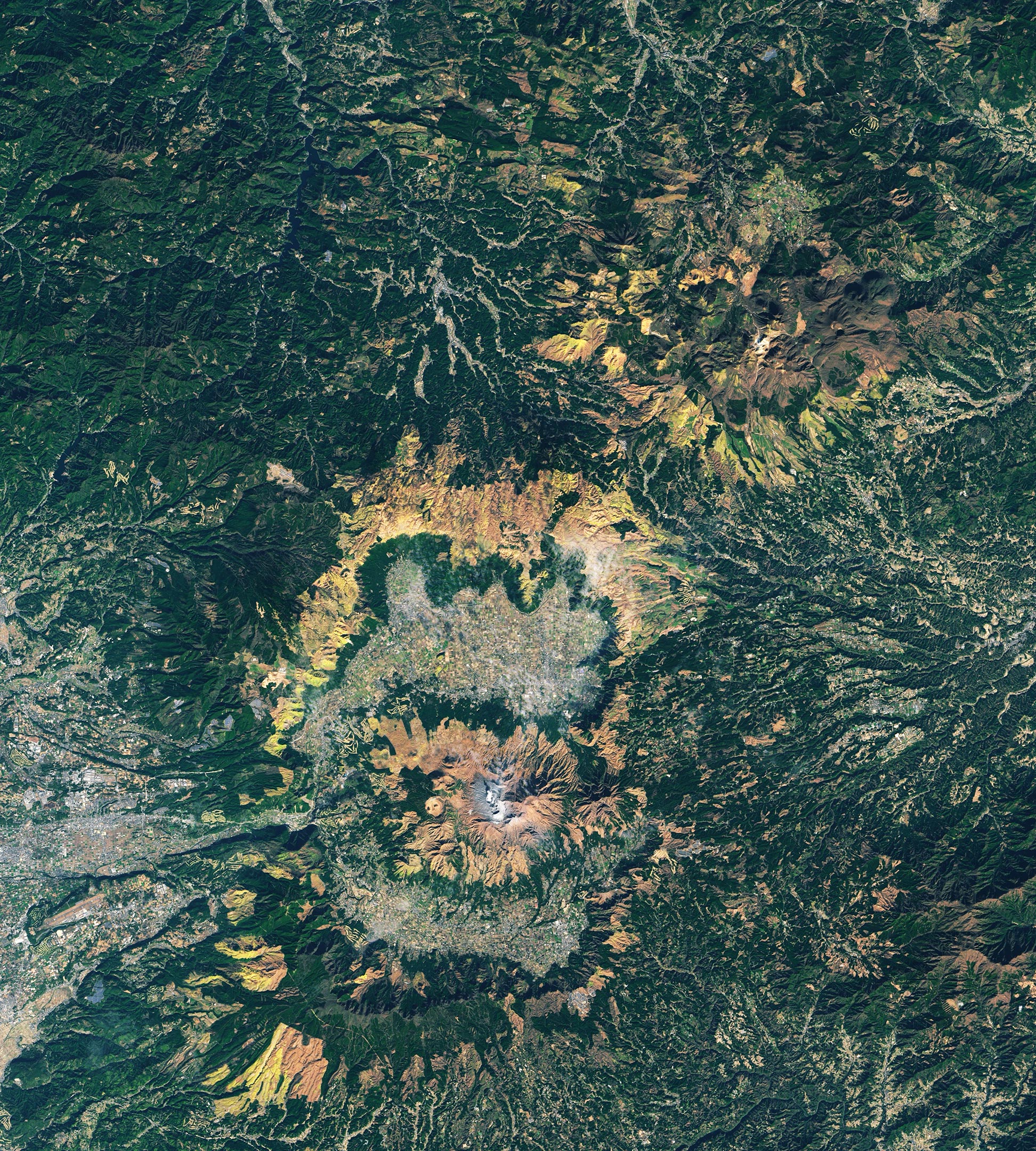
    Kyushu Japan, November 29, 2021

    Leaves have already dropped from the trees across much of the Northern Hemisphere, and once-colorful autumnal landscapes are starting to appear stark, bare, and even snow-covered as the season advances. But in Japan, some areas still displayed autumnal color in late November 2021.

    Prime autumn foliage in Japan generally shows up first in Hokkaido, the country’s northernmost region, where colorful leaves are usually in full display by mid- to late-September. But in the country’s more southern regions, colorful foliage can persist into early December.

    Momijigari is the Japanese tradition of visiting areas where leaves have turned red in the autumn.

    On November 29, 2021, the Operational Land Imager (OLI) on Landsat 8 acquired this natural-color image of north-central Kyushu, the most southerly of Japan’s four largest islands. Colorful vegetation is visible across the mountainsides and lowlands in Aso-Kuju National Park.

    It is not possible to know the exact sources of the color based on this satellite image alone, but it is likely a combination of evergreens, deciduous trees, grasses, shrubs, and agricultural fields. Deciduous trees turn various shades of yellow, orange, and red; the region’s grasses are known to turn a brilliant gold.

    This autumn, visitors were asked to keep away from Mount Aso—the largest active volcano in Japan—after an eruption on October 20, 2021, sent a plume of ash 3.5 kilometers (2.2 miles) high. As of November 18, the Japan Meteorological Agency was still asking people to stay at least 1 kilometer (0.6 miles) from the mountain.

    The nearby Kuju Mountains might be a safer location to view fall color this year. According to a Japan travel guide, this area “consists of several mountains, and among them Mount Kuju is the most impressive one that offers you to see striking fall colors in the fall.”

    Autumn leaves have been a part of Japanese culture for thousands of years, showing up in poetry during the Nara period (710–794), and sought out by common people who journeyed to see them starting in the middle of the Edo period (1603–1868). Leaf peeping in Japan is known as Momijiari, which translates to “red leaf hunting.”

    NASA Earth Observatory image by Lauren Dauphin, using Landsat data from the U.S. Geological Survey.

    Never miss a breakthrough: Join the SciTechDaily newsletter.
    Follow us on Google and Google News.

    Geography NASA NASA Earth Observatory
    Share. Facebook Twitter Pinterest LinkedIn Email Reddit

    Related Articles

    NASA Picturing Earth: Astronaut Photography In Focus [Video]

    Coloring the Great Salt Lake – Astronaut Takes Beautiful Photograph From Space Station

    Sea Ice in Denmark Strait – Drifted More Than 1,000 Km (600 Miles) From the Arctic Ocean

    NASA Scientists Map Beirut Blast Damage – Devastating Explosion Rocked Port Area

    NASA Advanced Rapid Imaging Satellite Maps Blast Damage: Beirut Explosion Aftermath

    NASA/NOAA Satellites Observe Surprisingly Rapid Increase in Scale and Intensity of Fires in Siberia

    Mars Terraforming: Cultivating Ideas for Mars on Earth

    Meandering Mississippi River: Photo Taken by Astronaut on Space Station Shows Divergence From State Boundaries

    Incredible Rare Peek at Patagonia in Winter

    Leave A Reply Cancel Reply

    • Facebook
    • Twitter
    • Pinterest
    • YouTube

    Don't Miss a Discovery

    Subscribe for the Latest in Science & Tech!

    Trending News

    What Causes Chronic Pain? Scientists Identify Key Culprit in the Brain

    Semaglutide Shows Surprising Mental Health Benefits in Massive 100,000-Person Study

    This Liquid Snapped Instead of Flowing and Scientists Were Shocked

    Breakthrough Alzheimer’s Drug Rewires the Brain Instead of Just Clearing Plaques

    Scientists Discover Hidden “Footprint of Death” That Could Transform How We Fight Disease

    A Simple Nose Swab Could Detect Alzheimer’s Years Before Symptoms Appear

    Scientists Just Rewrote the Timeline of Complex Life on Earth

    Teenager’s Fossil Find Leads to Discovery of Shark Teeth in 5 Million-Year-Old Whale Skull

    Follow SciTechDaily
    • Facebook
    • Twitter
    • YouTube
    • Pinterest
    • Newsletter
    • RSS
    SciTech News
    • Biology News
    • Chemistry News
    • Earth News
    • Health News
    • Physics News
    • Science News
    • Space News
    • Technology News
    Recent Posts
    • Even “Failed” Diets May Deliver Long-Term Health Gains, Study Finds
    • Childhood Junk Food May Rewire the Brain for Life
    • NIH Scientists Discover Powerful New Opioid That Relieves Pain Without Dangerous Side Effects
    • Breakthrough Study Reveals Why Damaged Nerves Struggle To Heal
    • 20-Year Study Reveals Cholera’s Surprising Weakness
    Copyright © 1998 - 2026 SciTechDaily. All Rights Reserved.
    • Science News
    • About
    • Contact
    • Editorial Board
    • Privacy Policy
    • Terms of Use

    Type above and press Enter to search. Press Esc to cancel.